EPS Functionality

23 comments started 2021-12-14 last 2022-02-26
CommisioningGivEnergy Products
C
#1 chrisdev

Hi all, I'm interested in hearing from people who have EPS functionality turned on for their batteries. I didn't enable it when I had my installation as power cuts were pretty rare for us, but after storm Arwen which left us without power for 3/4 days, it's something I want to re-visit.

We already have a huge change-over switch installed which was designed to switch between grid power and a dino-juice generator and since it's no longer used, I'm wondering if I can re-use it to switch between grid power and the GE battery instead.

Does anyone have experience of using the EPS capability to power their house through a change-over switch? It basically isolates the house from the grid, then re-connects the house to the genny/battery so there's no danger of back-feeding into the grid.

Also, If I get a regular electrician to do the work for me, do I still need GE to "enable" the EPS functionality or is it a default feature?

Lastly, if the grid fails, EPS circuit becomes live, and then I flip the change-over switch, I'd obviously need to manage the load within the house to stop it exceeding the discharge limit of the battery/inverter (3kW in my case). However, what happens if it were to be exceeded? Is there an internal "fuse" on the inverter to prevent damage to the battery and/or my house?

Appreciate your insight!
Thanks

#2 hoggy

chrisdev eps is always live (even yours now if you stuck a meter in it you'd see 240V so you could have actually had some power during the recent storms!)
There's a KB with wiring up an changeover, but make sure whoever does it pays close attention to earthing arrangements as you can't rely on your suppliers earth on anything other than TT.

The normal route is to separate house supplies you want to keep running into a separate board. This sounds a pain but do bear this in mind as if you just straight up couple the EPS circuit back into you incomer without disconnecting the inverter feed you'll end up with an endless loop back to your inverter.
You'll need some interlock mechanism to take the "normal" inverter circuit out of service.

Not sure of the protection but I'd guess it'd shutdown although it would be sensible to atleast fit a 10A rcd device straight out of the eps side. (Edit: It will shut down but it's not good for the inverter so an overcurrent device is needed)

Wiring diagrams here

W
#3 wrefordj

hoggy That's brilliant, thanks! My installer had put in a separate board, but I hadn't come across the diagrams in the knowledge base.
My current question is: will any preset limits on battery drawdown (eg 4%, 20% etc) still be acting on the EPS? I guess not.

#4 hoggy

wrefordj The "Drawdown" or Reserve Power limit is precisely for the EPS.
Say your reserve 20% from the portal - under normal grid connected conditions your battery will float between 20 & 100%.
If the grid were to fail you'd get the full remaining capacity (whatever it is at the time) down to 4% (which would be as a minimum your 20% reserved part) available to the EPS.
It has been confirmed on another post that the system will charge via PV aswell while running as an EPS.

It won't be an issue as your changeover is manual but there's a 5 second delay on grid fail before the EPS kicks back in (even though it's always running it will still switch off temporarily along with the inverter on grid failure)

W
#5 wrefordj

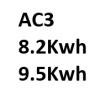
hoggy Thanks! - I have an AC3.0 plus 2x8.2kwh so I don't think the PVs will charge, only on the Hybrid inverter?

#6 hoggy

wrefordj "Probably" not but thats one for the tech team.

I'm unsure of the interaction between EPS & whatever your actual PV inverter is as i'm guessing that's tied to the grid? - it should shutdown on loss of supply but if it sees the EPS supply come back up it might not realise it's not the true grid and start back up again.
This is more of a concern for things like re-synchronisation again with the grid (would be wise to shut PV down before changeover again) & also what it tries to do with excess PV energy if your battery or house loads can't absorb all of it (given there's no grid to shove it back to it may just raise it's voltages until it trips out both!)

C
#7 chrisdev

hoggy Thank you for your reply, that's really helpful and useful. It does give me a few more things to think about and things to discuss with the electrician.

Regarding having the PV re-charge the batteries during a grid outage, my PV inverter is separate and cuts off during a grid outage as is required. If it then sees the EPS output as the grid being back on again, you're right to raise the problem of what happens to excess generation which can't be absorbed by the battery or the house load. I think we're getting into the realms of an off-grid system and that raises even more issues (and costs). All in, it points to your suggestion of having a dedicated board with critical circuits, or even just a 3 pin socket attached to the EPS output!

#8 THALL

hoggy I can answer some of that. Excess pv will be expelled as heat if it has no where to go.

C
#9 chrisdev

THALL Right - so I'd need an official "dump load" (heater) too unless I wanted the PV inverter to act as such 🤣

Reading the EPS documentation you linked, it does mention that any separate PV inverter MUST to connected to the grid only, so as not to cause these types of issues.

#10 THALL

chrisdev When my last set of panels was installed and the export to grid was limited the installer said any generation that was not used by the house or the battery and can not go to the grid due to the limit would be expelled as heat.

#11 hoggy

THALL Not entirely sure of the truth with that one but neither have I read up on it (I doubt the GE heatsink on the back can get rid of 5KW in heat, it gets hot on sunny days just with inverter losses)

@chrisdev didn't even see that bit but given mines a hybrid I've probably glossed straight over it!

#12 THALL

hoggy If not expelled as heat where else can it go? I have 3kw generation from the battery, 2.4kw from 1 pv inverter and 4.6 from another. 10kw total, my export limit is 3.68kw and my home has a background usage of 200w. When the battery is full where does all the excess pv go?

#13 hoggy

THALL I'm going off the top of my head here so I'm happy to get called out on this however my understanding is:

DC Side - PV cells are a constant current source so have some quirks in relation to open/short circuit voltages & current flow but the long and short of it is: the MPPT tracker inside the inverter can run up and down the PV voltage curve to get the most power from the panels at any given time (which is what you normally want for efficiency - the most power you can possibly extract)
As the MPPT is controlled by a microcontroller you can also force it outside of this "efficient zone" to lower panel output instead (mimicking say a less sunny day) & therefore just not produce as much energy in the first place to send into the DC/AC converter - balanced system.
I believe this is how normal "Off Grid" systems work otherwise they would have to account for times people are using 0 power which would turn the inverter it into a giant heater! (Although maybe they are, I don't have one)

On Grid Tied it's a little more complicated as you have the above "balancing act" going on but also have to factor in the AC grid voltage side aswell to determine your loads & if your importing or exporting. I've thought of this like a canal lock:
If you want to export you need to have "your" AC (water) higher than the grid side to flow into it. (There are some other tricks you can do with powerfactor and so on but this is the basic gist)

This is fine as normally the other side of the "lock /(the local grid)" is the size of the Suez Canal so you make little difference to the overall voltage. (Although this is why the DNO are getting picky as collectively, a lot of PV on one street does swing the voltage up. Anything beyond 253V and it should shutdown your inverter.)
The problem with excess AC from a second inverter with the "raising voltage" export method (if your running on EPS only) is there is no "other side of the lock" other than your GE inverter/battery. So once that's full, the voltage would be free to float up & up until the 253V limit where it "should" shutdown.
I guess the CT's or even something in the inverters etc may see what's going on and cut the MPPT side down but it depends how quick they can react (maybe this is the time it's bled off as heat???). A sudden change in AC load presumably would have a fairly instantaneous affect to voltage one way or the other with some fairly catastrophic effects.

Now that I think about it I'm unsure how even 2 Givenergy inverters know the difference between each others EPS output & true grid. Maybe your only allowed to use one EPS at a time or something.

Maybe I'm overthinking all this though - the EPS side can obviously handle swings form 0-10A fine!

In the Beta Portal Remote control there's a setting to reduce the entire systems power so the next sunny day i'll turn it lower than PV output and see what happens.

A
#14 Adam-Reynolds

If using EPS on the AC coupled unit yes, it should not be wired into the EPS consumer unit if using method 2 from https://kb.givenergy.cloud/article.php?id=12&oid=1

If using methods 3/4 you will need to manually isolate the PV before turning this back on, it can cause issues to the equipment due to the difference in sinewaves, the grid regulates PV inverters sinewaves to level them out closer to a pure sinewave, however our inverter would not be able to do this.

On the hybrid it is fine, but on the AC coupled PV inverter currently in any situation is a no go.

#15 hoggy

@THALL So looks like it's humble pie for tea.
Although my points stand in regards to modulating power from the panels & the AC stuff, any excess solar energy landing on said panels that isn't then demanded by the PV inverter circuit or just straight up exported is indeed just absorbed as heat on the panels themselves.
Wasn't thinking far enough back but at least I don't have to worry about my garage inverter turning into an oven when i'm over my DNO limits.
Now where's that pie...

W
#16 wrefordj

hoggy Great discussions subsequently! I have Solar Edge since my panels are badly affected by tree shading and are facing SE & SW, and I think I am using Method 2 mentioned by Adam. But I had a very good installer so I think everything is ok.

M
#17 Mark994

Hi, anybody have the EPS with more than 1 inverter, I'm having 2 AC 3.0 and 2 8.2 batteries, ( more batteries to be added later ) my question is would it be possible to connect both backup supplies into a seperate fuseboad to give twice the energy during a power cut instead of 2 seperate backups, basically the backup supply from each AC 3.0 into another fuseboard and then connect to 1 backup to that giving 5KW backup. Hoping I'm not talking out of my backside as I'm new to this 😅

A
#18 anglefire

I would expect that to be a big no. Simply because they won’t necessarily be in sync.

K
#19 kwmc

I would not connect the EPS from to inverters together for the reason given. I think you would liley fry both inverters if not both, I would think you could just have two EPS circuits e.g. one running fridges and TV the other running lights and interent etc. That would be simple and avoid the sync problem.

A
#20 anglefire

A simple ups would be best to keep computers and network alive. Heck of a lot easier and cheaper than running a separate circuit.
That’s what I’ve got. 2 ups’s actually. One for the pc and main router and switches and another in the loft for another switch and nas drives. Lasts about 15-30minutes which is long enough for most outages and to shut everything down safely.

A
#21 anabanet

EPS powers the house lights on a separate Consumer Unit. These are always running from the EPS power point. Also one 'spur' kitchen plug is also on the board. Finally the UPS powered from the EPS to keep SKY and the modem online at all times. 15 minutes life of the UPS is fine as the EPS takes 3 seconds to come back online....

K
#22 Kryten

On the GV teams call last week they mentioned that an upcoming firmware release will give the Inverters EPS UPS capability.

A
#23 anabanet

Kryten That would be good. However I do have a UPS plugged in already to stop the flicker.