
#1 hoggy
Just FYI the Octopus GO postcode quote checker is now returning rates of 7.5p /30p for me.
Not entirely unexpected given the market at the moment but something to factor in to your calcs.

Just FYI the Octopus GO postcode quote checker is now returning rates of 7.5p /30p for me.
Not entirely unexpected given the market at the moment but something to factor in to your calcs.
Ouch but it actually makes a bigger gap than the current rate of 24p Vs 5p, 2.5p increase Vs 6p!
Actually a faster return on investment for PV with the increasing price split between on and off peak rates.
Doesn't make the Agile versus Go argument any easier!
But only works if you have an Ev or Hybrid. Battery storage alone isn’t allowed on Go now.
hoggy Go Faster 5 hour 8.25p / 30.83p for me. Though I see Intelligent Octopus is still 5p for 6 hours.
anglefire Hi, can you explain that further please? I was planning on switching to Octopus for overnight charge of my GE 8kwh battery.
chris_p it’s very simple. Octopus have decided to restrict the GO and the other cheap overnight import tariffs to Ev or Hybrid owners.
I assume it’s because they want to sell more electric and not have people storing it cheap to use later.
anglefire Thanks for that. How do they know it is an EV and not a battery drawing the load?
You have to provide proof of either ownership or one is on order. They didn’t check apparently but are now doing so.
I’m waiting for my dno letter so I can at least get on some sort of export tarrif. But my break even logic did assume that I could get on the go tariff (or something similar) to charge the battery in the winter overnight. I’m sure the advertising blurb from GE did suggest that was possible. But my memory could be wrong. It often is these days.
chris_p for 12k a year mileage you will be using around an extra 3600kwh per year on an EV with an average efficiency around 250wh per mile.
We've had an E208 since May and it's averaging another 10kwh per day usage, we use around 10-13 kwh per day on the household front as a guide.
So its a pretty hefty increase in usage which they will need to get wholesale prices down as low as they can.
chris_p if you have an ev then they don’t know. But seemingly don’t care (they can’t know!) if that’s the case. But they are still getting revenue off your ev. How much will depend obviously how many miles you do.

anglefire
You've never had to provide proof of ownership and unless its very very recently changed, still don't.
EVM Narrator: It very very recently changed.
I have a feeling it'll all go Octo Intelligent style once they have enough data, cars & chargers onboard (& GO will disappear)
hoggy All Octopus can see is the smart meter - and wouldn't be able to tell the difference between a car battery charging and a house battery charging ? I agree - if a car or charge port supports direct accessas needed for Intelligent tariff, then they can - but many many EV's don't and never will support it I suspect.
GrahamRead
E.on already do this kind of thing on one of their tariffs - They hook into your charger and read what it's sent to the car and total that each day (say at 5p/kwh)
You get a bill (via normal smart meter readings for the entire usage) + a rebate for the cost difference above based on however many KWs your charger says has gone to the car.
GrahamRead they won't but other data will be indicative.
If you already an Octopus customer they will know roughly how much you normally use - even if you have just transferred you will still have given them an annual estimate.
As I mentioned above EVs use a lot of power, even a 2nd car option at around 5k miles a year is going to have a sizeable impact on your annual consumption which Octopus would notice. Even the PHEV bunch will be using a noticeable amount more.
Ultimately anyone signing up for Go is now confirming they have an EV and it's in the terms and conditions stuff which the customer has to agree to.
It's rubbish for those trying to run a home on a cheap rate tariff plus a battery especially as home EV charging even if you wanted to go down that road isn't an option for folks without a driveway.
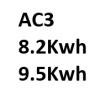
Well I got 2x8.2Kwh batteries mostly to "do my bit" to help utilise excess wind energy at night. As a bonus, it was now possible to install PV in an otherwise unsuitable shaded site because I could guarantee "earning" 16p rather than export at 5p. But I didn't expect to make money and probably won't break even for 10-12 years (if I live that long...).
But I think the ethos of Octopus is to assist people in using electrical energy in the most climate friendly way, so I hope they don't penalise me for not having an EV when I come to renew GO in August. I somehow think not.
chris_p you need to speak to octopus customer services and explain your situation ie a battery without wheels . if that dont work ask them if they are discriminating against you ? they cannot do that . talk nicely you should get a result ...i did
Octopus do reserve the right to move you off the Go tariff if you can not prove you have an EV when asked. Never used to be like that.
I wouldn't be surprised if in the next ten years or so the government requires that all home EV chargers have to be on a separate metered connection so they can collect higher tax on that energy. It's likely the simplest (from their perspective) way to collect road tax on EVs in a proportional way, and it would be easier to sell than outright instituting road tax payments.
Of course that doesn't stop you simply plugging into a 3pin socket in the house instead of having a wall charger so I may be wrong 😆
MRich I expect EV's will get a fixed road tax in the non to distant future. I would guess £140 per year in another 4 or 5 years time maybe.
I would agree with you - though the amount could be a bit more than that to cover the current £500+ That will disappear eventually.
THALL Hopefully based on efficiency or battery size. There's a lot of kwh with not so much range in some of the BEV SUVs as manufacturers reduce the average CO2 emissions across their range by electrifying some of the heaviest, premium vehicles first.
THALL You're probably right. I do wonder if they'll try to implement it by stealth though via an energy tax hike for EV charging tariffs etc. That way they can still sell the whole "EVs are not subject to road tax" line whilst still making the tax.
I actually don't disagree with it to be honest - someone has to pay for road maintenance etc and it makes sense it should be road users. With the reduction of tax income from fuel duty and fuel VAT they'll have to make that up somehow. Theoretically a pay-per-mile system would be a fairer system, but simply applying a blanket tax as you say is by far the easiest option for HMRC/DVLA to implement.
Of course if fuel cells manage to make it to mass market adoption they have a simpler option again, simply apply the same old fuel duty and VAT to hydrogen since it's unlikely people will be running an electrolysis plant in their garage...
stevelewis Hopefully the Dacia Spring will make it to the UK and shake up the small, cheap EV market a bit. We could use some downward pressure on short range but highly efficient EVs.
stevelewis thats simply because of the chip shortage - makes sense - do you put you chip in the model that will make £50k profit or the one that makes £4k? Not a difficult decision from a manufacturers perspective.
Apparently the chips in question are very old (but proven) technology and the chip makers are reluctant to retool up to make them, trying instead to get the manufacturers into the 2010's!
BEV prices are only going one way - upwards, and by significant amounts. Raw material costs due to big shortages of lithium, nickel, cobalt are the root cause. I can't help but think that lithium ion battery technology is an evolutionary dead end for BEVs. Electric cars cheap enough for mass uptake simply won't happen until we have a major breakthrough in battery chemistry.
Even the Dacia BEV has increased in price by 1300 euros this year already.
anglefire the manufacturers started on this route some time before 2019, prior to the chip shortage really biting. Agree its down to the economics of the premium car market.
Can't see any significant road tax changes until 2030 when the only choice new is an EV.
I suspect the Government would end up either charging £140 flat rate like now or to offset the fuel duty loses also or either bring in a usage per mile basis tied to type of road and time of day use. So the M25 at rush hour would be highest rate versus the A9 at 0100 at cheapest rate for example.
Any taxation that is tied to charging won't work as you'll either penalise those who can only use public chargers (although they already do with the VAT stuff) or as already mentioned folks just use a granny charger instead.
stevelewis Possibly for EV's - but traditional fuels have been noticeable more recently. How many new Jags do you see compared to Range Rovers?
That's because few or no new Jags are being made. XF and XE cannot be ordered right now - they are not being made - all chips being diverted to high end JLR models - RRs, mainly.
I can see a taxation coming in the form of still free VED for zero emmissions, discounted but not free congestion charges, road tolls and potentially a duty to be collected by RAPID charge operators. Slow posts and home units would still be normal VAT, any further driving for longer trips, businesses / reps / engineers travelling hundreds of miles beyond the range of the battery, would need to be charged up again at rapid charge locations. I could see a duty being applied to each kWh in the same way as per L of fuel. This would mean the bulk would come from those using the roads most and needing quick turnaround, and those travelling long distance say for visiting family. Would probably be more economical to go by train if it was done well enough. Though this all hinges on FCEVs not taking off, or battery swaps not becoming more favourable due to the taxation. Also manufacturers could simply start upping the on board chargers to 22kW to take the edge off. All rapid CPOs would be bound to pay the levy even if they were privately owned. Could even be done though metering with the energy supplier, the DNOs I imagine has to sign off on large load installations at present.
While all this is going on the combustion vehicles would be pummelled by duty still on fuel, emmissions, clean air zones and congestion charges, potentially alongside the road tolls!
All to get people out of cars.