
Vehicle to Load (V2L)

29 comments started 2022-01-09 last 2025-03-10
GivEnergy ProductsBattery
J
#1 JJB

We’re working on a plan to ditch our two diesels (both Euro VI) and add a longer range EV to our existing Mini Electric, which is realistically a 100 mile car due to its 32kWh battery. Our top choice is the Kia EV6, which along with its sibling Hyundai Ioniq 5 has a feature called Vehicle to Load (V2L). Unlike the Nissan Leaf, which along with their EV van is capable of Vehicle to Grid via their ChaDeMo connector and a capable wall box, the Kia will provide around 3kW AC via an adapter that plugs into the charge port. [https://m.youtube.com/watch?v=kq5vHL-hrrY]

Compared with the Nissan, the Kia is not capable of bidirectional charge/discharge but either one or the other. Then again, with a 77kWh battery, it should be fairly useful at augmenting my two 5.2 kWh GE batteries, each connected to an AC 3.0. The batteries are DC while the Kia would produce AC, so I’m not sure if it’s feasible to link it in with one of the AC 3.0s, but clearly it would have to include all the failsafes of the GE system in the event of a powercut etc.

Full disclosure, I’m neither a sparky nor a programmer so would not dream of doing this myself. But from an academic exercise to those on here who know more than I do about this stuff (not difficult), would it be worth it to try and how might it be done? Or am I better just using the car as an additional EPS in the event of a powercut and not trying to expand my house battery capacity?

#2 hoggy

JJB this will spawn all sorts of answers but the basic issue to overcome is grid frequency sync. This is the subtle difference between v2l and v2g (load is "off grid" like a giant phone battery bank, creating your own grid) so if you were to hook it up to your mains direct then you'd just get at best nothing or worse the magic smoke.

The bidirectional V2G spec for ccs cars is still being worked on so until then it's all a bit of VCR/Betamax and betting on the right one.

In current form with V2L given the GE inverters are designed to follow grid sinewaves I'm not entirely confident of the quality of the waveform is good enough for it to lock on to if you installed a changeover switch in the event of a power failure and fed the house such that it "thinks" this is the true grid.
You also have the issue in this instance as to what happens with excess PV - so would need to set the system to 0 export else you'll backfeed I to the v2l system.

You also have the same issues with earthing to overcome as per the normal EPS install methods.

J
#3 JJB

hoggy Thanks, Hoggy, I knew it wouldn't be as simple as plugging it in and hoping for the best. It's when you let the smoke escape from these electrical boxes that the problems start! 🤣

Perhaps, if we do end up getting the EV6, we'll just use it as a big battery to run the TV and beer fridge, in the event the ballon goes up!

Cheers. 🍻

A
#4 anglefire

JJB Its ok - Lucus do smoke in a bottle - really for classic cars, but its all the same stuff 😉

#5 hoggy

JJB haha yeah it all sounds easy but annoyingly often isn't.
Someone somewhere will come up with a synchroniser boxx of tricks and eventually CCS v2G will get ratified but until then it's just separate v2l stuff for now.

FYI you can do this even without V2L by running a 12V to 240V inverter from any EVs 12V battery - as they all take some charge from the main battery when ignition is on else they'd go flat constantly.
Providing you keep the load below the rating of the inbuilt charger between the main drive battery to 12V battery.

S
#6 Seye

I like the concept of V2L but I cant work out the practicality.

I dont have an EV yet, but will soon. I know I will not be able to charge that fully in the Octopus GO Faster timeframe, so will need multiple nights to fully charge. I expect to use most of that energy by actually driving. If I charge commecrially then the cost is significant unless you can find one of the remaining free chargers ( and expect those to reduce over time ).

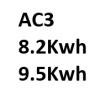
I have 1 8.2kWh battery at present. That charges in 3.5 hours so I have 1.5 spare on my cheep charge window. If I get another 8.2. battery that won't fill int the cheep period so in reality my 16.8kWh capacity reduces to maybe 12-14kWh. I can get more charge overnight by buying a second interter but that adds a lot to the capital cost, I can use the hedroom in the summer when PV fills it

EV does charge in parallel to battery, but without spare capacity to supply the home on a regular basis

When there is plenty of PV, my GE batteries charge. I got to zero grid on a couple of days last year with just 1 8.2. If I had a second then that would definately meet all demand as I did hot a few times my single battery was full ( at which time my hot water diverter worked well ).

So when at home,. what is the use case for V2L? Is it where you dont drive much so not using energy in the EV battery for driving? That might be the issue for myself as I will use it for that.
I can see a value on a campsite for supplyng a fridge, but I am getting older now so generally have electric hookup as its cheep, or use combo of 12v,PV & gas when away from civilisation

Y
#7 yandards

I think Octopus are currently doing some limited trials with Vehicle to Grid (V2G) but don't know if its open to customers and I believe you need a specific charger.

@Seye on the EV front it really depends on how you use the car, if you are driving it daily at close to maximum range on something like a Model 3 long range then Go for 4 hours won't work for you.

The E208 in our household has a 45kwh usable battery and it's normal daily usage isn't anything more than 50-60% battery depending on the time of year (110 miles or so). With a 7kwh wallbox I can get 28kwh in overnight so around 2/3rds of the battery. Most days its does less than 50 miles so its easy enough to deal with.

I'd love to be able use V2G to support those brief moments of higher demand above the 2.5kw the battery can manage and for the very odd days in December when I've run out of battery due to high load days. It would only be another couple of kwh which would easily be recoverable on the overnight charge.

Here's the octopus link, it seems you need to live in a certain area to get the correct supplier/DNO and lease a Leaf from Octopus to qualify: https://octopus.energy/blog/vehicle-to-grid/

M
#8 Martyn

yandards I'd love to be able use V2G to support those brief moments of higher demand above the 2.5kw the battery can manage and for the very odd days in December when I've run out of battery due to high load days.

That is exactly the use case I can see for V2H/L. My 8.2kWh battery covers most days but when it doesn't the battery in an EV could "fill in the gap".

#9 THALL

I am not personally sure about this, adding more charge and discharge cycles to the car battery etc. I dunno, time will tell.

Y
#10 yandards

THALL it's the low level charge discharge cycles though and in proportion to the normal use of the vehicle not anywhere near as demanding.

The E208 we have comes with a 100k, 8 year warranty with battery SoC degredation covered to 70% and breakdown cover for a traction battery fault over that period too.

This gives me confidence in the battery side of life and those numbers will be based on worst case use of the battery, ie only rapid charges, extreme temperatures etc. If they are happy to cover those sort of figures for a worst case usage scenario to then mostly AC charging at home between 50 and 80% SoC is best case use.

Only snag is if V2G would cause issues with the warranty.

A
#11 anabanet

yandards I am on the Octopus V2G trial. You needed a Nissan Leaf and a Wallbox CHADEMO interface bi directional charger.

S
#12 Seye

Martyn I thought about cases like that. I then looked at my stats for the last year. Its pretty rare I go over 2.5kW for any extended time, other than overnight when I have deliberaly load shifted or in the summer when there is lots of PV. In both of those case I am doing it deliberatley.

The figure I use for my personal insight is imported power. I only look at that outside octopus GO cheap rate times. WIth that infornation I have actually decided to uploft from 8.2Kw storage to 16.4Kw capacity as I can see it runs out regularly for 3 to 5 months a year. I have not decided to buy another inverter as the peak load is rarely over 2.5kW, certainly not often enough to warrent a significant investment ( or limitation on EV as only few support V2L or V2G ).
I do know that I will only get max capacity in the summer as charge rate is limited too, but 12Kw is actually all I need in storage and that will fit the charge window

Obviously we all have different usage profiles. Look at your own data to guide your thinking.
Its a heart and head question

A
#13 anabanet

hoggy V2L could be 'solved' if you used the V2L to charge a theoretical battery bank, and then a recognised grid tied inverter using this theoretical battery bank to generate the grid tied electricity. Grid Tied inverter come in many flavours, and I am sure you could match one to the other. It would add another step in the process, but then your feed from the car could simply be the source of energy for the grid tie - and other people have solved all your issues....

A
#14 anabanet

THALL V2G load is maxed at 32 amp. This is basically a 'low' charge / discharge rate, and should not have an effect on the battery. Also - you cant discharge below 20% and you cant charge above 97% so it actually helps the battery vs the dumb charger. I have two identical Nissan Leaf cars, one on the Wallbox Quasar Bidirectional Powerloop trial, and the other on a 7kw dumb charger. In a few months I will have had them both running for a year, and will look at the battery to confirm - but 6 months in, it does not look like there is any difference in the battery deg.

A
#15 anabanet

Nissan say that if you use CHADEMO, then there is no warranty issue with V2G. It was designed for that usecase.

#16 THALL

anabanet In that case I'm all for it. Can use my EV as a second battery instead of buying another 8.2kw GE :-)

#17 hoggy

anabanet Yes you can although I suspect waiting for true CCS V2G would be far more efficient than V2L fudge of: EV DC > AC > DC > AC Grid Tie. Good idea though!

A
#18 anabanet

hoggy It fixes now. I am finding that waiting for a proper solution is a pita.... V"G is not great unless you have Givenergy as a balancing influence. I do wonder how the other 99 are managing...

S
#19 Seye

I have seen that the MG ZS EV supports V2L. It can output up to 2.5kW via its own adapter.
I have also read that this output is not phased matched like an inverter, so cant be fed back to the house.

My ideal scenario would be supppliment my GE battery storage via the car. I would charge the battery over night.
1) use the battery in the morning
2) use PV when avaialble for load and recharge battery with spare
3) use car battery when GE battery runs out
4) recharge all battieries (GE and Car ) overnight

I have no interest in V2G, s if the house can just pull what it needs that would be ideal. That will be <2.5kW

Anyone know of any wall chargers that can do this generically on CSS connectors, non intellegent tariff, non IPhone user

MG ZS EV is a totally different price point to most other cars. If this can be made to work then that would be a significant attraction, as well at £10k less than the next car I am looking at !

Wallbox may do this, but their website isnt clear as to which products support it
https://blog.wallbox.com/en/why-bidirectional-charging-is-the-next-big-thing-for-ev-owners/#index_0

edit -->>
https://wallbox.com/en_uk/quasar-dc-charger ( but thats only chademo )

M
#20 Martyn

Seye That is exactly what I would like to be able to do.

If the battery was only ever used to power the house, does it need to be phase matched, or is that only when exporting?

If it is only if exporting, then it should be technically easier to feed the power from the battery only into the house.

#22 hoggy

Nothing on the market yet directly for CCS/T2 as far as i know given the specs for V2X are still being thrashed out between parties. Chademo is a proven route with the Quasar.
Suspect that the Quasar 2 CCS one is just making it's own rules up so may be restricted on manufacturers supporting it (and again Wallbox don't seem to state much time frame wise - perhaps they are waiting for the VW rollout?)
They guys over at Indra have done the same. They made their own CCS Bidirectional charger (presumably by butchering their own Chademo V2G one) to prove it can be done but it's not for sale any time soon as it's just a test/showpiece.

Not an easy call to make right now is it's a bit pot luck if you will or won't get support added retrospectively.

For V2L i think as discussed previously you've really only got the "hacky" methods such as:
1 as suggested by anabanet using a 2nd battery & charger as a buffer/reservoir to feed a 2nd Grid Tie (but the cost of doing this may well be more than just buying another GE battery.) This would theoretically allow your house to use the grid at the same time as the V2L feeds meaning your not stuck with V2Ls output limits. Never seen it done though.

2 Full changeover switch method (backup generator method) - disconnect the entire grid and run the house from the V2L feed only. No need to grid sync as there is no grid. Dubious as to the quality of the power you'd get such that the GE inverters would actually sync with it to allow charging the GE Batteries/boost output. All it would take is a sudden change in PV output/slow battery response for you to start to export spare power back into your V2L/Car (seeing as it has nowhere to export to) which would be a big no no...

Note - the current V2L of the MG & several others comes out of the Type 2 Charge Socket. This would add considerable messing about with unplugging the V2L & plugging in your normal charger each night if going this route no matter which method you pick.

Either of the above would need very careful consideration as to earthing arrangements & protection systems. I'd recommend neither to be honest partly owing to how many trade-offs/risks there are but mainly for the fact that the money to do either is probably better spent on more PV/Batteries directly.

@anabanet does however have the Nissan equivalent of what you want, perhaps they can elaborate how they find it or if their thoughts differ.

A
#23 anabanet

Seye Wallbox (Quasar) only supports CHADEMO which essentially is only Nissan as other CHADEMO dont allow discharge by default.

A
#24 anabanet

hoggy When we are not part of the trial ( and we have full control ) I use the car as a top up for the battery. so discharge say 12 amp from the car and this will allow the givenergy setup to draw all the power if we are not using, or to add to the 12 amp with its 12 amp when we are cooking with everything. Wallbox is dumb. It dumps a set amperage for a set time. Having Givenergy makes it work smart.

S
#25 Seye

anabanet The new one is CCS, but stupidly expensive

A
#26 anabanet

Seye I have not seen that. Usefully we are a house of Nissan Leaves.... So the Chademo is not an issue.

D
#27 Dataman

i have a 3.6kw AC coupled Givenergy system with one input from two solar strings via its own inverter. The other input to Givenergy is from a wind turbine, again with its own inverter.

I am hoping to do away with the turbine and its inverter and link a Renault 4 Electric AC 240/3.6 V2L in its place. The Givenergy input won't care/know where the AC is coming from (will it?).

If that works it will effectively enable to us the V2L as V2G/H as the Givenergy and batteries will handle it all. As it does now.

Win, win or is there a fundamental flaw? Have asked Givenergy support as well

W
#28 wrefordj

Dataman Presumably, the solar and turbine inverters are locked to mains frequency but I am not sure how the Renault would achieve this?

D
#29 Dataman

wrefordj
thanks. not sure myself. Both inverters worked, connected to the Givenergy AC input and then the batteries and back out to grid or home as needed. The Renault would only link to the AC input of the Givenergy inverter. Car not due for several months so time to think!