SEG rates - BEIS' SEG policy promotes market abuse

20 comments started 2022-01-11 last 2022-02-02
Cards - Smart Tariffs (Octopus)Cloud Portal
S
#1 Sparta

I appreciate that this does not exactly fit into existing Tags, however, I felt that the forum members would be interested and collective action can achieve a change in SEG policy.
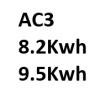
I have only commissioned by PV/battery system (5.84 kWp panels (16x 365 Wp REC Alpha Black with 4kW SolarEdge inverter connected to GE 8.2 kWh battery via GE AC 3.0) in April 2021 so I don't have the benefit of FIT tariff. I initially signed-up with Octopus [Flexible for import and Outgoing Fixed (5.5 p/kWh) for export]. As energy prices started to rise through the summer of 2021, I have approached Octopus about increasing the export tariff and was told that this was not possible, unless I change to Agile Outgoing, which I did from September and was being paid an average of 19 p/kWh, until I switched to Go Faster early November. With that came Octopus SEG of 3.00 p/kWh. I have contacted Ofgem to investigate uplift to SEG and was told that there is nothing they can do and the SEG policy set by the Government states "..remuneration must be greater than zero all times and exported electricity should be metered.."
To cut the long story short, based on my research the wholesale electricity price has risen from 6.04 p/kWh in April 2021 to 19.08 p/kWh in January 2022. I felt that I'm being negatively affected and my return on investment being damaged by poor and inadequate SEG policy and the value of electricity exported by all of us who installed the systems since FIT closure is creamed off by the big energy companies. BEIS’ failure to link the SEG rate to the electricity wholesale price distorts the market, allowing the multi-million pound revenue energy companies to exploit the policy, abuse their market position by offering SEG tariffs that grossly undercut the electricity wholesale price (the electricity wholesale price is between 347% and 1,272% higher than the available SEG rates. I have therefore raised a complaint to BEIS against the SEG policy (copying my MP, as suggested by BEIS Complaints procedure https://www.gov.uk/government/organisations/department-for-business-energy-and-industrial-strategy/about/complaints-procedure), as I feel that there cannot be a reasoned argument against the SEG tariff being at parity with the wholesale price. I also think that revised policy should introduce a mechanism permitting small-scale low-carbon generators to negotiate separate supply contracts (e.g. with their neighbours). BEIS has 20 working days to respond, but I do not think they can argue this. I feel very strongly about this and happy to take it to Parliamentary Ombudsman, if necessary.
I'd be happy to provide more details if anybody is interested to do the same and perhaps this will deserve its own Tag.

Y
#2 yandards

SEG was always a bit of a consolation prize compared to early FIT adopters.

Whilst I'm not expecting it to be huge it would be nice if there was some parity between SEG rates and increases in price caps for import as wholesale prices drive those price caps.

I will get 4p per kWh exported whilst being on Go as I've gone with OVO for my SEG payments so only a 1p split between my import at it's cheap rate.

What is frustrating is that the recent rise of Go to 7.5p.and 30p has not seen an associated rise to the SEG payments - even of they restricted it to those on that tariff rate.

#3 THALL

But you are saving money on your bills by having solar, currently for some people they are saving a lot of money. Getting paid for excess generation is a perk and nothing more. To be honest they do not even need to offer SEG but it is nice that they do. I do not believe the purchase of home generation should be viewed with the idea of making money but saving money over the long term. With current prices I believe I am saving £1400 per year at the moment, even more once my EV arrives. There is strong consensus that energy prices will only go up and the current 30p or 35p cap on agile will increase too making home generation even more valuable.

S
#4 Seye

I think FIT was really good to drive adoption. I could not have afforded my system with it.

A relative had PV very early. He gets 40p fit payment but his kit was really expensive. I had it later so get 16.5p but paid half the amount for the kit. Do the maths for 20 years and the scheme works as intended. Our payback periods are the same. Kit is significantly cheeper now

Reducing PV costs eventually lead to SEG, which in my view is a stop gap towards the future where payments will reduce or even dissapear. I think that was always in the government plan, and I undertand why.

As gas boilers are being banned, EVs more previlent, Hot water diveters become common domestic users will use more and more of their PV generation. Surplus energy will reduce. Also, historically suplus energy had nowhere to go other than the grid ( hence the schemes). Add storage and thats not the case. Surplus energy goes to storage which can then subsequently feed all those electrical demands.

I beleive becoming self sufficient in energy may well be the future goal.
I have FIT which means I get deemed rate for energy whether I actually export or not. My goal is therefore to export as little as possible. I have achieved that very sucessfully for the last year since I had storage fitted. So I am already operating in a way I expect many will in the future. The difference now is the capital outlay to achieve it is far less, and the payback period far shorter ( even without FIT or SEG ) due to inflated energy rates

The hard it is 'right sizing' PV and storage to optimise the balence of capital investment and return

M
#5 Martyn

THALL I do not believe the purchase of home generation should be viewed with the idea of making money but saving money over the long term.

I agree that making money is not the primary reason for installing solar, but exporting at such low rates is not correct either. I think there should be some relationship between SEG and wholesale rates otherwise the increases in electric costs will just be a windfall for the electric companies.

The "holy grail" is domestic long term storage. My system generates about double my use annually, but export huge amounts for 4 months, and import huge amounts for 4 months. If the Summer peaks could be stored for the Winter troughs then it would be possible to be self sufficient.

#6 THALL

Martyn But you do not have to have your system export at all. Local DNO's could be allowed to charge whatever they like to allow you to export. Currently we can export 3.68kw without much in the way of restriction. I still view SEG as a goodwill gesture to get something for the excess. Again though don't get me wrong if seg matched say 20% of wholesale on a 12 month review then great but I do not see a need for it.

But yes long term storage would be ideal! Though more generation on mass scale would also be good. I think there is a very large wind farm coming online at the end of this year/early next, hopefully that will lower prices or at least stabilise them.

S
#7 Seye

Net metering might be a good way forward. Thats used in other countries. Lower flat rate as there is a value to the suppliers in giving back energy as well as consuming it

It does kind of negate the need for local storage though

Y
#8 yandards

The other factor for consideration is that the infrastructure needs to be paid for, the more you become self sufficient arguably the larger the costs for the remaining grid users. A potential future is the way I think California have gone where solar PV owners are charged premiums to offset those costs.

I don't see SEG going away, grid supply versus demand is due to hit capacity in around 2030 or so when we are back to early 1990s level of consumption. There needs to be some form of payment for that excess and net metering is of no interest to supply companies.

Personally I think wind combined with solar is the best solution for the UK, a small 1kw turbine would see me through the low points over winter. Only problem is it's another inverter, I'd need to shove it on the end gable of the roof and they are known for being noisy.

#9 hoggy

I wish you all the best in this endeavour but I suspect should you even get a response , your not going to like the answer!
As others have alluded to your already getting considerable savings from having PV in the first place, even more so as the prices rise.

Think of it as a collective group of users rather than in isolation - from the grids perspective, household PV export is more of a thorn than an asset so it's valued accordingly. It is hard to predict everyone's export realtime (even if you applied Solcast en masse) & manage the peaks/troughs over the period (big brother doesn't yet know your going to turn the kettle on at 2pm and plummet your exports to 0. Multiply that by thousands of users over your region and it becomes a complex web to untangle.)
The person who your exports were flowing to at the time then needs to source from elsewhere - that "elsewhere" needs to be available & paid to do so.) All it really does is force the problem into the Balancing System (BM) which if you've seen the papers is a bit Wild West in £/MW...

As I think Seye is getting at - I can honestly see the SEG going down not up for just straight PV owing to the above.

Dispatchable Generation however (i.e. energy deployed when & where it's needed, such as batteries) is where we can turn this on it's head and make some difference/money. Agile sort of gets you there but again - how do they know what your going to output at a given time? The import rates are also not too favourable to make it work in winter when you need to export the most.
Some sort of community scheme is needed to join everything up. I've suggested this to GE a few times about combining everyone (who wants) systems into a Virtual Power Plant which is controlled by Octopus/whoever. You sacrifice / lay aside a % of your system that they can call upon when the grid is tight - the deal can be sweetened as needed with you import/export tariff to make this palatable. Similar to the Powerwall trial.
I'm not sure on the total amount of battery MWh installed but i'd guess we are not too far off the equivalent of 2x 15MW Holes Bay grid battery by now. And we have the edge in that we are spread around so can deliver it nearer/cheaper to where it's required.

Finally, I've exported 3.3MWh to date in 13months. With my 5p SEG that's £165.00 so I'm ontrack for a 50+ year wait to see me cover my install costs so it's hardly worth bothering. (I knew all this prior to install - the saving is in the import side)
Personally I'd rather donate 3.3MWh to low income families struggling with the current energy madness (Personal Opion - I suppose you could stretch to the SEG rate going up as being a bit selfish if you already had the £££ to insulate yourself from it on the other side of the equation)

A
#10 anabanet

Powerloop is paying £0.15 per unit for export during their request times. With import at the cheap rate at £0.05 there is a net profit of around £0.09 ( with losses ) per unit.

So given the spare car battery capacity of around 25kwh in my own case, £2.25 a day.

Dont know what it will be when the trial is over. But after the trial I would probably use the car to stabilise my battery use from 4pm onwards. Powerloop only is not refined, but Powerloop + Givenergy is awesome!

S
#11 Sparta

hoggy Thanks for the input and totally agree that the main return on investment comes from from savings against the import charges, however, the exported electricity does also have a value. Given the complexity and cost of matching generation and storage capacity (for anybody) I think unintended export is inevitable and agree that net metering is unlikely to be agreed to by the distribution companies. The exported energy will be required on the country’s journey to net zero. I exported just over 1 MWh in 7 months from May 2021. If you multiply that by the number of PV systems, it is a serious capacity. Being able to get wholesale price for it would reduce my ROI by one year. What I resent is that the distributors are allowed to cream off the value the electricity and the government is complicit in it - supporting big business rather than the micro generators, which should be encouraged. Allowing the micro generators to negotiate a supply contract to other users in local neighbourhood (to keep grid transmission cost to minimum) would reduce the cost to consumers but can imagine that this will be lobbied against by the big boys. We shall see what the response I get. BEIS’ complaints procedure suggests that they will have to respond. They cannot have a cake and eat it in arguing market driving the energy cost increases and ignoring the current SEG setup.

S
#12 Sparta

THALL I suspect that it would be rather expensive to use all energy and have zero export. Even the SEG Impact Assessment considers micro generation to be more beneficial to District generation schemes. It would be counter productive for DNO charging for export, if the country has any hope to achieve net zero. Local/district use or storage would make most sense, but the distributors won’t fund that and the government short sighted approach will not fund that either (like gas storage). Yet, it might be cheaper than large wind farm investments.

S
#13 Seye

just for info: over 10 months last last year I have generated 1990kWh. 1375kWh to the home, 519kWh to the battery, 95kWh to export.

Doing this got me to look back at last year. It was very poor, I didnt realise just how bad PV production was in 2021!! Thats about half of my best year. Not the fault of my GE kit as some days were high yield but many were not :-(

My use case is different to newer ones, as I say I am on FIT so I have a very large incentive to use everything. I have been pretty sucessful in that goal. I have balenced generation and storage pretty well. Next is demand vs storage to optimise grid charging over the winter, that will result in more capacity which in turn will reduce my 95kWh export further. When the response time of the inverter reduces ( which I know GE are working on ) it will be less still.

As the customer use cases are so wildly different, finding an answer that makes most people happy is challenging

GE have talked about virtual power plants but I have not seen any outcome.
Octopus have talked about a battery tariff, but I have not seen any outcome, in fact done things to make their offering less useful to storage customers

#14 THALL

Anyone else get an email from Octopus Energy about export rates going up? Mine went up from 3p to 4.1p p/kwh yesterday. Not massively bothered but it is a nice little extra. 5.5p import and 4.1p export.

#15 hoggy

It's a start but its still less the SO Energy who's done 5p SEG for the last 12 months.
I doubt it will happen but maybe others will start to do similar increases.

@Sparta it appears this post is 20 Days old which was the timeframe for a reply from BEIS. Any response at all?

#16 THALL

hoggy The normal export from Octopus is 7.5p but I am on Go so can't be on that export tariff.

#17 hoggy

THALL Yep, although you can be on GO and still export via SO if you really want that extra 0.9p now!

D
#18 dcsh

I’m on Go and export to SO Energy, currently both at 5p per KWh. I see this as an extension to the battery ie what I can’t put in the battery during the day I can import at the same rate and put in the EV or battery at night. Seems to work well and certainly has resulted in only 18% of our import last year being at peak rate, so big savings and even more this year at current rates.

J
#19 jkazer

anabanet Hello fellow Powerloop participant :-)

J
#20 jkazer

The Powerloop scheme planned to get involve in the grid balancing process each evening as well - although with all the price issues since it was announced I'm not sure if it'll actually happen.
Note that the price per balancing kWh around Oct last year when this announcement was made was I think about £4, so there's a lot of value potentially to be had in battery storage.