9.5kWh Battery Output - why only 2600W

39 comments started 2023-02-10 last 2023-07-06
GivEnergy ProductsBattery
D
#1 DavidMoore1

I have recently had installed 6kW PV panels (4kW house, 2kW garage) coupled to a 5kW GivEnergy Hybrid Inverter and a GivEnergy 9.5kWh battery. The battery spec suggests nom. 50v and 80A max output, giving a suggested max power of 4000W (4kW). The C rate is quoted a 0.5 to 1.0C. Therefore why is the charge and discharge power limited to 2600W? 1C should allow 4kW. I realise 0.5C would limit things to 2000W. I'd like to run at 3000W or so so that I do not draw power from the gird every time I put the kettle on. (I am sure the answer is going to be to protect battery life but 2600W seems limiting when the standard UK 13A (240V) equates to 3120W.)

T
#2 ToothyChris

Welcome David,

I'm an AC3 inverter owner, not a hybrid owner, so don't quote me on this: I think the battery is capable of more than 2.6kW, but it is the hybrid inverter which may be the limiting component - have a check on the datasheet.

I have a feeling that the hybrid inverters only give maximum power to the house/load when you have full solar passing through it as well.

Others will probably be along soon, with a more accurate answer.

#4 Simon_C

There are 2 versions of the 5kW hybrid currently being shipped from wholesalers.

The 5 kW Gen1 (with a USB-WiFi dongle plugged in the underside), is limited to 2600 W to/from the 9.5 kWh battery.

The 5 kW Gen2 (with a black WiFi antenna in the underside), is limited to 3600 W to/from the 9.5 kWh battery.

All available from the different datasheets on the GE web site.

It sounds like @DavidMoore1 has the Gen1 version.

L
#5 lifco

As said it's going to be gen 1, what we did was buy lower watt items

Like stated our kettle is 1800 watts

T
#6 Trumper

The output is controlled by the inverter which for a series 1 is 2600. I have 2 9.5 batteries and I am waiting for the ability to run a battery per inverter. That would give me using series 1 as an example 5.2kw output. Urgently required from Givenergy as no matter how many batteries you have savings will not be maximised.

T
#7 Tim

lifco We bought two HY5s so supplying the kettle is no issue although a lower wattage kettle is much more affordable. 😆

#8 hoggy

As a curve ball a Hybrid and a string battery charger can also get you to 5kW discharge so long as you don’t mind using Non GE batteries as well.

C
#9 cluelesscris

Tim A 1.8kw kettle will use the same energy to heat a litre of water as a 3kw kettle. It just takes longer!

C
#10 CARLMW

Trumper while I agree that having 2 large batteries and two inverters would be maximise efficiency, after a year of owning a 6kw PV 8kw battery and 5kw hybrid I’m glad I did not spend more. Reasoning is that the system has paid for 90% of my energy use including gas with me only using around 1 kw of electricity from the grid per day for 8 months of the year. With this in mind the payback time for a second battery and inverter would be around 15 years, during which time storage will get bigger and cheaper. Of course your situation may be very different to mine, however while under specifying a system is a bad idea, so may be over-specifying too. There will always be a ramp up time for any battery based system, so eliminating grid use will be impossible and 2.6kw plus solar output will often be 5kw plus much of the year.

A
#11 Anomnomnomaly

If you monitor your output, it's not that often that you go over 2600w for long periods of time.

If I boil a kettle with my system (4kw+5.2kwh) the average 400-600w use spikes to 3.3kw for a few mins. If I run the tumble dryer on it's highest setting. you'll get spikes to around 2.5kw every now and again... But running the dryer for an hour, still only gives me around an 800-900w avg over the hour.

It's similar when running the dishwasher or washing machine... spikes when heating water and drying.

The only sustained loads I see are when using a large oven... But seeing as we've switched to an airfryer for a few years now... You'll get a spike to around 3.3kw for 10-20 mins on average... But that hourly average is still around the 800-900w range.

What I've noticed is that as we become more aware of our usage, we're making adjustments to when and how long we use them... Maximise solar generation and battery. So we can pretty much run the house entirely on solar from around 10am right now, through to 6-7pm in the middle of winter... obviously that's on reasonable days when we get enough to cover the house and charge the battery.

On average in the month since installation... it appears we've covered 25% of our energy use... and that's during winter. Imagine what that's going to be like when you've got 14hrs of daylight instead of 7.

Had a 4kw solar system on previous house, but no battery and no app to monitor use... Had the FiT though and got £600-700 a year from that... and saved at least £30-40 on electric each month (average) based on bills before installation... Paying £105 a month back in 2014 and only paying £75 a month in Sept 2022 (fixed rate tariff still)... and that's for Electric & Gas.

Overall, our average daily use is in the 9-19kwh range... the more we use items like a dishwasher, washing machine & tumble dryer on the same day... that's when we have only once hit 19kwh use. using just the washing machine and tumble dryer... we'll hit 12-14kwh a day and we alternate days we use them. So we typically only use the dishwasher every 2nd or 3rd day. Do about 3 or 4 loads of laundry a week (only 2 people in the house) and use the tumble dryer on about 30% of laundry (things like towels and undergarments) everything else gets hung up to dry or can't be tumble dried.

We're saving on average right now... 25% of that use. So importing between 7-14kwh a day and average use has dropped from 105-115kwh a week to 80-85kwh.

C
#12 cluelesscris

Anomnomnomaly wow! We ware so similar in our approach. Our solar was installed when maximum FIT was a available and we only had our battery installed in September last. We've naturally made the same adjustments. It really surprising how much we 'wasted' before the battery system gave us better stats. The only major changes we made were to dump our 30 year old,but very faithful dishwasher and tumble dryer for a new super efficient models and to move to Octopus Go to fill the battery as much as needed to cover the next day, taking into account generation. We also programme dishwasher, washing machine and dryer to use off peak, but only if forecast generation won't cover them during the day. The only occasions that we use import during the day is when we do a large family roast dinner which needs multiple hob plates and the air fryer on at the same time. We have a 9.5 battery and have considered another but would only do so after we put in our ground source heat pump which we plan in the next couple of years.

K
#13 keith-smith

On the gen 1 5 inverter, it will deliver 2.6 kw from the battery, and anything more will come straight from solar if it is available, otherwise from grid.

K
#14 Karen

I agree - you do change your habits when you see how much electricity different appliances use. So I use them in series rather than in parallel, which means you can usually reduce grid import. The one that surprised me most was the vacuum cleaner - another good excuse for avoiding housework! I also have baking days - when the forecast says full sunshine I go crazy and fill the oven - between the solar and the battery I don't draw from the grid at all. Then I freeze my cakes, muffins etc and get them out a few at a time. I'm interested that so many of you use air fryers. I thought they were just for chips and roasting stuff - could I make a cake in them? I've tried in the microwave, but they just don't come out the same

S
#15 spawneydave

lifco i have a 1kw kettle, yes it takes longer to boil and uses the same energy to make a pot of tea, but doesn't take from the grid when only low pv or battery

T
#16 Tim

Karen Anything you can do in an oven, you can do in an air fryer. The only restriction is the size of the air fryer. The whole point of them is that you have a much smaller volume than the oven to heat. If you scaled up an air fryer to the same size as an oven, it would be an oven! They say that if you have to use the air fryer in batches to cook, because of the quantities, you'd be better off heating the whole oven and cooking all your food in one go.

They are great for cooking small quantities of food, say sausages, fish fingers, a couple of chicken portions, or a few chips (or even a few chips with some fish fingers on top). When cooking salmon steaks in it, we find it best to wrap the fish in foil to keep it together and make it easier to take out. We've never tried baking cakes but we have heard that they are successful. However, whether that would work out better for you since you batch cook and freeze, I can't say. Ours is perfect for just the two of us when we want to cook a small quantity of something for dinner.

D
#17 DavidMoore1

Simon_C Simon - you are correct. I have checked in the garage it is a GEN1 with white USB dongle on the underside. Shame - All the things you learn. Is the unit upgradable by changing the dongle to the black one or is this a completely new box?

A
#18 Anomnomnomaly

cluelesscris

Looked into the cost of a ground source heatpump... not worth the expense here. Neighbour had an airsource heatpump and the electricity bill during the winter is astronomical. He's got a 4kw + 10kwh system... and is having to use a wood burner to help heat the home because the heatpump can't cope. He's also had to have much larger rads installed to cope with the lower avg temp of the heating system.

A ground source system is better, if you've got the land... going down 200m is really expensive vs digging a trench 6ft deep and laying the pipework around a property. Underfloor heating is also a must for that type of system in my opinion.

Retro fitting those systems and maintaining efficiency and decent heating is a lot harder that you'd think.... Building it into a new build home and doubling/tripling the insulation is what's needed.

I've had plans for building my own home for 10-20yrs now... Not a large place, 3 decent sized double rooms, a large lounge/kitchen/dinner, home office/cinema room and a linked garage/plant room.

Only need that lottery win to buy a plot of land and get it built

C
#19 cluelesscris

Anomnomnomaly Agree with it all. We are lucky in that we have several acres behind the house and a friend with a 360 that I can borrow to do all the heavy groundworks for the heat loops. Our main cost will be the move to UFH and this is why we will have to wait until retirement in a couple of years to do.

A neighbour installed ASHP a couple of years ago, with underfloor heating. He's really disappointed with the performance during very cold periods and the huge energy bill. He's also getting lots of complaints over the noise of the thing from his other neighbours. During very cold weather the compressor is working so hard it's low frequency rumble goes right through their neighbours house and they can't sleep if it runs at night. Frankly, if just a few ASHP's make this sort of noise there's going to be a lot of complaints about them when they proliferate. The relatively stable running costs throughout the year and the ability to sound shield the compressor tipped us in favour of GSHP.

M
#20 michaelmcgoldrick

DavidMoore1 its a completely new box.. which is identical in size to the existing one you have.. only difference is it has 3600 watts througput to and from the battery's.. and the wifi dongle is built into the unit..

S
#21 SteveCook

I was a Building Services consulting engineer for 40 years before retiring. I ran a practice of 1000 engineers across the world.

Domestic heat pumps.
Rule 1 insulate the house
Rule 2 insulate the house
Rule 3 insulate the house
Rule 4 underfloor heating at low temperature with boiler (hot water pasteurization must not be forgotten)
Finally think about heat pump and preferably ground source, as in winter air source units can struggle with defrost cycles and loss of performance

Same rules apply to fitting HP to existing house.

The days of turning a 20kW gas boiler with 65degC radiators heating a room quickly can never exist with a HP

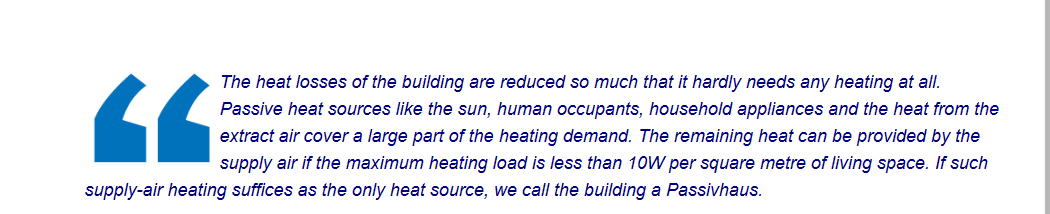
If you want to run with a heat pump you really need to build to European Passivhaus standards, where a large TV in the lounge will heat that room.
That is insulation, good construction dealing and stopping drafts
https://www.passivhaustrust.org.uk/what_is_passivhaus.php

A
#22 Anomnomnomaly

cluelesscris with a GS system, you are literally pumping water through pipes 6ft underground where the temps are stable below the permafrost layer and then running it through underfloor heating. Smaller pump required than a vertical system because gravity isn't as much of an issue.

I so want to build my own home... walls would have at least 300mm of insulation or more, roof at least 400-500mm, triple glazing, solar, batteries... did you know you can even install your own wind turbine subject to planning regs.

If I can find a plot of land with running water.... generate some electricity from that too if possible.

I know... never gonna happen.... but if it did. Eco home on Grand Designs I reckon. 🙂

S
#23 SteveCook

C
#24 cluelesscris

Anomnomnomaly If you get the chance - go for it. We built ours. Bought a field in 1990 moved a caravan on site and it took me 5 years as I was working overseas 4 days a week. Hard work but ever so rewarding. I actually want to do it again but the place we have here - location, land, people - would be hard to replace. I won the lottery I would knock it down and build again - seriously. Tastes and requirements change and I would build someething VERY different now.

T
#25 Tim

Anomnomnomaly pumping water through pipes 6ft underground where the temps are stable below the permafrost layer and then running it through underfloor heating.

You might struggle to get any heat with that arrangement. I think you need a heat source (pipes 6ft underground) and a heat sink (underfloor heating in the property) with a heat pump drawing heat from one and passing it over to the other. The lower the difference in temperature between the heat source and heat sink, the higher the Coefficient of Performance (CoP). That's why air source heat pumps struggle in winter - because they're having to shift massive volumes of cold external air to squeeze out a small amount of higher temperature air/water. ASHPs are great for new builds as @SteveCook says, where the thermal performance is designed into the construction.

S
#26 SteveCook

Don't forget the drive by HMGov and (giving grants) to replace boilers with heat pumps is about cutting carbon emissions by powering the HPs with hopefully green(er) electricity rather than burning gas.
I doubt in a "standard house" that switching from gas boiler to heat pump will save any money, and may in fact cost more.
Money is better spent on insulation to reduce the amount of heating needed, rather than just changing the method.
Unscrupulous Heat pumps salespeople will be all over this chasing HMGov grants (overpricing knowing the customer gets a grant) and promising "free heat", in the same way as the push for diesel cars and then PVs on the roof that you did not even need to pay for!

A
#27 Anomnomnomaly

SteveCook I heat my home office with 2 computers... I rarely need the radiator on in there. Over the course of the day it will keep the temp at least 2-3ºC above ambient. The TRV on the radiator is only set to 2.

S
#28 stevelewis

Anomnomnomaly you only need one computer to heat your house if it's a 1970’s mainframe 😁

S
#29 Slartibartfast

Try a VAX 780. You can get a matching wardrobe ...

#30 positor1

icl 1900 series is the heater of choice. ( need a mansion house)

K
#31 Karen

Has anyone any experience of air-to-air heat pumps. I know the gov don't give grants for them, but they are cheaper than the wet systems. II like the idea of almost instant heat delivery and being able to turn them on and off when needed rather than leaving them running all the time. Plus they can act as air conditioning in the summer - run off the excess solar. My mum has old fashioned gas fired hot air heating and it is great for heating the place up quickly and no huge radiators cluttering up the place.

S
#32 SteveCook

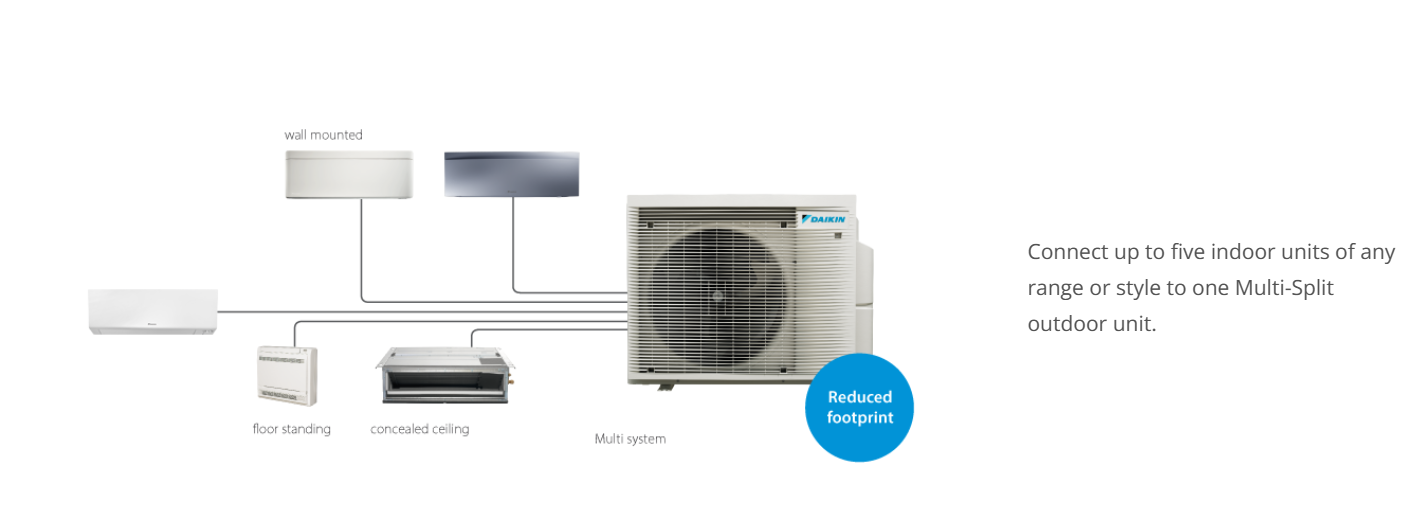
Air to air units are cheaper on capex and can provide heat in winter and cooling in summer (reverse cycle).
These are what you will see in most small /medium shops and restaurants. But the biggest challenge in shops/restaurants tends to be the need for the cooling cycle and less so on heating. (heat gain from lots of lighting, people, cooking etc) . Less worry about winter performance issues.

They need somewhere for the room unit (usually hidden in ceiling in shops or restaurants, though sometimes left exposed - about 300mm deep).
Can be wall mounted like extra deep radiator - 200mm deep
Will make some noise in a house - unlike a radiator
Need a specialist to install and maintain because of refrigerant gas - not harmful but a greenhouse gas and must not be allowed to escape to atmosphere.
Number of indoor units is limited by number of outdoor units
Efficiency (CoP - coefficient of performance) is good, but be wary of winter defrost/loss of performance as ashp.
As all heat pumps, insulate, insulate and insulate again. Then think about heat pumps

Z
#33 Zakalwe

Karen
I pout in a multi-split Daikin unit last year. The system has two indoor units, one in the lounge and one in the main bedroom.

They are dirt cheap to run and heat as well as cool. I have a 5 bed house, approx 200 square metres floor space. During the day I often run the lounge unit with the lounge door open to heat the core of the house, especially is there is any solar generation- free heating!

During last years heat having cooling made a massive difference to the comfort of the house. The bedroom unit ran every night and kept the room at a very comfortable setting. In total, the bedroom unit consumed 167kWh last year.

The installation cost about £3200 + £350 for the electrical work to install a separate mini consumer unit. I think that that was very good value, especially as they are so cheap to run.

I am now seriously considering expanding the system to heat the whole house. I reckon that it would be considerably cheaper than an ASHP, both to install and run. Of course, I would need a DHW solution...perhaps one of those air-source heatpumps water tanks. Doing it this way means that I can gradually de-carbonise both heating and DHW.

Based on my experience I really don't know why more people are not considering air-to-air. i love my system and as I said, it costs pennies to run.

J
#34 Joe1234555

spawneydave I suppose the ideal kettle would be like you say around 1kw but also a temperature controlled one. We have one that we can set to 40, 60, 70, 80, 90, and 100C and it already more than paid for itself multiple times. I find that I only need to go up to 70C for tea and 80C for instant coffee (since I add cold milk). We only boil to 100C when pre-boiling water for pasta etc.

Z
#35 Zakalwe

Tea needs to be made with boiling water.
Instant coffe can be made with anything you like.....it'll make no difference to the "flavour" 😁

#36 dbt85

Joe1234555 I suppose the ideal kettle would be like you say around 1kw

A 1kw kettle will use more energy to heat 1l of water than a 3kw one simply because it will be fighting losses for longer.

Zakalwe Your 2 indoor units are connected to an outdoor unit. That unit is an ASHP unless it is using a coil or bore hole in the ground. You have an Air to Air system which is exactly what I will get when my oil boiler dies. Warm in winter and cold in summer, as you describe.

C
#37 cluelesscris

Joe1234555 Our induction hob uses less energy to bring our pasta pot to the boil. It's faster too. However, we went to the effort of buying a large pot which fits perfectly over the induction point. We eat a lot of pasta....

J
#38 Joe1234555

Zakalwe I know some people are religious about tea having to be brewed at 100C only and will never change their mind but it's way too hot for me and brewing at 70C for just a little longer results in the same taste for me also. I tried instant coffee at 60C and it tastes much worse.

J
#39 Joe1234555

dbt85 1kw might use more energy to boil a kettle but you can save more money with them anyway with solar and/or battery by not importing anything.