Battery stops charging when solar high

34 comments started 2023-03-14 last 2023-03-25
GivEnergy ProductsAC CoupledBattery
G
#1 gnuss

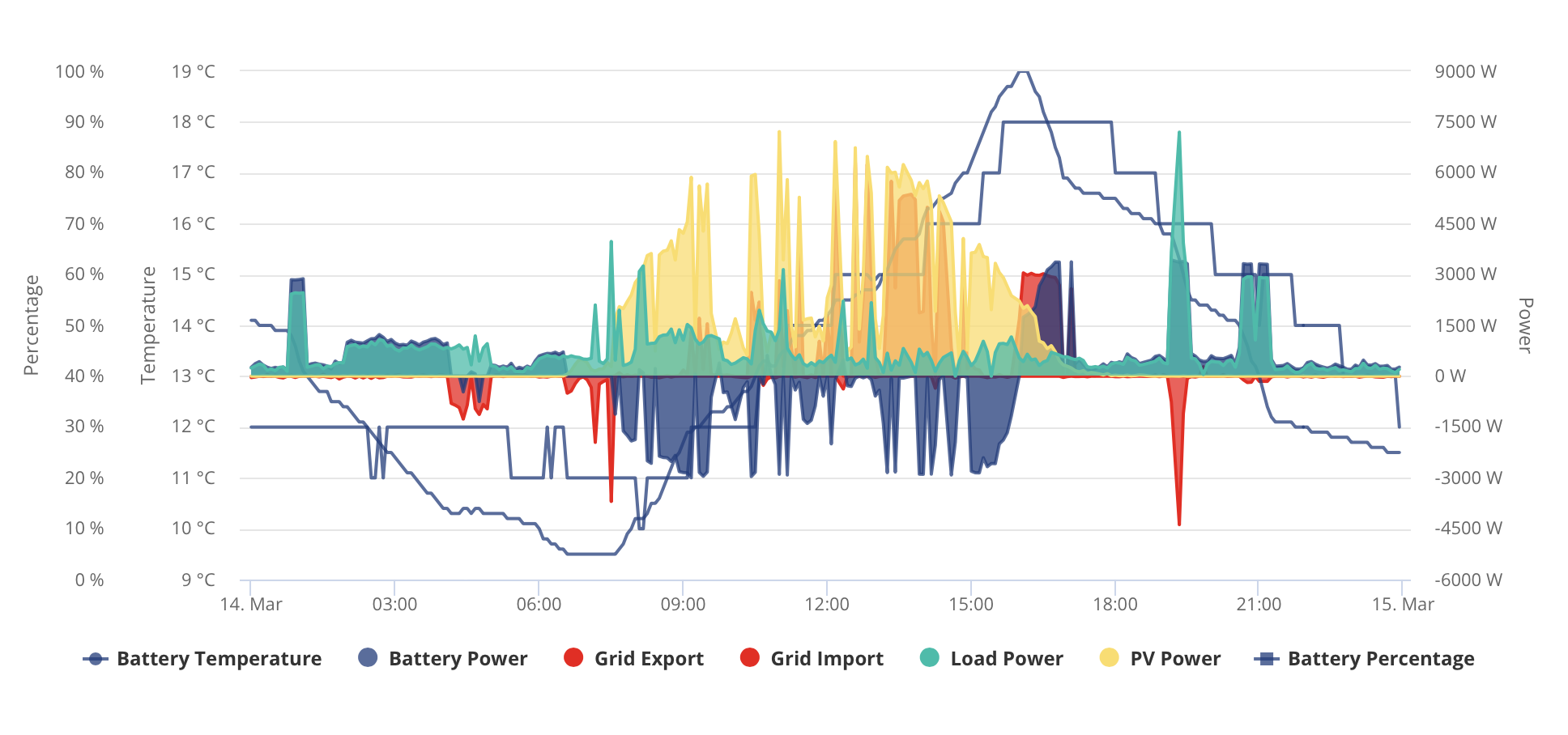
Sorry if this has been covered elsewhere. I have a 7kW string inverter connected to a GE 3kW AC coupled inverter and a 9.5kWh battery. System was installed in November but have only just noticed as the PV output is now increasing.

Whenever the PV output goes above around 6kW the battery stops charging and all the power is exported to the grid. I have tried reseting the inverter but doesn't seem to help. Anybody have any idea what is happening?

C
#2 cluelesscris

The AC Coupled Inverter shouldn't care what output the solar inverter is shoving out - it only takes 3.2kw max. Please post your energy graph from the portal so we can see what else is happening. Also, check all your settings in the portal - if in doubt reset to defaults, set charge period (if you have a low rate period). Disable any tariff automations. This should give you a base setting which 'should' work sensibly.

G
#3 gnuss

P
#5 pacemaker

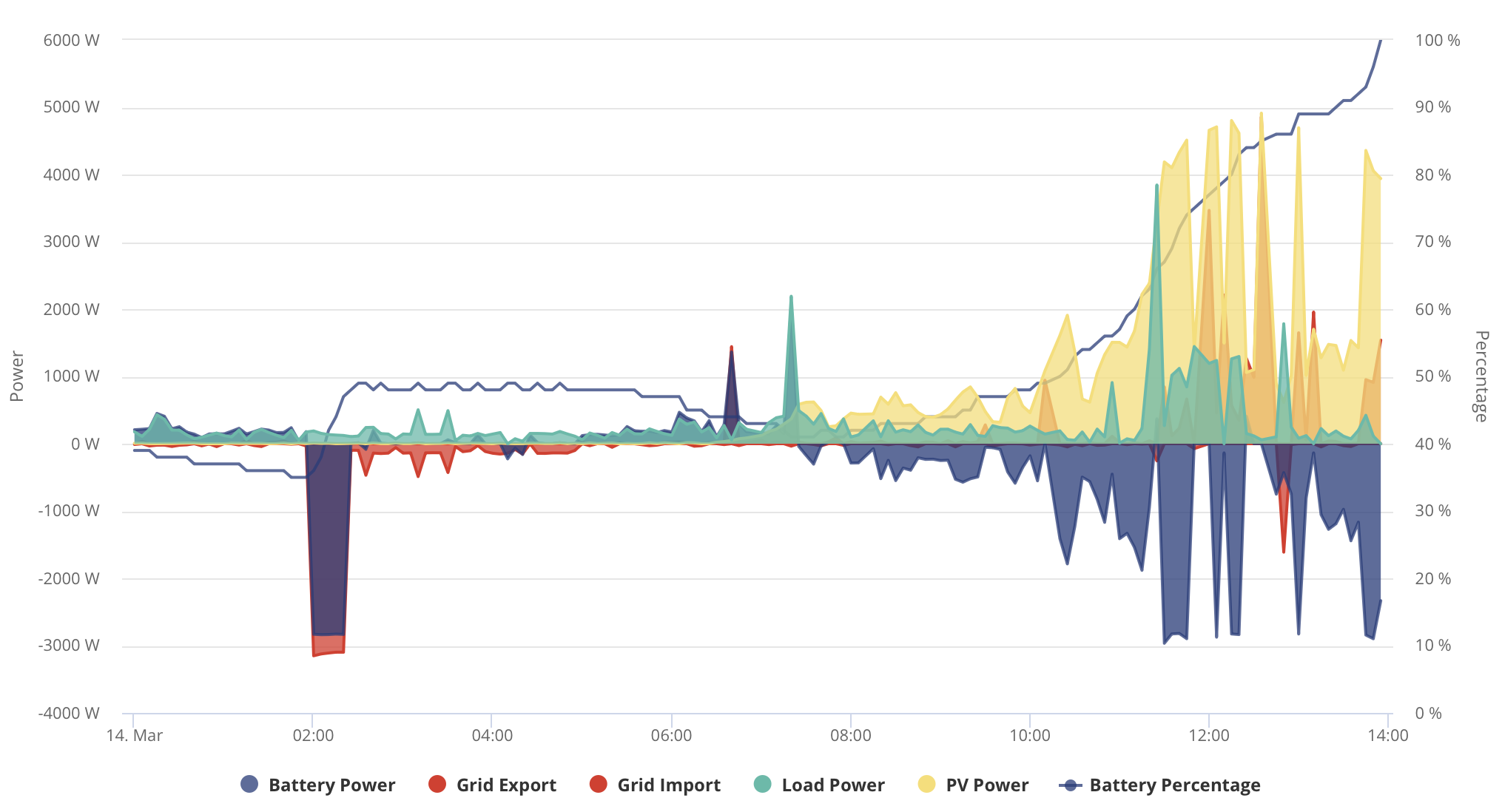
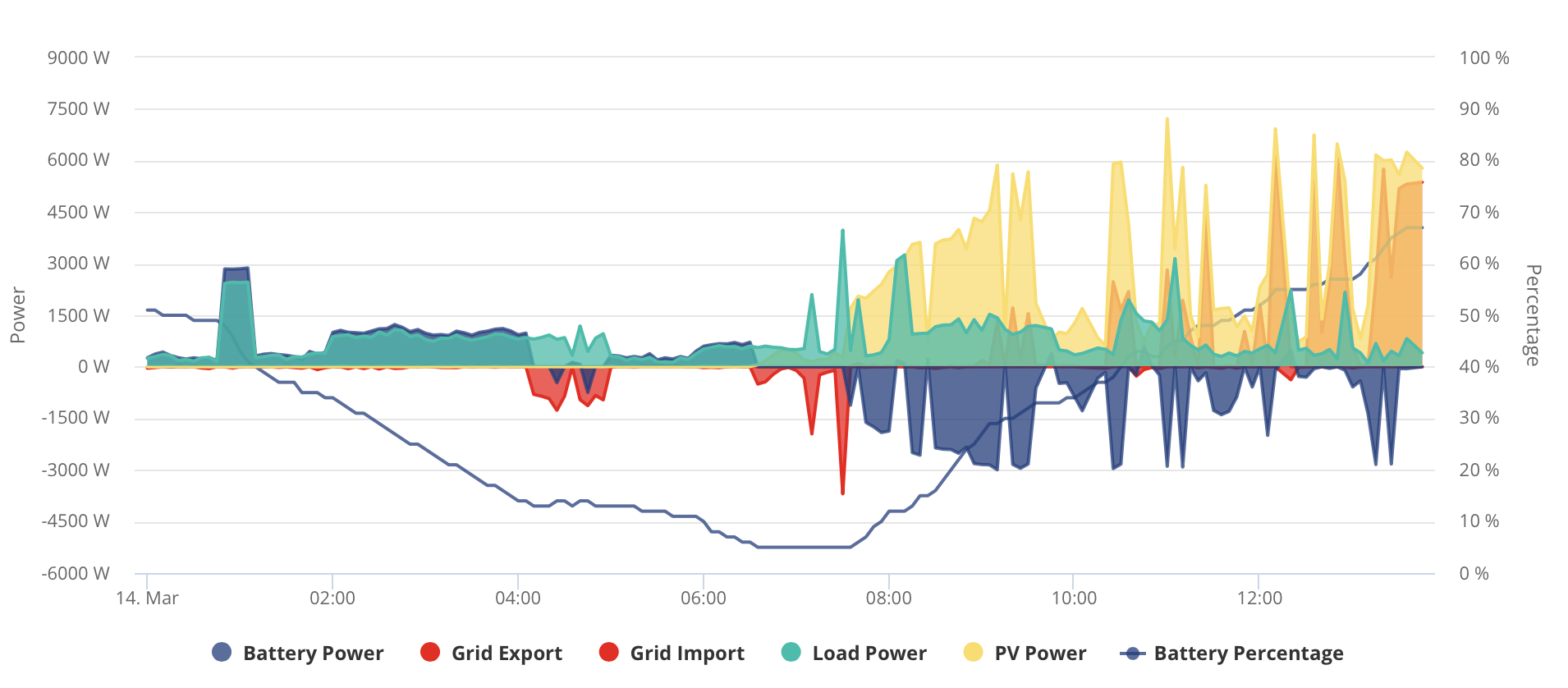
seems ok to me, its more that the solar is spiking - I have similar issues, when the clouds move today/yesterday its causing the solar to spike, which causes the inverter to behave... erratically. Not charging and instead exporting is what I am seeing too.

Have you got a day where it was consistent sun and this happens?

#6 THALL

pacemaker But it appears to have stopped at about 66% for the last 10 minutes and just dumping to the grid? Before then totally agree seems fine. But the last bit 10 - 20 minutes looks wrong.

P
#7 pacemaker

THALL it does but as these are 5 min intervals, how to be sure its not spiking up and down between?

#8 THALL

pacemaker Hmm true. But it looks very different to the rest of the graph.

This is mine with my AC3

A
#9 Atkinstagram

pacemaker I've had (and have) this issue, and you've responded similarly to me - that if the sun comes and goes it's entirely normal and expected for all that energy to be given away, rather than the default behaviour to be to charge the battery. I'm not sure that I really understand how a system that is designed solely to harvest and store PV power can be so eager to export, or how it can be so erratic in when it does it.

I've semi-managed the issue by sticking in an iBoost, so that exported power goes into my immersion and heats the hot water, but it does feel like a flaw in the system that their system is so slow to react to changes in PV, in a country where the sun does have a tendency to come and go..

P
#10 pacemaker

THALL

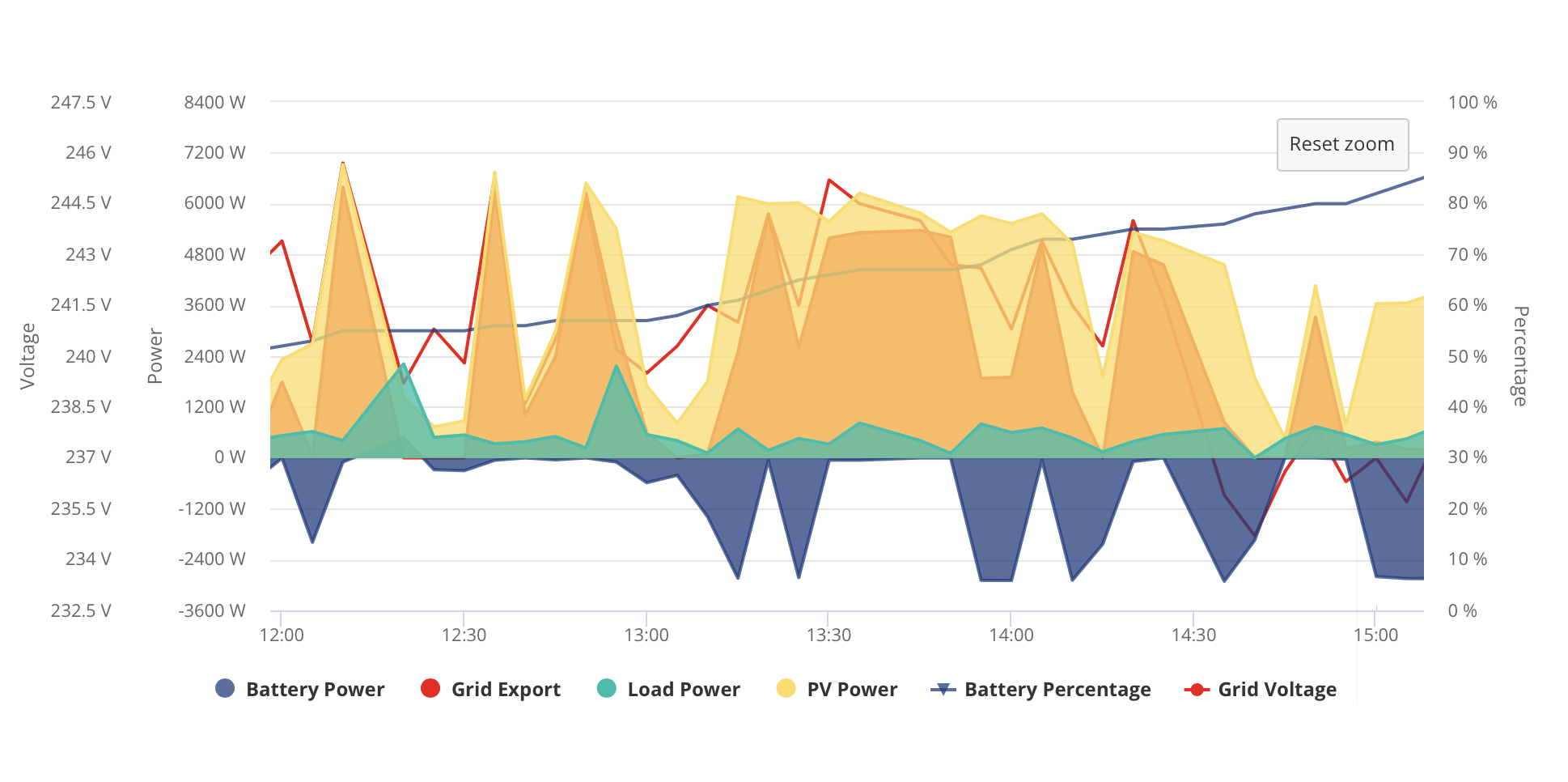
Here's my AC3 misbehaving today (and yesterday)

Often exporting instead of charging. Maybe OP could watch the home network 10 sec updates to see if its the sun or not.

G
#11 gnuss

Sun has been intermittent so hopefully just that as you say. I note that people on the beta test programme are talking about a quicker inverter reaction time so hopefully that should improve. I'll upload another graph at the end of the day as there is less cloud cover this afternoon and it still seems to be a problem. Thank you all.

P
#12 pacemaker

gnuss

yeah if its happening under solid sun (and no house loads causing it to trigger) then definitely a potential issue then

G
#13 gnuss

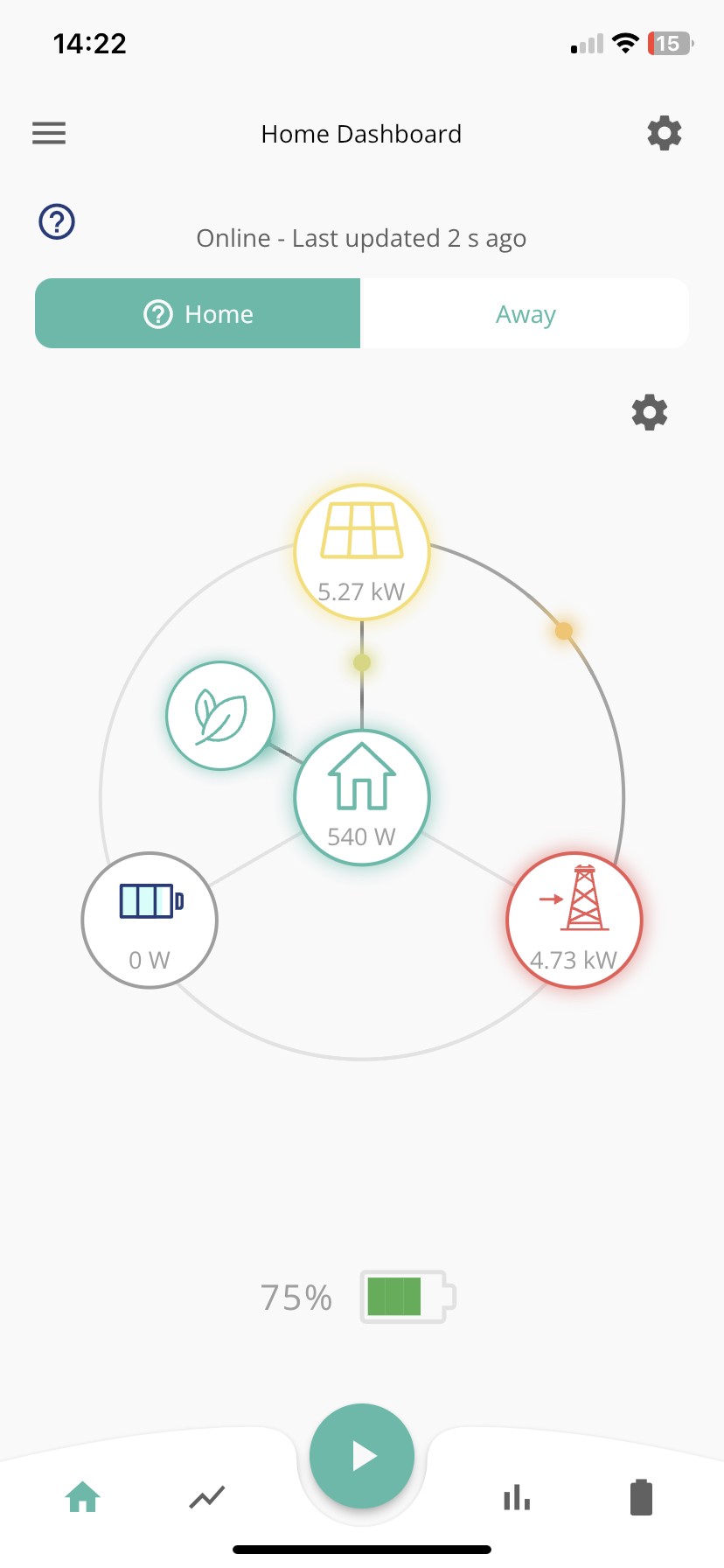
pacemaker On the app with 10sec update it seems to export whenever the solar goes above 6kW and only starts charging again once bellow 5kW or so. Almost like an over power protection failsafe. Much more prevalent when the battery is part charged.

#14 THALL

gnuss That should not be the case. The AC3 will only draw 3kw max, it shouldn't matter if you were generating 15kw of solar let alone 3. I generate about 6.2 at best at the moment and mine keeps charging. When did you have the AC3 fitted?

G
#15 gnuss

November '22. I have just contacted the installer who said they will speak to GE. Just wondered if there was a simple fix or if its already a known issue. Screen shot from the app.

#16 THALL

Other than what has been suggested above, ie reset to factory defaults I don't know what else to suggest for this one.

H
#17 hamilton

Could it be the line in mains voltage being too high? just a thought

G
#18 gnuss

Would it stop charging the battery if the grid voltage was too high?

G
#19 gnuss

Seems to follow that the high grid voltages caused by a spike in PV generation follow a period of lack of battery charging and charging resumes when grid voltage comes back down. Cause or effect?

#21 dbt85

How hot was the AC3 and battery throughout all this?

T
#22 ToothyChris

In order for the system to export power to the grid, it must raise the voltage from the solar inverter above that of the grid. So I think this is effect (and not cause). The question seems to be, why is the battery inverter not consuming power (to charge the battery), when it sees this export starting to happen?

My system (also an AC3 system) also showed some signs of this behavior today, with the intermittent sun.

S
#23 spawneydave

I havent read all the post but was having exactly same issue, since the sun has rissen in the sky and we are getting 8kw pv peaks. it finally it discarged to zero and the givenery guys got on the case, i really dont know what they did in full but i was told one of the problems was the export limit set to 3.1kw whilst we are on an 8kw export, i think they might have made some other tweeks to the firmware and its working really well now.

G
#24 gnuss

spawneydave This makes sense as I have also noticed now I'm on flux and want to export in the evening period that my battery won't discharge at full rate if my total export is >3kW. I'll give. them a ring today. Thank you!

G
#25 gnuss

dbt85

Battery temp was well within limits as was inverter temp.

G
#26 gnuss

Have spoken to GE. Apparently the inverter needs different firmware if the PV array is >6kW otherwise this happens. They also need to change the export limit in line with the DNO export agreement. Both of which they can do remotely so hopefully problem solved. I guess I'll find out on the next sunny day!

#27 THALL

gnuss That is a new one! I have 2 PV arrays feeding my AC3. One is 6.6kw the other 4.6.

I best drop them an email!

Thank you for posting :-)

I wonder if there will be another issue as I am on the Beta firmwares.........

J
#28 JacobSmith

gnuss It was I you were speaking to on the support line, I got confirmation no extra firmware is needed to exceed up to 10kw export limit it just simply needs the setting change in the remote control. The only firmware you need is if you need to have a 0 grid limit export as requested by the DNO in order to have your system function with the value that low.

H
#29 hamilton

gnuss I know you have an answer now but just to let you know my grid voltage is commonly above 250V with my AC3.0 so supply voltage looks like its nothing to worry about in your system. I have seen posts about other having issues from the grid with huge over voltages when lots of solar is in the area.

#30 THALL

JacobSmith I got the same response on the web chat. No firmware changes needed, support up to 10kw. Just needs to export limit changing to what ever DNO limit was agreed.

G
#31 gnuss

JacobSmith Thank you. Hoping this will sort the battery charging issue as well then when the PV generates >6kW. Will have to wait and find out. I wonder how the grid will cope with voltage spikes when so many more people are having PV installed!

T
#32 Tim

gnuss how the grid will cope with voltage spikes when so many more people are having PV installed!

Exactly. @TheDragon (GivEnergy) I have suggested elsewhere that the inverters also need to respect the DNO grid supply voltage limits for whichever country they are in. AFAIAA, Givenergy inverters can operate from about 180V up to 280V but if there is a micro generation cluster on the same distribution system, between them with significant PV, they could push the local voltage way in excess of 253V (230+10%) as they all vie to discharge their 3.68kW. Our Zappi regularly trips at 258V while we are exporting 3.68kW or less. The DNO will know how much local micro generation there is, but I have no idea, nor what the export limits are.

I understand that if the DNO can limit export but not voltage, then there would have to be a change in the regulations to prevent micro generation from pushing local voltage outside the specification. I'm aware that other DNOs simply reduce the tap on the distribution transformer but under heavy load that could pull the voltage below 216V (230-6%) when all the micro generation on off peak tariffs are charging house batteries and EVs. I have a lot of sympathy for DNO Engineers responsible for the security of supply yet having no say in what micro generation goes where or how it is operated.

Of course, having micro generation that has to respect both a maximum power output and voltage would inevitably lead to inverters limiting output when there's plenty of renewable energy available (sun, wind or water), causing frustration in owners "missing out" on their ability to optimise their energy tariffs, but it would result in more secure local distribution.

#33 TheDragon (GivEnergy)

Tim They do. the default setting is 253v. If the inverter grid goes over this, grid high alarm raised and inverter stops outputting, till the condition is resolved. This can be increased on a case by case basis, but really shouldnt be

T
#34 Tim

TheDragon (GivEnergy) They do. the default setting is 253v.

Are you saying that the Givenergy inverters follow grid voltage, except when exporting? When exporting the inverter raises inverter output voltage by 2-3V above grid to enable export but that if that takes the inverter voltage to 253V, then it won't go any higher, even with excess PV for export? Does this mean that a grid voltage of 253V or higher will prevent the Givenergy inverter from exporting?

S
#35 StuartWaudby

My new inverter shuts down completely as soon as the voltage touches 253. The proper action for exporting but it also stops battery charging, adding to the local voltage issue and causing my solar to waste away into the grid. Note all my solar inverters cut out at about 260v.