Octopus Flux with Giv HY5 gen 2 and battery integration

52 comments started 2023-03-15 last 2023-03-20
GivEnergy Products
R
#1 rio911

Hi guys,

I'm not on Flux yet, and I might not switch because with my EV, the cheap rate of Go makes more sense.

But while doing my mental calculations, I realised that I don't know what will happen or how the inverter will handle the following situation.

So, my setup is 5.2kWp of solar on the South roof, connected to Giv HY5 gen 2 inverter plus an 8.2kWh battery. Most sensible use case of Flux, is to make use of the high Export rate between 4 and 7pm. Basically you want to make your battery time export at full power to the grid.

Here is my question, 4pm is still early, and solar should still be generating. What will happen and how will the inverter handle: trying to export 3.6kW from the battery and let's say solar generating at full 5kW?

Are there any priorities or limits in this case? Will the battery export be limited or the solar generation?

#2 THALL

The export rate will be limited by whatever G100 dno limit you got. So if they said 3.68kw export your interverter will export that much in total, solar first and battery top up. If your DNO said you can export at your full 8.8kw then the limit will have been set by your installer export that amount.

Home power first, export second in this case.

I am also looking at Flux. But at the moment my bill on Intelligent is about £1.50 per day, if I swapped to Fluxmy bill would nearly double. So still not generating enough! I have lowered my battery to store only 35% now though. So maybe by the end of the month.....

D
#3 dcsh

I would think that the limiting factor will be the max output of the inverter at 5kw made up of a combination of the battery and solar, so the solar might end up being limited if the battery is pushing out at full whack.

R
#4 rio911

Thanks both, but seems it is not clear.

THALL , I get your point about DNO, so let's assume I have g100, which let's me export at 5kW to the grid. But I don't think my hybrid inverter can put out more than 5kW at a time.

There will be some used by the house load, so that makes it more complicated...

The timed discharge setting assumes power coming from the battery or the inverter?

#5 THALL

rio911 You are correct. 5kw max output

So house load first, then anything else can go to the grid. If you want it to.

Timed discharge is from the battery.

R
#6 rio911

THALL And again, that is the difficult bit.

If timed discharge is from the battery, and solar is generating more than1.4kW. Now the total is over 5kW, which is the maximum of the gen 2 hybrid inverter.

Something will have to give, and I expect, as a pessimist, that it will cut off the solar generation and export from the battery.

#7 THALL

rio911 Solar first, battery as a top up.

So house load say 500w, your solar is generating say 2kw, and you have set the battery to timed export your home will take the 500w from solar, then 1.5kw remaining solar will go to the grid and the other 3kw from the battery.

But is the few extra pennies worth the extra cycles from the battery? It will degrade the battery faster, is the income from excess solar not enough?

H
#8 hamilton

Remember you loose 10% moving in and out the battery. If you buy it for 20p and sell it for 35p you will loose around 5-6p of your expected export. If you are buying the energy your only going to make 54p (9p profit x around 6kwh available energy once house loads and losses taken into account )

I'm charging up during the evening when the battery will be at its coldest and then export any spare at 95% efficiency for going straight from solar to export. It should cycle the battery much less

R
#9 rio911

You are both right about exporting from the battery, but I am thinking about automations and/or "set and forget" scenarios.

See my first post, where I assume that everyone on FLUX will be trying to export at the peak time, as much as possible, to maximise earnings.

Even at 4kWh export in that 3hour peak window, will be £1.40 per day (from the battery), but a possible 15kWh (from inverter, combining solar and battery), which is now a considerable £5.20 per day. That only works if the solar is first priority in the inverter, the battery second. Otherwise, it doesn't make sense, as you pointed out cycling the battery like that.

#10 THALL

In theory I could tinker and generate £11 day with current solar increasing to £20+ per day in the Summer. But, I just think the best value is using it yourself. Solar diverter, EV, etc. Getting paid for excess is great but the investment into the battery system and solar is a lot more than I think most of us can generate.

I am interested in joining flux, but only for my extra solar I can not use or capture. I am not at home monday to friday to make full use of it so flux might make sense later in the year. But right now I need 20 - 24kw per day so until my generation is 35 - 40kw the math doesn't work out.

In your case, 4kw+ export while your house draws the excess is as good as it can get for now. Plus there are not at huge amount of days where you will get decent solar after 4pm, so most of the juice will come from the battery over the course of a year. So the extra possible income is even smaller.

R
#11 rio911

@THALL Exactly my thinking. The EV charging is making me stick with Go as long as possible (I'm currently on £0.075 per kWh in the off peak, which makes charging the EV and house battery extremely cheap.

At some point, that Go tariff will change, so I'm trying to work out the best plan. Agile is currently another option, but slightly more unpredictable.

N
#12 naltsta

rio911 I think the flux tarriff is more aimed for someone like me... (I'm now on it)

Solar and relatively small battery but no EV, or heat pump or electric water heater.

Even with no fiddling around I will be exporting loads over the summer and a reasonable chunk at the peak export time. Still reckon I'll be back on agile (or something else) for winter though.

#13 dbt85

Honestly I think more people will simply use Flux for load shifting rather than trying to deliberately capitalise on the peak export rates.

Set your charge to 100% ending at 5am and then let it get on with it. If solar tops the battery up great, if it sells it fine. In the winter there will be hardly any generation anyway, and the rest of the year the battery will, unless you use a lot overnight, likely still have charge come the 2am off peak start time so you won't need to import much.

There will be people that will tinker with forced export to get the extra money, but remember that its not just exporting to the grid but also having to cover your own usage. If there's no sun left and you need to cook dinner you aren't going to export 9kwh, and assuming you don't want to import at day rates, you only want to export enough to limp through till 2am so now maybe you're only exporting 5kwh or less. The financial returns need to be calculated with all that in mind.

My sums came out to us having a yearly bill of about £-60 if I export 75% of generation, and import everything else I need at the off peak rate. That was using a simplified calculation based on a) only importing at off peak, b) no losses c) only using 9.5kwh between 5am and 2am if there is no PV d) not factoring in any export at the higher rate.

A and b we can achieve probably 95% of the year.

The other thing is that in the winter I'd be importing a lot, but in the summer the export price may have dropped a fair bit from the current rates so maybe it won't be as good as it first looks.

It'll be an interesting ride either way to see how it goes and how people game it for maximum returns. While the battery does indeed have a 10 year unlimited cycle guarantee, I'd rather it didn't die after 10 years and a month because I'd been deliberately discharging as much as possible at peak rates if it wasn't going to make enough to really justify it.

#14 positor1

dbt85 I'd rather it didn't die after 10 years and a month because I'd been deliberately discharging as much as possible at peak rates if it wasn't going to make enough to really justify it.

This is my mantra too.

#15 THALL

rio911 For me I am planning on switching tariff twice a year. Flux for maybe 4 or 5 months and Intelligent for winter. What I lack is 1 years worth of data with my extra pv and ev to know when the best time to switch is. I think I need to regularly clear 30kw per day. I think.... Still working it out. With excess pv in the Summer that should be up to £15 per day which should cover winter. At least thats the plan!

N
#16 naltsta

positor1 Thats not how I see it at all...

Discharging from 4-7 shouldn't put any EXTRA use though my battery (just changing when it happens)

If I am paid more to export 4-7 than I am paying to import later and there is no extra load through my battery it is worth doing!

#17 dbt85

naltsta I guess that depends on your use of the battery if you didn't discharge.

For example, lets say you don't force a discharge and that at 6pm your battery is full. Your average use for the rest of the day until the off peak is 300w. So over the next 8 hours your battery will cover your usage and use 2.4kwh. Now at 2am the battery force charged to 100%. Only 2.4kwh needs to go in.

Conversely if you were to do a force discharge from 6pm for 1 hour and so export 3kwh from the battery alone (lets keep it simple and say the same 300w for your own use, the rest to the grid) and still you used the same 2.4kwh to get through to 2am, your battery has now discharged 5.1 kwh (3kw from 6-7 and 2.1 from 7-2)which needs to be replenished. The latter is to my mind absolutely going to use up the battery more than the former.

In addition, you would surely not force a discharge down to empty at the peak time because then for the rest of the night you need to import at the standard day rates to get you back to 2am and the cheap rate. Assuming its the same 300w per hour from the end of the discharge time, that's 2.1kwh at 33.73p (my local rates) which would basically eliminate that much of your income from the forced discharge.

N
#18 naltsta

dbt85 I'm saying I do want my battery to be very close to empty at 7pm. I can import my usage until 2am when I charge up fully. Givenergy batteries are warrantied for 2.7 full charge cycles per day. I'm only talking about doing just over one full charge cycle. If you are not even doing a full charge cycle per day you have paid a lot for a battery that you are not really using much! That money has already been spent

Flux has definitely changed how I think about the economics. On flux it is cheaper to put the dishwasher on overnight than it is to use excess generation on a sunny day

#19 dbt85

For some reason I can't edit to add this.

So lets say you instead export just enough to then have to limp home to 2am. A 9.5 battery in theory then has 7.4kwh of energy that you don't need from 7pm. To export 7.4kwh you'd have to start exporting at 5pm (reality a little before). So now you discharge that 7.4kwh, but actually 600w or likely more has been used just to power the home for 2 hours and cook dinner, so we're left exporting 6.8kwh. At 36p that could be in the region of £2.45. Then at 2 am you are charging again at 20p. Are we charging to full? It makes little sense not to since exported PV is sold at 22.7p, so now you fill your empty battery for £1.90. The reality is it will actually take more than 9.5kwh to put 9,5kwh into the battery due to transfer losses, and so cost more than £1.90, also on export you would get less than the 6.8kwh out because of losses. Lets say its a 10% loss each way. I literally have no idea. So now you only get £2.20 to export and it costs £2.10 to fill it back up again.

Octopus have set their prices smartly, it is a benefit to time shift your import, but little benefit to try and game the system by importing at cheap and selling high.

Please someone correct my sums if I'm out.

#20 dbt85

naltsta I'm saying I do want my battery to be very close to empty at 7pm. I can import my usage until 2am when I charge up fully. Givenergy batteries are warrantied for 2.7 full charge cycles per day. I'm only talking about doing just over one full charge cycle. If you are not even doing a full charge cycle per day you have paid a lot for a battery that you are not really using much! That money has already been spent

If you export it all and then have to import for 7 hours at 36p, that's going to take another dent out of your numbers, surely.

I didn't know it was a 2.7 charge cycles. the 9.5s are just unlimited as far as I'm aware. If it made financial sense to me to do it then sure, but from what I have been able to calculate it simply doesn't.

I'd love to see anyone elses calcs based on their real data for generation and export. My PV isn't even installed yet.

#21 THALL

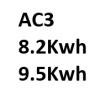
Working on just battery export alone a single AC3 with a 9.5kw battery should net about £1.10 per day factoring in standing charge and 300w background house use . Yes you could go down the warranty route if your battery fails due to increased cycles.

Questions, when do you cook your dinner? Before 4pm? Means less battery? After 7pm? Nearly empty battery? Due you make sure you don't use any high use electrical item 4 til 7 everyday?

Single AC3 and dual 9.5? Yeah that would work :-) Would need 20 years to make the cost of a new inverter and battery back.

:-)

#22 THALL

@dbt85

So 1 thought, if i take my best PV day so far this year. 26th feb. generated 30.4kwh. I only exported 0.3kw as I used it all, home and EV. But to make money......

Plan
1, Fully charge home batteries and EV during cheap 3 hour. So for me single AC3 9kwh plus 16kw for my car. 25 x 0.2103p = £5.25 cost (note there will be extra costs for me as a single AC3 does not run the over etc)
2, I can dump all my solar to the grid. 17.7kw (I know it wont work like that but to keep it simple) so 30.4 x 0.2406p = £7.31 income
3, dump my battery into the grid at peak export rate, assuming 300w background usage so export 8.1kw max. 8.1 x 0.3808p = £3.09
4, keep in mind standing charge 0.3729p

Costs for the day £5.63
Money raised by export £10.04
Profit/credit for winter £4.77

I don't personally want to see the higher grid use, I am trying to be ECO friendly. But I can see how flux can make some money back/winter credit.

#23 THALL

@THALL

However, take a rainy day like today
Costs the same £5.63
Money made from solar and battery cycling £3.77
LOSS of £1.86

Which is just more than my typical loss on Intelligent. Down to about £1.40 a day total bill now.

L
#24 L174559

THALL
Hi Thall thanks for your input. I would like to add another scenario.[ I have just had a replacement Gen 2 inverter installed with my 9.6kW battery supplied by 17 x 390 W panels].
My query is when I am away on holiday what would be the best settings to maximise solar generated excess energy. The house will be virtually put to sleep for up to 5 weeks. As for tariffs I'm now on Octopus and once they sort out my smart2 meters I will be offered a choice of tariff. That's my dilemma how best to max the benefit of my system?

#25 THALL

L174559

Depends what tariff you go on.
But say no special tarif just flexible. I would set ECO on, set reserve of 4%. If you get a little bit of solar it will run the house and keep the battery topped. If you get a lot of sun it will run the house, top up the battery and export. Win win.

Special tariff like Flux
1 same as above
2 could set the battery to charge during cheap rate to 100% and discharge during peak export to make some pennies

To be honest just having the system means you back ground use, so fridge, standby devices etc which is around (200w for me) are covered rain or shine. Tiny bit of PV runs it all during the day, battery over night. Zero grid usage. Can't do much about the standing charge fee though :-(

N
#26 naltsta

dbt85 If I have 1kWh in my battery I can either export it for 36p and have to buy it back later (direct grid usage) for 33p at net gain of 3p/kWh
or
not export it and use it later at net zero cost.

As per my diagrams above I don't see this having any impact on the number of cycles on my battery (as I am nearly always down to 4% overnight anyway). Even if I was on holiday with almost no usage we're only looking at one battery cycle per day.

T
#27 TX200

naltsta have you accounted for a circa 10% round trip loss during AC>DC>AC conversion?

N
#28 naltsta

TX200 At 4pm its in my battery already so whether I export or power the house later the same DC>AC conversion has to happen.

#29 THALL

naltsta if your battery empties over night, how much grid use would you have if you emptied your battery at the peak time?

#30 dbt85

naltsta If I have 1kWh in my battery I can either export it for 36p and have to buy it back later (direct grid usage) for 33p at net gain of 3p/kWh
or
not export it and use it later at net zero cost.

But assuming that its a 10% loss you're not getting paid 36p, you might only be getting 32.4p.

So, sell it for 32.4p and then import it back at 33p (or 36.3p if feeding the battery), or don't sell it at 32.4p and just use it.

As I said, if it looked like the number stacked up to do it great, but I think they've been smart enough to make it so that it basically isn't. Lots of people will be trying to find the best ways to min/max the tariff over the coming months and as I've said before, I look forward to seeing the results.

Perhaps the cycles used isn't something to worry about. If we say that, my question is still what is the benefit in doing it. It should in theory be buying at 20p and selling at 36p = profit, That's how it looks, I just don't see it in the actual numbers.

I'm going to try and make a sheet with some data to look at it further.

THALL So 1 thought, if i take my best PV day so far this year. 26th feb. generated 30.4kwh. I only exported 0.3kw as I used it all, home and EV. But to make money......

Plan
1, Fully charge home batteries and EV during cheap 3 hour. So for me single AC3 9kwh plus 16kw for my car. 25 x 0.2103p = £5.25 cost (note there will be extra costs for me as a single AC3 does not run the over etc)
2, I can dump all my solar to the grid. 17.7kw (I know it wont work like that but to keep it simple) so 30.4 x 0.2406p = £7.31 income
3, dump my battery into the grid at peak export rate, assuming 300w background usage so export 8.1kw max. 8.1 x 0.3808p = £3.09
4, keep in mind standing charge 0.3729p

Costs for the day £5.63
Money raised by export £10.04
Profit/credit for winter £4.77

I don't personally want to see the higher grid use, I am trying to be ECO friendly. But I can see how flux can make some money back/winter credit.

Did I misread something? You said you would sell all 17.7kwh of PV to the grid, but then used 30.4 in your calculation. That drops the PV export to £4.25.
Also to go from 7pm to 2am at 300w avg you need 2.1kwh so would only have 7.4 left, and to dump 7.4kwh would take an AC3 2.5 hours, so in that time you'd also need (assuming the same 300w average) .75kwh just for the home, so now you've only exported 6.65 kwh for £2.53

Those 2 changes drop your credit down to £1.15, I think?

Again its all simplified, we aren't using real half hourly data which would be great. We are assuming you cook your dinner on a BBQ and not the oven in the peak time, we are assuming all your PV export is at day rate and none at the peak rate which some of it would be and we're not really factoring losses accurately which with some fine margins might matter.

As you said, there is an Eco element to all this, but if your supplier is supplying 100% green energy already then you're not hurting anything. I'm certain Octopus' goal is simply to get people like me who can live off say 10kw to pump it from 2-5 and then slowly dump it, with anything extra left that you might want to force dump in the evening as a bonus.

The Home assistant routines could get quite complicated!

#31 THALL

dbt85 No no I got confused. 17.7kw is my battery total capacity. I have a single AC3 so I would not be able to dump all of it to the grid at peak rate.

Appologies, my reply was quickly typed and I did not read it before hitting send. Plus lack of caffine today :-(

#32 dbt85

THALL Go to the back of the class.

I'm trying to pair some generation data from one of our 4kw arrays with my personal usage data from a few days ago to see what's what. Fun trying to work out the excel formulae.

I
#33 IanMac

THALL I'm on GO and this will be my first full year of having this system installed. I could guess what I might make from export on Flux but I prefer the safety of Go - I know exactly what my bill is going to be each day £1.90 in winter on a non charging day and £3.90 with charging. Charging happens about 4 nights per week. I suspect flux might be slightly better overall, but I know if I switch we will have a miserable cloudy summer.

#34 THALL

@dbt85 I'll happily sit at the back quietly.

I have the Octopus Compare app and loaded various tariffs to compare my input costs. Flux VS Intelligent does not look too good with my current usage pattern. But I could change my usage pattern to keep my bill around -£1 or profit. But at the moment the weather is not good enough to keep my costs lower than Intelligent.

@IanMac i would only consider flux once the weather is better. Because my house is empty 7 til 5 monday to friday flux might be good for 4 months of the year to build credit for winter. But at the moment, not yet. The weather is just not good enough. Just seen the two week forecast and snow is forecast for 31st March :-(

#35 dbt85

THALL I have the Octopus Compare app and loaded various tariffs to compare my input costs. Flux VS Intelligent does not look too good with my current usage pattern. But I could change my usage pattern to keep my bill around -£1 or profit. But at the moment the weather is not good enough to keep my costs lower than Intelligent.

Yeah I think if you've the ability to get onto Go or Intelligent it makes it a much harder decision and it would be interesting to see what, if anything, Octopus do about people swapping to Flux in the summer and back out again. I don't even know if they'd care. Right now our best bet would probably be eco7 in the dark 4 or 5 and Flux for the rest. Though when I spoke to someone at Octopus they said configuring for eco7 can take a few weeks compared to just switching which can happen instantly.

I succeeded with my spreadsheet for calculating things, but its still only with a single days data but it was interesting to see. Still want to add losses to the calculations and then add in a few more days to play with. I believe Gary Does Solar has a spreadsheet on the way as he mentioned it in his latest video which was about Flux.

#36 THALL

dbt85 Well I have switched between Go, Agile and Intelligent over the last couple of years. The switch was instant, same day. Just phoned and switched, no hassle. I know the ECO7 switch takes longer as they edit your smart meter.

Last year March weather was much better and i would of switched by now.

Right now I am considering switching this month to keep my standing charge at 37p rather than 50p.

#37 dbt85

THALL Right now I am considering switching this month to keep my standing charge at 37p rather than 50p.

Are the margins on your tariff options so tight that £47 quid will swing it?

#38 THALL

dbt85 No its not that, I just resent paying such a high standing charge. My usage I can control and charge, standing charge i cant do anything about. It wasn't long ago I was paying 20p per day and 50p is just rude. My seg is 4.1p so when my contract renews I will need to export over 12kw just to cover standing charge.

#39 dbt85

THALL I understand the feeling. The whole debacle over the last 18 months has asked plenty of questions of the energy industry and how things are calculated and I'm not sure satisfactory answers have been provided yet.

W
#40 wrefordj

THALL I may be wrong but I think I read that the Standing charge has been jacked up to pay for taking over all the failed electricity suppliers?

R
#41 rio911

wrefordj Sadly, that is my understanding too.
But the problem is that we all wanted those cheap energy providers...and now we have to pay for it.
For me the conclusion was, that I can't depend on the providers. That I why I invested in Solar PV+battery.

#42 dbt85

wrefordj It was. And on that basis I'm sure it will come down again.

Right?

Huys?

Hello?

T
#43 TX200

dbt85 energy prices are expected to drop below the government's EPG in July. 🤞

Competition in the market, with fixed rates, is expected too.

#44 dbt85

TX200 oh unit prices will. Only got to look at the octopus tracker rates to see that.

Standing cherge though? Brought in to bail out companies that were not sound and I'd not at all be shocked if it never goes down again.

T
#45 TX200

dbt85 as long as no more suppliers go bust it "should" to down again eventually.

There's also a growing push to change how it works as the standing charge seems unfair to the lowest users. That said, if they remove it and build it into the unit rate people with high usage will be negatively impacted instead.

Perhaps more grants for home insulation etc needed for those people.

#47 THALL

wrefordj This is my understanding as well. So a tax. But now Octopus has absorbed Bulb I am hoping it will drop in 12 months time. However it may go up again to fund grid expansion and battery backups.

The other option I saw was to abolish standing charge and increase unit cost. Which would be great for people like us with batteries and solar.

#48 positor1

THALL abolish standing charge and increase unit cost.

And a ray of hope for those so poor they have turned everything off and still have debt rising.
Standing charges are a despicable tax on the poorest.

#49 dbt85

THALL The other option I saw was to abolish standing charge and increase unit cost. Which would be great for people like us with batteries and solar.

The counter argument is that the grid still needs supporting even for those of us with solar and storage, assuming we want to import off peak and export, so if we abolish the standing charges (we should) and only charge per unit used, how do they factor that in. My feeling to that point was that exporters are largely only getting pathetic SEG rates so they are being shafted there already, though options are increasing at last.

However solar and pv are within the purview of those with money to do it. If every house in the UK that could do it did so and only unit charge paid for the grid it would collapse as only the poorest would remain without solar and paying the inflated unit rates to cover it.

I don't generally have an issue with a standing charge. My issue is that the poorest are hit hardest by it (and it could easily be removed for those) and that it doubled because businesses failed on one hand while others were inflating like a balloon due to the inflated energy prices, even when their costs didnt change that much at all.

W
#51 wrefordj

dbt85 But remember that everyone with solar and batteries has stumped up a considerable amount of holiday/car/beer money for an investment that made sense partly because of unrealistically low interest rates.
If everyone who could do that, did do that, the famous duck curve might become the "dead duck" curve, so that overall generation costs would reduce.

#52 positor1

dbt85 if we abolish the standing charges (we should) and only charge per unit used, how do they factor that in

simply add it to the unit charge .0002p?

#53 dbt85

naltsta Looks like the 9.5s are unlimited but mine aren't! https://kb.givenergy.cloud/article.php?id=55

Ah. I do wonder if they are going to bother brining gen2 smaller batteries or just stick with it as it is. It seemed so daft to me to have been selling it as x size only for it to actually be a chunk smaller due to margin and 80% dod so I'm glad they have changed tack. a 9.5 is still larger than 9.5 but at least you can expect to get the sticker number of actual usable storage from it now.

wrefordj But remember that everyone with solar and batteries has stumped up a considerable amount of holiday/car/beer money for an investment that made sense partly because of unrealistically low interest rates.
If everyone who could do that, did do that, the famous duck curve might become the "dead duck" curve, so that overall generation costs would reduce.

I agree, and that's basically why my system is being installed. The possible £1200 pound a year it will save me far outstrips the interest the £15k would earn (my mother in law) in the same time frame at the current rates. Rates have been low for a long time but that's mostly been to prop up the screwed up property markets and peoples mortgages because people who get their house taken away are not keen on re electing the people that let it happen.

Whether everyone has solar and storage or not the grid still needs maintaining as the majority cannot possibly go off grid. You could put 4kw on every home in the country and a 10kw battery, and people would still regularly need the grid, if only in winter, more so with more heat pumps being installed, EVs and so on all diverting current energy consumption from Nat gas and petrol pumps to the cables coming into the home. Yes the curve would have been changed drastically and so we could probably finally end the need for top of peak fossil generation. But the grid still must exist and so must be paid for, even if every house in the land can generate its own electricity.

positor1 simply add it to the unit charge .0002p?
But if you don't import much but export loads you're still using the grid. As I said, given the appalling rates people have been paid for export might well be considered punishment enough, but I don't think its a good look to say "we're abolishing standing charges to help low income households and instead you'll just pay more for what you use from the grid (which will now cost you about £180 more per year so net zero for low income households), while at the same time those of us rich enough to afford solar and storage will pay even less because we import less than you do".

It was my issue with the FIT scheme also. It paid people who were largely already wealthy enough to get solar to get solar and get a nice regular guaranteed income that would far more than cover the cost of the installation in the first place. It drove adoption and did help bring prices down, but the people it benefited were those that already had the money to do it in the first place, and installers charging more because they knew people were getting a decent return.

I fear I may have veered off topic 😆