
What do you like / wish was better about the AC 3.0 + battery?

10 comments started 2022-01-30 last 2022-01-31
GivEnergy ProductsAC Coupled
I
#1 ihailey

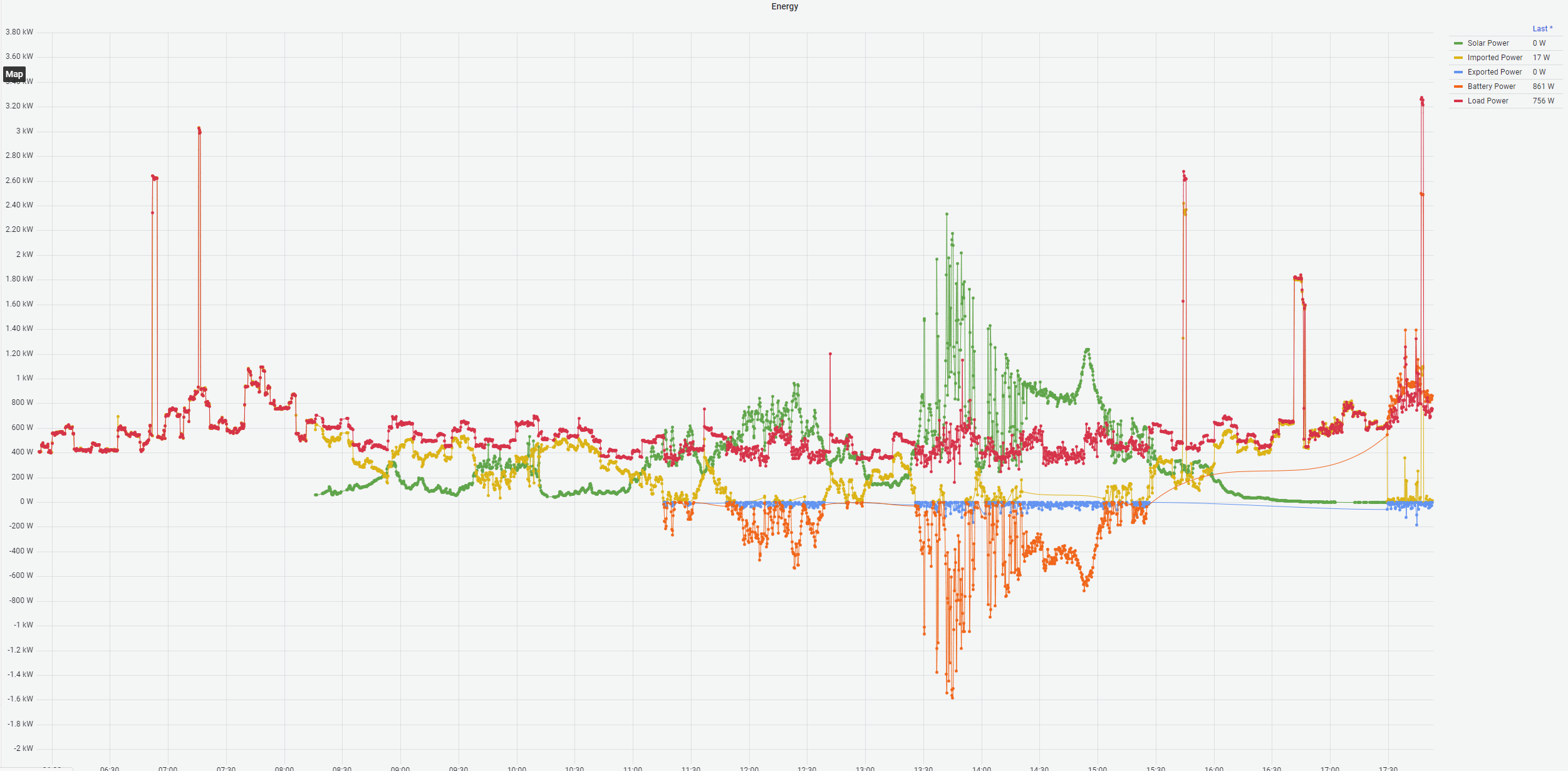
Hi, I am trying to decide on a battery solution to add to my existing 7.36kW SolarEdge PV. GE products look like good value and their support and SW team seem good. Lower price than a PowerWall or LG / SE option. Doing a bit of searching around here I have seen a few comments about the AC 3.0 inverter being slow to track the instantaneous power demands of the house be it either higher load or more export. Does anyone have a graph of what this actually looks like (with say 1s per sample for the data) with a for example a kettle being turned on then later off? The other question I have is do the 8.2kWh batteries charge / discharge at the 3.0kW max across 100% of the SOC or does it ramp down at each end? Thanks.
A
#2 anglefire

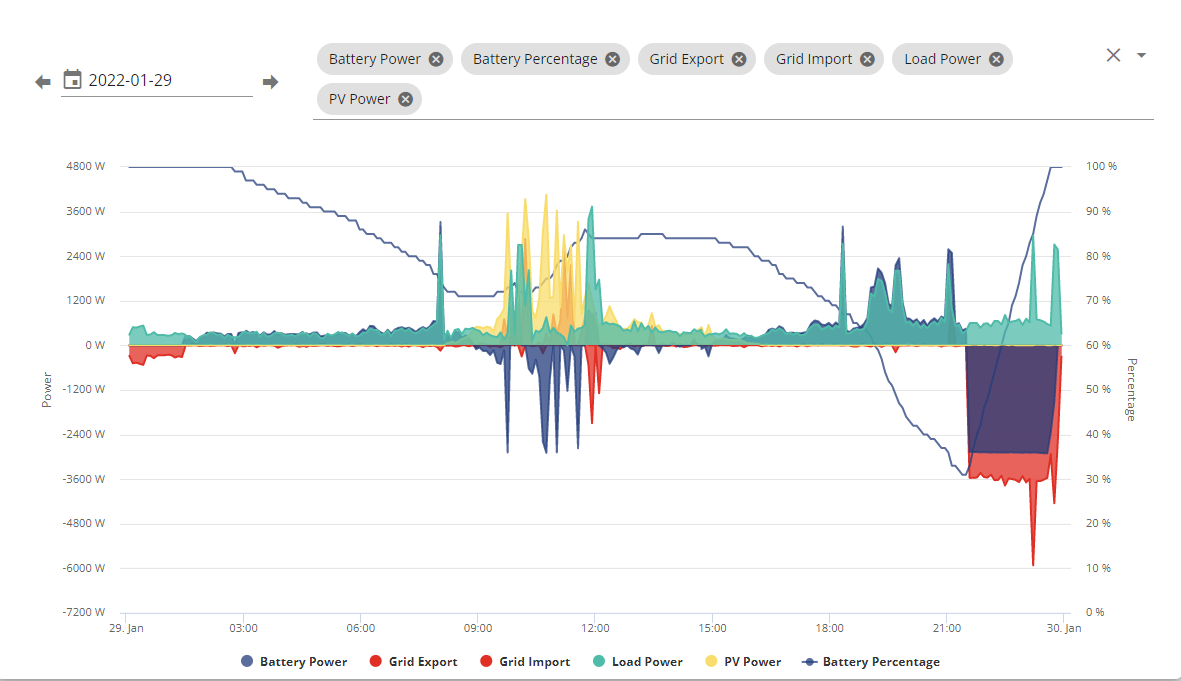
ihailey I can show some data from yesterday that shows the reaction of the sun going in and out as well as kettle etc. Solar its sampling at 10sec intervals - 1 second will stress the comms too much in my view.
A
#3 anglefire

Just realised that you are talking about the AC inverter - I have a hybrid

W
#4 wilfleek

Whilst I have (as per the thread I started recently) noted some exporting of solar power that really ought to go into the battery, I think the data I look at (the iPhone app and the beta preotal graphs) makes it look worse because of the time buckets involved. (5 or 10 minutes).

That said, in conditions where the solar power swings rapidly from little to a lot (sunny days with clouds scudding past) it does seem that a significant amount of enrgey is "lost" if the beta portal data is to be believed. (for me, today, total generation was 13.4kWh, with 0.6kWh exported). Whether this is better or worse than for competing products I have no idea. In terms of house load, the inverter does seem to be able to react rapidly and draw down from stored battery energy very quickly. And when I still had my old "rotating" electricity meter, it was very good at balancing solar/house load/ import - as I could see the meter "disc" being held pretty much stationary.

And lastly, yes, I have had good help/suppport from the GE team, and my installer confessed that he felt they were good to deal with (and being UK based, a darn sight better than having to rely on China for comissioning input).

On your last point, I have two 5.2 batteries, and they seem to hold discharge rates pretty well until you get very close to "empty". Can't see why the 8.2 would be much different.

S
#5 Sparta

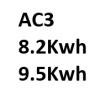
ihailey Hi, I have GE AC 3.0 with 8.2 kWh battery connected to 5.84 kWp array via 4 kW SolarEdge inverter. The system has been running for the past 9 months and I have been really pleased with it. The difference between 8.2kWh battery and the smaller versions is that 8.2kWh is 100% DOD and unlimited cycles. The smaller batteries have been 90% DOD and limited to 10,000 cycles https://www.givenergy.co.uk/products#givbat52; however, the latest product sheet suggests that 5.2kWh battery is also 100% DOD https://www.givenergy.co.uk/pdf/Version-2021/Bat5.2.pdf. Though not sure whether 10,000 cycles is really a limitation, as my battery has done only 450 cycles in 9 months and I've been charging from the grid using Octopus Go Faster as "winter" operating mode.
Regarding the response time, there is inevitable ramping up/down time for the battery to switch e.g., from charging to discharging mode. In my experience the response time is in seconds, however, the data is only recorded in 5 min interval (unless the battery is in troubleshooting mode), so I'm unable to send you data with higher frequency data sampling. The battery charges at 2.9 kW and discharges at up to 3.2 kW. Battery charges at max rate up until 97% SOC and there has been a significant improvement through firmware upgrade compared to when my system was installed, when ramp down started at 80%-85% SOC.
Screenshot-2022-01-30-222349.png

Y
#6 yandards

The slow to react inverter issue is a bit of something for nothing to me. Given the relative cost of the system compared to others it's all about understanding what that slower reaction really means.

I don't think it's more than a few seconds during transient loads which in the grand scheme of how electricity is billed isn't adding that much to the total bill.

I think EV Puzzle on YouTube touched on this when he had the GE inverter and battery installed, it's a few watts per day resulting in pennies extra on your bill.

I've been watching both my smart meter and the Myenergi app as they both provide 5 seconds updates and the system is usually prompt in its response. It tends to hold battery output a bit post load drop off but as we are talking about a period of under 5 seconds (sample rate) before it's corrected.

If you assume a transient load event takes 5 seconds of inverter response (which is too long I think) you would need 1200 over a day at a power rating of a 1000w to even hit a single unit (kWh). Or if you managed that in a 24 hour period it would cost you about 30p extra on the new rates.

I
#7 ihailey

Thanks for the replies everyone.

#8 THALL

Had my AC3 and 8.2 batt since end of July last year. Really happy with it overall, support has been good. Features I would like is the ability to set export to grid by price rather than just time and obvious import by price. To be honest I wish there was an AC5 but thats a different matter.

S
#9 Sparta

THALL I noticed that the discharge rates have been as high as 3370W whilst charging has never been above 2900W, Makes me wonder whether this could be addressed through firmware upgrade. Not sure I would be replacing a one year old inverter, even is AC5 became available.

#10 THALL

Sparta the AC3 can peak power at 3600w for 10 seconds. True i would not replace a 1 year old inverter but I can dream of some kind of upgrade program 😄