Acronym meanings

31 comments started 2023-05-08 last 2023-05-14
GivEnergy Products
F
#1 Franco

Hi, we have just had a GE solar and battery system installed and are trying to get a grips with its operation and functionality. Have read through some of the ‘discussions’ for guidance there are a lot of acronyms that frankly we have no idea what they refer to. Is there a list of acronyms and what they stand for that I can refer to and more importantly an explanation as to their meaning. I didn’t realise that I needed a degree in physics and IT analytics to operate our system😂. Thanks in anticipation.

T
#2 thewhalw21

Franco Link to the unofficial wiki that may help 🙂
https://wiki.terravolt.co.uk/

Tho if you want to share a list, im sure people on here can help.

T
#3 ToothyChris

I would second this - assuming it doesn't already exist on the GE Knowledge Base somewhere. Without wishing to criticise Paul (a GE employee, with minor super-star status), even he is guilty of using acronyms and terminology, in the Facebook pages, which some (non-technical) users simply won't understand.

But I also understand how easy it can be to make this mistake (from personal experience), when working in a highly technical area.

Franco, you will find that this forum tends to attract the most technical of GE users, whilst the two Facebook groups tend to operate on a more user-orientated level. Try both, and then decide where you feel most comfortable. Yes, the systems can seem quite complicated to begin with, but you will gain knowledge with time and experience.

You will also find that using the Portal and using the App present their own challenges - since different terminology is used on both, for the same thing. They both have their strengths and weaknesses. The App is quick and easy, while the Portal has much more detail and more control over your system.

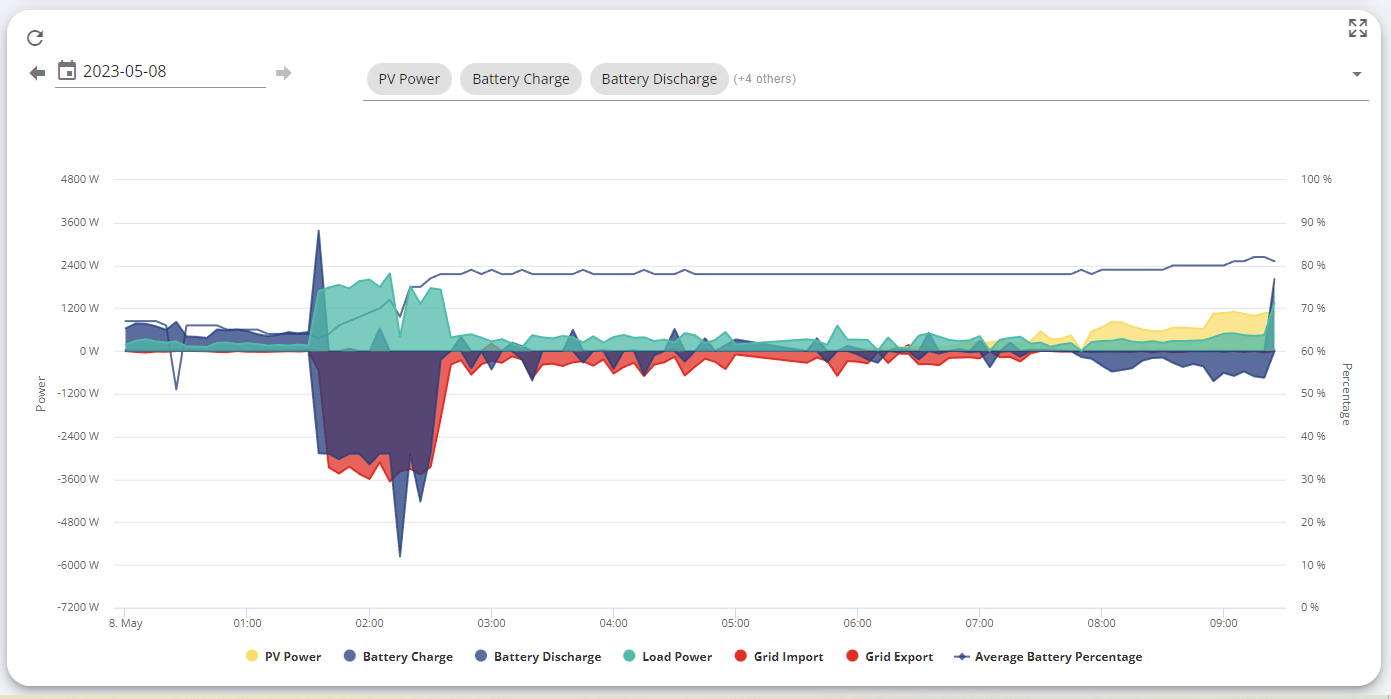
If you post specific questions on here, try to include some basic details of your system, and also a Power Graph from the Portal, like this, so that people can see what your system is doing:
To get the list started....

SOC - State of Charge (so the amount of energy in your battery, shown as a percentage)
OCV - Open Circuit Voltage (something with the new Firmware uses, to try and measure/correct the SOC)
FW - Firmware (software which lives inside the battery and inverter)
BMS - Battery Management System


W
#4 wrefordj

I have some sympathy with this, despite having a technical background and since my memory is getting worse each day...
So I have started a list in the back of my notebook. Feel free to add any more to it!

AP access point
SEG smart export guarantee
SSID service set identifier
IP address internet protocol
MAC address media access control
RSSI received signal strength indicator
TKIP temporary key integrity protocol
STA station mode
WPA2-PSK wifi protected access pre-shared key
AES advanced encryption standard
WAN wide area network
TL;DR too long, didn't read
DHCP dynamic host configuration protocol
FTTP fibre to the premises
DCC data communications company
MPPT maximum power point tracker
IOT internet of things
DNO distribution network operator
AIO all in one
EPS emergency power supply
MCS microgeneration certification scheme

#5 Maxwell

TCP - Transmisson Control Protocol
DOD - Depth of Discharge
API - Application Programming Interface

F
#6 Franco

Thanks to all who responded. Hopefully I can understand a little of what is being discussed and apply it to operating my system.

#7 positor1

I have combined the above posts and added further, hope OPs' dont mind?
and suggest further additions are added to keep the list together.

OP original poster
AP WiFi access point
SEG smart export guarantee
SSID service set identifier (wireless network name)
IP address internet protocol (A unique number assigned to your PC/phone to identify it on the web)
MAC address media access control (A unique hex number given to every WiFi device)
RSSI received signal strength indicator
TKIP temporary key integrity protocol (security system for WiFi)
STA station mode (WiFi router mode)
WPA2-PSK wifi protected access pre-shared key (security system for WiFi)
AES advanced encryption standard (security system for WiFi)
WAN wider area network (as opposed the home network)
TL;DR too long, didn't read (used on forums to promote succinct posts)
DHCP dynamic host configuration protocol (WiFi router auto assigns IP keys to connected devices)
FTTP fibre to the premises (internet)
DCC data communications company
MPPT maximum power point tracker (solar panels)
IOT internet of things
DNO distribution network operator ( MEB sic)
sic denotes the writer knows the information is actually incorrect (latin)
AIO all in one
EPS emergency power supply
MCS microgeneration certification scheme
TCP - Transmission Control Protocol (security system for WiFi)
DOD - Depth of Discharge
API - Application Programming Interface

S
#8 stevelewis

Franco no need for a Stem degree, although there would be worse uses for your time 😁. Set it to Eco mode and let it do its thing. If you have a cheap overnight rate, set to at least partially charge overnight too. The rest is for geeks or those who want to squeeze every last penny out of the functionality.

W
#9 wilfleek

RTFM - inapplicable because there isn't one.
And this is an issue I feel Ge should try to correct asap. It seems obvious that installers don't give very much instruction on the systems. Mine certainly didn't.

#10 TheDragon (GivEnergy)

Add to your list the new firmware self levelling known as simply OCV

OCV - Open Circuit Voltage

#11 hoggy

BLT - Bacon, lettuce and tomato....

I'll add all these to the wiki when I get a sec...

#12 TheDragon (GivEnergy)

hoggy Trust you to lighten the mood.

TLC - Tender Loving Care. What i do to your batteries when they mis behave

#13 hoggy

@TheDragon (GivEnergy) TIOAOA - Turn it off and on again (What I do to my batteries when they mis behave :-P)

#14 positor1

OP original poster
AP WiFi access point
SEG smart export guarantee
SSID service set identifier (wireless network name)
IP address internet protocol (A unique number assigned to your PC/phone to identify it on the web)
MAC address media access control (A unique hex number given to every WiFi device)
RSSI received signal strength indicator
TKIP temporary key integrity protocol (security system for WiFi)
STA station mode (WiFi router mode)
WPA2-PSK wifi protected access pre-shared key (security system for WiFi)
AES advanced encryption standard (security system for WiFi)
WAN wider area network (as opposed the home network)
TL;DR too long, didn't read (used on forums to promote succinct posts)
DHCP dynamic host configuration protocol (WiFi router auto assigns IP keys to connected devices)
FTTP fibre to the premises (internet)
DCC data communications company
MPPT maximum power point tracker (solar panels)
IOT internet of things
DNO distribution network operator ( MEB sic)
sic denotes the writer knows the information is actually incorrect (latin)
AIO all in one
EPS emergency power supply
EMS energy management system ( for dual ac3 inverters that do not play well without an EMS)
MCS microgeneration certification scheme
TCP - Transmission Control Protocol (security system for WiFi)
DOD - Depth of Discharge
API - Application Programming Interface
OCV - Open Circuit Voltage
TIOAOA - Turn it off and on again
SOC state of charge (the percentage level displayed for the battery (s)

#15 Cdent

Should we add HA - Home Assistant?

#16 positor1

The Dragon (GE) (see hero) an employee of GE who goes out of his way to help
HA - Home Assistant ( A standalone software /hardware solution to control the IOT, eg home automation)
OP original poster
AP WiFi access point
SEG smart export guarantee
SSID service set identifier (wireless network name)
IP address internet protocol (A unique number assigned to your PC/phone to identify it on the web)
MAC address media access control (A unique hex number given to every WiFi device)
RSSI received signal strength indicator
TKIP temporary key integrity protocol (security system for WiFi)
STA station mode (WiFi router mode)
WPA2-PSK wifi protected access pre-shared key (security system for WiFi)
AES advanced encryption standard (security system for WiFi)
WAN wider area network (as opposed the home network)
TL;DR too long, didn't read (used on forums to promote succinct posts)
DHCP dynamic host configuration protocol (WiFi router auto assigns IP keys to connected devices)
FTTP fibre to the premises (internet)
DCC data communications company
MPPT maximum power point tracker (solar panels)
IOT internet of things
DNO distribution network operator ( MEB sic)
sic denotes the writer knows the information is actually incorrect (latin)
AIO all in one
EPS emergency power supply
EMS energy management system ( for dual ac3 inverters that do not play well without an EMS)
MCS microgeneration certification scheme
TCP - Transmission Control Protocol (security system for WiFi)
DOD - Depth of Discharge
API - Application Programming Interface
OCV - Open Circuit Voltage
TIOAOA - Turn it off and on again
SOC state of charge (the percentage level displayed for the battery (s)
EEBUS for the Internet of things that aims to standardise the interface between electrical consumers, producers, storage etc

S
#17 stevelewis

hoggy I'd prefer a BBC :-)

#18 Cdent

stevelewis bacon, (more) bacon, chicken? XD

#19 ProximusAl

stevelewis

😃 If you know....you know 😃

T
#20 ToothyChris

Remember that to be useful, this list should define what the abbreviation stands for, but also what it means using a layperson's terminology. Without that, the list becomes far less useful to the people that need it most.

So, to use my examples from the top of this post:

SOC - State of Charge (so the amount of energy in your battery, shown as a percentage)
OCV - Open Circuit Voltage (something which the new Firmware uses, to try and measure/correct the SOC)
FW - Firmware (software which lives inside the battery and inverter)

F
#21 Franco

stevelewis Thanks for your sound advice. I haven’t touched anything since Octopus installed it and I didn’t intend to until I started reading the discussions and I became frightened wishing I had paid more attention in my physics ‘O’ level. Am I correct in saying that if something goes wrong, I am considering pressing the update button but not quite raised the courage, Paul from GE, who seems to fix everything, or one of his team can fix it remotely?

T
#22 ToothyChris

Franco Sometimes they can and sometimes they can't. If you are not suffering from sudden drops or jumps in SOC, it is probably best to sit on it for now. That way you minimize the risk of you being asked to open the battery, looking for an internal USB stick!

S
#23 stevelewis

Cdent nah... Bacon, brie and cranberry

S
#24 stevelewis

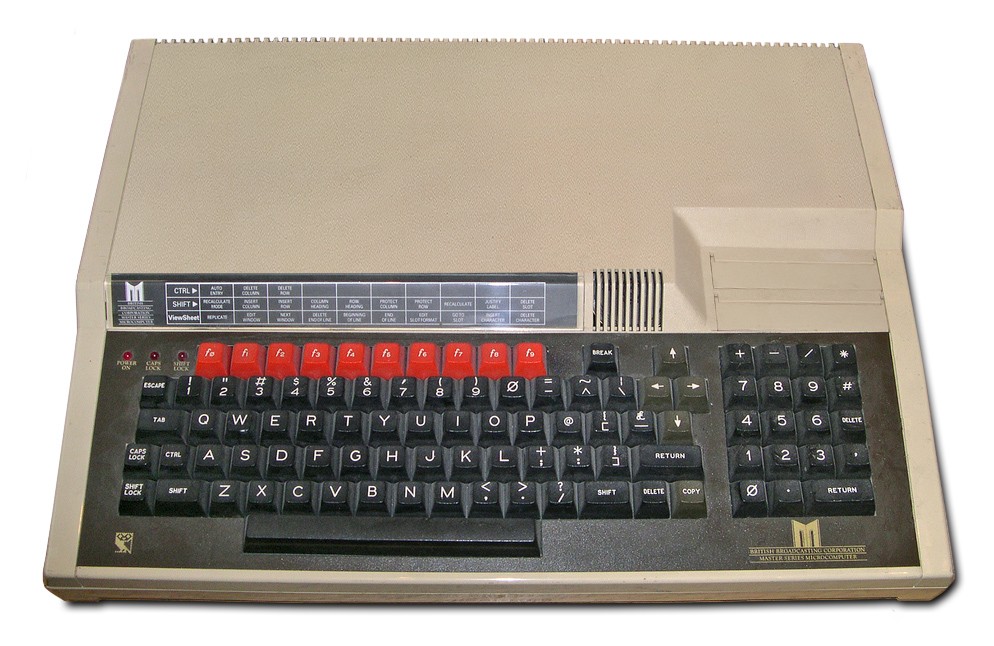
ProximusAl not my type... the Z80 was a better processor than the 6502.

#25 positor1

updated
TOU tariff charges fluctuate with the expected demand at varying times of the day
UFH Under Floor Heating
OP original poster
AP WiFi access point
SEG smart export guarantee
SSID service set identifier (wireless network name)
IP address internet protocol (A unique number assigned to your PC/phone to identify it on the web)
MAC address media access control (A unique hex number given to every WiFi device)
RSSI received signal strength indicator
TKIP temporary key integrity protocol (security system for WiFi)
STA station mode (WiFi router mode)
WPA2-PSK wifi protected access pre-shared key (security system for WiFi)
AES advanced encryption standard (security system for WiFi)
WAN wider area network (as opposed the home network)
TL;DR too long, didn't read (used on forums to promote succinct posts)
DHCP dynamic host configuration protocol (WiFi router auto assigns IP keys to connected devices)
FTTP fibre to the premises (internet)
DCC data communications company
MPPT maximum power point tracker (solar panels)
IOT internet of things
DNO distribution network operator ( MEB sic)
sic denotes the writer knows the information is actually incorrect (latin)
AIO all in one
EPS emergency power supply
EMS energy management system ( for dual ac3 inverters that do not play well without an EMS)
MCS microgeneration certification scheme
TCP - Transmission Control Protocol (security system for WiFi)
DOD - Depth of Discharge
API - Application Programming Interface
OCV - Open Circuit Voltage
TIOAOA - Turn it off and on again
SOC state of charge (the percentage level displayed for the battery (s)

H
#26 Hilditchhouse

Keep up the good work, I havent had such a good laugh for ages reading this stream, well done

#27 Cdent

stevelewis sorry, lost me a brie and cranberry XD

#28 positor1

updated
TOU tariff charges fluctuate with the expected demand at varying times of the day
UFH Under Floor Heating
OP original poster
AP WiFi access point
SEG smart export guarantee
SSID service set identifier (wireless network name)
IP address internet protocol (A unique number assigned to your PC/phone to identify it on the web)
MAC address media access control (A unique hex number given to every WiFi device)
RSSI received signal strength indicator
TKIP temporary key integrity protocol (security system for WiFi)
STA station mode (WiFi router mode)
WPA2-PSK wifi protected access pre-shared key (security system for WiFi)
AES advanced encryption standard (security system for WiFi)
WAN wider area network (as opposed the home network)
TL;DR too long, didn't read (used on forums to promote succinct posts)
DHCP dynamic host configuration protocol (WiFi router auto assigns IP keys to connected devices)
FTTP fibre to the premises (internet)
DCC data communications company
MPPT maximum power point tracker (solar panels)
IOT internet of things
DNO distribution network operator ( MEB sic)
sic denotes the writer knows the information is actually incorrect (latin)
AIO all in one
EPS emergency power supply
EMS energy management system ( for dual ac3 inverters that do not play well without an EMS)
MCS microgeneration certification scheme
TCP - Transmission Control Protocol (security system for WiFi)
DOD - Depth of Discharge
API - Application Programming Interface
OCV - Open Circuit Voltage
TIOAOA - Turn it off and on again
SOC state of charge (the percentage level displayed for the battery (s)
EVSE electric vehicle supply equipment. Most people commonly refer to EVSE as “EV charging station” or “charging point.
V2L Vehicle-to-load or V2L technology is much simpler as it does not require a bidirectional charger to operate. This is also sometimes referred to as VTOL. Vehicles with V2L have a built-in bidirectional charger and standard AC power outlets, which can be used to plug in any regular household AC appliances

R
#29 rivimey

Another attempt, starting from @positor1's version. The terms have been sorted A-Z, where appropriate abbreviations capitalised, and a longer explanation given. A couple of incorrect definitions fixed, and a few others added for good meaasure:

  • AES: Advanced encryption standard (security system, used in WiFi)
  • AIO: All In One (widely applied: all the parts for a system in one box; usually used only when other similar devices use distinct units)
  • AP: (WiFi) Access Point (A hardware device connecting WiFi signals to a Wired (e.g. Ethernet) network)
  • API: Application Programming Interface (A programming term, which has become more widely used. The documented software interface between parts of a computer system)
  • BMS: Battery Management System. A control unit that ensures the battery is used safely, not under- or over-charged or charged faster than it should be. Sometimes includes status reporting and overall charge control)
  • DCC: Data Communications Channel (or ... Company?)
  • DHCP: Dynamic Host Configuration Protocol (Method of assigning IP addresses on demand)
  • DNO: Distribution Network Operator (Company that runs the equipment, vs the one charging consumers)
  • DOD: Depth of Discharge (How much of the stored energy in a battery can be used without damaging the battery, in %)
  • EMS: Energy Management System (A control system whose job it is to monitor and apply rules to energy flows)
  • EPS: Emergency Power Supply (GivEnergy: an output on the inverter that is powered from the battery even when no grid available)
  • EVSE: Electric Vehicle Supply Equipment (Most people commonly refer to EVSE as "EV charging station" or "charge point")
  • Firmware: A computer program built into a device as a permanent part of it and usually necessary for operation. Often it can be changed with some special procedure. Contrast Hardware (the wires, components boards and boxes) and Software (user-interactive programs such as a web browser or App).
  • FTTP: Fibre To The Premises (Providing broadband/internet using only a Fibre-Optic cable all the way, vs using metal wires.
  • IOT: Internet of things (Umbrella term for gadgets, such as sensors, that are internet connected, rather than standalone)
  • IP: The Internet Protocol, backbone of the Internet (A unique number assigned to all PCs/phones/etc to identify them. See also TCP, UDP)
  • LiFePo: A type of Lithium-Ion Battery using Lithium and Iron phosphate (Ferrophosphate).
  • LiPo: A type of Lithium-Ion Battery using Lithium and and an organic Polymer such as polyethylene.
  • MAC: Media Access Control address (An address given to every network device by the manufacturer, usually 6 bytes long and usually written down in hexadecimal with colons between bytes: "33:58:22:ab:77:32". A byte is 8 binary digits, or bits, so a MAC is 48 bits long.)
  • MCS: Microgeneration Certification Scheme (UK Govt authorisation scheme for grid-connected small (<50KWh) power generators)
  • MPPT: Maximum Power Point Tracking (Algorithm used in solar panel DC converters to extract the maximum energy from panels)
  • OCV: Open Circuit Voltage (The voltage between terminals of a power source with no load attached. Normally much higher than the loaded voltage)
  • OP: Original Poster (In email or forum discussions the person who posted the initial question in this particular thread)
  • RSSI: Received Signal Strength Indicator (A tool measuring the quality of a signal as received, usually radio but not always)
  • SEG: Smart Export Guarantee (a UK Govt scheme for small power generators)
  • sic: Sic Erat Scriptum, "thus was it written". Indicates the writer knows something is wrong but it has been left uncorrected because it is a quote from some other source. Not capitalised.
  • SOC: State of charge (the amount of power (KW) left in a battery as a percentage of its currently known maximum value)
  • SSID: Service Set Identifier (wireless network name)
  • STA: Station Mode (WiFi router mode, alternative to AP, qv)
  • TCP: Transmission Control Protocol (common algorithm enabling computers to communicate lots of data; the fundamentals of the internet. See also IP, UDP)
  • TIOAOA: Turn It Off And On Again
  • TKIP: Temporal Key Integrity Protocol (name of a now-insecure WiFi password algorithm)
  • TL;DR: Too Long, Didn't Read (originally a rather rude response to a very long or overly detailed forum or email post; now used ironically by authors to signpost a quick summary of the remaining text)
  • TOU: Tariff charges that fluctuate with the expected demand at varying times of the day
  • UDP: User Datagram Protocol (common algorithm enabling computers to communicate very small blocks of data; the fundamentals of the internet. See also IP, TCP)
  • UFH: Under-Floor Heating (heating system that uses pipes or cables embedded in the floor rather than radiators, etc)
  • V2L: Vehicle-to-load or V2L technology is much simpler as it does not require a bidirectional charger to operate. This is also sometimes referred to as VTOL. Vehicles with V2L have a built-in bidirectional charger and standard AC power outlets, which can be used to plug in any regular household AC appliances
  • WAN: Wide Area Network (a data network that spans areas larger than towns, such as the Internet. Contrast: MAN (Metropolitan area, a town or city), and LAN (Local area, up to a building))
  • WEP: Wired Equivalent Privacy (name of a broken WiFi password algorithm)
  • WPA2-PSK: WiFi Protected Access Pre-Shared Key (name of WiFi password algorithm)
W
#30 wrefordj

rivimey Good enough for the wiki, now!