Backup Overload Faults

20 comments started 2023-06-06 last 2023-06-09
GivEnergy Products
M
#1 MikeBakke

I'm seeing repeated backup overload faults and before spending a lot of money with an electrician I'd like to be sure I'm understanding correctly.

I have a method 2 EPS setup on a 5kw inverter with a new EPS breaker box which the installer populated by moving existing circuits from the main box. I asked (probably wrongly) for ground and 1st floor sockets when I actually needed fridge (from gnd) and 1st floor sockets where router etc lives.

My assumption based on the timings of the faults - lunch or dinner time(ish) is that the kitchen is triggering this - I guess what confuses me a little is that the kettle alone is c. 3kw/h and that runs a lot through the day with seemingly no issue.

Q1. Even though there is no power cut the 2.6kw/h limit is there for any circuits fed by the EPS box? I've seen other posts saying that's so but the wording in EPS docs is confusing as that says circuits will be fed by solar/inverter until a cut. 99% certain it's how it is but would like to be 100.

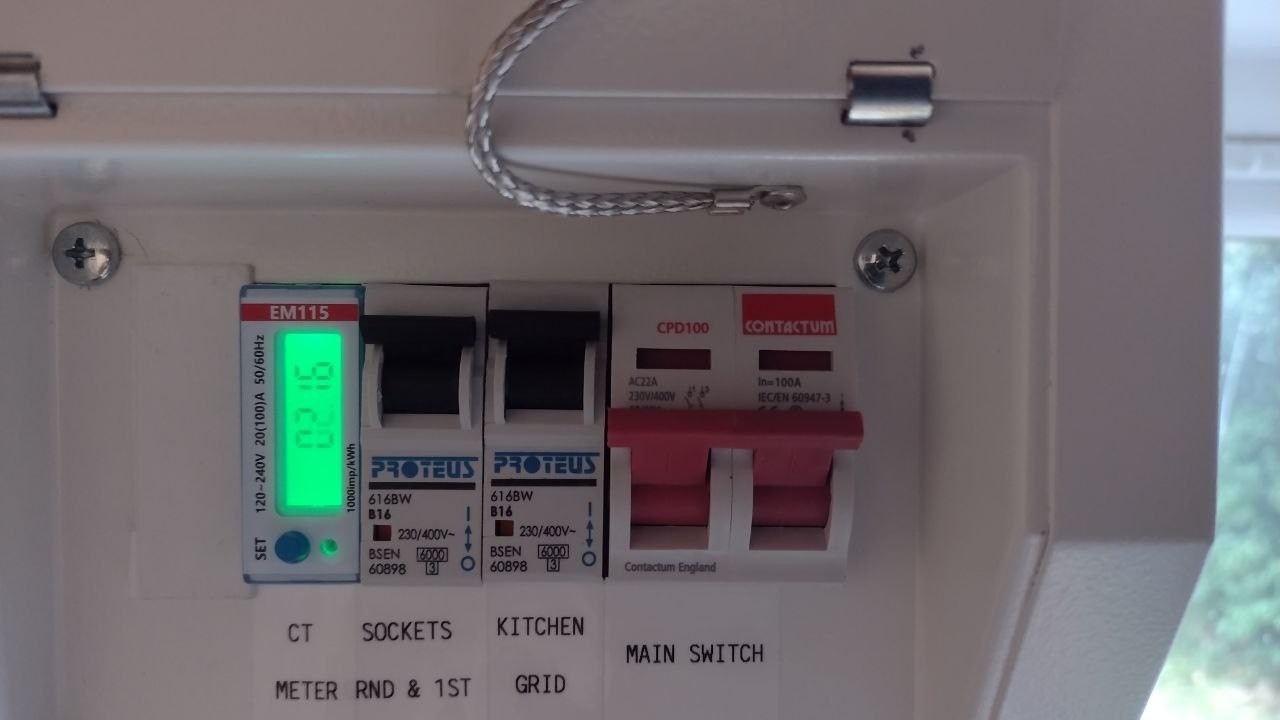
My EPS breaker box has 2 breakers labelled a). GND/1st Sockets and b). Kitchen Grid. Sockets makes sense but when I switched of the kitchen grid one nothing happened.... Installer did not document that but I will get it reverse engineered as I wouldn't trust any answer from them.

Q2. In addition to the two breakers there is a meter labelled CT and I'm confused as the EPS docs from GE do not show any options with that. Unclear to me if that's used for something else. Any thoughts?

My intention is to get an electrician in and most likely change to a fully manual switchover EPS to remove the issue. When originally installing I assumed failover was instant but I now see it's about 5 secs anyway so the router will die anyway. Only disadvantage I see is that if I'm out of the house then the fridge won't be protected. Will discuss with the electrician and ask for options.

T
#2 Tim

MikeBakke I think that the EPS can provide more than the stated limit (2.5kW in your case) if there is sufficient PV; probably the reason why the circuit hadn't tripped when boiling the kettle. The EM115 will likely be for inverter control (minimising import/export) and being fed from EPS is as good a place as any.

The EPS circuit should be designed such that it can never exceed the load capability of the inverter when running from battery only (2.5kW). You could get away with simply buying a lower wattage kettle, but my advice would be to change both MCB/RCBOs to 10A. That way, if the kettle is on and a toaster or microwave also gets switched on the MCB will trip and remind you that you need to limit the load. That won't protect the inverter when there's no PV and someone has a hairdryer on upstairs and the kettle downstairs. I don't think there's any simple way to achieve what you want without some rewiring.

S
#3 SteveCook

The item labelled CT is the EM115 meter. It just monitors power coming in/out of the house and tells the inverter. It does nothing else.
What was casing your faults
1 Are either of those brakers tripping, if so which one.
2 Is the MCB that should be close to the inverter that feeds this consumer unit tripping
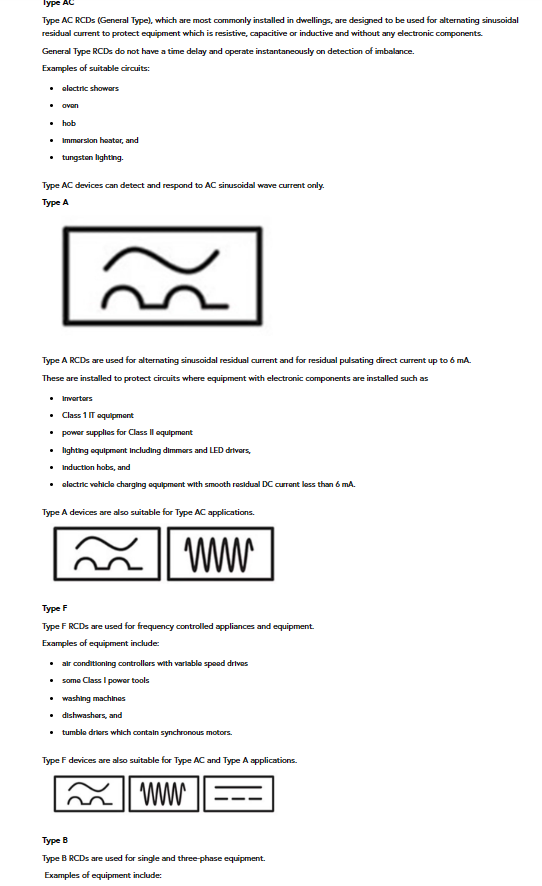
3 is there an RCD somewhere that could be nuisance tripping. RCDs can have problems both with PV/batteries (need to get correct type) and also with things that have water (kettles and washing machines).Crumbs on toaster elements can also cause RCD trips.

#4 positor1

SteveCook RCDs can have problems both with PV/batteries (need to get correct type)

what type do you refer to?

M
#6 MikeBakke

SteveCook Hi Steve - that's the thing - no breakers ever trip. I just see Backup Overload Fault in the notifications. Most clear by themselves but twice I've had to trigger a remote control reset after which it went back to normal.

M
#7 MikeBakke

Tim Hi Tim. That's what is confusing for me - if the battery is not feeding then either PV or Grid should cover the circuits on the EPS box?

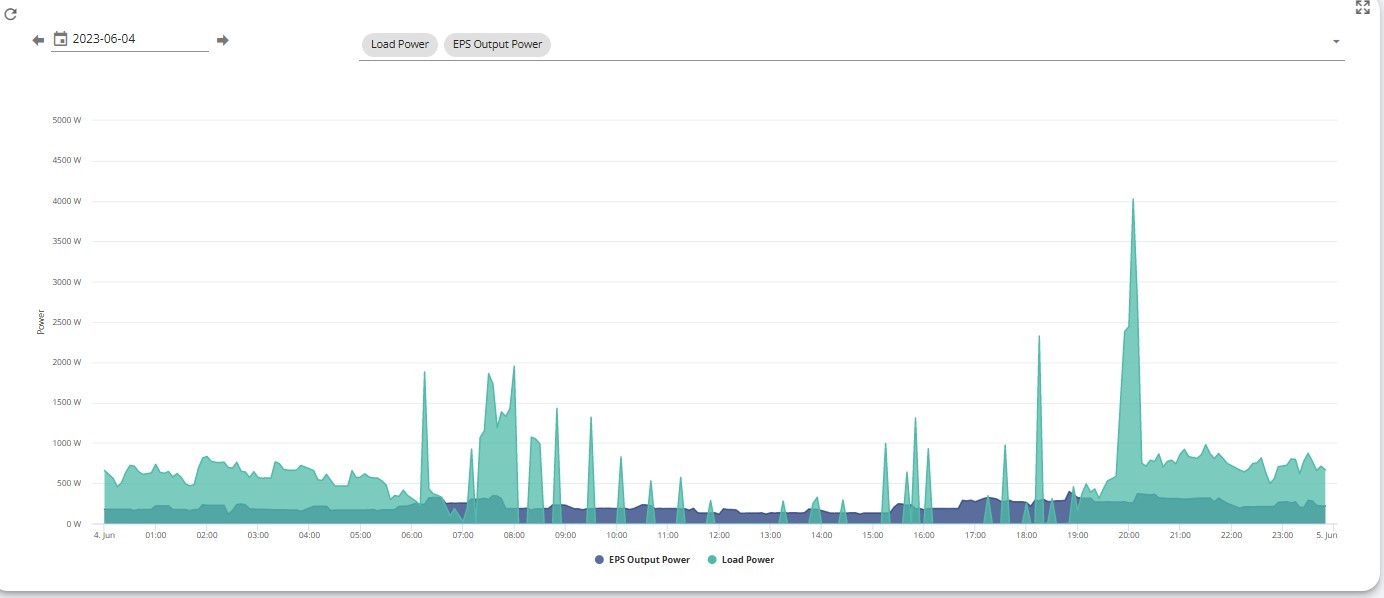
The thing is - I had no power cuts and no tripped breakers so I thought I'd be ok - I see days with max loads of c. 6kwh with no faults registered.

I know I need to rejig the EPS setup anyway but just concerned about the faults happening while BAU.

#8 hoggy

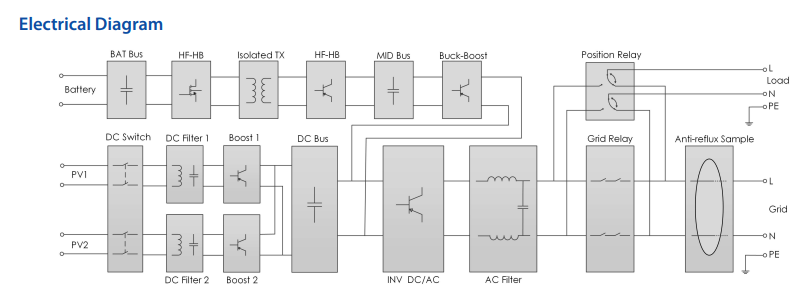
I'm in the middle of a teardown/writeup of the Gen 1 Hybrid but the EPS side is setup like this:

I.E it is directly connected to the inverter incoming AC side in "normal" operation (which in a round about way is powered by the inverter when it's running)
Only when the system detects a grid loss does it throw the relays over and then power directly from the inverter only.
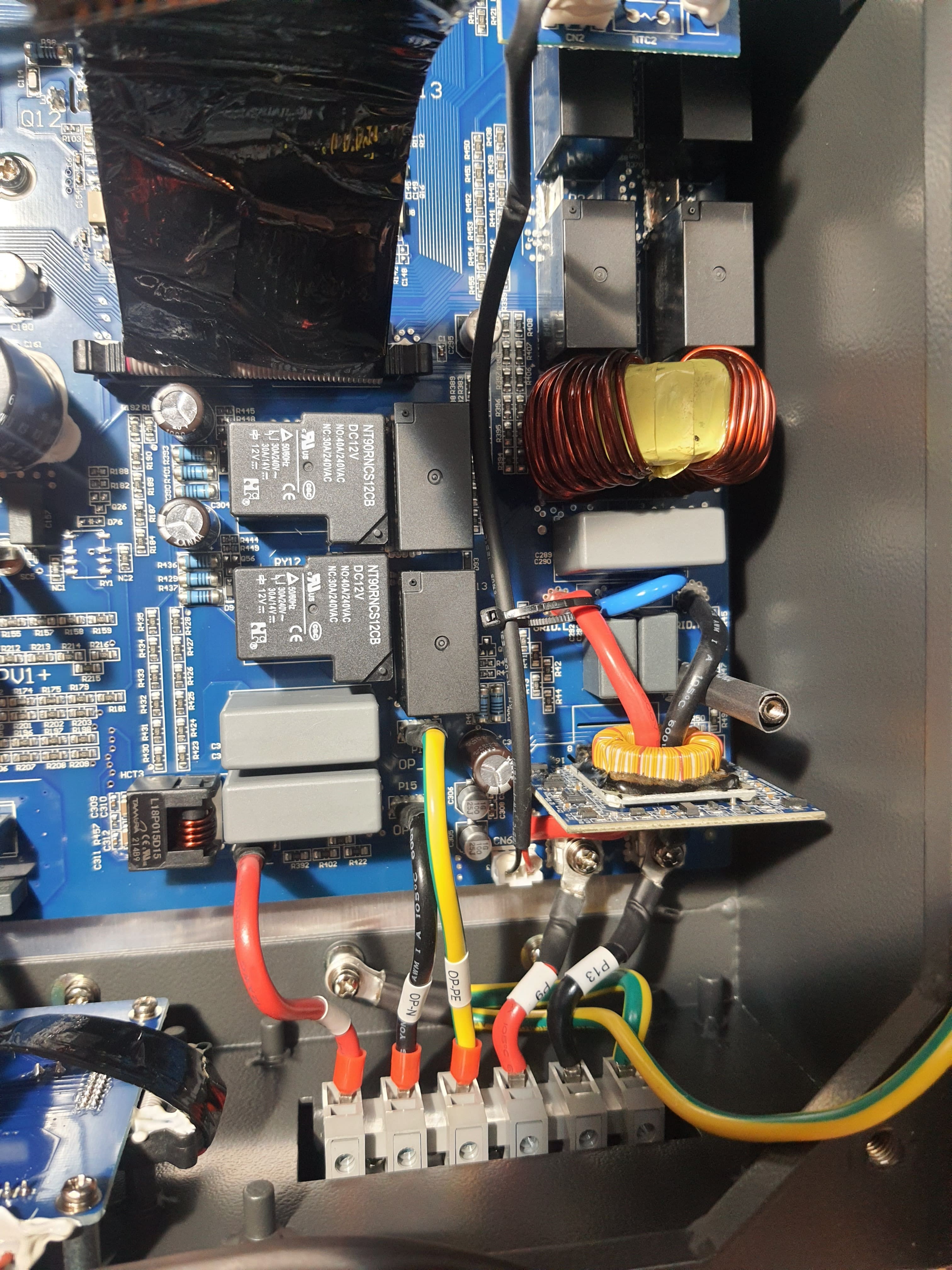
Pic of actual relays & CT's should anyone care:

M
#9 MikeBakke

hoggy Soooo - does that mean if the EPS side is not active then it should feed well over 2.5kw from the two EPS breakers from PV and/or grid? That was my start point but still not certain tbh.

#10 hoggy

In theory you are good until you overload the relays (I'm in the middle of this bit but believe they are 30A/40A depending on if they are wired NO or NC) BUT you can't really guess when your going to get a power cut so it's very wise to not go beyond the capability of the battery only power of the inverter. (so 2.6 / 3.0 / 3.6 depending on if your Gen1, AC, or Gen2/3)

Note: The relays may be good for 30/40A but the PCB tracks may not - i've not got that far yet...

M
#11 MikeBakke

hoggy So that sort of confirms that I really shouldn't be seeing backup overload faults without having experienced a powercut. My concern is that there is a system fault triggering these which any work I do on the EPS side is not going to address.

The EPS work needs doing anyway but I want to understand exactly what the situation is.

I will call support again and try to get definitive confirmation before engaging an electrician.

Thanks

#12 hoggy

MikeBakke For clarity, I'm not done tracing all this (I'm busy on the battery side) so it's not a technical support of it being OK or not, I have a feeling looking at the images that the EPS relays are actually the smaller grey ones below the NT90... ones (which are likely the main Grid Relays.)
Either way, ALL of the EPS readings no matter if fed from Grid or Inverter will likely be running through the Tamura CT ("HCT3" L18P0...) hence why your getting the alarms.
There's also a Neutral Earth bond that it makes in EPS mode (bonds N - E) which one of these relays will be doing.

M
#13 MikeBakke

hoggy Ah - ok. I think I'll get the electrician to look and probably get them to speak to GE support while onsite.

I need to rejig the circuits anyway clearly - hopefully that stops the overloads.

Thanks

S
#14 SteveCook

The EPS side is always live when mains is live and will feed your consumer unit pictured above.
Your kettle could be 3kW and if your inverter EPS is rated 2.6kW then that could be causing the issue you see

M
#15 MikeBakke

SteveCook Yes that's what I wondered but it confused me because often, I will have an air-fryer running at 1.5kw/h and also run the kettle with no faults and the kettle will run at 3kw/h 5 or 6 times a day. Current notification rate is c. twice a month.

S
#16 SteveCook

Dont get confused with kW and kW/hr.
kW is the instantaneous power (volts x amps)
KW/hr is the energy consumed (power x time. volts x amps x hours)
A very empty kettle may have a big power draw for a short period of time. A full kettle will have the same power draw but for a longer period of time.
On my EPS we dont have any big electrical consumption items (kettle/oven/toaster/dishwasher/washing machine etc).
If we lose grid and go to EPS we have to make tea by boiling a pan of water on the cooker gas ring.
House heating is gas boiler and EPS can run that.

EPS pretty much consistent over 24 hours (fridge, freezer, boiler, router, lounge TV/sky box, lounge lights).
House power goes up and down as big consumption items go on and off.

T
#18 Tim

SteveCook @MikeBakke Our setup is similar to Steve's in that there's a double switched socket on the EPS with a number of circuits fed from a 4-way extension. These devices are: BT FTTP; BT router providing home wifi; Dell Wyse for Home Assistant; Fire Alarm hub; Zappi Hub; Central Heating Hub; Oil boiler supply, including pump. That's it! If we had a short power interruption, we'd be Ok for phone, internet and heating. A longer interruption and I'd be running extension leads for lights and so on. We don't need to supply any heavy loads as we could use the gas hob for cooking and boiling a kettle in the short term. We could run an extension for the freezer if it was an extended power cut but fridges aren't included by default. Normal EPS load is <30W and 150-200W when the boiler is firing/pumping.

S
#19 SteveCook

SteveCook KW/hr is the energy consumed (power x time. volts x amps x hours)

Sorry should say kWhr (not kW/hr)

M
#20 MikeBakke

OK. I have an electrician booked for Wednesday and my gut feel atm is to change to a fully manual switchover with all circuits on the main board but I'll discuss options on the day. For the router and key servers it probably make more sense to put them on a small UPS to keep them alive during any switchover.

Wish me luck....

W
#21 wrefordj

MikeBakke I opted for manual changeover in case I forgot about the immersion being on the boiler circuit...
But for the internet, I have an APC ES700 Back-UPS ES. This seems to do the trick in case we should be out when the powercut occurs.