Thoughts...Solar PV or Mortgage Overpayment

48 comments started 2023-06-26 last 2023-06-29
Forums/Meta
K
#1 kram

After yet another delay in the installation of the solar system and another rise in the interest rates I have been left thinking.

The cost of solar is very high at the moment
The cost of electricity falling approximately 20% in the next few days
Panels/Inverters are always improving
Interest rates have gone up again and so have mortgage rates

Solar/Battery systems are looking at 10-20 year pay back periods.

Rather than just taking yet another delay, I am wondering if many (possibly most) people are better off taking the money from a solar install and instead using it to overpay the mortgage or shrink it at renewal.

An an example, I took some rounded figures for 20k worth of solar and it might pay for itself at 25p/kWh over 20 years. Now it's not that simple, but realistically the average saving is about £150 a month. That is everything generated saves or is sold for 25p (which is optimistic from July).

When you then look at dumping 20k on a mortgage when it comes to renew, then 20k gave a total repayment price of approx 30k less when looking at interest rates of 6%. Over 15 years it is £167 saving a month.
In turn that reduces the monthly payments, so making further regular overpayments more of a possibility or at least more likely that mortgage payments are managable.

Now that is a massive over simplification, it ignores so many factors, but since I imagine many people are in for solar to save money are we looking in the wrong place?

With rates going up and people concerned about mortgages, is mortgage overpayment in fact a better investment regardless of the amount?

R
#2 Rubikcube

Solar Panels wont save you anything if your house is repossessed. (Over)Paying the mortgage should be your first priority. And getting a smart meter.

K
#3 kram

Rubikcube

Smart meter is in, so I take advantage of ToU smart tariffs.

The panels not saving you anything if your house is repossessed was kind of the thought process that was going through the head.

I just wondered how many people rushed in to get solar to insulate against crazy energy bills, but are now seeing energy price drops have thought if they still need it.

Every man and his dog/cat appear to be qualifying as installers still, people are flogging solutions like PVCu in the 80s and it's not cheap. Waiting times are still very long so I can only assume there are huge queues of people still waiting.

As you say the quicker you can get rid of the mortgage the better.
Solar will help insulate people from crazy energy prices, but are we confident that electric will go up and not drop? If you have the money now, but might not later, then you could say it would help with the bills, but so would a rainy day fund.

I don't have a crystal ball, but beyond wanting to do the right thing for the environment, there really doesn't seem to be a strong driver for all the demand that is out there.

C
#4 chickengeorge

Professional financial advisor?

#5 hoggy

There's always outsourcing your generation to something/one like Ripple to consider.
Or (cue flak from everyone) DIY solar.... (2nd hand batteries and so on)

K
#6 kram

chickengeorge

I am not no, but it’s likely worth asking one.
Purely speculating at my end after chucking some figures into internet mortgage calculators.

K
#7 kram

hoggy

TBH getting an inverter wired in and then buying some DIY battery’s seems like a middle ground.

With an EV tariff you can buy cheap and consume later. Of course it would be quite a lot of DIY batteries to do that and not lose out.

Shame you can’t do v2g right now.

D
#8 deepanshus

kram maybe get a better quote from other installers, i installed 12 jinko 420w panel with Gen 3 5kw inverter and 9.5 kWh battery, all for 11500/- and I will end up saving 100/- in bills plus whatever I can get for exporting.

Z
#9 Zakalwe

I think your argument boils down to three main areas:

  1. Solar PV costs are improving, so waiting gets more "bangs per buck"
  2. Payback periods are likely to be longer given the short-range energy cost drops.
  3. Interest rates are high, so mortgage payback might be better.

Personally I'd address these this way:

  1. Technology is ALWAYS improving so you will ALWAYS get more bangs per buck in the future. However, we all have a finite lifespan and constantly delaying means that you never see the benefit. If you wait say 12 months, then in 12 months time there will be another technological improvement round the corner.

  2. I somewhat agree on this point, however you need to think in longer terms, especially when considering a payback of 20 years.

  3. In a world of high interest rates there is very little argument to paying off the mortgage early. From a purely financial point of view though, and especially if you have the means to pay back all or at least a substantial amount at any time, there are advantages to holding debt. High interest rates usually goes hand in hand with high inflation. And high inflation erodes the real world value of both money AND debt. So inflation will devalue your debt in real terms over time.

Purely thinking in economic terms is narrowing your field of view though. There is also an environmental impact to consider. Generating your own power has an intrinsic "charm" which can be overlooked. Also, solar seems to be a "gateway" into considering other environmental impacts of our lifestyles. People that get into solar in a lot of cases also end up with more green technology such as heatpumps, EVs and so on. In short, there's more to factor in than just the finances.

Also don't force your thinking into a black or white position. Why not do both? Maybe pay a smaller amount off the mortgage and get solar PVs without a battery?

What size is the mortgage? If it is say £50K, then I'd tend to pay it down. If it is £500K, then a £20k reduction wont make that much of a difference.

If it was me and I had to make the choice between only solar or pay off the mortgage then I probably would pay off the mortgage, especially if the £20K made a dramatic change.

B
#10 billG

hoggy I bought a 2nd hand Sunamp 10.5 kWh heat battery ( 3 years old?) it cost£550 (normally £2500,before installation costs) . I can now get all my summer DHW for free from PV saving 600 litres of oil. It Will pay for itself over 1 summer😊

I reckon my 4kw PV + 9.5 KWh GE battery + 10.5 kWh Sunamp heat battery will pay for itself in 5-7 years . Total cost system capital cost £10,000 on an interest free loan from EST , no vat on anything. I’ve halved my oil costs and decimated my electricity costs. Plus still have excess power perhaps for free 3000-4000 miles of EV motoring annually if I get one.

Bill G

H
#11 hamilton

I bought solar 2 years ago and got an absolute bargain (because no one was installing and the energy crisis had not happen).
last year I seen how the forums started exploding with panic buyers and suppliers unable to deliver. I chucked all my spare money into solar manufacturing companies which returned a large sum of money (when demand goes up, share prices rocket).
I have seen them come down significantly due to them being made in Taiwan and the solar boom is slowing, that is from the manufactures of equipment.
There are some good deals to be had at the moment such as the all in 1 which offers lots of extra functionality and capacity for very little extra expenditure.
I would either buy a system you really want or hold off until December, I am the same sort of person who walked into a wood burning stove company on the hottest day of the year and got a massive deal being the only customer that week.

Paying of the mortgage is good but if your doing things solely on RO!, super insulating your home and supper energy efficiency devices will get you the best returns. My Return on investment is around 10% for solar and batteries where my rental property was barely 6%

#12 THALL

If new mortgage interests are making you question purchasing solar panels then the answer is pay the mortgage. I don't think interest rates have come close to peaking yet. Core home first, home improvements second.

K
#13 kram

THALL

I was more looking at the crazy prices being asked by some and the very long queues.

Wondering if the queues might start evaporating as people still waiting decide to not bother.

To be fair we originally were due to get it in 2021 and the whole thing has become a joke of delays, changing specs and s lack of installers.

When I price up at midsummer the prices are not much less than our quote, so the installers profit is likely their discount rate.

I think I just raised the thread on the basis of people are still waiting for installations and I wonder if cancelling is a better financial proposition.

I can see panel and inverter prices going down already, so I am tempted to get a new quote elsewhere or just a refund and wait it out.

K
#14 KBoyden
  1. It depends on you age and family circumstances.
  2. I was told, and have always lived by the premise, pay off debts first in order of highest interest to lowest.
  3. Given the above, if you will save £100 a month, say, with solar why not install solar and overpay the mortgage £100 a month?
#15 THALL

kram It is one of those crystal ball questions. My daughters partner is a financial advisor and he thinks interests will peak by the end of this year at sub 6%. My uncle however is also a financial advisor (he has done my mortgage since my first home) is convinced interests will continue to rise for another 12 to 18 months and reach close to 8%. Then we have energy costs, another big who knows. I can see costs creeping up a little more to be honest, over the next couple of years maybe floating around £1900 for a typical usage 3 bed family home. However if funds are available I believe the investment in solar is something everyone should do. Not for cost reasons but green reasons. My missus wants a large veranda built on the back of the house big glass thing which isn't cheap. But she agreed that doing the solar upgrade first was a better plan. The veranda is next years project now, tad more expensive than a typical solar pv and battery install :-S

C
#16 chris_p

THALL is convinced interests will continue to rise for another 12 to 18 months and reach close to 8%

That is the highest/longest estimate I've heard yet. Someone has to be right, but I suspect the government will intervene if this looks a likely prospect. Otherwise middle England will revolt and with an election within the next 18 months, the Tories will want to minimise their loses or face 10 years in oblivion. /politicalDiscussionOver!

W
#17 wilfleek

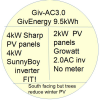
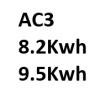
I reckon our system (5.2kWp, AC3 and 2 x 5.2kWh batteries ) will pay for itself in 10 to 12 years, based on 18 months of history and expectation of energy costs dropping from their recent peak. So a ROI of between 8 and 10%. And that is woithout utilising any "off peaK" tariffs like Go or FLux.

Will mortgage rates go that high? (mind you, I lived (with a large mortgage) through 16% mortgage rates, and so am rather baffled by the fuss over 6% rates today)).

Z
#18 Zakalwe

chris_p

chris_p or face 10 years in oblivion.

I think that they have pretty much guaranteed that by now.

#19 positor1

wilfleek
I was quoted 7 years pay back, with batteries unlikely to be much good at 10 years I wouldn't have proceeded with solar.
I don't have 12 months figures yet but it does look like i will be close to a 7 year break even point.

K
#20 kram

THALL

Doesn't the veranda need to block sun and allow you to enjoy the outdoor air? Sounds like it needs a solar panel roof 🙂

#21 THALL

Thats the thing, we have had much higher rates before. As @wilfleek mentioned 16%+ so I see no reason it wont get close to 8% or more soon.

Totally agree with Zakalwe the recent news they will block the public sector pay review bodies if they suggest over 5% for teachers and doctors is the final nail. They can't use "we went with the official body" then block it when they don't like it. Not that I want Labour in either......

As for solar, I have gone over the top with my system. Spent around £16k the last 3 years but being on Flux at the moment is generating over £250 a month credit, factoring in lower winter costs. EV so no more petrol, breakeven for solar and home battery costs 4 - 5 years current rates. Summer credits + lower winter grid use + no petrol.

#22 THALL

kram Lol I did see one that has a solar roof, but the one we want is all glass with sun shades for the roof and 1 side so hopefully cool my living room a bit. Plus all of my houses are now cover in panels, my garage is half covered, you can barely see a tile 😆

K
#23 kram

wilfleek

I am old enough to remember 6% being normal and whilst I didn't have a mortgage at 16% the family did.
My understanding is that the key difference is before earnings ratios of 3 time back when 16% happened, to 4.5 times when 6% was normal were not applied as rates stayed low.

You could see people taking out 8 even 9 times multipliers whilst rates were down below 3%. I got my bank offering me a 9 times multiplier mortgage which I thought was madness. Clearly not everyone thought this way.

We ended up buying our first house quite late, and compared to friends and family we have a smaller house, in a cheaper areas and hence a smaller mortgage, which was at a sensible debt to earnings ratio. I also calculated mortgage payment at 3, 5, 7 and even 10% to make sure I could (just about) afford the monthly payments.
The idea of the rates increasing to 6% and beyond will certainly be painful, but hopefully manageable, albeit because when had spare money we overpaid to get the debt down.

When I talk to some people, the mortgage at 6% would be nearly the entire monthly income, which is going to be a problem.

Essentially it's a shared problem, because banks shouldn't have leant such large ratios, but equally people should not have borrowed it just because it was offered.

Certainly I don't think the state should be bailing people out when some of these people are still taking holidays etc and stating they can't pay the bills.

#24 positor1

THALL
I had to endure 15% rates and took on 2 part time jobs as well as the full time one and had to have a lodger. younger members of my family tell me they are too tired to take a second job so i assume earnings pro rata are higher.
It has fascinated me for a long time the acceptance that 1% rates were as good as fixed.

#25 THALL

positor1 yep! With everything going up I got up and found a better paying job. Hell of a lot more work but an uplift in pay none the less. There are jobs out there.

T
#26 Tim

kram An interesting thread you've started. My two pen'orth is that it all depends on your circumstances. You could have a fantastic job with six figure salary and aren't worried about the cost of the mortgage, even if repayments double; you could have paid off your mortgage and have cash in the bank; you could be struggling to pay your mortgage and fear future increases. There's no single right answer.

For us, the prospect (nearly two years ago) of earning sub 1% on savings compared to "Putting it on the roof" was a no brainer. We are in our forever home, mortgage free, having overpaid when we could for over 25 years. We wanted to do our bit to save the planet for our grandchildren. The fact that it would pay for itself in less than 12 years was a bonus. Then the energy crisis kicked off, we changed the little petrol runabout for an EV and the pay back time looks more like 7 years. Obviously, if energy prices fall, the pay back will extend, but the money is on the roof now. We could export by flattening our batteries at peak times but I'm sure that the price differential will reduce as energy prices generally fall. But I'd also support those who say that if you are at all concerned with how you might afford your mortgage in the future, be cautious about committing to spend now that you could postpone for more certain times.

#27 Judith

Since no-one in Europe is going to buy gas from Russia anytime soon the supply of gas (for power generation in general and load balancing in particular) is going to be lower than the last 10 years. So the gas price will be higher and so will the electric.
The Middle East gas suppliers are restricting supply and cashing in (they have to their bonanza won’t last much longer) so there’s no respite there.
So the return on panels etc will remain sub 10years (imo) but you need to still be in the house to benefit.
So to OP pay mortgage down or don’t take on more debt!

D
#28 deepanshus

my take on this is, Solar panel is an investment, it will give you not only ROI but also a peace of mind.... like KBoyden said, repay the 100 from solar towards your loan. It will give you back much more once you are breakeven. Also, whatever you spend on solar will add towards the property value so it's not a depreciating asset. If for any reason, house mortgage rates might go down in 2 - 3 years, the solar will still give you returns as the demand of electricity is going to go up.

K
#29 kram

Interesting views and just to be clear I’m asking this more generally rather than thinking if I take on debts.

Interesting to see people suggest solar increases the property value. Is that the case now as I know as little as two years ago it made Jo difference or was potentially negative.

P
#30 phoenix

If you are asking the question, in my opinion do what relieves the most stress from your mind, which I would guess is at least in part the mortgage. If things get harder, you have a greater flexibility to adjust by eg. using less electricity/gas.
Not quite the same, but my parents have told me how they could only afford to pay my school fees by sitting under duvets whilst sipping the last few drops of heating oil left in the tank. Fuel became a variable cost which they could adjust, even though it meant personal discomfort for them.
I guess what that probably means is that if this is even a concern for you, stay flexible, pay down some of the mortgage and keep some as emergency funds, forget about a fixed investment in solar + batteries until you can do it without adding extra concerns to your life.
If I read you wrong I apologise - it's just another opinion, and if it doesn't help/apply to you, maybe somebody else benefits 😉

My personal opinion re batteries is that at current costs they are a questionable 'investment', and more a nice to have re energy security. A 7 -10yr payback period on something that we know will degrade considerably over that period, but are not quite sure yet by how much is essentially a gamble on the tech and the companies selling them. RoI is only relevant if what you have at the end is worth something in price or utility, which mostly remains to be seen.
Solar panels in my opinion are more of a known quantity due to them being around for much longer in domestic settings already. Which probably explains why the payback doesn't look so great - there's no such thing as a free lunch.
Environmentally, I remain utterly unconvinced that Li batteries solve very much other than load shifting/emission shifting, and I am unconvinced that this outweighs the material and environmental costs. They seem to me to be a 'nice to have' on a personal level, and an essential for the grid stability in a 'replaceables' world, though how plausible that is in reality remains to be seen. I use that word intentionally as offshore wind turbines that essentially rot in 20 years and require huge maintenance costs are not renewable energy, unless your definition means 'renewing the product'. Its a subscription service to another form of energy at the end of the day, one we in the UK will be priced out of producing if our current energy policies do not change ...

This will probably go down like a lead balloon, but hey, I can only do me and I'm seeing a semi-naked emperor ...

good luck to you!

P
#31 phoenix

kram Made no difference to me 3 years ago - I bought the house that I wanted and will never regret it. Was a bonus that it had solar already, but I planned to add that to wherever I bought and I never overtly considered the costs. Now, maybe it does make a difference, but I'm not convinced that isn't due to the fabled 'nudge unit', and if mortgage affordability becomes an issue for many, solar will be lower down the list of priorities imo and I'm not sure it will add much to resale.

Z
#32 Zakalwe

kram Interesting to see people suggest solar increases the property value. Is that the case now as I know as little as two years ago it made Jo difference or was potentially negative.

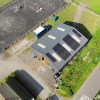
Two houses are for sale on my road. Both identical (4 year old development) except on opposite sides of the road. One has a south facing garden and was the development show house. The owner installed a 5.2 kWp array, GE inverter and 8.2 battery in Nov 22. The other house has a north facing garden and no solar. The difference in asking price? £5k.

#33 THALL

kram So when I moved nearly 3 years ago my last house had 4kw pv. All estate agents I had value my home said the same thing. Solar PV is a home improvement and the general rule was 50% of the install cost is added to the value of your home. I need to get my current home valued in 6 months for my re-mortgage so will see if this still holds true.

L
#34 LordHippos

This isn't a black and white question.

I still owe a good chunk on my mortgage (£170K) but it's manageable, even at 6%.

I put down £8.5K on a solar install about a year ago with battery etc, and since then I'd estimate it's saved me around £1.5K. Repayment should be 5-10 years depending on future energy prices.

The savings I make on energy usage can be overpaid each month into the mortgage, or otherwise gives me a buffer on available capital each month after expenses.

I have no regrets from taking the course of action I have, but my solar install cost was reasonable, and my mortgage isn't unreasonably high.

If mortgage is very high then paying that down would be a higher priority for me.

If solar install cost was very high then potentially waiting on that would also be a good idea. 15-20 year payback would be too expensive for me.

M
#35 MarkyG82

phoenix Another interesting aspect of wind power is the continued availability of generation. If a turbine goes down in a field of 20, you lose only 5% of the potential output. I believe they are also relatively quick to bring back online compared to a gas power station. If a gas station goes down then it can be months or years before it's back online while dropping 100% of the potential output.
I'm generalising of course and mostly regurgitating info I've received from elsewhere, but I think it mostly holds true.
In my area there has been a big increase in PV installations with something like between 1 in 5-10 houses now having PV. That's got to have an affect on the local grid (mostly positive?). Topic swerve over.

On topic:
Like most at this time of year, we are just now seeing the financial benefit of the PV install. I have a PHEV which is either charging from stored power or cheap overnight. We are also on the cusp of changing the other car to an EV which should further save us some running costs. These things all cost large sums and we are using inheritance money to do most of it. I'd obviously rather have my parents still here but they would approve of how we are spending their money.
We are also just coming to the end of the period of large nursery bills. All of this will get us into a phase of additional monthly "spare" cash. The intention is to pile some of it into the mortgage as we have just fixed for 5 years onto something we know we can afford but would prefer to reign it in.

K
#36 kram

Zakalwe

I’d suggest that’s more for the garden direction personally, but kind of why I’m asking.

Z
#37 Zakalwe

kram Pretty much. The solar seems to have made no difference to the price. Someone will get a bargain.

J
#38 Josie

MarkyG82 re effect on the grid - our DNO has limited us to 3.68KWh and when we queried it, they said it's because a lot of other houses in the area also have PV (they do!) and the grid can't handle letting people export more as we're all on the same line. Which is really sad because it means that the more people get pv, the more pressure on the grid, and people can't export as much as they'd like at peak times to reduce pressure on the grid. I thought solar and battery was supposed to be the future (if it became mainstream). So really the grid needs an upgrade but I'm not hearing anything suggesting that's on the cards.....

R
#39 rjp

Josie The G98 process should in theory allow them to track which parts of the grid need enhancing to cope with increased rooftop PV contribution. Whether they do anything about it is another matter...

#40 RHardie

Paying off the mortgage is never a bad idea. i am fortunate not to have one so i figured panels on the roof give a better return than cash sitting in the bank. Solar PV certainly gives a better ROI than a new kitchen or bathroom but for some reason people seem happy to extend the mortgage to have one.

P
#41 phoenix

MarkyG82 Another interesting aspect of wind power is the continued availability of generation. If a turbine goes down in a field of 20, you lose only 5% of the potential output. I believe they are also relatively quick to bring back online compared to a gas power station. If a gas station goes down then it can be months or years before it's back online while dropping 100% of the potential output.

Honestly, that comparison makes little sense to me as you really are comparing apples and oranges when you compare the downtime of a single wind turbine to the downtime of a modern power station.

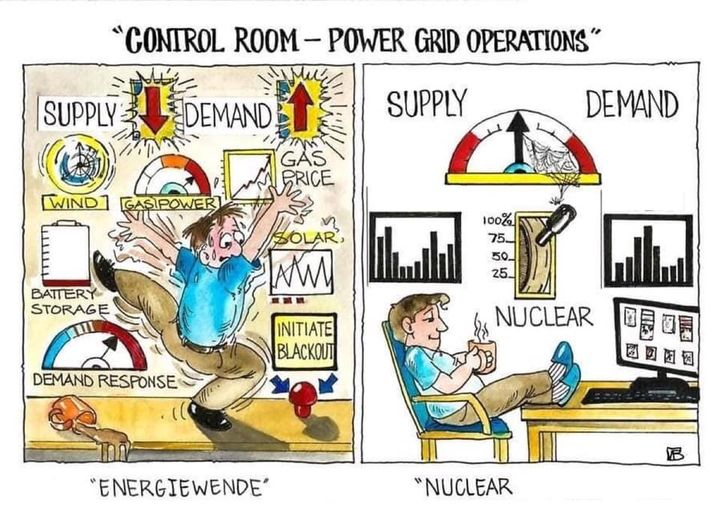
More relevant would be to discuss the 'downtime' of that whole 'field' of turbines due to too much/too little wind, or simply the variability of solar and wind, and the costs of having to have back up Combined Cycle Gas Turbine plants ready to take up the slack in order to avoid blackouts, and the costs of dialing down those plants when the turbines are operating at full capacity and the CCGT's have to turned down (at a cost of efficiency) to balance the grid. This complication of adding wind and solar is rarely discussed, but I am glad to see that a few articles have made it into the press recently, as it needs eyeballs on it or we go dark. I honestly believe the leadership of this country is virtually clueless on this with their Oxford PPE degrees.

The joking mention of reintroducing the CEGB in another thread does not seem so funny to me in the context of the imminent renationalisation of Thames Water due to mortgaging the assets and running out of cash to maintain a system they have blatantly failed to maintain, all whilst paying themselves and shareholders very nicely. If you think this has not happened to 'our' power companies too, I have a bridge to sell you. And we will all be on the hook for the bill ...

K
#42 kram

Not that I'd have a big issue renationalising the water companies, because frankly I don't think they have invested enough in reservoirs and in waste water management etc.

Winter comes too much water where do we put it, then summer comes and we have not got enough water so hose pipe ban. I dunno maybe store the winter water in reservoirs to keep the river levels down a bit and then say discharge it in the summer when the levels are lower.

Oh and sewage... stop pumping it into rivers/sea at what at least to many members of the public looks like pretty regular intervals?

I suppose though, when asked if the power companies done the same to themselves... some have others less so, but solar and batteries give a degree of protection should it all go to rats muck.

W
#43 wildybeast

Mortgage overpayment will reduce your mortgage however, your pay back from the grid could be used for the mortgage overpayment, net result, you pay mortgage earlier but you also have panels, and if you have a battery too will save you loads on top plus add to the value of your house

D
#44 deepanshus

kram i guess in the olden days where the solar was on lease this was a great negative as you could not do any conversion. Now that the prices have reduced a lot and you own the whole system, it's not very complex to remove the panels while the loft conversion is ongoing and put them back up once done. Also, in terms of sustainability, you score more brownie points ! i see no reason why it should be anything but a value add to your house and for the prospective buyer

M
#45 MarkyG82

Josie and phoenix My points were more to add to the discussion as many might not consider them. The bit about the single turbine vs whole gas station is relevant I think as it's a running maintenance thing. But yes I agree it's not all black and white and a balance must be drawn. Very long term we need a solution to drop gas fuelled power and chucking wind and solar at it isn't the answer as you have suggested. Then the micro generation of the DNO limiting the output comes into the conversation and we all have more issues. I say lets get bolt croppers out and all go off grid!

P
#46 phoenix

kram Not that I'd have a big issue renationalising the water companies, because frankly I don't think they have invested enough in reservoirs and in waste water management etc.

Totally agree, but the bigger issue is that the financial problems are largely due to financial engineering and an industry that was privatised debt free is coming back in a worse physical state, stuffed with debts whilst those responsible will likely get away scot-free ...

kram I suppose though, when asked if the power companies done the same to themselves... some have others less so, but solar and batteries give a degree of protection should it all go to rats muck.

True to a degree - they would likely claw back as much as possible through the standing charge, but would probably have to do some through surcharges above a certain usage level for political reasons - we got a glimpse of this latter line of thought over the winter. Obviously solar etc only protects against the latter.

Going back to your original question though, I personally feel mortgage prepayment is a better option at least in part. If rates go up, you'll be happy. If they go down you will likely be able to withdraw some capital for the solar if you still want it. Personally I don't like participating in crazy markets, and am interested to see if things cool off in the next 12 months. That's when we will find out which suppliers and installers are going to last - the ones who didn't over-leverage, and provide a quality service at a reasonable price 😉

I also strongly believe the gov will have to back off on their net zero timetable as it does not seem mathematically/physically possible to achieve. A more balanced approach over a longer time period, involving nuclear, seems like the only way to get there anyway without decimating living standards. People seem to be waking up to this (apart from the Marxist Death Cult aka Just Stop Oil Painting). That will likely cool the market a little and give supply a chance to catch up with demand.

P
#47 phoenix

Came across this 5 minutes ago, seemed apt!

Needs to be part of the mix

K
#48 kram

Sadly they allowed Hinckley B to stop generating and cool down. Hinckley C won’t be going until 2026 and has a strike rate of £90/MWh.

At the time people were losing their s£!t over that rate, but it looks like a good bet these days. That’s probably 12-15p per kWh once you put some losses and margins in there.

Still way cheaper than today, but at the same time probably a darn sight more than wind/pumped hydro and tidal power.

Like nuclear both are predictable, as excess wind pumps water back up for when wind is low. A few nuclear stations with much more dependable renewables is a good thing.

Solar should be on buildings, not in fields and wind turbines in fields/sea. They compliment each other as wind tends to do more in poor weather when solar does less.

I was doing some sums again and I think a 9-14 year payback at 25p per kWh looks standard.

The points about overpayment by you electric bill savings is valid, albeit only £5-7.5k over an 5 year mortgage.

It does give some stability vs peak usage or peak draw rates and also if there are brownouts.