Storage Battery Savings: Estimated versus Reality.

39 comments started 2023-06-30 last 2024-04-09
GivEnergy ProductsAC CoupledBattery
#1 ZenSlo

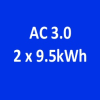
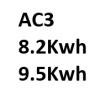
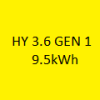
Like many users of this forum I spent a lot of time over the last few years wondering if adding battery storage to my existing FIT PV system was economically justified. About a year ago I decided to go ahead and ordered a GivEnergy AC Coupled 3.0 (Generation 1) Inverter and two Giv-Bat 9.5 (Generation 2) 9.5 kWh Batteries to add to my 10 year old 3.99kWp PV system.

Over the last 10 years my PV system has produced on average 3,895kWh per year.

Before ordering my battery system I modelled the potential saving using my actual day to day solar profile from the previous year and my existing usage pattern, whilst using Octopus “Economy 7" tariff. My model suggested that I should save, on average, £5.42 per day.

My model assumed (incorrectly) that with SolCast and automatic daily adjustment I would get my “AC Charge Upper Limit” optimally correct every day.

My model assumed (incorrectly) that I would reduce unwanted power export to very near zero.

My model assumed (incorrectly) that I would get round trip battery efficiency of 95%.

My model assumed (incorrectly) that I would not have to import significant power whilst my battery was charged.

In trying to work out the actual saving my battery system has made I am lucky that I have a real import/export meter on the feed to the battery inverter and I do not have to rely on the figures produced by the inverter itself. (For example the sum of my inverter measured “solar to battery” and “grid to battery” is only 90.6% of what my external import/export meter says it is.)

To calculate my actual saving I have used only the externally metered export power from my battery and assumed that this is all at my day rate (this is what I have saved).

I have assumed that my “solar to battery” power is “free” and that my ”grid to battery” power is at my night rate (increased in line with the actual round trip efficiency of my battery system currently 77.4%). I have assumed that the ratio of “solar” to “grid” as recorded by my inverter is correct.

With 65 days of data so far my daily saving is £2.69.

Whilst I might be able to slightly improve my prediction of the optimal “AC Charge Upper Limit” over time I am resigned to the fact that my saving is unlikely to exceed £3.00 a day)
#2 THALL

Just wondering if this is a positive or negative post? It sounds positive as 1 you are getting fit payments with the added bonus of storing unused solar (up to 3kwh) but then based on the saving amount you calculated vs what you are actually saving are you not happy with the saving?

You should see higher savings in the winter months, charging at the reduced price and running on battery power etc. Until you have a full years worth of data you will not see a full average saving. I do not have a full years data yet either as I keep adding to my system. But it does need a whole years worth to really see the gains.

#3 ZenSlo

What I am seeing is a considerably lower ROI than I expected.

I just wanted to record what I expected to see versus what I am currently seeing. I am aware that because I do have an external import/export meter on an AC coupled inverter (and I don’t think everybody has) I may have access to better data than some others who are only relying on what their inverter is telling them.

For the record my model forecast savings of £4.62 in January and £6.13 in June.

I am really interested in how others are measuring the savings produced by their AC coupled battery systems and hoping some one will explain why it is better than I think it is.

K
#4 killythebid

I am not sure I understand how you are using the batteries. Do you not charge them during the day and use the stored energy at night when the sun has gone in or are you hoping to export the batteries' energy and make money that way and charge them at night?

My expectation is that the normal use of the batteries is to use as much of the self-generation from solar oneself rather than export. That may not be so worthwhile of course if you have an older advantageous FIT agreement.

I would have thought that the inverter parameters to force timed charge and discharge would be worthwhile if the objective is to charge at night and sell during the day.

Otherwise I think I have missed something.

S
#5 stevelewis

ZenSlo if you consistently achieve £2.69/day, that's near enough £1000/yr, so not too shabby.

Reality is that you won't save so much in the winter months as you'll be paying off-peak rates for some of your charging.

Depending on your tariff and usage, you may have achieved a better ROI with a smaller battery so it gets fully exercised more often. The biggest saving comes with the first 5kWh and there's minimal benefit in going above the capacity that can be charged in the overnight off-peak period and used on a daily basis.

#6 ZenSlo

I am on a 11 year old FIT schedule and get paid for a presumed export of 50%.

As I do not (currently) claim any payment for actual export my FIT payment remains intact.

Likw most people I am using my battery both to avoid any unwanted PV export (by storing all my excess “PV” energy) and by buying as much of my “grid” electricity at “night” rate.

Each morning (00:30 to 07:30) I charge my battery up to a preset limit at my “night” rate.

I set the preset limit using SolCast so as to leave room for the expected PV excess.

I very rarely have my battery above 95% or below 10% so this is working fairly well.

#7 ZenSlo

The point about a better ROI with smaller capacity is well made. My model allowed me to adjust battery capacity and suggested an optimum capacity of around 12kWh with perfect PV forecasting. However with 7 hours of “night” rate I can fully charge my battery if required.

The biggest difference between forecast and actuality was the much lower AC round trip efficiency than I was expecting.

K
#8 killythebid

If the solar capacity is not charging the batteries sufficiently while the sunshines the amount of kWh installed was too much. It may have been better to just have one 9.5kWh battery.

#9 ZenSlo

For reference over the last two weeks I have had solar input as high as 23.28 kWh (2023-06-21) with an average of 17.9 kWh. So not too much excess battery capacity.

#10 THALL

Ok so weather prediction is generally crap. I have not used solcast and not going to bother.

I would of thought you could capture 80% of you previous solar export? But my thinking for that would be to not charge from grid at all during the Summer.

I could be wrong but you lose 5% going in and 5% out, 10% round trip loss. AC to DC, DC to AC. What loss percentage are you seeing?

As the AC3 can only provide 3kw on your last point about importing while battery was charged is that purely due to usage of high power items? Oven? Heating?

Personally this time of year I do not charge from my batteries from the grid at all. I will only enable grid charge late September. Weather predicting I wont touch based on forecasting here id say they are right 60% of the time.

K
#11 kram

But your AC3 can only discharge a 3kW and charge at possibly 3kW. When the battery gets too hot or cold it’ll slow down.

Your full 7 hours at 3kW would give 21kW, but at 85% efficiency 19kWh stored really = 22kWh in.

But ignoring that side of things essentially if you’re using a few things at once or have an electric oven on it’s not hard to blow that 3kW.

Maybe see if your kettle is a 3kW one and if so replace it with a 2kW version. No power saving but drawn over a longer time so less likely to blow the 3kW limit. Then repeat with your other high draw items to see where you end up.

I’d you’re generating too much or you’re going over the 3kW, could you buy another AC3 and split the batteries to get 2 x AC3 + 9.5.

Probably cheaper to just look at the consumer items, but if AC3 play nicely together it could be an option.

The AIO has 13.5 ish kWH usable but can charg/discharge at around 5-6kW.

S
#12 stevelewis

THALL I'd beg to differ on Solcast, but you need to understand what you're doing: the GE app displays the P50 forecast, with an equal probability of more or less generation. Not helpful if you are trying to maximise self-consumption and also avoid peak import. Use a more pessimistic estimate, automate and leave it to do its thing is my recommendation.

#13 ZenSlo

The actual AC to AC round trip efficiency of my setup as measured by my external import/export meter is 77.4%.

S
#14 stevelewis

kram there's merit in choosing new appliances widely, especially induction jobs and immersion heaters, but a big shopping list could easily outweigh any savings as the 3kW limit on the AC system only applies after dark. On a sunny midday, max consumption without export will often be over 6kW due to the 4kWp of PV on top of the battery and even on a typical day will be over 4kW total for much of the day.

K
#15 kram

ZenSlo

Dumb question but I assume the wiring is thick enough witg a bit of headroom? Is the inverter somewhere warm?

Heat is inefficient and both of the above would potentially contribute.

Have you tried charging in at 2.2kW (10A) and then seeing what results you get?
If the inverter is somewhere warm maybe find a way to cool it in the hot months?

K
#16 kram

stevelewis

Indeed, but then I’m assuming the battery is being drained after dark. The items I’m talking about are cheaper items like the kettle.

The bigger ones you just use in an informed fashion and be a bit more careful when they require replacement in the future.

Re solcast do you mean for example a 90/10 forecast rather than 50/50

S
#17 stevelewis

kram yes, Solcast provides a 3-point estimate. It's what I use in my PALM code and can be user-configured. My default is 35% so the odds are always in my favour. 😁

K
#18 kram

stevelewis

As I will be using this, what do you mean sorry?
I went onto a website and did the system and got 90/10 shown. You’re talking about 35%… I assume 90/10 means 90% it will happen but I could be wrong.

Would you mind clarifying so I can use it in the best way if we ever get batteries. 👍

S
#19 stevelewis

kram 90=90th percentile for generation, higher on only 10% of days.

#20 ZenSlo

I have found that although SolCast is far from perfect it is good enough for me to automatically set (using Node-Red) my “AC Charge Upper Limit” each day in such a way that during the last 24 days I have never exceeded 95% or gone below 10% SOC. (This presumably means I have made to maximum saving possible during this period?)

During this period I have saved an average of £3.28 per day, of this £3.01 comes from storing excess solar and £0.26 from using lower cost “night” grid rates. Obviously the ratio between “solar” and “night” saving will change over the year but both still worth having even in June.

#21 ZenSlo

Does anybody else have a value for AC round trip efficiency measured by an external import/export meter?

Is 77.4% unusual. (My batteries are in a cool place)

#22 ZenSlo

Because I have an external import/export meter connected to my AC coupled inverter I am able to compare its readings with those produced by the GivEnergy website.

So for example the sum of “Battery to Home” and “Battery to Grid” should (I think) be the same as the “export” as measured by my external meter. In fact it is 17% higher.

Similarly the sum of “Solar to Battery” and “Grid to Battery” should be the same as the “import” as measured by my external meter. In fact it is 10% lower.

Does anybody else get comparable readings? Or have I missed something?

T
#23 TX200

ZenSlo I think you’ve got it a bit mixed up.

Import is grid to battery, and grid to home

Export is battery to grid, and solar to grid.

K
#24 kram

ZenSlo

I don’t yet, but it’s more about the inverter being cool as it’s doing the conversion. It just seems very low to me.

10kWh @ 90% in = 9kWh which at 90% = 8.1kWh.

90% conversion efficiency isn’t crazy high and I say was a bit pessimistic.

#25 ZenSlo

TX200 I don’t seem to have clear enough about the import/export meter I am talking about.

I am NOT talking about the house meter, I have an additional Emlite-ECA2 import/export meter wired directly before my AC coupled battery inverter. All the AC power going to and from my batteries goes through this meter. No other power goes through this meter.

This meter exactly measures the AC round trip efficiency of my battery system and it is 77.4% measured over about 60 days.

Both my inverter and my two batteries are in a cool place.

Does anybody else have a similar meter and if so what AC round trip efficency do you get?

S
#26 stevelewis

ZenSlo if that's what you've measured, then that's the efficiency of your system, give or take a few percent for measurement accuracy.

I suspect that your system is spending a lot of time idling and I'd expect efficiency to increase slightly if you had a higher battery throughput. I'm running at about 1x full cycle per day across the year.

Out of interest, how much battery capacity and PV do you have if you're not fully charging even in the high season? I'd expect the battery to regularly hit 100% in May/June and export a good chunk on most days too. Maybe you have a far higher winter load, such as an ASHP, so the battery will get heavier use in the winter with off-peak storage?

J
#27 Jerrytaff

THALL With the Octopus plunge pricing, on their agile tariff, why wouldn't you charge your batteries from the grid? Tomorrow there's a period when you will get paid 15p/kWh for taking energy from the grid. It is actually worthwhile to dump energy from the battery before hand, turning your panels off, forcing your battery to charge over that period. Perhaps its a lot of hassle to make £1-50 on a 9.5kW battery. However, it's definitely worthwhile if you are also being paid the 15p export rate. Such a shame that I'm still waiting for my export MPAN

#28 Hook

Jerrytaff you can’t get the 15p export with the ‘smart’ tariffs. You can get it with the tracker and obviously the best export tariff is the flux, but that has higher import costs.

#29 THALL

Jerrytaff Well yes if you are on agile etc. But I have all this tech to be greener and I want the batteries to last as long a possible at the best possible health. I know the larger batteries have unlimited cycle 10 year warranty but I don't think that model fits with me wanting to be greener. Though currently I am putting 8kw @ just under 20p/kwh into the grid for everyone else to charge from :-)

My goal, minimum grid import.

#30 ZenSlo

Thanks to everybody who has responded to my original post.

What I seem to have learnt so far is that with an AC coupled battery storage system:

1) The actually saving will be less than you anticipate.

2) Without an external import/export meter on the AC feed to your inverter you will never know how much/little you are saving.

3) If you use the figures reported by your inverter you will significantly over estimate your saving.

4) Nobody else seems to have an alternative/better method of calculating their saving that they are happy to share.

#31 THALL

ZenSlo So with all that in mind, if you had this data to hand pre purchase would you have still purchased the system?

K
#32 kram

And the problem with DC hybrids is it’s likely you’ll never know…

#33 ZenSlo

I would certainly have done some more research. I am still hoping someone is going to point out why I’m wrong with my calculations.

#34 ZenSlo

THALL I would certainly have done some more research. I am still hoping someone is going to point out why I’m wrong with my calculations.

#35 ZenSlo

Thanks to everybody who has responded to my original post. I now have a year of data that might be of interest to anybody thinking of adding AC coupled battery storage to an existing FIT PV system.

My annual average daily saving is £2.24
My inverter records only 92% of actual input energy as measured by my external meter.
My inverter records over 118% of actual output energy as measured by my external meter.
My AC round trip efficience is 79.1% as measured by my external meter.

I have found that although SolCast is far from perfect it is good enough for me to automatically set (using Node-Red) my “AC Charge Upper Limit” each day in such a way that during the last year I have rarely exceeded 95% or gone below 10% SOC or exported any solar except when on holiday and the sun shone at home.

What I seem to have learnt so far is that with an AC coupled battery storage system:

1) The actually saving will be less than you anticipate.

2) Without an external import/export meter on the AC feed to your inverter you will never know how much/little you are saving.

3) If you use the figures reported by your inverter you will significantly over estimate your saving.

4) Nobody else seems to have an external import/export meter on their inverter.

5) Nobody else seems to have an alternative/better method of calculating their saving that they are happy to share.

R
#36 Rubikcube

ZenSlo My inverter records over 118% of actual output energy as measured by my external meter.

If you have anything connected to the EPS output, it will be recorded as output from your inverter but not go through the external meter.

S
#37 SimonP

ZenSlo I haven't read all the posts here, but £2.24 per day is over £800 per year -- seems pretty good to me? And you're helping balance the grid and using energy stored when it's less CO2 intensive. These are all good things. It's not just about getting a return on your investment, that's a bonus. Or am I being idealistic / naive?

#38 nophead

Since the round trip involves two inversions with probably mid 90's percent efficiency and the battery loses of a charge and discharge and they all get multiplied together it doesn't seem unreasonable to get 79.1%. That would be an average efficiency for each of the four stages of about 94.3%, which doesn't seem too bad to me. To get high 90's efficiency at high power you would really need the latest technology. Not sure about battery loses but they do have internal resistance and produce heat.

The only mystery is why the inverter figures are so much different.

V
#39 Vestas

nophead Inverter only "counts" chemical losses incurred during charge/discharge, which is around 4-5% worst case.

It doesn't take the AC-DC-AC conversion losses into account, which is another 15% if its full rate charge/discharge. Pretty sure it actually did take them into account on a previous version of the portal but I may be misremembering.

Also the meter we have on the output of the inverter shows the EM115 meter is about 8-10% out on readings. Smart meter agrees with the meter on the output of the inverter.