
Battery Operation during Winter

28 comments started 2021-11-10 last 2021-12-11
GivEnergy ProductsBattery
A
#1 AlanDenison

I have two 2.6kWhr battery packs. During the Spring, Summer and Autumn, I will generally use much or all of the total capacity of the two battery packs most days, however during winter I generally don't generate sufficient to top up the capacity of even one of the two packs. However since both packs Battery Management Systems are drawing power from their pack, in dull periods, when there is little or no Solar generation, the battery packs need topping up from the Grid to keep to their 4% minimum 'capacity'. This draws circa 0.8 - 0.9 kW on each occasion. In dull periods this can occur each day, and that top up energy is then expended soley to drive the two Battery Management Systems.
I am contemplating whether I should switch off one of the two packs over the period November to February so that only one of the two packs is operational and therefore only one of the two Battery Management Systems is drawing power. I am assuming therefore that this regular top up charge will then reduce to 0.4kW per occasion. I am unlikley to notice the reduced battery capacity available to the system.
My questions:

  1. Is there any risk of long term damage to leaving a Battery Pack switched off for an extended period (say 4 months - or any other period)? Assume the Battery Pack is at the "4%" capacity when switched off.
  2. What are the implications of switching back on a Battery Pack that had been switched off for a period - would that automatically trigger an calibration cycle (which would then also use energy negating any potential saving).
  3. Would I be better off alternating the battery that is swtiched off between the two, so that the period left 'off' is much reduced (for example changing the pack that is 'Off' each month, or each week)? If so, what would be the recommended period between swapping the 'Off' and 'On' Packs.
  4. If I undertook this routine, I assume I would simply 'Switch off' one battery, and after the intended period simply switch it it back on. If I was needed to alternate which Pack was switched off, I would need to switch the 'off' pack back on wait a period for the system to settle (say one day) and then simply switch the other pack off.
  5. Would this sort of operational process actually save energy (ie by only needing one Battery Management System in circuit for most of the Winter?
    Grateful for your thoughts.
    Alan
#2 THALL

I am surprised they draw that much. Have you set the 4% reserve in the battery options? Have you tried increasing this a bit? Early on with my battery I set the reserve to 0% and noticed the battery would then draw from the grid backup to 10% before turning off. Might even be worth raising a support ticket.

A
#3 AlanDenison

THALL
Hi Thall,
The Battery Management system draws its power from the battery. This is not noticeable when the PV is supplying power daily, it is just part of the daily charge / discharge cycle.
Under normal circumstances the battery packs is able to discharge to load as planned until it reaches the set limit (4% in my case) at which point the Pack will no longer discharges to load but the BMS continues to draw energy from the batteries until it reaches circa 1% capacity (this is generally not reached in Spring/Summer or Autum but is reached from time to time on dull winter days). When the batteries reach circa 1% capacity, there is an automatic charge cycle from the grid to restore the Packs back to the 4% normal discharge set limit. This charge, for the two 2.6kWh packs I have draws circa 0.8/0.9 kWh from the grid. If the dull weather continues, this can happen on successive days. Last winter I was getting this top-up charge between one and three times a week for most (but not all) weeks in December and January . This is (as far as I am aware) normal for these systems and has been discussed with the Support Team.
If I assume a top up charge lasts about 24hrs (it is probably slightly longer in reality), this represents (if I have my rough calculations right) a constant draw of about 20W per BMS which is not at all unreasonable.
However seeing that I hardly ever manage to charge both battery packs in the December /January period (last year I only managed 1 day above 50% of the two packs in between mid Nov and mid Feb), it seems pointless keeping both battery packs in the circuit and to simply reduce to one pack for that period. That would appear to potentially save circa 43kWh of energy (ie 0.02x24x90) that one BMS draws over 3 months.
Raising the 4% set limit to say 10% would not really change the fundamental problem that I don't really need both Packs over the winter 3ish months. The loss of energy to support a BMS I don't really need would be the same.

A
#4 AlanDenison

I made a typo in my original post.
It should have read "This draws circa 0.8 - 0.9 kWh on each occasion".

#5 THALL

AlanDenison I think a very quick email to support is going to answer this one. I do think 40w constant draw is a lot though, my back ground consumption is 180 - 210w. I did not realise 20+ of that is for the battery.

A
#6 AlanDenison

Thanks Thall,
I agree 20W per battery BMS is not a lot, but it does of course add up over time. Not a problem when it draws on energy coming from the sun, but seeing over the winter 3ish months I don't get any benefit from one on the two battery packs it strikes me that it is still 43kWh (which sounds a lot more significant than 20W constant) which I don't need to loose if I can simply and safely shut down one of the two packs. I only have an 8 panel PV array and on dull days in winter that doesn't manage to generate enough to replace even the BMS consumption, hence this line of thought!
This was my first foray into the Forum, so I was trialling this as a source of information / thoughts. Intending to go direct to Tech Support next week if this attempt does not get a response. At least it helps me to get my thoughts on this subject a bit straighter.
Having done the calculations, it does makes me think about other low grade constant drains on Winter power though!

S
#7 Sparta

AlanDenison instead of concerns about battery usage why don’t you consider using Octopus Go Faster to get the maximum benefit from the battery pack over the winter? Otherwise you are wasting your investment/warranty period and run a risk of batteries downgrading because they are not being cycled.

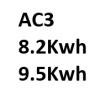
You will be able to charge batteries at 5p/kWh and use that to reduce the cost of the energy. My house uses between 12-16kWh per day and my 5.8kWp array generates on some days only 3-4kWh, not enough to power the house and charge the 8.2kWh pack. I just switched to Octopus Go Faster (21:30-01:30) which enables me to run my appliances and charge battery at 5p/kWh. The battery (set on Mode 1 - Dynamic with independent smart charge for the above window) then takes over at 01:30 and whilst I only have a few days of data, it has covered me for most of the day in combination with the array which, on a better days, tops up the battery to keep it going further. On Thursday the house used 14.3kWh of energy and the cost was £0.89 for the day (including the standing charge) according to IHD. That way I save more money on grid import to help pay for the investment, keeps the battery cycled and helps in balancing the grid - best of all worlds. I estimate that I will switch back to variable rate early March to enable me to take advantage of Octopus Outgoing and provide better returns on exported energy.
Go Faster is a smart tariff (will require a smart meter) in Beta version, so you will be required to sign up to some specific terms, but I don’t expect billing issues, as the system records half hourly data so there is a clear evidence when the grid energy was imported. You can always switch back to standard tariff if that doesn’t work for you but I struggle to see a reason why it should not, unless you don’t have a smart meter.
I hope this helps.

#8 THALL

Sparta Good idea. Considering I do just that I don't know why I didn't suggest it too lol. My current energy price is 7.03p per kwh charging the batt to full on Go. Already had a couple of days this month where my solar generation was sub 2kwh and my house uses 10kwh monday to friday and 18+ at weekends but that will go up to 30+ when the heating comes on for longer periods etc etc

S
#9 Sparta

THALL I considered Go, but did not fancy running washer drier at night when everybody is asleep, so was delighted when Go Faster was launched, and intentionally selected the early start, as the house is still “awake” and then high draw appliances can be run on plunge rate rather than depleting the battery during the day. I also intentionally select the battery charge slot across the entire price plunge window. This means that even the house base load comes from the grid during that period, rather than battery returning to dynamic mode (if charged earlier) to maximise the benefit. Whilst I only have few days of data it appears to work. Last night the price plunge window arrived with 16% SOC, the battery finished charging at 00:05 o’clock and the house continued on grid until 01:30, PV kicked in this morning at 08:30 with 67% SOC and is still at that 3 hrs later. My yesterday’s electricity cost was 6.20p/kWh including standing charge.
One thing to add, I had my house supply tail fuses upgraded to 100A (free of charge by the network) when we installed the PV/battery system, so should have no problems running high load appliances and charge the battery at full rate of 2.9kWh (AC 3.0).
My next step is to understand/implement the Solcast, as export rate on Go Faster (3p/kWh) is a swingeingly low rate, considering the wholesale prices. It would amazing to be able to schedule it to be, say 10% SOC, when the array kicks in on a sunny day 😉. Need to do more reading, but this forum is amazing. Thank you @simon_swinburne.

#10 simon_swinburne

Sparta
We are providing all the basics tools currently, with just a few more enhanced one. I think getting the fundamentals right before going too deep into optimisations is the right plan.
I also dont know all the automations people want / use. It would be good to understand those. I think I may open a new discussion for that.
I will be releasing a number of NodeRed flows that use the cloud APIs to do lots of automations re scheduling etc. I just need to tidy those before I release them as they have evolved over quite a while. The objective of those is to show what is possible and to allow people to enhance / extend. In that way the community can enhance the capabilities of the service, in advance of GivEnergy. ( you do need hme automation hosting to do that ).
If particular automations are popular and are seen to add value to customerss, they will be obvious candidates for inclusion in the portal ( thats how Solcast and Octopus came about ), others will remain solely community enhancements.

BTW, I use exactly the same technique for managing load. I charge for the whole of GO Faster period too, even though the battery doesnt need it so that all home load comes from the grid. Thats my winter mode though as PV supply is insufficient to meet my home needs. When there is plenty of PV you may want a smarter algoritm. I wonder if I may have a home brew one of those too ;-)

S
#11 Sparta

simon_swinburne thank you Simon. I have no home brew at the moment, I’m afraid 😊. My home automation server is Fibaro/Yubii (Home Center 3) which supports API, however, so far I have only been using it for controlling Z-Wave devices like lights, sockets, curtains, etc. I’m an absolute novice to API coding. So any steer would be very helpful and a dedicated thread amazing. Thanks again Tom

K
#12 kerik

I only have one battery, but I really recommend to switch to night/day tariff.

During the winter you can top up your battery using cheap nightly rate and use it during the day.
During the summer you still can do the same on rainy days, when your panels dont produce enough energy.

Because of that the battery in my installation is the component with the best RoI 🙂

#13 deepfat

we have the same set up but we have economy 7 tariff so in winter we charge up on cheap rate an burn that during the day

S
#14 Sykes

With the recent run of dull days in the north of England, I've just started using our Octopus Go Faster (5hr) to charge the two 8.2s we have - as well as the EV.
Despite having 14.5kWp, we currently can't manage to keep everything topped-up.
I'm complicating things by also trying to use the new beta portal! I think we need to get used to it now, as at some stage the old one's bound to get switched off.
I'm using the new functionality to charge only to 60%, which then covers the kitchen grunt next morning, and still leaves enough charge such that there's a fairly good chance of topping up on PV if the following day's even just moderately good. Solcast's not bad for forecasting (I use an Excel Data Query to draw it down from Solcast, then a bit of VBA to draw the graphs etc locally) but Solcast got it badly wrong one day last weekend!).
If the following day looks good, I don't bother with the overnight charge.
The forced charge worked well on Monday morning (I awoke to bang-on 60% SoC on both batteries), but failed this morning.
I have a feeling this may have been down to a conflict between either this functionality & my discharge times, or a conflict between settings on both the old and the new portals. More experimentation needed...
I'm using manual discharge times, because if I don't prevent discharge during EV scheduled charging (on cheap tariff) with the zappi, it'll draw current from the ESS - despite having the zappi set to "Avoid drain." I think this is probably due to "Avoid Drain" not working in "Fast charge" mode, which is, effectively, what scheduled charging in an ECO mode on the zappi, does.
Remember Folks, if you're signing up to Octopus, use a referral code, and both parties get a £50 credit to their account.
If you're interested, my code's accessed by using this link.

#15 simon_swinburne

Sykes SolCast is built into the beta portal, that may save you some effort downloading and plotting/

Alternative strategy to stop battery drain into the EV. Schedule a charge on the battery. Set target SOC. When reachedcharging will stop but discharge will not happen for the whole period set to charge

S
#16 Sykes

simon_swinburne
Thanks Simon - very interesting.
These are the nuggets that users need to know.
So if I understand correctly, by setting a scheduled charge to a pre-defined SoC, on an AC-Coupled 3.0 (some might wish to say ‘battery’), via the GivEnergy beta portal, this will prevent discharge through that controller/inverter for the entire scheduled period, whether or not the associated battery’s (batteries are) already >= the pre-set SoC.
is that correct?
Ta.

#17 THALL

Sykes That is correct. During my scheduled charge window of 0030 to 0430 the battery does not discharge.

S
#18 Sykes

THALL 0030

Great. Thanks.

S
#19 Sykes

simon_swinburne Alternative strategy to stop battery drain into the EV. Schedule a charge on the battery. Set target SOC. When reachedcharging will stop but discharge will not happen for the whole period set to charge

@simon_swinburne
Tried this, and scheduled it for just after midnight on Wednesday morning - to charge up to 60%.
Unfortunately, the charge occurred, but the battery in question then promptly began to discharge again!
Having spoken to Adam in tech support( @Adam-Reynolds ) about it today, this is expected behaviour apparently.
Adam told me that unless the desired SoC is set to 100%, winter mode will cut in, and the discharge will commence.
I set both of my 8.2s to do the same, but one was already > SoC 60%, so didn't need any charge, and never discharged like the other one, presumably because winter mode never cut-in.
Until a change is made to the algorithms, I suggest treating 'Timed charge' as a means to avoid discharge, with some caution - or always set the charge schedule all the way up to 100%.

Y
#20 yandards

THALL @Sykes I've run into various occasions where the battery has supported EV charge when I don't want it to - luckily I was still on a flat rate tariff when it happened.

Now on Go I've just told the battery to charge to 100% between 0030 and 0430 - this prevents the EV stealing any of its charging at the same time and I'm not worried about using grid energy for that 4 hour period at 5p a unit either.

It becomes more difficult during summer when it'll be guesswork about battery from PV per day whilst balancing that with EV charging etc. Holding out hope the planned integrations between Solcast and the Zappi charger will make most of that automatic.

S
#21 Sykes

yandards It becomes more difficult during summer when it'll be guesswork about battery from PV per day whilst balancing that with EV charging etc. Holding out hope the planned integrations between Solcast and the Zappi charger will make most of that automatic.

I'm sure that, as time goes on, the automation will get better & better.

I already use Solcast, and find it generally good.
I have an Excel workbook which uses Power Query to pull my plant data into a database. I've also written some VBA which then accesses the database half-hourly slots for the following day, and selects any slots where the PV's predicted to be >1.4 kW. All these slots then get added together, and fed to a UI, from where the user (oh, alright then -me!) can select EV departure time, and arrival time, the following day.
All I then do, is input the actual EV battery remaining % (on arrival home), the ESS amount to use, and my programme calculates the overnight grid charge required (if any) to restore the EV to 100% for the following day.

Just as a project, I'm hoping to eventually use my NAS as a local server to host a local control GUI - which will allow access, integration & control to all of our kit, from one place, as one of the issues I find is having to keep darting from one bit of software to another, to change settings, based (mainly) on what the PV's doing, or likely to do.
The other issue I'm seeing, is forgetting what mode everything's set to, which sometimes causes annoyance; this morning, for example, I was expecting an overnight EV top-up, from the ESS, and the cheap Go-Faster tariff.
Fortunately, I awoke at 04:30, and thought I'd just check on the phone, to ensure that the charge had finished... Horror! It hadn't even started!
Once again, fortunately, I went for the 5hr window - which I decided to run from 00:30 - 05:30. I say fortunately, but to be honest, one of the reasons behind choosing this time slot, was to be able to do at least a bit of fire fighting, should an overnight issue occur.
One hr was just enough to get the last 7 kWh into the EV.
When I looked on my phone to find out what had (or rather, hadn't) happened, I realised that the previous week, I'd been messing around with my zappi scheduled charge settings; For ages I've used the same schedule, to charge Mon - Fri, from 00:30 - 05:30 controlling it by simply plugging-in the car the evening before, and either setting 'ECO+' or not doing so - depending upon whether or not I wanted the overnight scheduled charge to activate.
A couple of days last week, however, I wanted to leave everything set-up, as above, but didn't want the scheduled charge. This was because the EV was home all next day, and I wanted the ECO+ to kick-in, as soon as the PV exceeded 1.4kW - without any further action from me (good solar radiation forecast early-on), so I deselected several days from my schedule... and failed to re-instate them again.
It's great to have all this kit to play with, but I find, very easy for human error to ruin my day (or night!).

Building my own UI, and getting all of the controls in one place will suit me, as I'll be able to make it user-friendly to suit my needs, and a one-stop-shop for setting everything up.
I'm also hoping to build-in some pre-set modes, where one can select just one button - 'Overnight grid charge + ESS' , for example, and the zappi gets scheduled, as does the ESS (amount, rate etc), and a reminder gets set on my phone, which triggers when the EV arrives home, to 'Plug - in!'

Looong way off yet, as I'm still getting to grips with controlling the GE kit with any level of confidence, and I can't honestly see that happening until the various bugs are sorted out, both on the hardware, and the software / FW.

C
#22 c_squared

Had my 5kwp array, 5kw inverter and 8.2 battery installed yesterday. I'd done my research in advance of the install but really interesting to flick through all the posts here to confirm thoughts or spark some new ones. I'm currently with scottish power on a fixed deal, paying 14p/kwh and that ends late March 22. I will move onto a smart tariff like octopus go so I can charge the battery on a cheap rate. I'm just not sure when I should be doing this, do I wait it out on my current tariff until it expires or do I go now and make the most of cheap charging in the winter, when I'll get the most from it. All the energy providers say to stick with the deal but I'm just wondering what others think? Stick or twist?

This is my first post here and I realise this could be in the wrong thread, its just there has been a lot of chat about day/night rates here. Apologies if I've got that wrong!

S
#23 Sykes

Hi, and welcome to the forum!
Good questions, and no - not in the wrong place; there are no silly latent rules here, about what gets posted, where… just like-minded folk wishing to discuss their GE products & set-ups.

Very tricky to know what to do WRT tariffs.
As you’ve said, most providers are advising folk to stick with their extant deals, Octopus being no different; if you go through the switch process on-line, even Octopus (a very forward-thinking company) are advising to stay with your current provider - even if you’re out of contract. You can, however, contact them, and get a quote, I’m just not sure how competitive it would be - if at all.

If you can still get onto one of the cheap overnight tariffs, I’d say it would definitely be worth your while, as any array will struggle this time of year, to produce a meaningful amount of power. That having been said, up t’north has been superb the last couple of days; we got the EV completely topped up on PV alone, today!

At the end of the day, it all depends upon your personal situation / energy usage, but I’d be ignoring any contribution from your PV, then classing anything you do get, as a Brucie bonus. Of course, this’ll turn around, come March, when you’ll begin to see the PV coming into its own.
Instead, use your ESS to buy cheaply (if you can) and use during peak time.
In case you do decide to go with Octopus, you can benefit from my referral code, and we’ll both receive a £50 credit to our accounts: use this.
HTH

G
#24 GrahamRead

Sykes FYI, Octopus referral codes have been suspended I believe

I was already on Octopus Go for cheap overnight EV charging, but i also now have batteries (10.4kWh / 4kw array) do similar to above. As I don't have a smart EV charger, and don't want the EV draining the house batteries, I tend to keep it simple:

Always charge the EV on overnight cheap rate.
As it's winter I also charge the batteries on the same overnight rate

However I do tweak the "max charge %" setting, depending on the next day forecast (MetO plus Solas) - if it's looking cloudy charge to 100%, the batteries just about cover the whole day with some solar input to support house use. If it's looking sunny I charge to 75%, which gives enough head room to take in excess solar the next day. I'm pleasantly surprised how much charge I am getting into the batteries (added 40%), even in December, on those clear if short sunny days. Something semi automatic like above would be good, have to think on that. I've already got fairly good monitoring using EmonCMS to grab data using current clamps and direct read of solar inverter data etc.

Come summer I'm going to have to set a pretty low target % overnight charge, but keep the time period the same in order to stop the EV draining the battery overnight. Charging the EV from solar too would be nice, but can't justify the expense of a new charger vs the savings really. Any excess solar not taken up by the batteries gets grabbed by the iBoost to top up hotwater tank.

K
#25 Kevsla

It depends on your usage profile really and how much you will use of the grid on a typical day.
As others have said, solar is at a minimum now, work on approx 2kwh per day in December and charge your battery overnight to try it out. We are currently on Go, charge the battery and Ev overnight(5p rate) but only draw approx 1-2 kwh from the grid . We are only paying 6p per kwh average, so you can see the cost savings that can be achieved. Hope this helps

#26 THALL

Need signatures adding to this forum so we can all add our octopus referral codes lol

S
#27 Sykes

THALL
Yes - I asked for that, but before he left, Simon had told me it’s in the pipeline, but for some reason, not straight forward to implement.
I think the signature block will be particularly useful for folk to display their particular ESS/PV/EV set-up, which will remove a lot of the guesswork, when replying to posts for help, etc.

S
#28 Sykes

GrahamRead FYI, Octopus referral codes have been suspended I believe

Thanks for that, Graham. Didn't realise that was the case, but in the current climate, it makes sense.