What happens if you go above the maximum number of solar panels recommended by GE?
I already have 20 panels paired with a Gen 3 GIV-HY5.0 and 2x 9.5 batteries and was thinking of adding 5 more panels. Not really bothered by peak performance when it's sunny outside, I am more after getting more out of the system in cloudy conditions.
#2positor1
dragos.balaban
if the voltage input to the inverter goes higher than the spec for it, it will shut down and you would lose solar on sunny days.
D
#3dragos.balaban
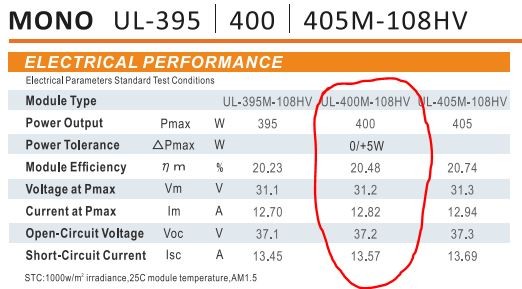
what voltage should i look for on the panel? Vm or Voc?
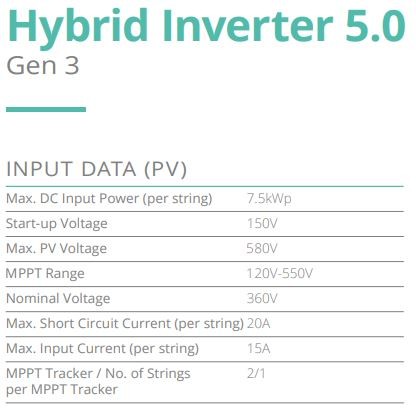
Also, what is the maximum voltage that the inverter accepts? Max PV Voltage or the one listed in MPPT range?
I
#4IanW
Split the strings would be my advice, 12 + 13
or perhaps 20 + 5 maybe easier.
My installer said GE recommend this for my install of 15 panels.
V
#5Vestas
I'd hope "20 panels" are on two strings anyway given the way GivEnergy inverters do MPPT (see other posts here regarding no global tracking). tl;dr in simple terms is that shade on part of the string will drag all of the string down unless you have some form of "optimiser" on each panel.
I can see when all of each string I have fitted comes fully out of shade in the morning - there's a noticeable jump in power which happens on the first string (higher up) about 15 minutes before the second string. NB - its only part of one panel which is in shade on each string but it drags the overall string power down a LOT more than you'd think.
If they are on the same string then split them before you install any more - you might find you don't actually need the extra 5 panels.
#6hoggy
It's voltage that kills these not the power.
I have 6.1kW split as 3kW on each string plus another 2.5kW of DC coupled battery also sat on string 2 (so 5.5 on String 2 / 8.6kW total) all on Gen 1 Hybrid and its fine as voltage doesn't get near the limits.
It just means it clips when you run out of string MPPT current (11A on gen 1)
D
#7dragos.balaban
Vestas why the quotation marks for "20 panels"?
Anyway, at the moment I have them equally split per strings, 10+10.
What do you mean I might find out I don't actually need the extra 5?
D
#8dragos.balaban
hoggy Yes, confirmed by GE that voltage is the main factor in calculating this:
"We recommend that you check the collective VOC (Open Circuit Voltage) of the panels, which, on our inverters should be under 550V per string. It is important to note that any other specifications, such as Wattage, will be clipped back by the inverter to the maximum it can take"
Seeing my Voc is 37,2 means that I could easily set it as 14 panels on each string without causing any problems with the inverter
T
#9Tim
dragos.balaban Looks like you'd be OK with that many panels although you just want to make sure that they are at the same angles (azimuth and altitude) as the others on that string and aren't introducing shading. More panels will lengthen your harvesting day and increase the number of days you can effectively produce each year.
D
#10dragos.balaban
Tim agreed, that's why I did not understand Vestas comment regarding the fact I might not need the extra ones.
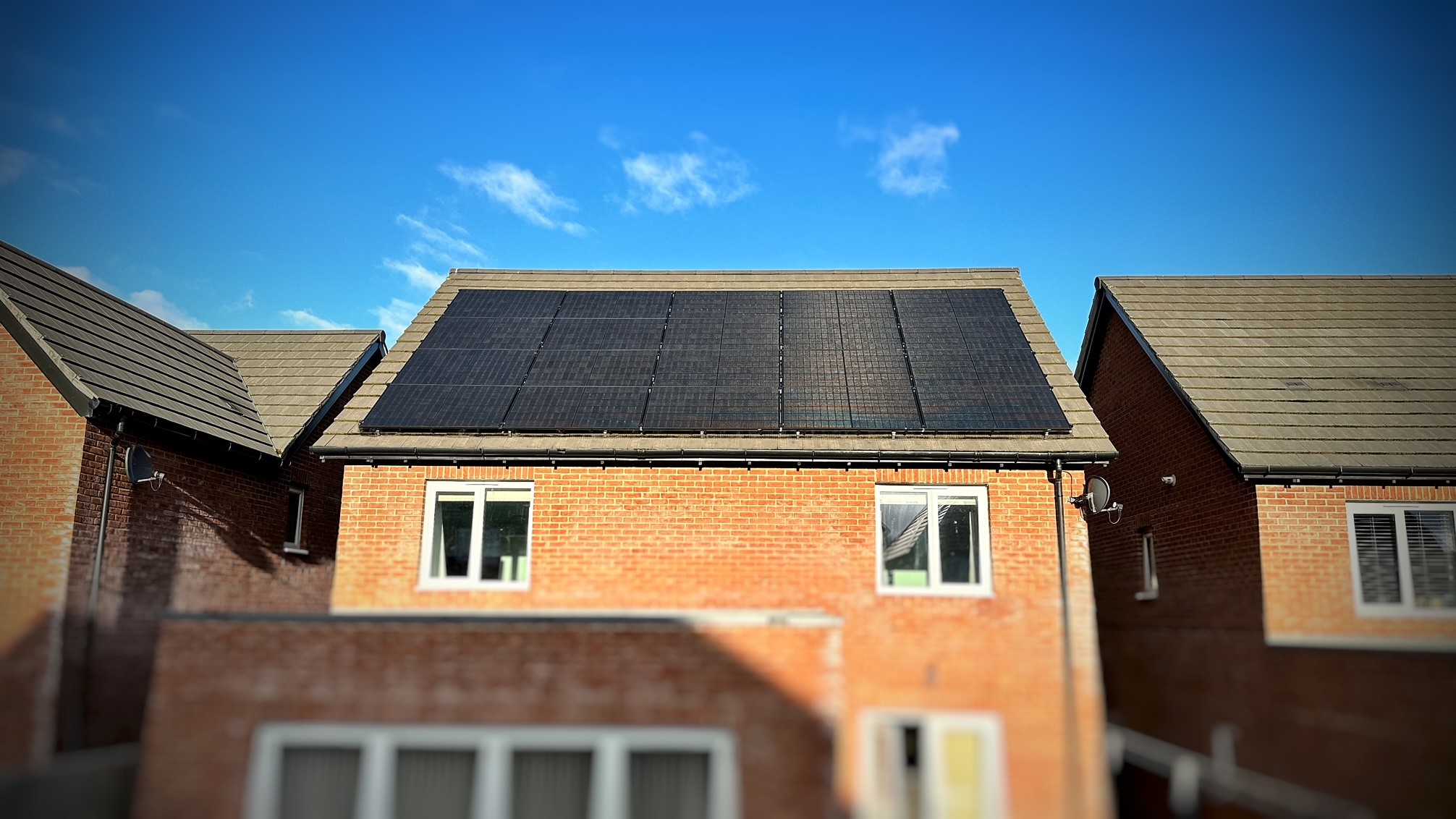
All the panels would be mounted @ same angle:
V
#11Vestas
I meant you may not have needed extra panels if everything was on one string then you split it into two strings is all.
D
#12dragos.balaban
Vestas forgive my ignorance I still don't see how the benefit of adding more panels can be otherwise achieved by different splitting per strings
S
#13sunnyjoe
dragos.balaban Total Voc should not exceed the inverters max PV voltage of 580V.
Voc given in your extract above is at Standard Test Conditions which includes cell temperature 25 deg C. Voc will go higher at low temperatures, so you would need to obtain your PV module's temperature coefficient of Voc to calculate VoC for the lowest anticipated design temperature.
E.g. if the temperature cooefficient of Voc is -0.290 %/deg C and your lowest design temperature is -5deg C then your design VoC = 37.2V x (1 + (-0.290 / 100 x (-5 - 25)) = 40.4V per module
D
#14dragos.balaban
sunnyjoe Would this contradict the advice I've been given by GE that I should only look at not going over 550V per string?
S
#15sunnyjoe
dragos.balaban There is no contradiction. GE is advising that your string voltage should not exceed 550V because this is the upper range of the GE inverter's Maximum Power Point Tracker (MPPT). Any higher and the inverter will be unable to provide optimum performance from the string. If the string voltage should exceed 580V then I suspect that the inverter would shut down (perhaps GE could confirm).
I suspect that GE might also be suggesting string Voc should not exceed 550V knowing that at low temperatures it might start to approach 580V
Fortunately the operating voltage Vm of the string at maximum power is lower than Voc, probably around 31V per module (higher when cold).
So there are two conditions to consider:
no. of modules x Vm < 550V
no. of modules x Voc <580V this is more likely to be the binding condition
For the example I suggested with temperature corrected to -5 deg C, Voc = 40.4V and the number of modules in a string shouldn't exceed 580V / 40.4V = 14 modules