
Flux and discharging to grid at peak export times

21 comments started 2023-08-08 last 2023-08-10
GivEnergy ProductsBattery
T
#1 TRBob

4.4kW south facing array, 5.2kWh battery. Assuming consistent(ish) Sun, (not July lol), when I have 100% I discharge 40% into the grid up until 7pm, then the remainder sees me through until the next morning if it's Sunny. I've seen a few of the guys on Youtube (bigger array and battery than me) that are on Flux charge up in the cheap import period and then discharge fully during the peak export period. I'm not sure which is best, my way is saving the battery surely as it cycles less (it will be cycling more when I go back to Cosy in autumn). I welcome people's thoughts.
G
#2 geoffreycoan

TRBob Personal choice really. The batteries are designed to be repeatedly charged and discharged, and yes performance does degrade with repeated cycling, but if you’ve got the batteries you want to use them for their intended purpose !

If you were charging and discharging from completely empty to full multiple times a day then you’d be increasing the cycles significantly, but either approach you describe isn’t going to make a material difference. Sounds like you are already doing a full cycle every day and charging overnight and then discharging fully in the peak period is still only one cycle.

Financially you will earn a little more if you charge the battery overnight and then fully discharge in the evening, but at the current flux rates its not a great deal. I’m still waiting for my flux export to be setup but I’m probably not going to bother with overnight charging as the night import rate (18.43p) is so close to the day export rate (19.72p) that I don’t feel I will gain anything by pre-filling the battery. I’ll just let the batteries charge in the day and get paid for the excess export. Will probably do a force discharge in the evening to gain from the peak export (32.01p) rate, but then if I discharge too much and have to import later in the evening (30.72p), I’ll wipe out any benefits.
Allowing for energy loss on AC/DC voltage conversion, there’s not as much flux benefit from aggressive use of the battery IMHO.

J
#3 justpassing

geoffreycoan I was interested in anybody with a hybrid that was able to quantify the round trip losses they are seeing, for AC and or PV charging and Discharge. My gut feel is the losses will outweigh the "profit" of buying and selling, unless ther is at least a 25% difference of in to out prices. But I haven't seen anybody publishing there results.

L
#4 LordHippos

I always charge my battery overnight as much as I can on this model, I'm not charging to max out discharge, I'm charging to minimise grid import costs.

My approach is:

02:00 - 05;00 - Max out charge
16:00 - 23:00 - Set Discharge. If SOC is > 90% set export until SOC is 65%.

Rest of the time I just let it do whatever. Note that Discharge on G1 Hybrid does not empty to grid, it simply states the battery should not accept any incoming charge, this maximises grid export if the sun is shining, and also means the battery is in discharge mode so feeds the house load without getting confused.

Export mode only flips on if the SOC is high enough, on a poor day with no solar it will not export anything.

I didn't see the point in emptying the battery 16;00 - 19:00 as you then wind up importing from the grid at standard rates, and the delta between standard rates and flux export rates isn't high enough.

Flux cheap import to Flux peak export is reasonably good, so I don't mind stocking up on cheaper energy with the idea being that I either export at normal or peak Flux rates.

T
#5 TRBob

Thank you all for your replies, yes I'll continue as I am as there seems little gain to be had. I have been importing during the cheap period a few days where the forecast has been rainy/cloudy the following day, otherwise its not necessary even on cloudy days as I still get enough to cover the daily house usage.

#6 Hook

justpassing I think it’s about 22% loss from charging to discharging.

I’m on fixed export 15p as my battery normally hits 100% early/mid afternoon and then I export until the early evening.

T
#7 TimHutchings

I've written about this a few times, but personally, I have found that the loss on charging from the grid to the battery ie ac to dc, then exporting back to the grid dc to ac, the losses amount to between 15-20%. At full import to full export on a Gen 1 is 19.25%. Done many tests and always works out around these figures. So if you take the night time flux import charge which for me is 18.3p kw, add 20% works out at 21.96p kw. Since daytime export for me is 19.72p kw, I'm losing around 2p kw by importing at night and exporting solar in the day. Not only that but cycling the battery more than necessary will just shorten its life.
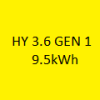
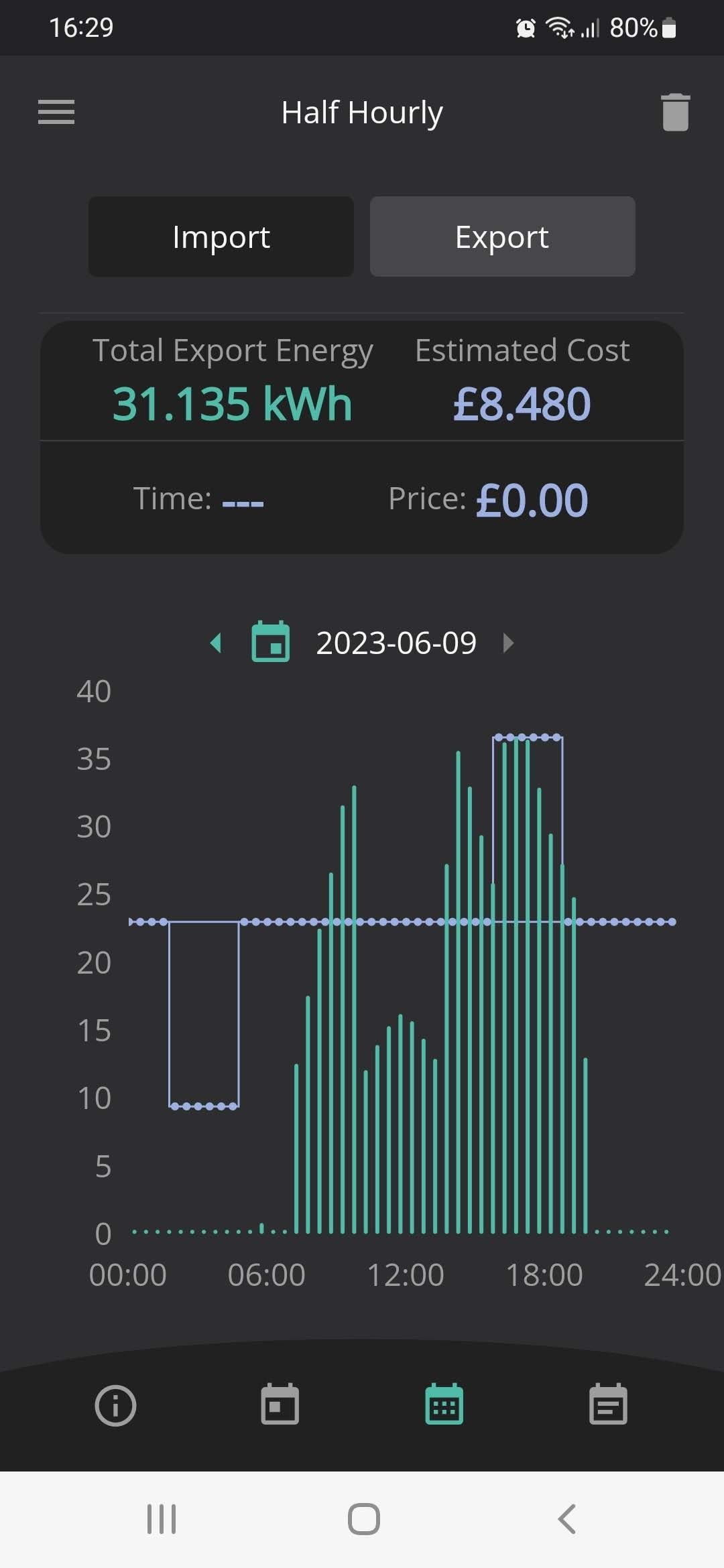
I charge battery (9.5kw) by solar in the day, then force discharge between 4-7 to leave around 30% which sees me through to sunrise.
Hope this helps.

J
#8 justpassing

TimHutchings It does indeed, exactly what I wanted to know :-). Did you ever work out how do do the same test PV -> Battery-> AC compared to straight PV-> AC ?, so how much you lose by time shifting the PV export ? I am never convinced that all the different values are actually apples and apples. ( PV today / Battery charge/discharge today etc ). If you pull the values off givTCP or the portal, then the daily battery charge/discharge is significantly different.

G
#9 geoffreycoan

TimHutchings Thanks Tim for your hard data, it backs up what I thought that the flux import and export rates are too close to be able to make a profit by pre-charging the battery overnight.

I plan to do something similar with forcing a discharge in the evening when I get my flux export setup, will need some experimentation as to what the discharge-to figure will be. Only thing I would add to my strategy is to vary the discharge-to depending on the next day’s weather forecast - no point in discharging too much if its going to be rainy the next day as the panels won’t charge the battery enough to last through the day.

My saga with getting flux export continues, after nearly 2 months of waiting in the process, Octopus came back to me today to say that my export payments will start tomorrow, but due to a network-wide data collection issue they are unable to collect 30-minute export data and so will only be able to pay me at the fixed outgoing export rate (15p/kW).
Asked a bunch of questions about how long this issue has been occurring, what the ETA for fix is, etc. Annoyed that I am further delayed in getting the full benefits of flux in the summer months, but at least 15p is better than the 0p I’m currently getting. Sigh.

M
#10 MKICampaign

justpassing The figure quoted of 19.25% for a round trip sounds a little optimistic to me. I would like to see the figures in detail. I expect a 10% loss through either AC to DC conversion and a small loss of about 5% through storing in the battery. This would give a loss of around 25% for a round trip which aligns with figures quoted for the AC3 on posts on this forum and the 90% efficiency that has been mentioned.

The most efficient way to export is direct from solar to AC as that should only incur an approximate 10% loss. The most efficient way to charge the battery is from solar which will incur a small loss on charging and an additional loss of about 10% when the stored energy is converted from DC to AC.

I haven’t had a chance to setup GivTCP on my system to look at the figures in detail.

The new inverter pause charge timed setting is handy for making the most of solar export during peak periods. 😀

T
#11 TimHutchings

geoffreycoan 30% generally sees me through till sunrise, leaving around 10% in the battery. Even on dull or rainy days the battery usually charges up to 100% by 4pm this summer (I think twice in the last month I've only got to 80-85%). I have a 5.46kw solar array facing East (6 panals) and South (7 panals) which gives a max generation of around 4.75kw per hour on a sunny day. Obviously, as the days shorten the amount exported will reduce, and consumption will rise as the lights go on earlier. There will come a point where I'll have to progressively start importing at the night rate. December last year, I was only getting around 4.5kw per day on solar, so I'll need a full charge between 2-5, though that will only fill my battery just over 70% with a Gen1 inverter.
I'll have to see how things go on flux, but I don't have an EV so if Flux doesn't work for me. I might move tariff to Cosy or Intelligent for import. Don't really export anything in December or January.
Good luck sorting your export!

T
#12 TimHutchings

MKICampaign The figure I've quoted is on my setup, with a Gen1 inverter and a 9.5kw battery. Other setups my be different. My figures are not scientific but done at 11.30 at night when my background draw was 130w-150w over about 10 minutes a time period, on several nights. I did a 5 minute import at full power, subtracting the steady charge rate from the the grid import figure and taking out the house draw. I then did a 5 minute full export from battery to grid, subtracting one from the other and removing out the steady house draw. Adding the losses together as a percentage of the quoted 2600w my Gen1 can charge and discharge at come out to 19.25%.
As I said, other systems and combos may be different.

L
#13 LordHippos

I think people are overstating the excess cycle thing, in general, on a reasonable day where the sun is shining enough to charge the battery regardless, you are cycling it around the same amount whether you charge from grid ahead of time or not.

The battery gets charged one way or another.

I'm probably cycling mine more than most anyway, as my average daily consumption is around double my battery capacity, so I'll chew through 10% SOC in an hour once the sun goes down.

I've cycled the battery 448 times since installation which was 01/09/2022, so a bit more than one full cycle per day so far.

G
#14 geoffreycoan

LordHippos I think people are overstating the excess cycle thing, in general, on a reasonable day where the sun is shining enough to charge the battery regardless, you are cycling it around the same amount whether you charge from grid ahead of time or not.

The battery gets charged one way or another.

Yes I made the same point earlier. The battery is getting charged and discharged on a daily basis anyway. Maybe with flux you can get more ‘full to empty’ cycles if you use the battery to the max, but its still a cycle that occurs automatically. My point was that the pre-chargeup to maximise solar export wasn’t really worth it financially. I was anticipating an energy loss of 5-10%, if its truly as high as 20-25% then even more so not worth it.

Can you remind me where you can see the number of cycles the battery has done?

L
#15 LordHippos

geoffreycoan Yes indeed really the main reason I do it is because we've had a few days when the weather has been poor enough that I need as much in the batteries as I can, and paying £0.20 is better than the alternatives even if the rate isn't amazing.

I have the statistic available for me in Home Assistant, not sure if the general GE site displays it. Was wondering if you could calculate it based on total battery charge / battery size but doesn't seem to spit out the same number for me. Not sure if the value is available anywhere else.

J
#16 justpassing

geoffreycoan I feel your pain, I cant even move to the 15p rate, as octopus still cant connect to my ( fully working with DCC / Bright) meter after 5 months.

@TimHutchings Appreciate the explanation. Sorry to keep digging, but I can't work out how to end up with an accurate measure on my own system. You did a 5 min in / 5 min out at full power, but where/how where you determining the loss. |Isn't this just the difference between the power (in out) you are seeing, not the energy lost. I mean you could charge at exactly 2600, and discharge at exactly 2600, but its the state of the battery afterwards, which seems hard to determine, that would tell you the lost energy ?

Just seems like there are too many variables and to many measurements that are derived to actually measure whats going on as a user. For instance in GivTCP, the SoC from theBMS/Inverter is only reported in either % ( of what ! ) or Amp Hours, the kWh figure is calculated. Similarly it doesn't match with the givtcp portal figures, so I have no idea how they are calculated :-)

L
#17 LordHippos

Fwiw when I charge the battery from Grid the inverter seems to report 2.6kW imported vs 2.4kW charge rate on the battery, so looks like around 10% loss on conversion.

T
#18 TimHutchings

justpassing I used the GE app. Before I started the test I noted the steady house draw which was around 130-150w. This was the same after the test. I can't remember the exact numbers, but on download, the grid was showing an import between 2700-2800w. The battery was charging at around 2450w ish. Therefore the difference between the two was the conversion loss less the house load. Then exporting the other way round, the battery was exporting at near to 2600w, but the grid was only getting around 2200w. So the loss between the 2 less the 130-150w house load was the second loss. Put the two together and the loss was around 500w (530w comes to mind). As a percentage of 2600w, that's 19.23%.
I did this several times over a week with similar results. I know it's not scientific, and I'm sure different systems will be different. But the upshot was that adding 20% to the flux night rate made it uneconomic for me to download between 2-5 and export solar in the day when it could be charging the battery with just the excess going to the grid.

T
#19 TimHutchings

My best day exporting!

G
#20 geoffreycoan

LordHippos Thanks, I have got Home Assistant and GivTCP installed so I will take a look in there.

Am planning to use HA and solar forecast to charge the battery overnight when the next day’s solar won’t see me through the day. We have a 10.4kW array so even on poor solar days we generally can fill the batteries even if its late afternoon, but as we get towards winter I am expecting to start seeing shortfalls and start using HA.

Cheers

L
#21 LordHippos

geoffreycoan My data is from the Givenergy Local repo, yours may or may not have it, it's possible it's also calculated somehow.

I find Solcast estimates can be quite wrong sometimes, which means I can't really rely on it for predicting stuff!