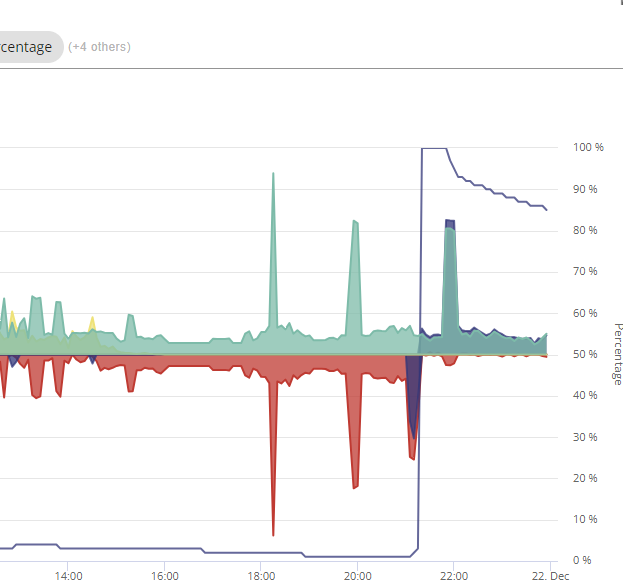
James L We've had very little sun recently, so battery was cruising along at nearly empty for several days.
From what I've heard, people who regularly charge up to 100% and down to empty tend to have less trouble with random SoC jumps. LFP chemistry is such that voltage is very flat over most of the range, so it's hard to estimate SoC from just the voltage. The only other option the BMS has is to measure energy in and out and try to interpolate. Letting it visit both ends of the range from time to time help with this. Recent firmwares do try to do some introspection when load is low (possibly even pausing completely) to try to get a firmer estimate of SoC.
Many here have a ToU tariff and charge the battery overnight. I take it you're not doing that? I've done more reading on EV batteries than on LFP batteries, but the advice there tends to be to try to keep them betwene 20% and 80%, and that small cycles around 50% are best for battery health. (Charging overnight also avoids letting the battery get too cold.) LFP chemistry is more tolerant, but the same heuristics may apply.
I have a friend who also avoids charging battery from grid, on the grounds that cycling is bad. But I suspect leaving the battery close to 100% (as he does in summer) or 0% (as he does in winter) is probably equally bad. The battery will have buffers, so it's not true 0% / 100%, but still...
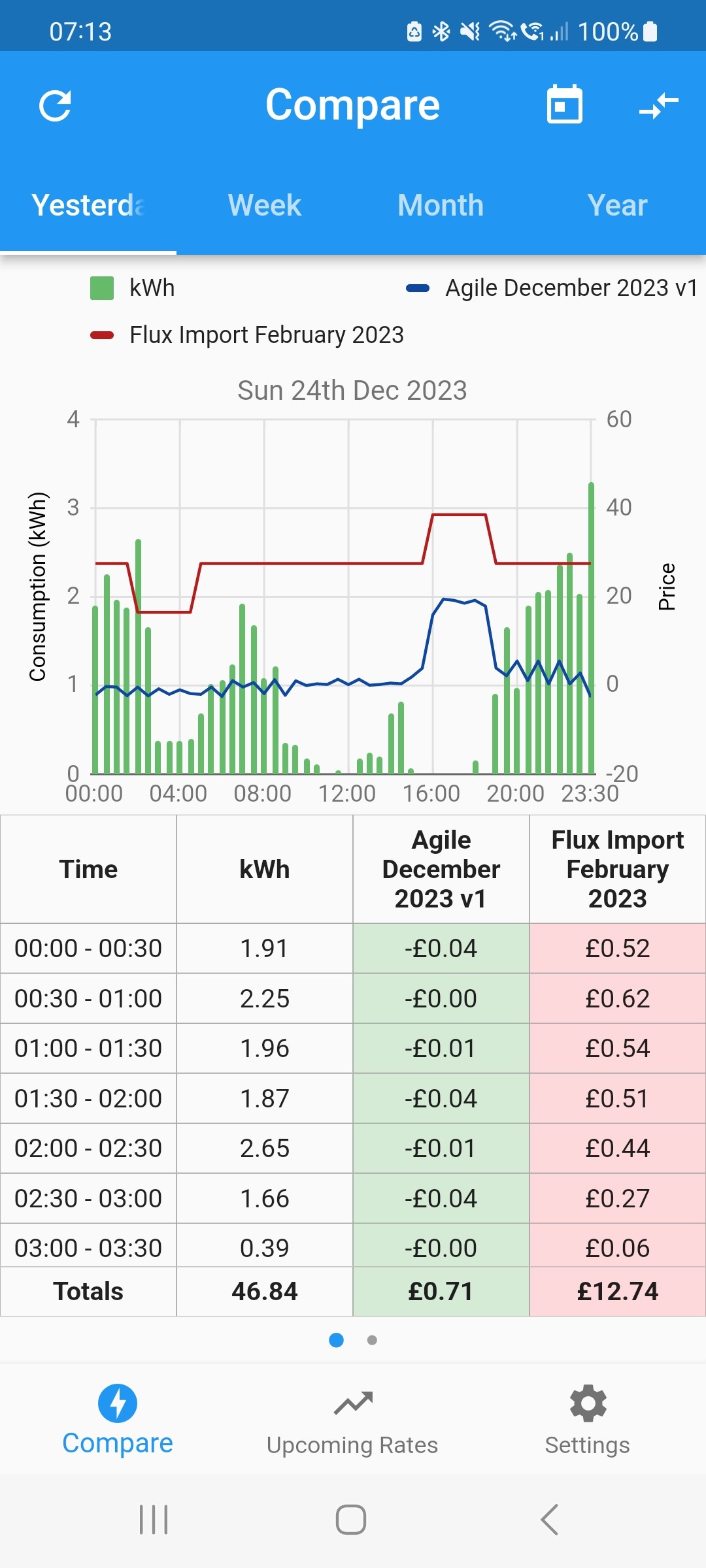
Anyway, I'm rambling.. what I'd do is use the battery as normal as it runs down to 0, then give it a relatively slow charge back up to 100% (doing it overnight will be friendly for the grid, and good for the temperature, even if financially neutral for you. Or when carbon intensity is low.) Even though the battery can tolerate charging at 3kW or so, it's probably kinder to be gentler, with a max charge rate of 2kW or even less. [I use a script to set overnight charge rate to whatever will take all 4 cheap hours to complete.]
Check that the recharge took in about as much energy as you'd expect. Then take it from there.