Which "total" numbers to believe?

19 comments started 2023-12-28 last 2024-01-15
Cards - Energy GraphCloud PortalGivEnergy ProductsBattery
P
#1 pacemaker

I am trying to understand for 2023 how much charge and discharge my battery has done. I've had the system since Jan 23 so any totals should be 2023 only.

If I look at the portal the all time charge and discharge is 2019.80 kWh for both.

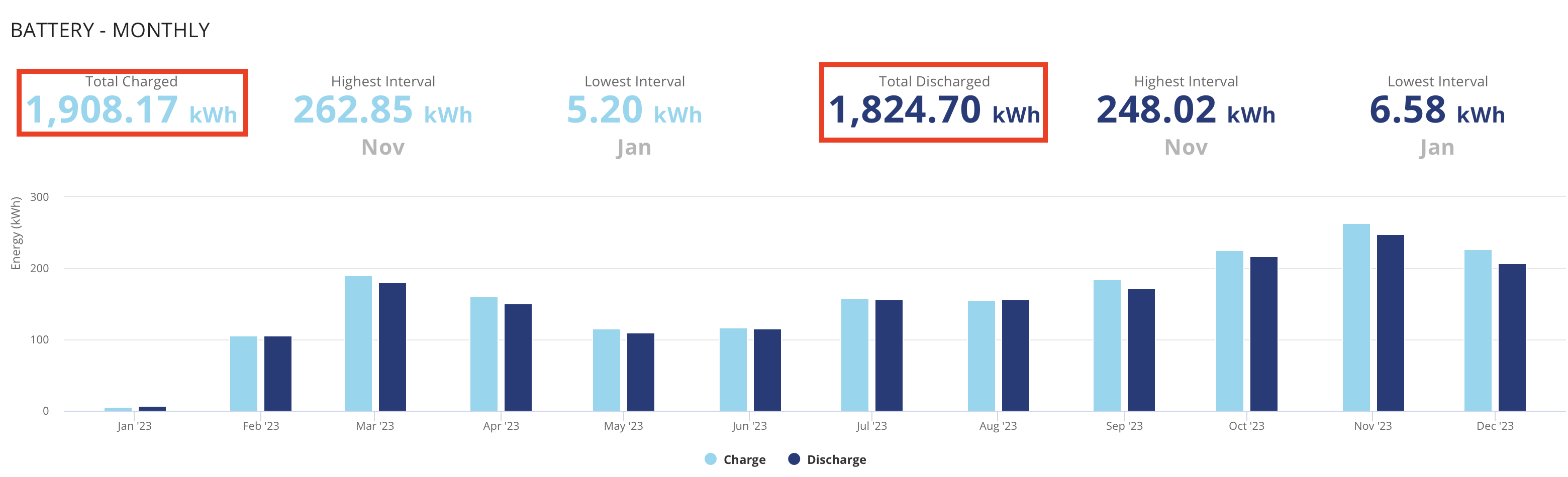
If I look at the energy section (which is mirrored by the report section), I see this for 2023:

Charge: 1908.17
Discharge: 1824.7
If I look at the Richard Burton app "Inverter" I see completely different all time info:
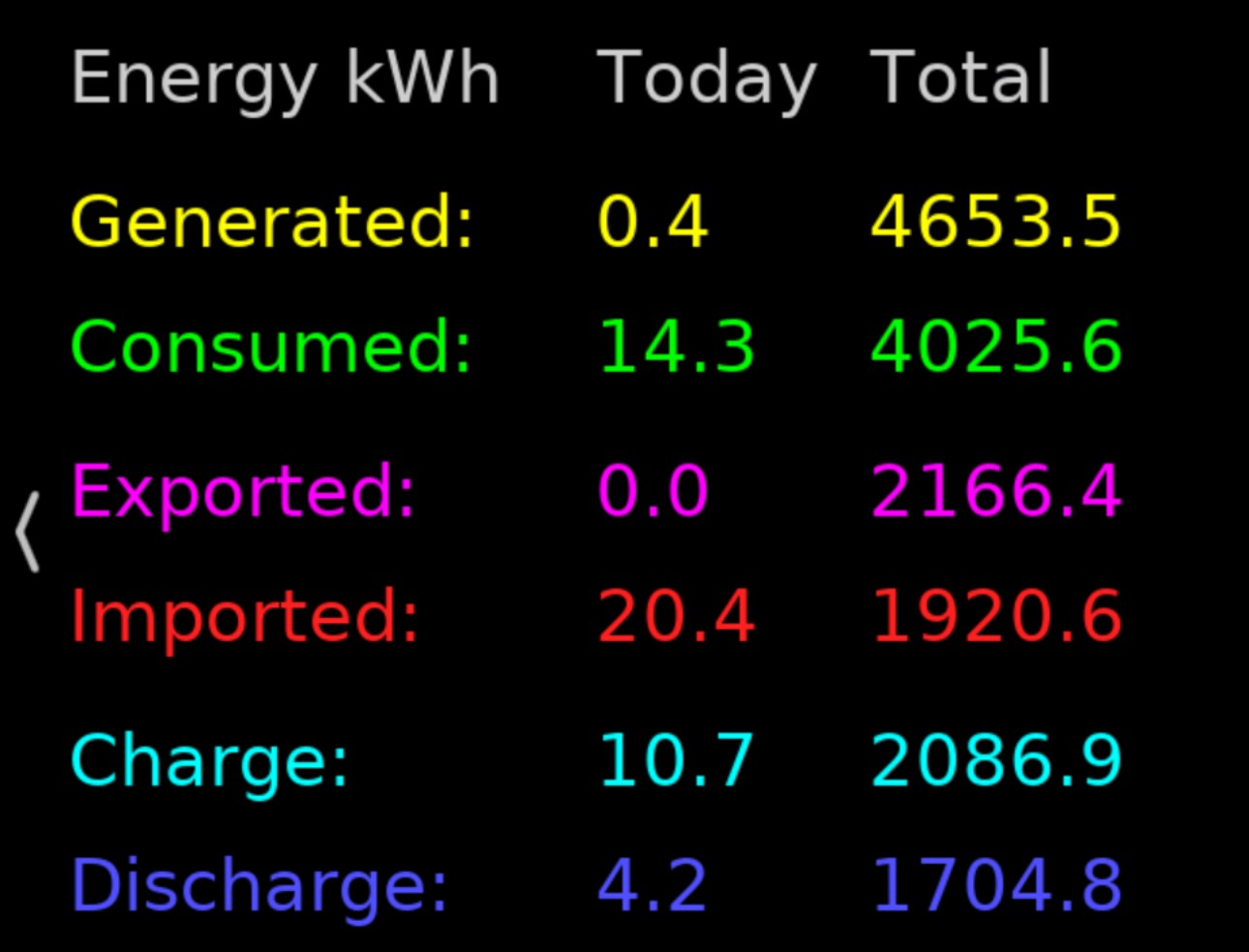
Doing the maths, the "losses" are really bad on that last data, but I just don't know what the source of truth is!

Interestingly all the other numbers match for generated, consumed, exported, imported between portal and Inverter app.

G
#2 geoffreycoan

pacemaker The BBC Basic "inverter" app is reading directly from the inverter so I would trust that over what's on the GivEnergy portal which is fed every 5 minutes by snapshots from the inverter.

Interestingly looking at the app myself, for my GivEnergy Gen 1 hybrid inverters there is no Charge or Discharge total, only today figures. But looking in Home Assistant, there are total battery numbers for both of my inverters:
Inv 1 charge total 2243, discharge total 2228
Inv 2 charge total 1627 discharge total 1604

Losses on these figures are almost too good.

P
#3 pacemaker

geoffreycoan

That's not great if inverter app is the source of truth, 2086 vs 1704 discharge is a 18% loss! That's huge is it not?

P
#4 Pete UK

Is this an AC system or DC system that the OP has?

With mine the battery charge and discharge is equal. Surely what goes in should be the same as what comes out? How the losses are measured is a different question.

Or am I missing something?

P
#5 pacemaker

Mine is AC. My data only shows equal at the top of the portal. In the reports from portal it shows a disparity. Inverter app shows an even greater disparity.

P
#6 pacemaker

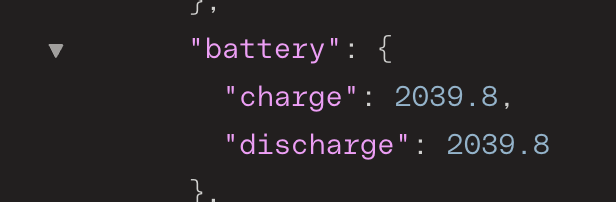
Just used the API to see what it gives back, its saying same for charge and discharge... no ideas where these different numbers come from!

V
#7 Vestas

Pete UK Or am I missing something?

Yes, you are.

There's chemical losses inherent in the charge/discharge cycle on every chemical battery ever made. You never get back out what you put in, simple as that. It'll depend on the charge/discharge rate/temperature but 5% is a ballpark figure to work with for lithium-ion batteries. So if you put 1000W into the battery then its unlikely you'll get much more than 950W back out of it.

As to what the various figures in GE apps/portals are actually displaying - who knows? There doesn't seem to be much consistency across any of their docs/apps/etc.

#8 Tenkaykev

Vestas As to what the various figures in GE apps/portals are actually displaying - who knows? There doesn't seem to be much consistency across any of their docs/apps/etc.

I think that to make sense of the figures we're supposed to run a calibration cycle during the first full moon after the winter solstice whilst offering up a sacrifice to " Dongle " the spirit of WiFi 😉

P
#9 pacemaker

Tenkaykev I think that to make sense of the figures we're supposed to run a calibration cycle during the first full moon after the winter solstice whilst offering up a sacrifice to " Dongle " the spirit of WiFi 😉

I tried banging my head into a brick wall but that didn't help either 🙂

V
#10 Vestas

If you want to get even more confused then we have a third meter installed as the EM115 GE supply isn't certified so to comply with MCS regs there's another meter connected to the inverter.

This one is in-line with the inverter output before it reaches the consumer unit (where the EM115 is).

It more or less agrees with the smart meter but there's as much as 8% difference in readings between those and the EM115. The clamp is fitted fine for the EM115 but there's a reason the EM115 isn't certified IMHO, and that's because its not accurate enough for export metering, so it's potentially not that accurate on anything else either.

That's why (IMHO) you need to be with an electricity supplier which supplies 30 minute readings simply as a sanity check 🙂

P
#11 pacemaker

Vestas I'm trying to get accurate charged/discharged from the battery data, not import/export from the grid.

P
#12 pacemaker

I am really starting to get suspicious of the battery data honestly, it's like they are purposely hiding true data from their portal and app.

Right now the portal and METER API is showing All time:

Total Charge: 2175.2 kWh
Total Discharge: 2175.2 kWh
0% loss.

Suggesting what I put in is what I get out. I frankly do not believe that, but that's what you'd really wish for as a normal consumer. We all know there are some losses...

Their own "all time" reports show:

Total Charge: 2045.08 kWh
Total Discharge: 1965.19 kWh
~ 4% loss

Feels a little better in terms of % loss at least. As above, what you put in is not what you put out. I can stomach that.

Meanwhile the "BBC Inverter" iOS app, which looks at LOCAL inverter data has this:

Total Charge: 2243.1 kWh
Total Discharge: 1833.10 kWh
~ 22.5 % loss

That last stat is SHOCKING honestly. Over 400 kWh lost in less than a year...!

geoffreycoan The BBC Basic "inverter" app is reading directly from the inverter so I would trust that over what's on the GivEnergy portal which is fed every 5 minutes by snapshots from the inverter.

So, does anyone else care about this data and its accuracy? Wouldn't it be shocking to learn you actually have over 20% loss vs 5%? I'll raise it with them through support obviously. I'd love to know what others see through the BBC inverter app vs GE data...!

#13 nophead

The losses would depend on where you are measuring it. The battery won't give back what was put in but also the inverter losses power as heat when it is charging or discharging, so it would depend if that was included or not. I could imagine a total round trip system loss being of that magnitude.

R
#14 Rubikcube

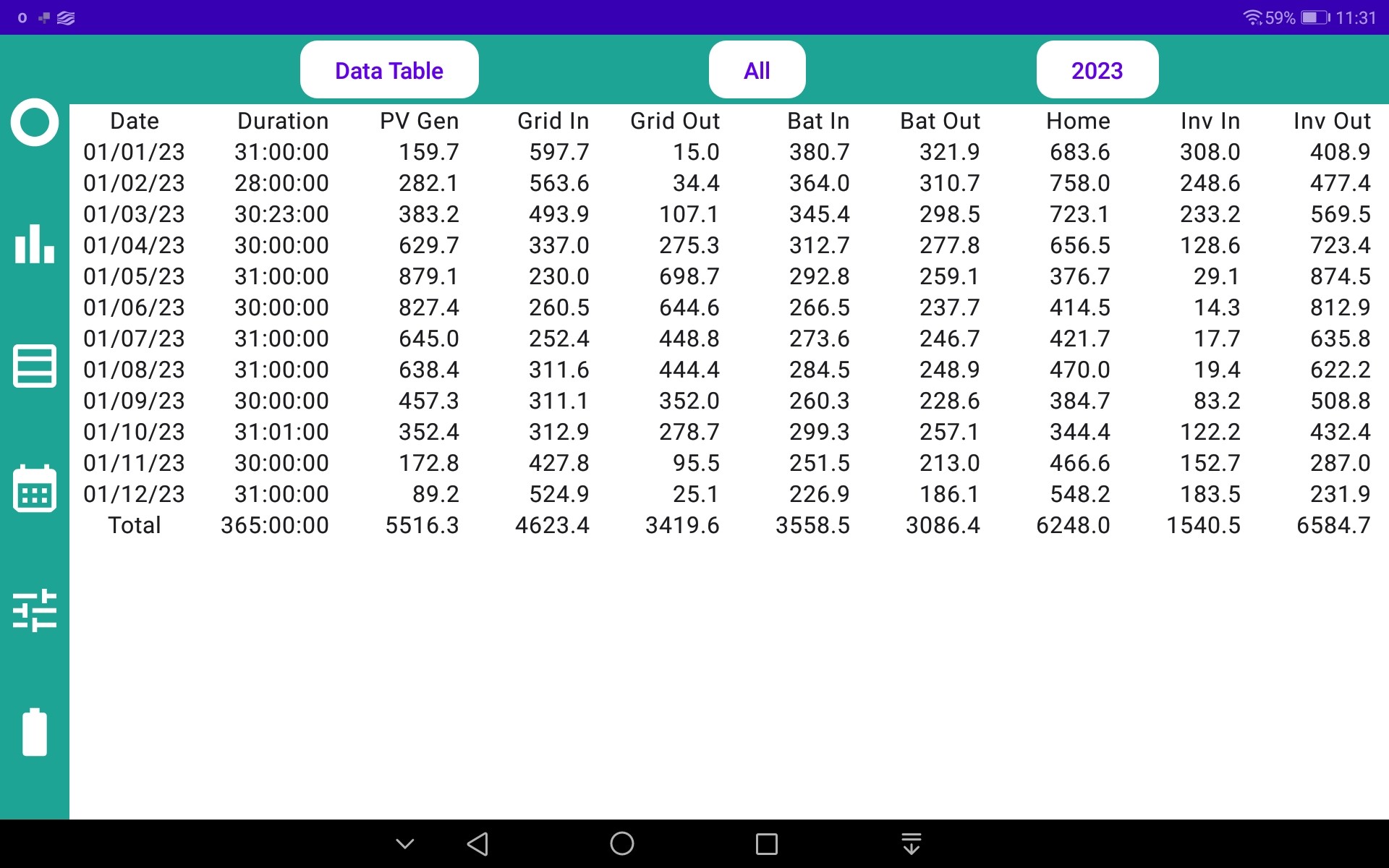
Here are my figures for 2023 from my app

All the losses are accumulated into Bat In minus Bat Out. So a generation of 5516kWh against consumption of 3558 - 3086 = 472kWh.

As for accuracy, my grid import was
4701kWh according to smart meter.
4623kWh according to my app.
4520kWh according to portal energy graph.
All are "correct" just calculated differently!

P
#15 pacemaker

Rubikcube 3558 - 3086 = 472kWh.

14% loss - quite high

R
#16 Rubikcube

pacemaker Depends how you calculate the percentage. There is a fixed consumption, like a "standing charge" to take into account.

If you plug a gen1 hybrid into the mains with no panels and no battery, it consumes 16W. Multiply 16W * 24 * 365 / 1000 = 140kWh per year. Is it useful to describe that as 100% loss or better to describe it as power consumption?

P
#17 pacemaker

Rubikcube totally get what you are saying, and I guess that's my whole point. How is it calculated in all these different places? To have such varied numbers for the same "thing" is just very odd and confusing to me.

Like there is literally threads of people complaining they put X in their battery but got Y out on the SoC issue threads. But if you can't trust the data, how the hell do you even know what's up or down? Just mad to me, guess I'm on my own on this one though 🙂

R
#18 Robgy

pacemaker You're not on your own with the numbers, I'm new here so didn't like to say anything in case what I have been thinking was stupid. You wouldn't believe how many times I've checked my spreadsheet in the last month since I had my system fitted, thinking that I must have made a mistake.

D
#19 DreadorUK

pacemaker

Thats why I just trust the time it charges over most other data on the output you can check the flow from battery to house by testing it with known appliance w usage.