SolarPV Optimisers

39 comments started 2024-01-09 last 2024-01-24
Forums/Meta
C
#1 Coys68

I wonder if I might pick the brains of some of you experts out there please?

I have a very modest array of 11 panels (2.7kw) which was probably the best investment choice I ever made - it's on the original feed in tariff!!!

It suffers from some shading so a couple of years or so ago I have Tigo optimisers fitted which, in the main, have improved performance. However, there are some days (today being one) when they might just as well not be there. Even this time of year, on a sunny day a kilowatt or two can be generated which supplements the overnight cheap charge to my new all in one. It can peak at just of 1kWh early afternoon. Today has been wall to wall sunshine but the system hasn't even generated 0.1 of a kWh and has peaked at 92wH. Tomorrow is forecast to be wall to wall sunshine again and it could well perform to the higher end. Absolutely nothing changes physically - just the generation which is pants. This was the case before fitting the AIO also so that has had no bearing on things.
Intermittent faulty optimiser? Any thoughts?
Unfortunately the installers of the optimisers didn't log which optimiser was to which panel so cannot narrow it down by using a CCA.
K
#2 kram

Because tigo optimisers work with any string inverter, they operate differently to the solaredge ones. SE is essentially MPPT on each panel, but I think tigo operate differently which allow poor panels to stop dragging the string down. (Do check though as I’m not certain)

Essentially some days maybe there are enough panels in shade and the voltage generated by those left isn’t enough to get over startup voltage?

P
#3 paulwindy

I have Tigos to all my 20 panels and have the CCA all linked up with rapid shut down, I have 10 panels SE facing and 10 panels NW facing. This time of year as the sun is so low and with my shading the production is not great (today overcast and producing 146w)

C
#4 Coys68

ok - today's weather almost identical to yesterdays. My 11 panels (5 on the top row and 6 below) have today peaked at 988wH and have, so far, produced 2.9kWh. Yesterday's peak was 92wH with a total production of less than 0.1kWh.

The top row have been in full sun both days and the bottom row have been shaded half way up all 6.

Today is far better than I would have got prior to the optimisers being fitted. Yesterday was far worse.

Any thoughts why they should be so different? This is not an uncommon occurrence - odd days have been almost zero when its a lovely sunny day ever since the optimisers were fitted.

K
#5 kram

For us today was 8.5kWh and yesterday about 4.5kWh, so clearly there was a difference in intensity.

Are your panels all half cut with effectively six sections to it? Also are they all oriented portrait or landscape.

I ask because if the optimiser drops the voltage to maximise current (I think tigo work like this) then you need to make sure you get above the string startup.

If your bottom row has the shade just a tiny bit higher that it takes out all 6 sections the generation is zero. If you shade half, you might have to drop the voltage a lot to get the current.

5 panels in the sun generating 30V each = 150v so if somehow the partial shade is in a way that trips up the optimisers you could get zero volts from the bottom 6.

If your inverter has a 170V startup voltage, then you’re generating zero whilst there is shade.

I assume having 5 portrait plus two rows of 3 landscape or another option that puts more whole panels out of the shade more of the time isn’t an option?

I would look at the DC Voltage of the inverter on bad production days and see if it’s lower than your inverters start up voltage.

D
#6 DD

Coys68 you didn't say what solar inverter you're using. Are the panels configured as one single string, or separate strings for top and bottom row.
AIUI the inverter has to explore the voltage/current range to try to find the highest power. So the thing that can change day to day is whether it gets stuck at a local maximum, and is unable to discover the true peak. Which then depends on what algorithm the inverter is using.

P
#7 paulwindy

Coys68 On the 9th we generated 3.66kWh and the 10th 0.96kWh so seem the same as yours we have 20 panels @400w each 8kW. Did have issue with previous firmware where if you restarted inverter generation would shoot up but seem to have gone away with the latest.

C
#8 Coys68

ok - the 11 panels are all on a single string and all portrait set in two rows. Top row = 5 and the bottom row = 6 panels. The line drawn by the shade is pretty much identical. I appreciate the sun 's height can vary marginally but not enough to make any difference. It will rise and lower marginally through the day as the sun moves around but that, again, should be the same both days pretty much.
The inverter is a Fronius IG plus 3.0kw and the panels are Jetion Solar 245w. In the summer when the sun is higher and there is no shade they actually peak higher than their rated power which, given they are now 12 years old, is rather impressive!
The voltage thing I'm struggling with. Pre optimisers the panels would have produced probably 0.5kWh of power on a sunny January day. No issues whatsoever and the shading would have been the same.
Thanks for the comments so far guys - this is way beyond my meagre brain capacity I'm afraid

C
#9 Coys68

It's interesting that you were so different on the 9th and 10th and the opposite way round to mine with the 10th being substantially better for me. I'm in East Anglia and the days were almost identical weatherwise. Was the weather the same both days at yours?

A
#10 athresuk

The thing you need to realise with Tigo optimisers, all they effectively do is prevent a panel which is fitted with a Tigo from staying high impedance (due to shading on that panel) which reducing series current through the entire string of panels.
This is why you can fit Tigos to just the shade affected panels.

Panel output when in partial shade is all down to:
a) what panels you have full or split cell
b) if bypass diodes are fitted
c) the shadow pattern on the panel

On many cases the bypass diode will do a good job of keeping panel impedance under control as long as the shadow takes out a good proportion of cells so that all the panel current passes though the diode in action, this happens for hard edge shadows (like a roof) hitting multiple cells.

The bypass diodes are not effective when you have odd shaped shadows affecting just parts of individual cells (diagonal shading on cells is a good example) or from trees. In this scenario the panel cells are still generating voltage with high impedance enough that the bypass diode is not "bypassing" the affected cells and this then increase the impedance of that panel and hence reduces total string output.
This is where Tigos come in as it will "short out" that panel if the impedance increases. Yes it will kill that panel, but it will prevent the other panel outputs in the string from being reduced from high string series impedance.

If you can post up a picture of the shading on your array this may help figure out what is going on.

P
#11 paulwindy

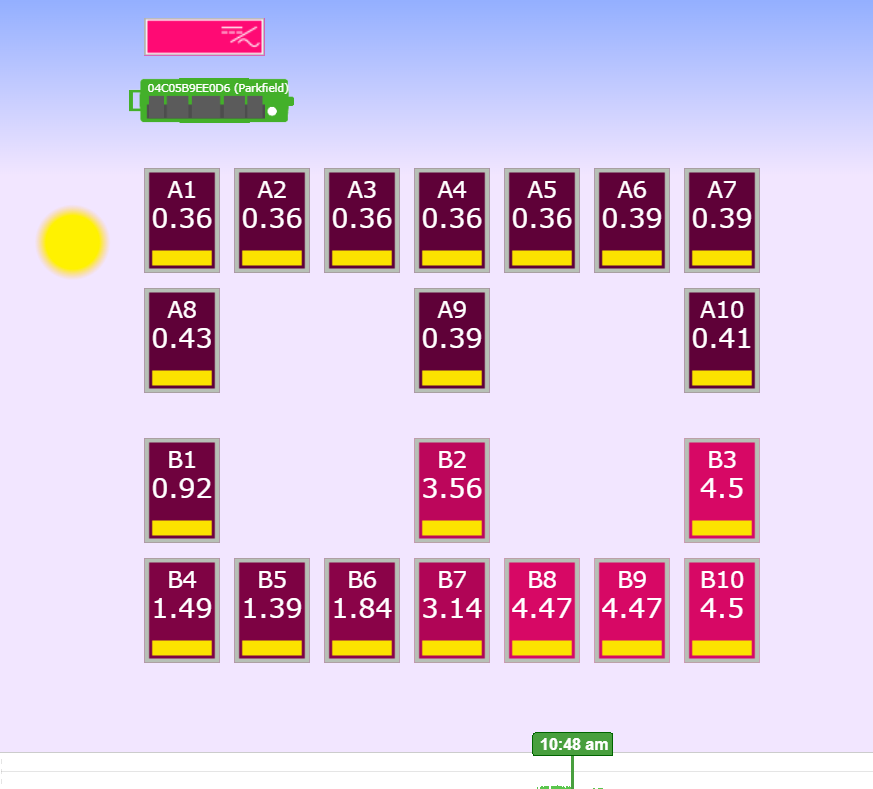
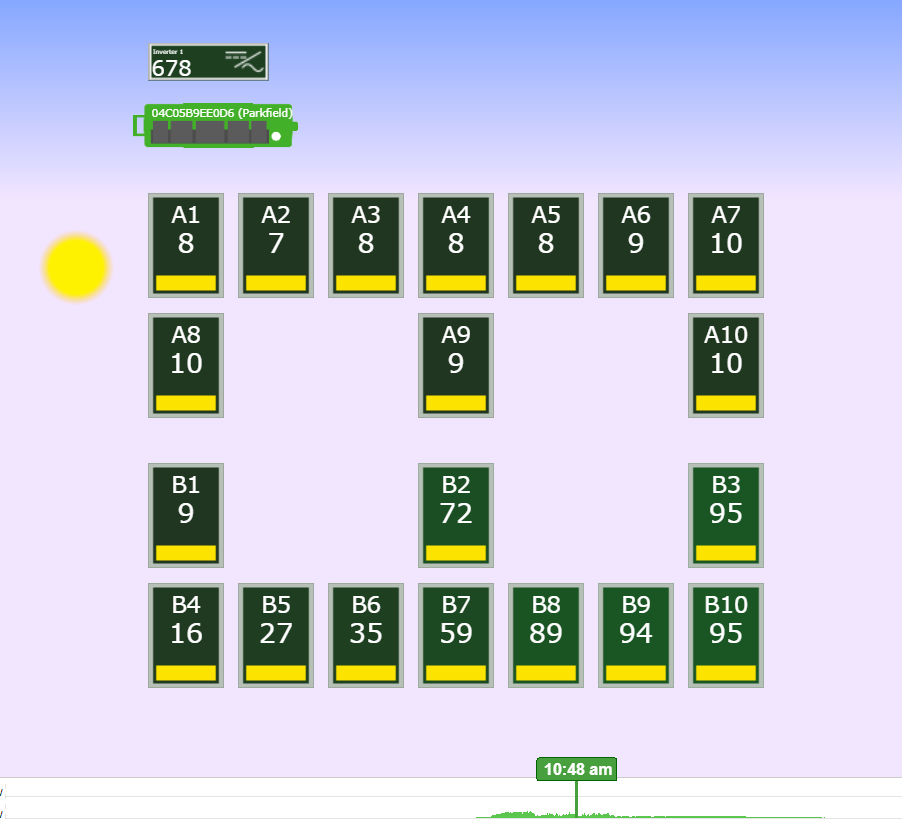
athresuk This is my layout with the power shown at 10:48am on the 9th bottom 10 panels SE facing top 10 NW facing trees to the bottom left

K
#12 kram

Each panel generates its power 245W in your case by voltage x current. So 25v at 10A would give your 250W each x 11 = 2750W total.

Each time you lose a panel, the current stats at 10A but the series voltage would drop by 1 panels worth 25V

11 panels each @25V = 275V string
10 panels = 250
And so on down to

5 panels = 125V

Inverters have three key voltages,

Maximum = Bad stuff happens if you go over this.
MPPT = this is where the inverter can play to maximise power
Startup = The inverter is effectively off below this point.

As the tigo are effectively removing excessively shaded panels from the strings or bypass diodes drop the power this drops the voltage contributed to the series string.

If you were to have a 170V startup voltage 7 panels will start it but less won’t. Partial panels might bump you over.

150V startup = still 5 won’t do it, so no power.

5 fully working and 3 (6 x 0.5) = 125 + 75 = 200V so if your startup is below this great and if not no power. If the panels are borderline shaded a tiny difference can be all the difference.

Now if you startup at 180 but MPPT is at 310, the inverter will start but MPPT won’t kick in and you get limited power.

Lots of factors and with your panels being older they may not be half cut. At that point a shade line across the panel, even a couple of inches from the bottom will take out the whole panel.

If you get shade from one side, you need to think about how the panel bus bars are wired relative to the shade and put your panel in that direction to minimise rows/colums bypassed.

A
#13 athresuk

paulwindy It is individual panel shading images that are of interest

C
#14 Coys68

Next time we get a sunny day I will try to get some photos.

Thanks for your thoughts guys!

P
#15 paulwindy

athresuk The bottom left panels are shaded but still produce, Tigos don't shut the panel down it just reduces the generation on the panels that are shaded.

P
#16 paulwindy

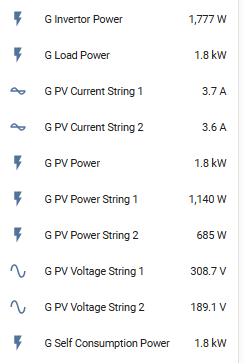
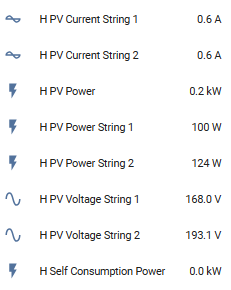
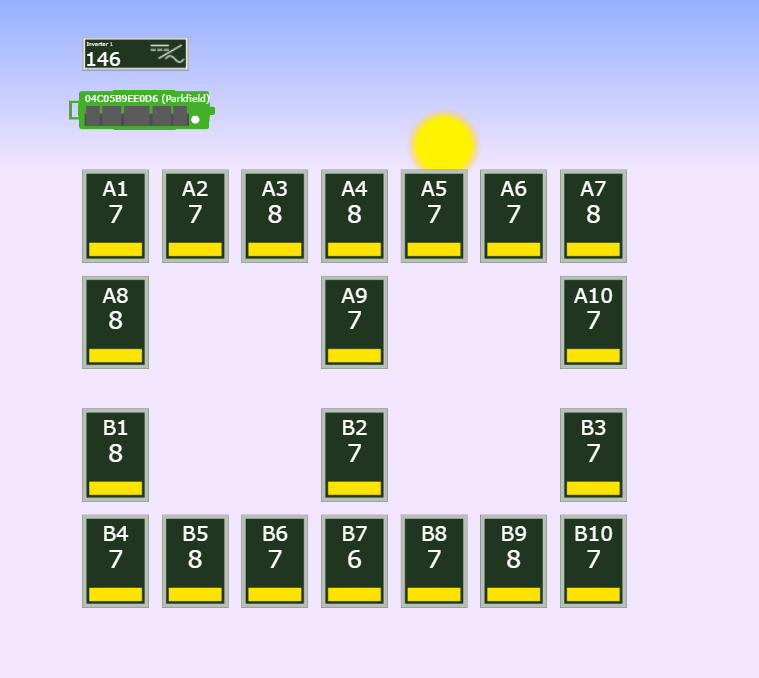
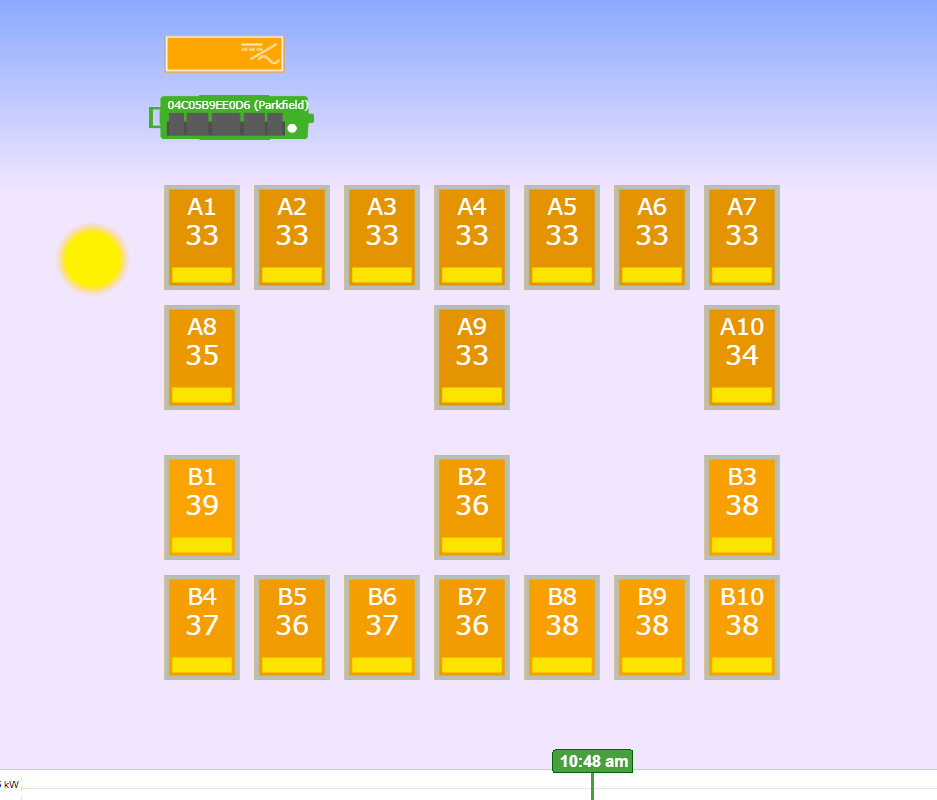
The images below are of the same time first showing voltage and second amps
paulwindy

P
#17 paulwindy

Coys68 It still can be done adding the CCA but not straight forward and you also need the taps which the panels connect to and if you have 2 arrays then you would need 2 taps 1 per array.
My installer did not have a clue so I had to install all the Tigo CCA / Taps / Rapid shut down myself.

C
#18 Coys68

I've been thinking more about the issue of insufficient voltage mentioned. Is it relevant for me to point out that the inverter does start up and work all day. It just chugs along producing somewhere between 60 and 120 Wh all day (no shutting down and restarts). So, this time of year some days with 5 in full sun and 6 partially shaded, they will peak at around 1000wH and produce 2 - 4 kWh through the day. Other, seemingly identical days weatherwise, it will chug along at 80 - 90wH and produce less that 0.1kWh all day, but be working all day.

Does that make any sense??

D
#19 DD

Coys68 I wonder if you've tried restarting the inverter on a low-power day. Just in case it has got itself stuck in the wrong part of the voltage curve, or something. Maybe a fresh start will allow it to find a better equilbrium position. [I don't know much about it, but this was an impression I'd got from another thread.]

V
#20 Vestas

Coys68 There's two "startup" voltages which I'm not sure people are aware of?

There's a MPPT startup voltage - this is the voltage at which the inverter will present a load to the PV panels. That's the voltage which support/your installer can change in the firmware if you request it. Default value is 150V on G1 inverters.

Then there's an inverter start-up voltage - basically if you have a battery connected and charging/discharging then this value is meaningless as the inverter will be running all the time. The inverter start-up voltage is fixed (AFAIK) and is as per the published value on the datasheets.

C
#21 Coys68

ok - so, as far as I can ascertain the working voltage for the Fronius IG Plus 3.0 is 150 - 400. The MPP voltage shows as 230 - 500.
So, if the voltage is between 150 and 230 the inverter will switch on and work but just not very well until the voltage exceeds 230???

Does that sound right?

The inverter is 12 years old now so will, in all likelihood, need replacing at some point soonish. Presumably newer ones will have lower voltage thresholds and probably greater efficiency??

K
#22 kram

Coys68

That’s exactly it.

Check the spec on new string inverters as there isn’t certainty.

400v = bad stuff happens voltage
230v = MPPT Voltage
150v = startup.

I don’t think you’ll go much lower than 150v, but the right inverter might be lower MPPT.

Also some newer inverters support global MPPT which can help on shaded systems.

Edit:

3kW sma sunnyboy has shadefix (global MPPT)

100v startup, 110 MPPT Voltage.

https://files.sma.de/downloads/SB30-60-DS-en-61.pdf

C
#23 Coys68

Curiouser and curiouser.
Just checked through the data on the inverter. Today - lowest voltage 235 highest 394. Top 5 panels in full sun (its a lovely day here!). Peak production 88wH

MPPT should have kicked in so maybe that isn't the problem.
Whatever the issue it seems to be intermittent - either the inverter MPPT not working correctly or a fault in a panel/optimiser?
When we get to higher sun in 2-3 months time, the system will have no problem working at full capacity and there will be no down days like this. This problem only manifested when the optimisers were fitted and only happens in Jan and Feb as far as I know.

K
#24 kram

Coys68

235v is close to 230v, there is tolerance and your device is 12 years old.

395v will be all 11 panels in sun at approx 35v each. 235, is probably 5 in sun plus some partial voltage from the lower ones.

You inverter does not have global MPPT support from what I can see, so try turning it off and back on during a sunny but low production window. This will force the MPPT to retrack and it might find a higher point (or not).

If you’re concerned about lost production, I would seriously consider looking at a more modern inverter such as the linked sunnyboy 3.

You might find that performs betty without optimisers than with, but you’ll have to try. Optimisers are best for irregular shade and it sounds like yours is fairly straight.

C
#25 Coys68

ok - it looks like I may have been reading the wrong voltage figure (doh!). The 230 - 235v figure appears to be the 'output' from the inverter. Easy mistake surely 😉

Today the panels are working well - maintaining around 870wH's for the last 3-4 hours - Excellent. However, the voltage from the array is only at around 170 - 180v.

Does this alter the argument that it is the inverter MPPT not working properly? To recap - the MPPT voltage range for this inverter should be 230 - 500.

We had another down day a couple of days ago where less than 0.1kWh was produced all day even though it was lovely and sunny.

K
#26 kram

Coys68

It’s working, but:

Your panels are not creating enough to get into the MPPT range so whilst it is starting up, it isn’t getting max power.

Further your inverter does not support global MPPT and retry, so you end up stuck in ruts.

On a bad generation day I imagine you’re hovering around your startup voltage.

With the inverters age, I would find something like that sunnyboy 3kW or a new fronius, with lower start up and MPPT start voltage and swap it. Keep your old as a spare.

Otherwise just accept the loss until your inverter pops.

K
#27 kram

Optimisers can cause this by bypassing a weak panel to allow others to generate a higher total string power.

Of course where the voltages are close to the start up values, this could drop them by a few volts and push the string below startup voltages. At that point it’s game over for generation.

Edit: shade and diodes can do this too, you just get another set of edge cases when you add in more things.

D
#28 DD

I thought the point of an optimiser that each panel operated at its own max power point, and the optimiser then re-ranged the voltage so that all currents were the same. Or something along those lines. So there's no need for the string inverter to try to find a suitable v/i for the string as a whole, and it just needs to do conversion to AC.

K
#29 kram

DD

Solaredge inverters don’t do MPPT the optimisers do with a fixed voltage string.

I believe Tigo are a bit different as they work with normal string inverters. If you’re impedance matching and changing voltages to keep a current you could drop below startup surely?

In some cases it’s an advantage as a fixed voltage sting has its potential pitfalls. In others it’s not.

I’d been trying to find a post I found whilst we were looking which might interest the OP and finally found it:

https://mcelectrical.com.au/tigo-optimiser-recall/

C
#30 Coys68

A new thought.
Today looks like being another down day for my panels - bright sunshine but almost no output. Voltage from the array is over 270 currently so no issue there with insufficient for the MPPT. However Amps are showing as 0.3. The technical data for the Fronius says 'nominal' Amps 8.3.
I can never really get my head around amps and volts but does this mean that there is some abnormal resistance somewhere in the array? Are we then back to a faulty Tigo optimisers? I will check the Amps again when there is a 'normal' day.

I read the piece regarding the demand for a Tigo recall - very interesting but doesn't quite seem to fit my scenario.

I am considering getting a new inverter fitted in the summer (as suggested on here) but don't really want to spend the money if the issue I'm having isn't down to the inverter.

As an aside from that - does the greater efficiency of newer inverters (3 or 4%) along with the lower startup voltage mean anything significant in terms of overall production?

Thanks in advance - always grateful for the expertise available on these forums

D
#31 DD

Coys68 Unfortunately the installers of the optimisers didn't log which optimiser was to which panel so cannot narrow it down by using a CCA.
CCA = Tigo's "Cloud Connect Advanced" monitoring system ?

While you may not be able to identify which optimiser is on which panel, can you compare all the readings with each other to see if there any obvious anomalies ?

G
#32 geoffreycoan

Coys68 Don't know if this helps you or not, but here's the power data from two arrays. No power optimisers

The East array which is bathed in sunlight at the moment:

The second array. String 1 is on the garage East facing so is shaded by the neighbours at the moment, string 2 is on the rear, west facing

K
#33 kram

Lower startup voltages will give better production in lower light conditions.
Global MPPT allows for more power from panels
Wider MPPT voltage and better efficiency should get more power.

Will it pay for a new inverter, unlikely, but it’s worth paying attention when updating an old one.

I’d be interested to see if shadefix (global MPPT ) would negate the need for optimisers.

On your current setup:

Power = Voltage x Current
80W = 270v x 0.3A

So to increase voltage optimisers will reduce current and increase it to drop voltage.

I am wondering if you’re stuck in an MPPT rut of low power point. Have you tried restarting the inverter on a day like today to see if power increases after a restart?

https://aurorasolar.com/blog/the-importance-of-modeling-global-maximum-power-point-tracking/

That seems a possibility, but there could be an issue where the optimiser isn’t bypassing but is making things worse by not.

Using a modern inverter with global MPPT, without optimisers might actually give better performance. It might not, but could be worth trying.

C
#34 Coys68

Thanks guys - that's all really useful.

kram - yes, I have tried (several times) restarting the inverter. It has never made a difference. For whatever reason, a bad day stays as a bad day. Good days are significantly better than pre-optimisers. That's what I cannot fathom. It seems like some odd days something doesn't work properly but it is an intermittent fault. I guess, when the time comes for a new inverter I will find out if that is where the issue lies. Otherwise it will be a panel or an optimiser.

P
#35 paulwindy

Coys68 Just to add when was your system installed ? As there are issues with the Tigo's firmware and if you do not have the CCA (which will update firmware) then they will be faulty.

K
#36 kram

paulwindy Coys68

If your optimisers are not running the latest firmware it’s definitely worth doing the update as suggested.

P
#37 paulwindy

kram Yes but to update the firmware you need the CCA which I don't think he has, so would need to contact installer and get the CCA installed temporarily to update the Tigos !

C
#38 Coys68

Thanks again guys.

My optimisers were fitted in Oct 22.

If I could get hold of a CCA is the firmware update something which would be available to me or are they 'installer only'?

Once we get past about this time of year the problem won't manifest again until next December. A couple of months and then back to normal operation again.

P
#39 paulwindy

Coys68 Hi this is something that Tigo will have to do. I installed mine as the installer had no idea and I had to do alot of testing with Tigo in the states to get it all up and running a it should be. I have 20 inset panels in the roof and the tigos would not connect to the taps due to GSE panel / concrete roof tiles, so went front 1 tap that the installer put in to 4 taps to connect to the 20 tigos I have (2 on each face). Not seen an option in the tigo portal to update the firmware so tigo can connect via the internet and look what is going on and update.