When topping up or holding charge for a saving session, surely there's no point in going beyond what the battery can dump to the grid for the duration of that session. Why does it overcharge the battery to try and run off the battery until 11:30pm. That's going to cost more due to inefficiencies in the charge/discharge of the battery than just running off the grid once the saving session is finished.
G
#2geoffreycoan
WillC I'm sorry but I don't see any issues with that plan.
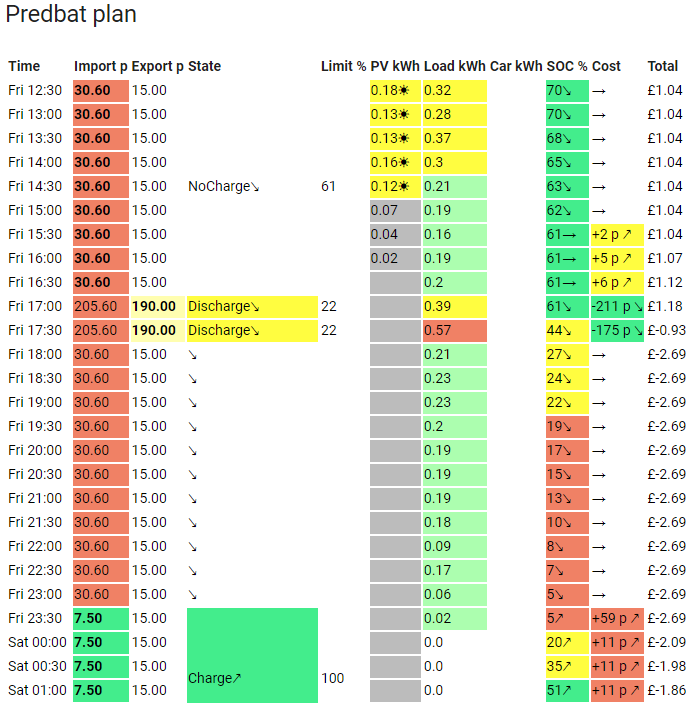
Predbat is planning your battery so there is enough charge for the saving session, then doing a discharge in the saving session to give you the best earnings, then after that from 18:00 the battery is released and it gets to about 5% SoC by 23:30 when it starts charging on the overnight cheap rate.
You've got 13p of predicted cost before the saving session, and maybe that could have been met from the battery, but you'd have run out of battery before 23:30 then and it'd have incurred the same cost
You've got 13p of predicted cost before the saving session, and maybe that could have been met from the battery, but you'd have run out of battery before 23:30 then and it'd have incurred the same cost
This isn't true as charge/discharge isn't 100% efficient, typically between 80-90%, so it's better to run out of battery early than it is to charge before the event. The reason I was asking the question is because I noticed the battery charged for 30 mins earlier in the day. On top of this, it also increases battery degradation.
I admit we're talking very marginal gains here, but there's no harm in striving for perfection!
A
#4Arg0t
WillC it didn't charge, it used the grid to supply the house rather than the battery. No losses and as GC said cost neutral with running out of battery at 10pm.
Question is why the state does not reflect freeze or hold charge in those slots.
W
#5WillC
Arg0t It charged the battery for 30 mins and then drained it when it could have run from the grid after the session. Filling and draining the battery uses approximately 15% more electricity than running from the grid, so it wasted approximately 7p. It's not cost neutral.
D
#6DD
WillC In which specific time slot did it charge the battery? I'm not fluent in these charts, since I don't use predbat. It looks lto me like it ran from solar and battery until it hit the reserve of 61% at 15:30. Then paused the battery at 61% and ran from the grid until the saving sesson. Then started discharging the battery again.
R
#7rwbarrett
you can change the costs of using the battery in predbat if you want to prevent it doing this when the benefit is marginal,
In the predbat docs -
input_number.predbat_metric_battery_cycle ? Higher numbers mean less charging and discharging but higher costs
A
#8Arg0t
DD is correct, it used the grid but did not charge based on that chart. The arrow is flat at 61% SOC, this was a freeze charge event not a charge event. Maintained battery at 61% by using grid to power house.
W
#9WillC
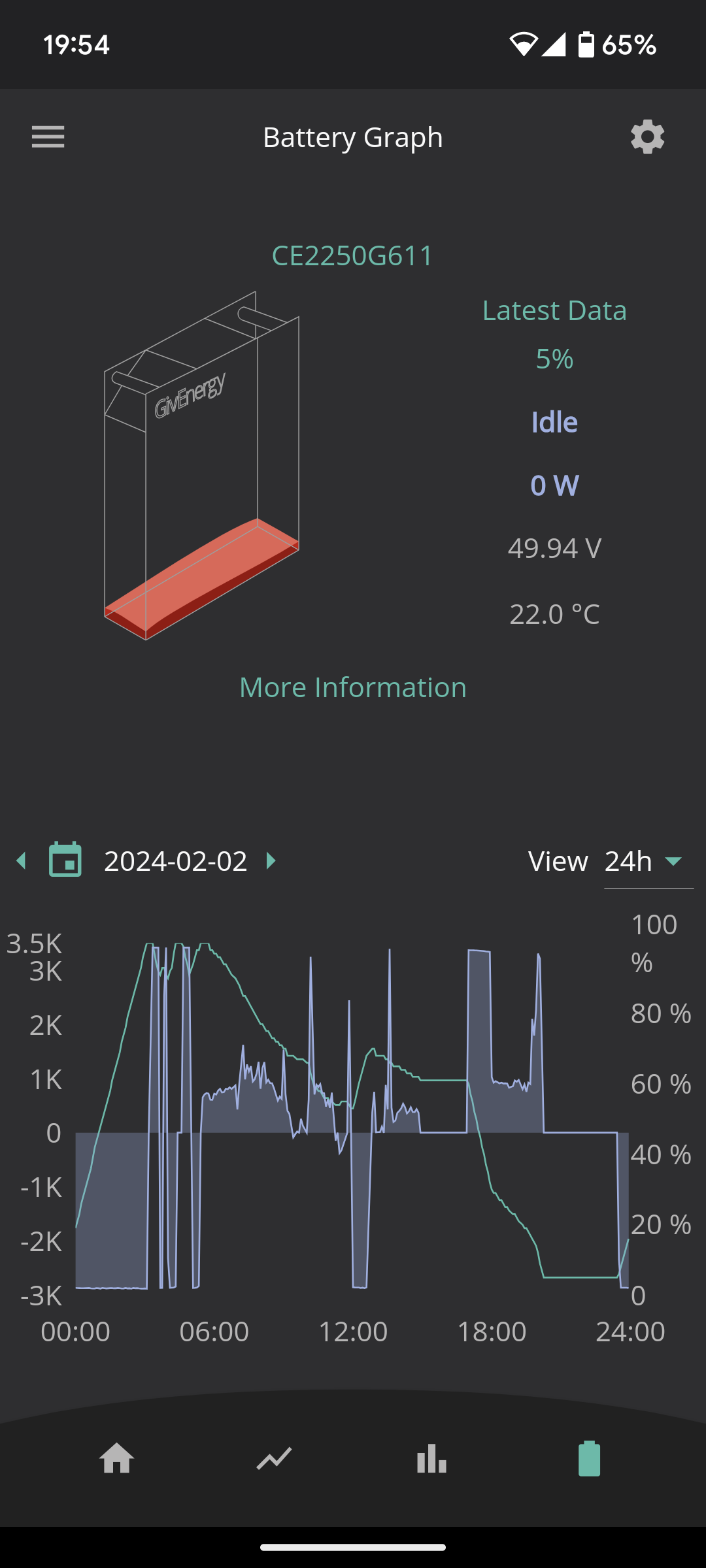
DD It charged earlier in the day, from 12 until 12:30.
G
#10geoffreycoan
It’s hard to make any judgement without more information as to what predbat did and why. If you can attach the log file from around the time that predbat did the charging to the GitHub ticket, Trefor may be able to see why it decided you needed an extra battery boost.
It looks from the graph that you were on about 50% Soc when it charged you up to about 70%. Then in the saving session it discharged from 60-30%.
So possibly an alternative plan could have been to hold charge at 50% all the way through to the start of the saving session.
What were your best_soc_min and best_soc_keep set to, might have been trying to preserve the Soc above these.
W
#11WillC
geoffreycoan Thanks. I'll dig through it all tomorrow... I'm very new to all this and drowning in information currently!