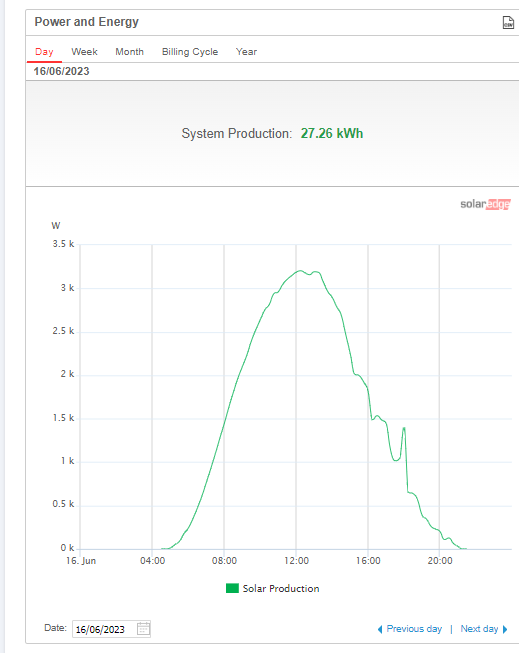
PV solar on a flat roof

18 comments started 2024-02-19 last 2024-03-13
GivEnergy ProductsAC Coupled
K
#1 Karen

I have a south facing single story flat roof extension which potentially could hold another 4 solar panels. I've investigated and converting it to a low pitch roof is not possible due to the position of the first floor windows. Does any one have any experience of panels on a similar type of roof, and
a) is it worth it?
b) what type of non-invasive mounting system did you use?
c) what type of roof surface is best (felt, rubber or fibreglass?)

I have an AC3.0 and 8.2kw battery. At the moment my south ad west facing arrays run into a Solis inverter and then make a single connection to the AC3.0. I think this means that potentially I can add a further connection to the AC3.0. Would it be best to get a second smaller Solis inverter for the new panels, or to go for microinverters given that the panel angle will not be optimal (There is no direct shading on the flat roof). Any thoughts welcome!!

V
#2 Vestas

You're going to have to mount the panels with a tilt anyway - both for performance and warranty reasons* - so if you can't have a low-pitch roof then panels are unlikely to be more acceptable in terms of aesthetics. In addition you're going to have to clean them very frequently.

Also bear in mind that flat-roof PV panels are not permitted development and require planning permission in some (all?) cases. Whether your local authority actually enforces this is another matter.

*pretty much all the PV panels I've looked at say the warranty is invalid if mounted flat because water ingress between frame and PV module is all but inevitable during the warranty period when mounted flat. Most manufacturers require a minimum 20 degree slope

S
#3 SteveCook

On my flat roof garage i have 13 panels on premade plastic 'bins' that are just weighed down with a bag of gravel and the panels clip on at preset 10 deg angle. Been up 4 years through major storms. No problems.
Like this
https://www.ebay.co.uk/itm/134404920993?chn=ps&_ul=GB&norover=1&mkevt=1&mkrid=710-134428-41853-0&mkcid=2&mkscid=101&itemid=134404920993&targetid=1817264049995&device=c&mktype=pla&googleloc=1006507&poi=&campaignid=19697487289&mkgroupid=146342272739&rlsatarget=pla-1817264049995&abcId=9307892&merchantid=6995734&gad_source=1&gclid=CjwKCAiAlcyuBhBnEiwAOGZ2S49V1iNLRYH3PhHW6OqWKpBIDAj7kxUiFUu3zSZp2Zd_PyUkS18EYBoCwk0QAvD_BwE

G
#4 geoffreycoan

Karen have an AC3.0 and 8.2kw battery. At the moment my south ad west facing arrays run into a Solis inverter and then make a single connection to the AC3.0. I think this means that potentially I can add a further connection to the AC3.0. Would it be best to get a second smaller Solis inverter for the new panels, or to go for microinverters given that the panel angle will not be optimal (There is no direct shading on the flat roof). Any thoughts welcome!!

Answering your original question, you’d need to look at the solar panel cables going into the Solis inverter as to how they are wired up.
You didn’t say how many panels you currently have, and if its a decent number they may well have been wired up as multiple strings into the inverter (there are two connections per string, a DC voltage in and a voltage out).
Most inverters have 2 sets of string inputs but I think some Solis inverters have connections for 3 strings. So you need to look at your inverter ad see whether it has spare string connection ports or not.

If you have spare ports then it’’d be cheaper to wire the new panels into your existing inverter. Not recommended to wire the panels into an existing string if they are significantly different orientations and solar generation profiles as the new panels will impact the generation of the existing panels.
If you don’t have spare ports then yes you’d need another inverter. Doesn’t have to be solis, any one will do, and they can both feed your AC3.
However going to have to do the maths as to whether it is really worth it or not.
New inverter, £700-1000. 4 panels £500, Installation costs? Probably looking at £2000-3000 or so.
You’d probably get about 600-800kWh off 4 panels over a year.

All very rough figures of course. More panels would be better to maximise the investment in the new inverter

K
#5 kram

Careful though as some of the 3 string inverters only have 2 MPPT

K
#6 Karen

geoffreycoan My existing system has 3 west facing panels and 5 south facing panels, each on a separate string, which connect into the existing Solis inverter - so no room to attach another string there. There is one output from the Solis that feeds to the AC3.0. The new panels would be at a different orientation because of the tilt angle (between 10-15 degrees on most of the rail mounting systems) so I couldn't link them to the existing south facing string. As there would only be 4 I wondered if microinverters might be a better option as they could be linked together and fed straight into the spare port on the AC3.0?

K
#7 Karen

SteveCook Hi Steve, What is your garage roof made from. I am going to have to replace my roof this year and don't know what covering to go for, as I don't know how they will stand up to the extra weight. How much ballast do you need to put in each bin? Are the panels in landscape or portrait orientation?

S
#8 SteveCook

Hi
The roof is timber beams with plywood sheeting and then a rubber membrane.
I went the plastic bins route so I did not have to pierce the membrane for fixings.
Each of my bins has 2 bags of gravel in about 10kg each bag. The way the panel is fixed means there is nowhere for wind to get underneath anything and lift/move anything.
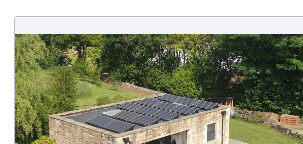
South is to the left of this picture - ie the panels are south facing when inclined.
I had to leave out a couple of panels where there are polycarb roof lights.

S
#9 SteveCook

some days I peak around 5kw production. I am in the Pennines in N Yorkshire. There is a big willow to the SW that does some afternoon shading, but I am not going to cut it. It is too beautiful

G
#10 geoffreycoan

Karen As there would only be 4 I wondered if microinverters might be a better option as they could be linked together and fed straight into the spare port on the AC3.0?

Yes Microinverters are another option, Gary does Solar on YouTube recommends microinverters.
Price wise they seem to be about £130+ each https://www.itstechnologies.shop/collections/enphase?sort_by=price-ascending which might work out slightly more expensive than a Solis inverter https://www.itstechnologies.shop/collections/solis-inverter
But either would do to generate AC and feed into your AC3

A
#11 Avenir

I have 12 south-facing panels on our main roof, which is flat. They shade each other in midwinter, so if I was doing it again I would take a closer look at microinverters. We have a variety of portrait and landscape orientations to fit around some rooflights and comply with some planning restrictions. I think the roof is bitumen felt; it seems to be in good condition and the panels should extend its life by shading it. Some of the neighbours have fibreglass, which looks more solid and durable, though apparently makes expansion/contraction noises. The panels are on inclined frames ballasted with concrete slabs, not sure how heavy but they've been fine in the 80mph wind gusts recently.

G
#12 geoffreycoan

Avenir Some of the neighbours have fibreglass, which looks more solid and durable, though apparently makes expansion/contraction noises

I’ve replaced the roof on 3 sheds, a front porch and a utility room all with fibreglass. It’s a fairly straightforward DIY job (plenty of instructions on internet and YouTube). Not had any experience of expansion and contraction noises and fibreglass is a pretty inert material so would surprise me if it did, but looking on google the advice seems to be that expansion joints should be fitted every 60-100 square meters so maybe that’s why your neighbours are getting noises if the underlying roof timbers are expanding and expansion joints weren’t fitted?
I re-did these roofs with fibreglass as its quoted 50 year life whereas bitumen or felt is usually 10-15 years.

A
#13 alan_johnston

My system has 8 panels on a pitched roof and the installer put another 2 on a flat roof.
The flat roof panels are mounted on portable frames which just sit on the flat roof making them temporary and not needing planning permission. Being on a first floor flat roof they can get a bit of shading so the installer added an optimiser. They certainly add extra Watts to the solar PV and were cheaper to instal than the roof mounted ones.

A
#14 Avenir

alan_johnston Have you obtained a Certificate of Lawful Development for the ‘temporary’ panels? If not I would be wary of stating that ballasted systems do not need planning permission. I applied to do my ballasted system under permitted development and was refused.

A
#16 Avenir

alan_johnston Planning reform would be welcome. The absurdity of the current situation is that you can conspicuously plaster a pitched roof with panels under permitted development, but a flat roof needs to get planning permission, even if the panels are not visible from ground.

M
#17 mrand31

I'm somewhat ashamed to say that all of my solar panels are on my workshop roof. It's got a 1:12 slope. When the building control officer queried the planned height of the workshop (limits are lower for flat roofs). I said "A 1:12 slope is pitched, not flat isn't it?". he bemusedly admitted that it was. 😃