EON Drive tariff

68 comments started 2024-03-01 last 2024-03-11
Commisioning
#1 Midlands_Solar

Signed up for the above today, as despite not owning an EV I was told that this is the best tariff in order to cheaply charge my battery between 00:00 and 07:00, in reality the battery is charged to 100% when it’s typically around 40% capacity by 02:30

Any one else use this tariff? As keen to get some thoughts and feedback

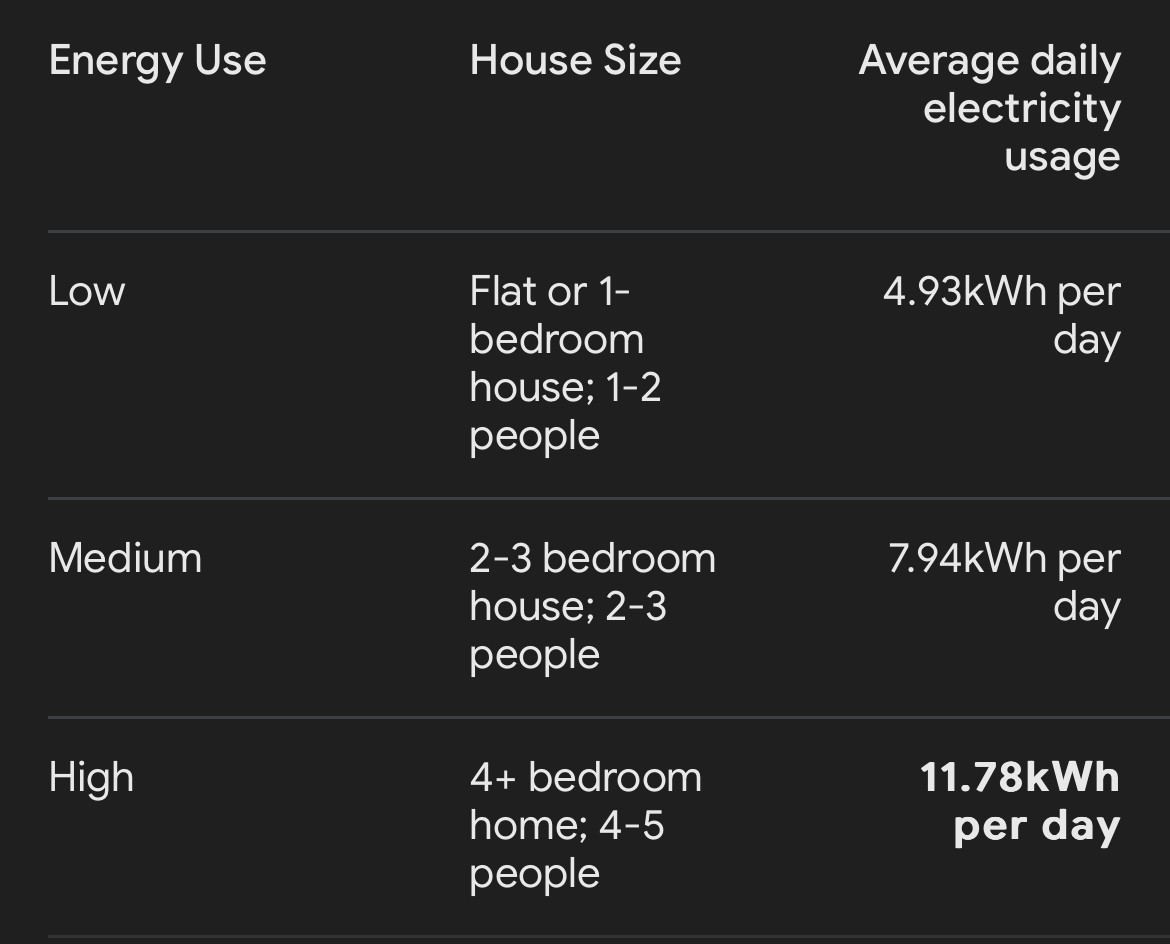
We are a high usage household consuming typically between 37 & 52kwh per day

Our property is approx 20 years old, the doors and windows have been replaced and cavity wall insulated.

We have a standard immersion heater, no storage heaters or heat pump, or underfloor heating

K
#2 killythebid

I am on the EON Drive tariff but I have an EV too. I do charge the Givenergy at night in the winter period to 100% each night between midnight and 7am.

This works well for us and the battery stops us from using any daytime tariff grid power. I will soon move to a summer regime in the next few weeks and stop charging the battery at night and just let the solar panels charge the battery.

I doubt, unless you have a very large battery bank and solar array you will be able to do the same with such a high power consumption.

C
#3 Coys68

This tariff works really well for me. The longer period means less draw from the battery 17 hours instead of 19/20 on other tariffs.

Main reason - EON offers 16.5p SEG! Charge your battery in the summer at 9.5p and export your solar all day for 16.5p. No brainer surely!!!

D
#4 DD

Coys68 Main reason - EON offers 16.5p SEG! Charge your battery in the summer at 9.5p and export your solar all day for 16.5p. No brainer surely!!!

No brainer, unless you then have to reimport from the grid later in the day. With such a high daily consumption, probably want to use as much of the solar as possible. (Though if the high usage is only in the winter, that's not so bad.)

G
#5 geoffreycoan

Midlands_Solar We are a high usage household consuming typically between 37 & 52kwh per day

You would probably find Octopus Tracker or Octopus Agile are more cost effective.

We have an ASHP and typically consume between 30 and 60kWh a day in winter. Until recently I only had a 5.2kWh battery which was just about enough to see me through the evening peak (typical rates 30-40p/kWh but did go up to 60kWh in early December when it was very cold). Nevertheless with agile and active management of the battery my average rate has been around 18p/kWh.

Sort of thing you need to spreadsheet out

A
#6 Avenir

Midlands_Solar why is your consumption so high? Do you have an electric boiler? Are you running a kiln…?

#7 Midlands_Solar

Avenir we have an economy 7 timer on our 20 year old boiler

A
#8 Avenir

Midlands_Solar Seems like extraordinarily high energy use for someone not charging a car or running electric heating of some sort – like 3 to 5 times higher than normal.

#9 Midlands_Solar

Avenir I agree

Our house is electricity supply only (so no gas or LPG) we have a very inefficient Economy 7 system to heat the water overnight for showers in the morning

Looking to change the timer on the water heater to the day, and looking to change the immersion heaters from 6kwh elements to 3kwh elements

Happy to get input and thoughts as to how we can reduce this our consumption further? We don't have any electrical items on 24/7 (i.e. no fish tanks etc). running wattage late PM is about 330w

V
#10 Vestas

Midlands_Solar Presumably the majority of the consumption is on electric heating rather than water heating?

There's no way you're using 30-50kWh a day to heat water - if you are then you have a hell of a water leak somewhere. Edit - or you have a 2500 litre water tank.... 🙂

#11 Midlands_Solar

Very little at the moment regarding heating, it's all being used to heat the water overnight on economy 7, economy 7 is a static heating timing schedule from 00:00 - 07:00. When I check the usage we're at about 25kwh use for the day by 07:00

V
#12 Vestas

Midlands_Solar There's no way on this planet you're using that much electricity to heat water. Something is very very wrong there.

#13 Midlands_Solar

No heating is on late at night or every early in the morning, and other than charging the battery for approximately 2.5hrs, only the economy 7 heater is on, I’m a bit lost tbh

V
#14 Vestas

Midlands_Solar What is used to heat the house?

Economy 7 was a popular tariff when there were lots of coal-fired power stations and it would nearly always involve overnight electric space heating and water heating.

If you have electric space heating then that's what's running overnight and your figures make sense. If not then I dunno.

As an aside, Scottish Power billed me the wrong way round on Economy 7 after a meter change. I told them multiple times and they even sent a meter reader round who treated me like the village idiot, so it never got sorted & our electricity bills were incredibly small. 13 years later we moved house and the new owners were benefiting from the same error until they made the mistake of getting a smartmeter 🙂

A
#15 Avenir

I heat my water overnight to 60C using an immersion heater. 210l tank, uses about 6–9kwh depending on usage in the prior day. I would suggest that it's your boiler heating water for space heating which is consuming vast amounts of 'leccy – or there's someone in the household with a bitcoin mining rig.

It would be worth looking into an ASHP. Even though you won't qualify for the grant it might still be cheaper in the long run. Storage or infra-red heaters probably worth a look too.

D
#16 DD

Perhaps you could post a power graph, which shows all components throughout the day. (Whereas the energy graph focuses on one source or sink, and so shows only part of the story.)

V
#17 Vestas

DD He has and you replied to it

He's got several threads open and I thought I'd seen a power graph but that was the other thread and not to do with this.

I hate this "forum" s/w....

D
#18 DD

If you're thinking of changing element anyway, I wonder if it's worth getting a solar divert or similar. [I assume these modulate heating power to match available solar ?] But certainly going down to 3kW should help, since a 6kW immersion heater would require additional import from the grid.

V
#19 Vestas

DD Yeah but it won't matter if, as he says, he's using the best part of 20kWh to heat water. That's just wrong. Edit - also a 6kW immersion heater seems about right if that's the sole heat source - its usually 2 x 3kW coils anyway, one at the top of the tank, one at the bottom.

The solar divert ones basically look at export (current clamp/transmitter at meter tails) and if it exceeds say 200W will divert any extra power to the immersion element. The unit modulates the mains to produce the desired output and that's about it.

Z
#20 Zakalwe

Midlands_Solar

It takes roughly 12kWh to heat 200 litres of water from 10C to 60C. If you are using 3 to 4 times this per day then there is something amiss here.

Z
#21 Zakalwe

Midlands_Solar Looking to change the timer on the water heater to the day, and looking to change the immersion heaters from 6kwh elements to 3kwh elements

Changing the immersion heater to a lower output will do nothing apart from taking longer to heat the water. Resistive heating elements are 100% efficient.
All you are doing is reducing the amount of heat going into the water per hour, meaning that it will take twice as long to raise the temperature of the same amount of water.

When heating do you hear noises coming from the water tank? If the immersion thermostat is set too high then you might be trying to boil the water in the tank. That will absolutely use loads of energy.

S
#23 Slartibartfast

Hard water? An old HW tank with furred up heating elements etc. will drop your efficiency to 60% ish. Take the old tank out and weigh it. You'll be really astounded by the amout of crap ... It's also a bit of a health hazard. Don't forget to fit a new one.

#24 Midlands_Solar

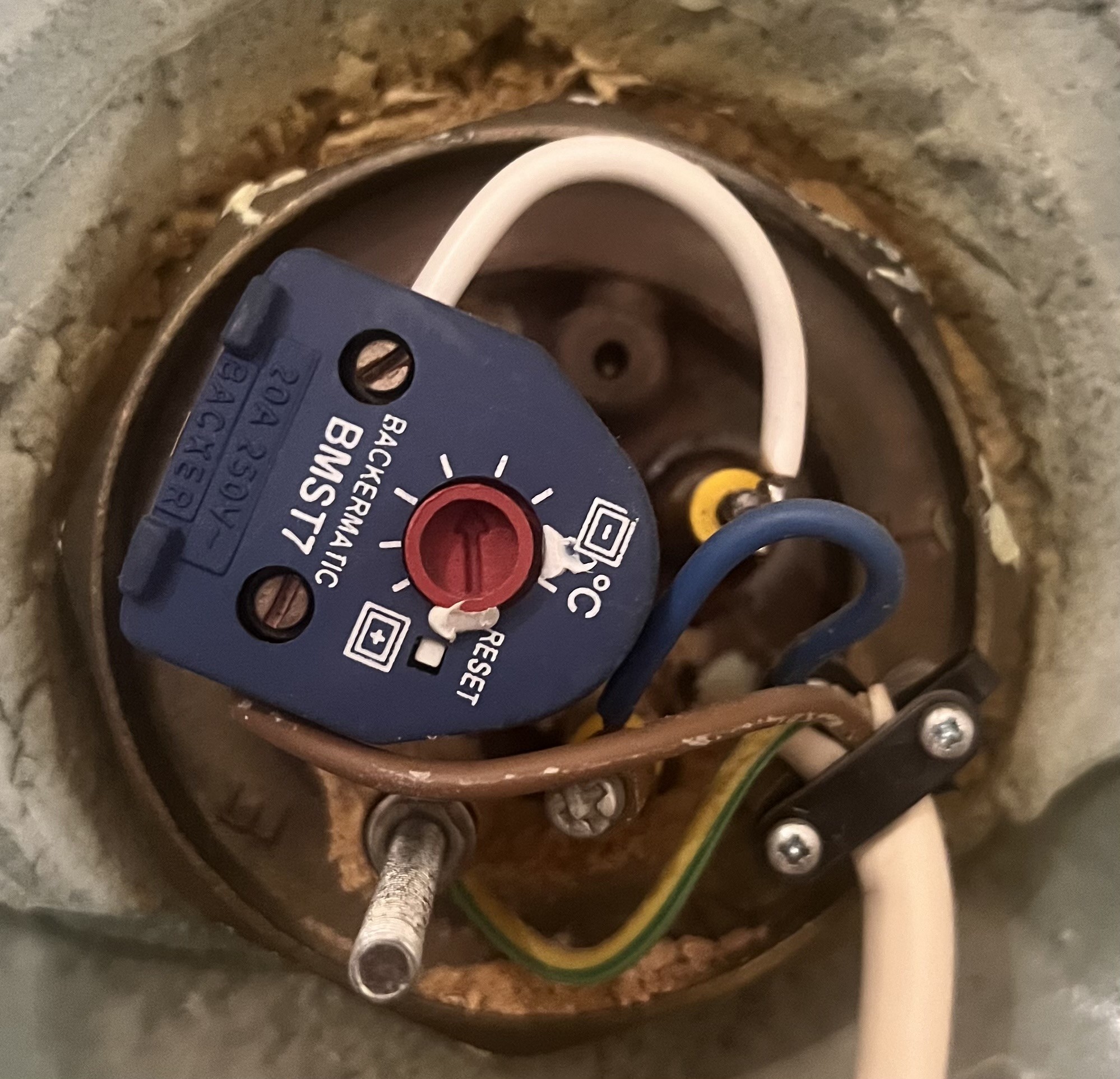
So I took the protective cover off the immersion heater, and to my horror I have discovered the thermostat setting was set hard over to maximum!

The bottom immersion heater doesn’t appear to be working, unless this kicks in independently, I have tried moving the potentiometer on this unit, and pressing the reset switch, but it doesn’t appear to be functioning. As a result the top heater will be on for longer, and at it’s maximum setting

Z
#25 Zakalwe

Slartibartfast
A scaled up immersion won't lower the efficiency, but it will increase the time to to heat the same volume of water. The scale will insulate the element somewhat, slowing down the transfer of the heat to the water.

D
#26 DD

Midlands_Solar The bottom immersion heater doesn’t appear to be working, unless this kicks in independently,

It's possible that the top immersion is wired such that it can come on any time (as a daytime boost) whereas the lower one is connected to E7 timer and will only run overnight, when you want to heat the whole tank. When adjusting the thermostat, do you hear a faint click as it crosses the current water temperature?

#27 Midlands_Solar

DD

Yes I hear a click and see an arc on the top immersion heater, doesn’t appear to be a feed going to the bottom heater, as you say it’s likely controlled on the overnight timed heating

#28 Midlands_Solar

I turned the thermostat down to this, as it’s was at the maximum for both!

Energy consumption is right down this am, I’ve imported about 10kwh as opposed to 30 yesterday

#29 Midlands_Solar

Given we are electricity only, I’m guessing this more in line with what’s expected

V
#30 Vestas

Midlands_Solar Depends if you're out all day or not. Those figures are (IMHO) wildly optimistic.

#31 Midlands_Solar

Vestas yes agreed 🙂 but more in line with my consumption, down from typically 35kwh per day

G
#32 geoffreycoan

Midlands_Solar Its worth you turning the immersion heater down to the lowest you can “get away with”, i.e. enough hot water for running baths, showers, etc that you need the minimal amount of cold water to be able to bathe in it, but the hot water doesn’t run out.

I’ve progressively turned our hot water down and its now on 48 degrees which is plenty hot enough for baths and I only heat the water once a day.

The government estimates of consumption I too find optomistic. I find it depends on the season a lot. Through the summer we were using 14kWh a day (including 1-2kWh to heat the hot water with the ASHP). In winter its averaging 18-25kWh a day excluding any hot water and heating.
Although we have a large house there’s only 3 of us living here, we don’t leave lights or heating on in unoccupied rooms so according to the guidelines we are using double the amount we should use.

At least you’ve got your consumption down a chunk

V
#33 Vestas

geoffreycoan The problem with dropping the temperature that far is potential legionella in the tank. I know your ASHP runs a cycle periodically to heat to 60C but if Midlands_Solar has a manual thermostat then that isn't practical & WILL be forgotten about.

G
#34 geoffreycoan

Vestas I have turned the Legionella heat cycle off on my ASHP.

Before everyone throws their hands up in horror, have a look at the heat geek article https://www.heatgeek.com/hot-water-temperature-scalding-and-legionella/

In short, the risk from Legionella comes from warm stagnant water and as long as you turn over the water in your tank regularly the risk is minimal.

Make your own decisions about risk of course.

D
#35 DD

If the lower immersion does work overnight, you can use that to heat the entire tank, and the upper one can be set to a relatively low temperature to top the water up during the day if necessary. (We don't bother - since the cylinder expects to use gas as the primary heat source, we only have the upper immersion. But we make do with hot water in the morning, even though it's merely tepid by the end of the day.)

geoffreycoan I’ve progressively turned our hot water down and its now on 48 degrees which is plenty hot enough for baths and I only heat the water once a day.

Aren't you supposed to heat to a minimum temperature to avoid Legionnaires ?
https://en.wikipedia.org/wiki/Legionnaires%27_disease#Prevention

Keep water temperature either above or below the 20–50 °C (68–122 °F) range in which the Legionella bacterium thrives.

V
#36 Vestas

geoffreycoan The problem with that on a lot of tanks (not so much the very modern ones) is that the water in the bottom of the tank never gets drained completely - in some installs there's 10% of the tank left due to design/water pressure - and that's the reason to periodically heat to 60C.

I know there's been a few cases of legionaires in the last decade in some "care" homes (the dodgy ones, of which there are many) in the Midlands & some council tenants had to be moved out of a block fairly recently as the whole system was contaminated.

YMMV for sure on this one. Was a lot simpler with a combi boiler, set it to whatever you like 🙂

#37 Midlands_Solar

hi all,

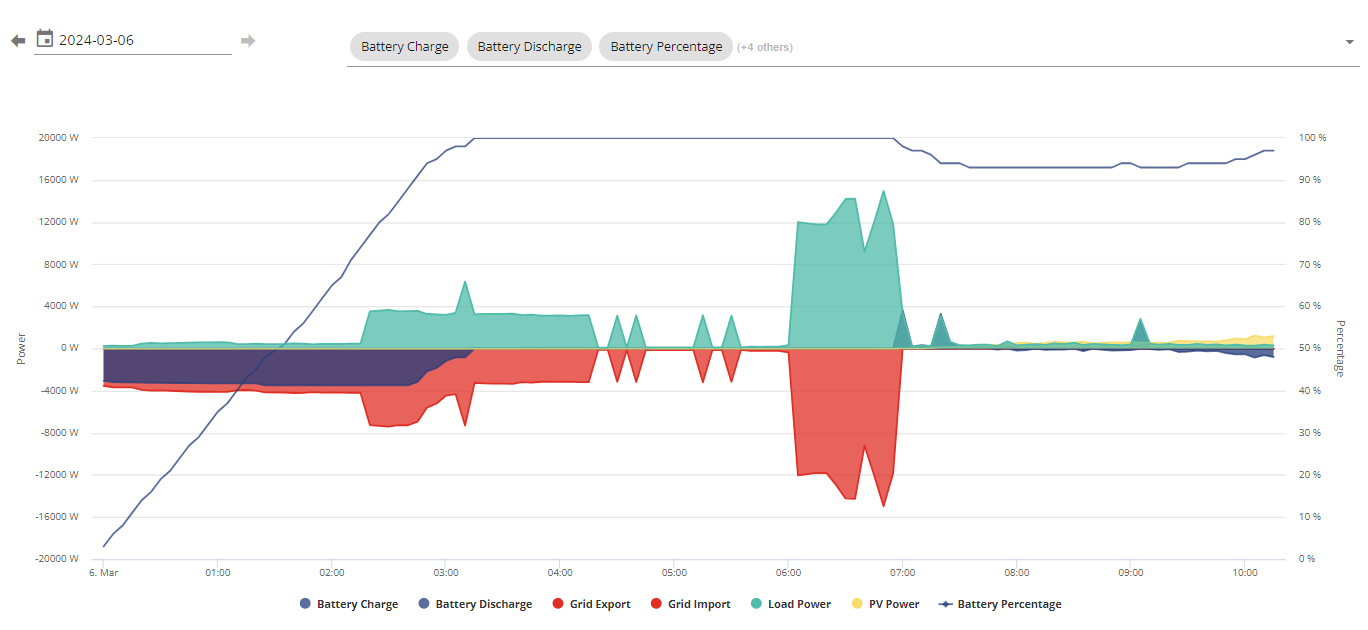
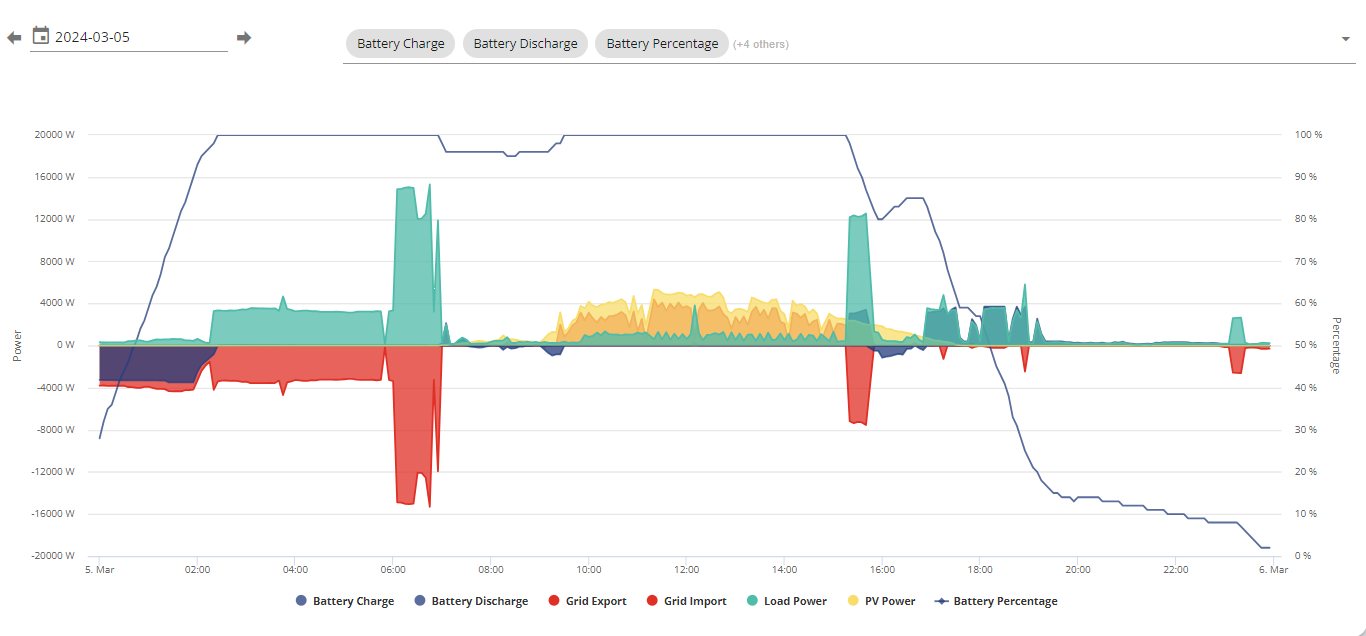
It looks to have made a bit of a difference turning down the thermostat in terms of energy consumption. Note that the heating comes on at 06:00 -07:00 hence the consistent spike at this time over the past two days.

I have further tweaked the immersion thermostat, as the hot water was plenty warm enough for our showers yesterday

Yesterday

Today

D
#38 DD

geoffreycoan Perhaps it matters more if your shower takes water from the hot tank, vs an electric shower which heats the cold water directly ? And of course underlying health.

G
#39 geoffreycoan

DD geoffreycoan Perhaps it matters more if your shower takes water from the hot tank, vs an electric shower which heats the cold water directly ? And of course underlying health.

Yes absolutely. If you have cold feed electric showers and tend not to have may baths then your water turnover will be that much lower and so the risks higher. Make your own risk assessment as I said with the aim being not to over-heat the water unnecessarily

D
#40 DD

geoffreycoan ah... actually, no, what I meant was that, when showering, you're more likely to breath in tiny water droplets....

D
#41 DD

Midlands_Solar What's the 12kW spike between 3pm and 4pm ? It's too big for the battery to supply on its own, so needs grid supplement. Just seems a shame that you've been exporting power all afternoon at 16p/kWh, and now have to import it back at 30p or so ? Then there's another small spike at 11pm, when the battery has run out - late heating ?

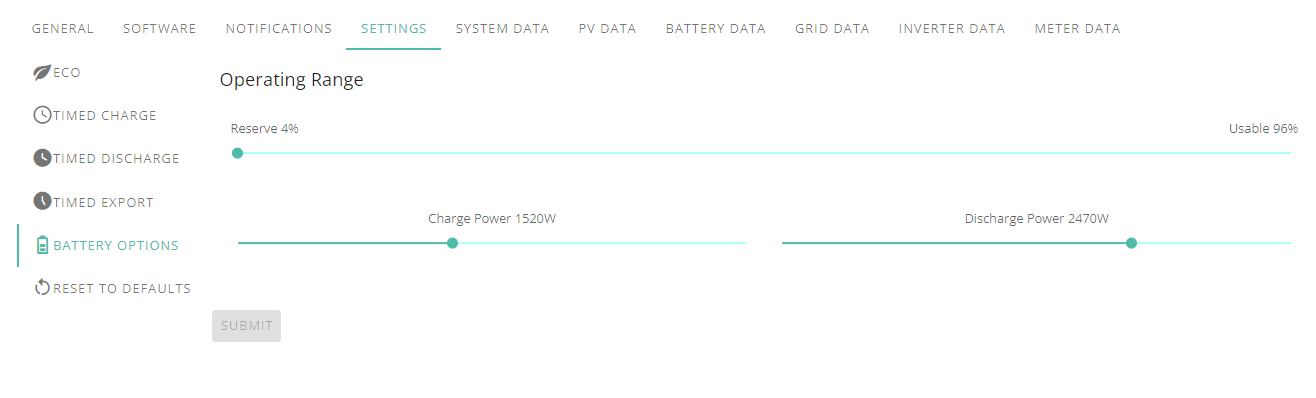
Also, possibly just personal opinion, but it might be kinder to the battery to reduce the charging power overnight - 7 hours is plenty of time to charge it at, say, 1.5kW, but you're charging flat-out in half the time.

A
#42 Avenir

Midlands_Solar Looks like you're using around 8kwh for water heating – which is more normal – and maybe 15–17kwh for space heating.

#43 Midlands_Solar

DD the 3-4 pm spike is the heating coming on in the afternoon

As to the battery charging, yes I’m keen to do what’s required to preserve the life of the battery.

I've now changed the parameters to:

D
#44 DD

Midlands_Solar the 3-4 pm spike is the heating coming on in the afternoon

What kind of heating do you have? Must be something quite hefty to be using 12kW. Is there any way to operate it at a lower power for longer, earlier in the afternoon, so that it can use the solar that you're currently exporting ?

#45 Midlands_Solar

DD on our heating unit , whilst it wasn’t on maximum (unlike my immersion heaters) I have turned it down a fraction, no finer controls on the timer itself, just on and off timings

D
#46 DD

Midlands_Solar Could it run on a significantly lower setting from, say, 11am to 3pm, to use some of the solar directly? Does the setting modulate the power, or just lower a thermostat (so that it would cycle on and off) ?

A
#47 Avenir

Midlands_Solar Might be worth measuring the flow temp and seeing how low you can go. I've got fairly large rads so was able to turn down the flow temp on my gas system boiler to 45C with no reduction in comfort.

I would recommend looking at Wonder Watt to smart charge your battery. You do not need to charge to 100% overnight when you will be generating ample solar to charge it the next day.

You could consider an Eddi to do your hot water in the summer, from your excess solar.

V
#48 Vestas

Avenir He doesn't have gas.

D
#49 DD

Avenir You do not need to charge to 100% overnight when you will be generating ample solar to charge it the next day.

Not necessarily... overnight power is around 7p/kWh, whereas export is around 16p, so better to charge overnight and export, than to charge from solar. However, daytime import is around 30p (?) so better to shift usage to also use the solar to avoid later import. (Battery doesn't seem to be big enough to cover all afternoon usage at the moment.)

A
#50 Avenir

Vestas Well, yes, I think that's pretty clear! My point is that if you have sufficiently large emitters the water flowing through them doesn't need to be particularly hot – regardless of how the water in the system is heated.

A
#51 Avenir

DD Ah, yes – I missed the bit about the high export payments. Sounds like a good deal. Give the Eddi a miss then!

V
#52 Vestas

Avenir He has electric heating, hence the huge spikes. It sounds like the controls date from 40 years ago but the house is 20 years old. I'm surprised anyone built houses designed to use economy 7 in the mid-00's but I can see it being done to meet the EPC/SAP ratings that building regs had then.

D
#53 DreadorUK

You could go the route I did with T-Smart Thermostat controller where you can schedule different temps

So for the week 50 or lower if your having showers, then one day in the week 60 for a purge as such for a few hours then back down.

If you want to go another level you can then cut its schedule short when it reaches the temp over letting it keep it at that level (needs other smarts for that though) - I use this to turn of gas boiler when it hits correct temperature

M
#54 MisterPleasant

Midlands_Solar Hope you don't mind me jumping on your thread but while I await my export licence and possible move to Octopus can you tell me how you got Eon Drive without an EV? Did you need their 'permission' or did you just tell them you had an EV in the declaration when you signed up?

#55 Midlands_Solar

MisterPleasant

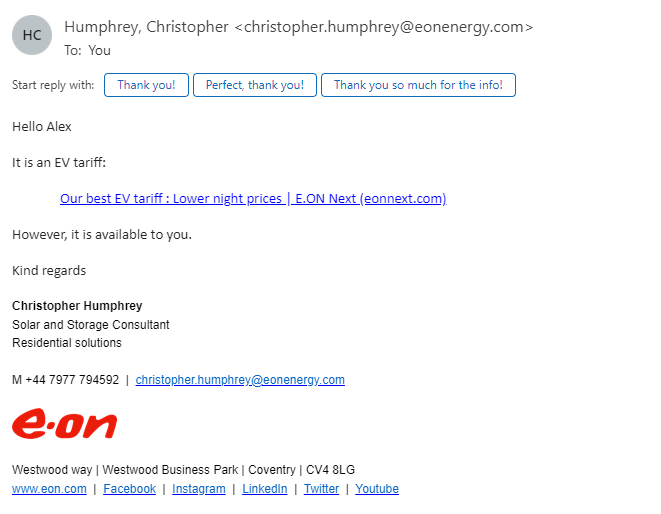
Sure, I was advised simply that with Solar installed by EON I was able to consume their "Drive" tariff despite not owning an EV

See below

K
#56 kram

geoffreycoan

48 degrees isn’t hot enough to kill legionella, so you need to up that to 55/60 or make sure you have a way to boost it once a day to 60.

Plenty of information out there if you need it.

S
#57 SimonClarke

Once a week will do

G
#58 geoffreycoan

kram 48 degrees isn’t hot enough to kill legionella, so you need to up that to 55/60 or make sure you have a way to boost it once a day to 60.

Plenty of information out there if you need it.

Please read the heat geek article I linked above, here it is again https://www.heatgeek.com/hot-water-temperature-scalding-and-legionella/

I’m not trying to kill the legionella, but instead to manage the risk. And you certainly don’t need to boost to 60 degrees once a day, the heat pump anti-legionella cycles only operate once a week.

As ever, you make your own risk and energy cost decisions. I’m just saying what I do and the advice I have read.

Z
#59 Zakalwe

geoffreycoan
The risk/reward equation. Get it correct and you save a few quid every year. Get it wrong and you die.

In the immortal words of Dirty Harry ".....you've got to ask yourself one question: 'Do I feel lucky?' "

#60 nophead

Only about 10% of people that get it die, so you have to be very unlucky.

#61 hoggy

The T-smart immersion controller has a built in legionnaires function. If it doesn't see 60'C temp in a 14 day timespan it'll run one for you.

Z
#62 Zakalwe

nophead
True that. My colleague didn't die when she contracted it. But she did spend 10 days in an induced coma as the docs battles to save her from multiple organ failure.
Life permanently altered, but she didn't die.

S
#63 SimonClarke

Zakalwe did she catch it in this country? That would be very unlucky if so. We think my father in law died of it years ago but he got it in Spain.

Z
#64 Zakalwe

SimonClarke
In Spain too.
It's really not worth messing with, especially just to save a few quid per year.

S
#65 SimonClarke

Zakalwe as you say not worth the risk. At the moment my oil boiler likes to keep a minimum of 65c so not an issue. ASHP in the future will probably be the time for making a once a week plan unless things change temperature wise

G
#67 geoffreycoan

I think we are very much off topic here, but as the article says, firstly legionnaires is quite rare in the UK and the vast majority of cases are contracted abroad or from commercial premises. The author said they couldn't find a single case of legionnaires contracted in a UK domestic property.

I personally don't see the risk as 1 in 10, its one in a very large number of catching it in the first place, and then its a 1 in 10 if that is the death rate. There are plenty of other hazardous things we all do every day, the number of people killed or seriously injured on UK road is way higher than this risk.

We have a good turnover of water in our tank so the risk of Legionnaires growing in stagnant water is reduced and we don't have any elderly people or people suppressed immune systems.

As I said, make your own risk decision. I personally don't see the need to boost the hot water to high temperatures on a weekly basis for a low risk issue; and such boosts are at low heat pump efficiency or using the immersion heater so are relatively expensive.

I would also say that heating the hot water to 65 degrees is excessive, you definitely don't need it that hot, you're wasting money. 55 or 60 is more than enough if you want hot water. There is also the risk of scalding from too hot water of course - probably higher risk than legionnaires.


#68 nophead

killythebid It is only 1 in 10 if you catch it and the chance of catching it is minute. I compare it the chance of dying in the next year, which is about 1 in 100 for most people because most people don't live for 100 years.

K
#69 killythebid

nophead I would advise against a career as an actuary if you calculate the probability/chances of dying/living that way. In any case, you did not mention the chances of anyone catching it just the 1 in 10 of dying if one does.