DNO Export Limit query.

22 comments started 2024-04-05 last 2024-04-10
GivEnergy Products
#1 Tenkaykev

I have a GivEnergy AIO and a 5.3kWh solar array that feeds into a Solis Inverter. When the installer sent the details to the local DNO, the DNO sent back a document with approval for 7.36kWh of export. On a couple of occasions recently when the battery has been at 100% and all the solar above house load is being exported to the grid I've set the battery to export.
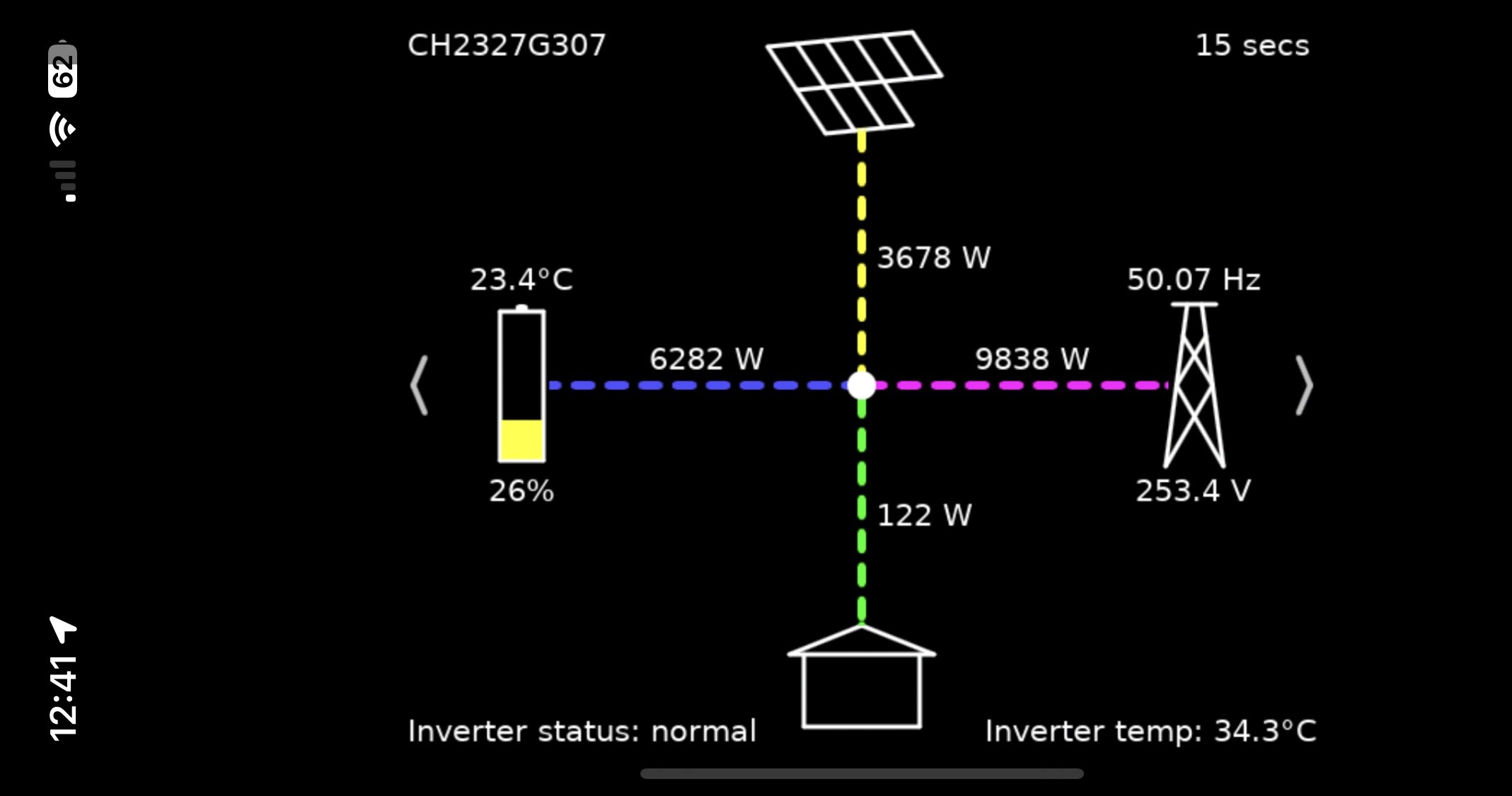
During the export when the AIO is pushing just under 6kWh to grid and the Solar is also contributing I've seen the export figure exceed the deemed DNO limit, not by a great deal but almost 8kWh.
My questions are, Is the export limit supposed to be set in the AIO / Gateway, or the Solis Inverter, and is there any risk to them from excess current. Another query is does the DNO monitor individual installs to make sure that they don't exceed the permitted levels.

D
#2 DD

Tenkaykev Is the export limit supposed to be set in the AIO / Gateway, or the Solis Inverter,

I'm not familiar with that sort of setup, but I'd have thought that if you do it on the Solis inverter, then when there's too much export, it has to reduce the power it can accept from the solar panels (which means you're giving up energy), whereas if you do it on the AIO, it would merely reduce how much battery was discharged.

As to whether it does any harm... I guess it could push up the voltage on that phase, which would be bad. (Unlikely that just one extra kW would do that - it has to cope with kettle spikes all the time.)

#3 Simon_C

Tenkaykev, you have not stated the output rating of the Solis inverter.

Assuming the Solis and AIO are both individually less than the limit of 7.36 kW, but collectively they can exceed that rating, then they both should be programmed with the limit. That is assuming the Solis even has grid import/export monitoring, if not then the AIO will have to do all the throttling back to avoid exceeding the allowed export power limit.

#4 Tenkaykev

Simon_C
The Inverter is a Solis S6 GR1P5K which I believe is a 5kW unit. I will check again when there's a fair bit of sunshine and the battery is full. I know I can alter the charge and discharge rates of the battery in the " My Inverter " page of the Givenergy portal so I could so a series of increasing steps an watch what happens to the total export power. I will report back.

#5 PianSom

Tenkaykev

A normal installation looks like this:

                                                    House
                                                       ⬆️
PV panels ➡️ Inverter ➡️ AIO Gateway ⬅️ ➡️ Grid
                                                       ⬆️
                                                       ⬇️
                                                 AIO Battery

So all of the solar energy you are generating is coverted to AC by an inverter (the Solis in your case) which is passed to the AIO Gateway. Let's suppose your house doesn't need any power at the moment. So the Gateway either passes the solar-sources AC to the Battery (which has its own 6kW inverter, so converts it back to DC for storage) or exports it to the grid.

As you say, the battery could be discharging at the same time as solar is being generated. As mentioned, it has a 6kW inverter, so can covert 6kW of DC from the battery to AC and export it at the same time. So the total AC that could be exported at any time is 6kW from the battery plus whatever the Solis can generate - let's say it's 5kW. So a total of 11kW.

So to come to your questions:
Q: Is the export limit supposed to be set in the AIO/Gateway or the Solis? A: the Gateway. As you can see from the diagram, neither the Battery nor the Solis connect directly to the Grid, only the Gateway does. Your installer should have set an export limit when installing.
Q: is there any risk from exporting an excess? A: no, the Gateway spec allows for a maximum power flow of 18.4kW. Way more that you can generate.
Q: does your DNO monitor individual install compliance? A: dunno, but I very much doubt it. I'm sure someone will be along soon to confirm this

G
#6 geoffreycoan

PianSom Q: does your DNO monitor individual install compliance? A: dunno, but I very much doubt it. I'm sure someone will be along soon to confirm this

Unless your DNO has put a monitoring device onto your house supply eg for you reporting excess voltage giving over-voltage errors in the inverter (as I had), then no, there’s no monitoring going on AFAIK.
Bear in mind that you and a number of other houses in your area are all on the same phase coming off the local transformer.
The transformer for us feeds about 60 houses at a guess.

BTW I have 14.4kW of panels and no export limit. I did get over-voltage issues that the DNO resolved by turning the transformer tap down a bit. They never said anything about the number of panels I have

#7 Tenkaykev

It would seem that no limit has been set.

#8 nophead

And the line voltage seems to have gone 0.4V over the UK limit! When we export or use a 10kW shower our line voltage doesn't change much at all, so we seem to have a solid connection to the transformer.

V
#9 Vestas

Tenkaykev Ummm do remember that its YOUR legal responsibility to ensure the export limit isn't breached, nobody else. Anything adverse occurs and they trace it to you then you have basically unlimited liability. Chances are slim they do but you could easily end up with a significant bill for damages.

Looks like your installer didn't set a limit (ours didn't either), probably because they haven't considered battery + solar export.

#10 Tenkaykev

I rarely export from the battery to grid I think that if I'm planning to do so and the Panels are generating then I can restrict the battery discharge rate in the Givenergy Inverter page in the portal.

K
#11 kram

Tenkaykev
Surely just set the g100 limit in the gateway, which is far easier? I assume the GE gateway has g100 compliance.

#12 Icarus

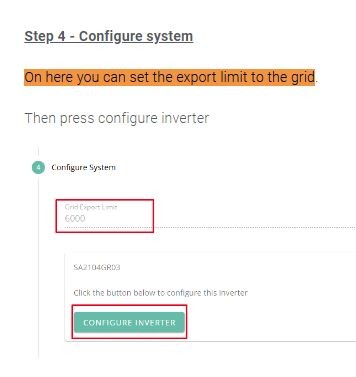
The Installer is able to configure the Grid Export Limit during commisioning.
Search for the document "Installer portal commisioning" on the GE documentation site.

I am in the position of having 5kW solar plus 6kW from the AIO and still waiting for a higher export limit to be approved (currently capped at 3.68kW). Unfortunately my loop impedance test has failed, but DNO is working with my Installer to (hopefully) get my limit raised.

#13 THALL

I might be wrong, it has been a while since I have had to deal with the DNO. But on my original install and dno approval it lists solar inverter size and battery inverter size. The DNO agreed an export limit matching my solar inverter size. Giv were asked by my installer to limit battery export according to the DNO limit. Later I had a 8kw pv inverter and a second ac3 added and the dno agreed an export limit of 8kw pv inverter. The DNO seemed to ignore my total inverter power and just go on the new pv requested size. I now have 15.5kw of pv inverter and 6kw of giverngy ac3's and the dunno will not increase my limit from 8kw. Limitation on the battery inverter is applied by givenergy and my pv inverters have ct's attached monitoring grid and will throttle my pv inverters to stay under 8kw. Its not an exact setup, i see peak export of 9.5kw but that slows to the 8kw cap. Seems to take a few minutes for the inverters to throttle. The DNO set my limits after my installers, my installer had to come back to add the limiting ct's.

In short contact giv support and send your dno export approval limit. Your solar installer should throttle your pv once the dno send their letters/emails out.

D
#14 Daveb01

I had the same issue with my AIO, DNO said 3.6 kWH but AIO was pushing 6 kWH. My installer had told GE but they did not set it on AIO / Gateway. After a prompt that we had requested the setting and we had proof that it was sent to GE, so if the DNO came looking GE would be responsible. My system was updated the same day.

GE have a hidden setting that has to be changed by them

#15 Windy Miller

My DNO limit is 6KW. With a SolarEdge 6KW inverter I can see it limit at 6KW during bright periods (which of course is its capacity). If I'm exporting from the batteries, my AC3.0 can export 3.3KW. But I can see it throttle back each time the Solaredge output rises above 2.7KW. It takes a few seconds but it does adjust. Using my Emporia current clamp I only ever export more than 6KW for a few seconds before the AC3.0 adjusts. The Solaredge never throttles back which is the right behaviour so as not to waste Solar. But it is only the AC3.0 that has a current clamp on the grid supply so only it knows how much is being exported.

G
#16 Goshiki2

Daveb01 installers have access to change it. It’s only the end user that can’t see the hidden register. Originally we thought that my 8kWh export limit would need to be split somehow between the string inverter and the AIO but that’s not the case.
I have a 6kW solis string inverter and an AIO. My export limit is 8kWh which is set only in the gateway and to test it we waited for a rare sunny day and then set a forced discharge of the AIO. The Pv was generating nearly 6kW at the time and we could easily see the battery throttle back from its max output so that 8kWh export is not exceeded. During testing the export limit was changed more than once by the installer so different scenarios could be proved.

#17 Tenkaykev

Goshiki2
How quickly did the battery throttle? When I did a forced export that exceeded my DNO limit I was watching the total export figure and cancelled it when I saw it over the allowed amount.

G
#18 Goshiki2

Tenkaykev immediately. It peaked at 8.02kW for a couple of seconds then settled at a steady 8
I actually video’d it on my phone but I can’t upload it here.

M
#20 mrand31

I noticed that my inverter has its export limit set to 6kW on a G98 approval! Of course, it's only a 3.6 hybrid. 😃

D
#21 Daveb01

mrand31

I would contact GE to change that, G98 has a max limit to 3.6, if you wanted 6 kWh you would need a G99. Don’t forget it is your responsibility, so don’t leave it.

If the sub station goes bang they will start looking.

M
#22 mrand31

Daveb01 The Hy 3.6 would struggle to reach 6kW of export 🙂