Battery trip

9 comments started 2024-04-08 last 2024-04-10
GivEnergy ProductsHybridBattery
1
#1 1aRectoryDrive

Sometimes during periods of heavy use (charge/discharge >3000kW) my battery MCB will trip. This happened occasionally last year, and the installer returned and fitted a new MCB supplied by GivEnergy. It was then winter so did not experience the high power rates until now.
Up to the point of tripping all values appear normal, and it should not be anywhere near the 100A trip setting of the breaker.
Battery temp 19-21deg, voltages 51<55vDC

Has anyone else experienced this, is there a known cause/solution?
Thanks,
Will

PV Hybrid with storage
Inverter= GIV-HY5.0-G3
Battery= GIV-BAT8.2
S
#2 SteveCook

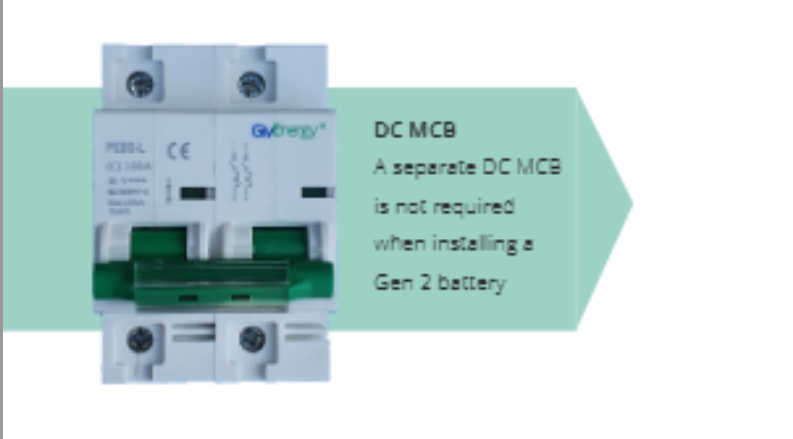
I presume from the 100a rating this the DC MCB between the battery and inverter.
Are you sure it is just an MCB and is rated 100A and suitable for DC

S
#3 SteveCook

to trip a 100A breaker would need an awful lot of power draw from the battery. I am not sure the inverter you have can deal with that much DC-AC conversion in any event.
Any smells of burning around any connection points/joints

1
#4 1aRectoryDrive

Hi Steve,
thanks for your reply. Yes it's a DC MCB, rated at 100A at 80v, as your picture. No smell of heat, connections look good and tight. As its been replaced already, I didn't think it likely to also be faulty, but can't think of any other reason for it to trip like this

S
#5 SteveCook

I cant think of any reason either. Is there anything on the GE portal energy graph showing anything ramping up drastically just prior to trip.
eg zero sun and big house load (cooker, dishwasher and washing machine all coming on) causing a big battery draw?
Still should not be anywhere near 100A though

C
#6 comms

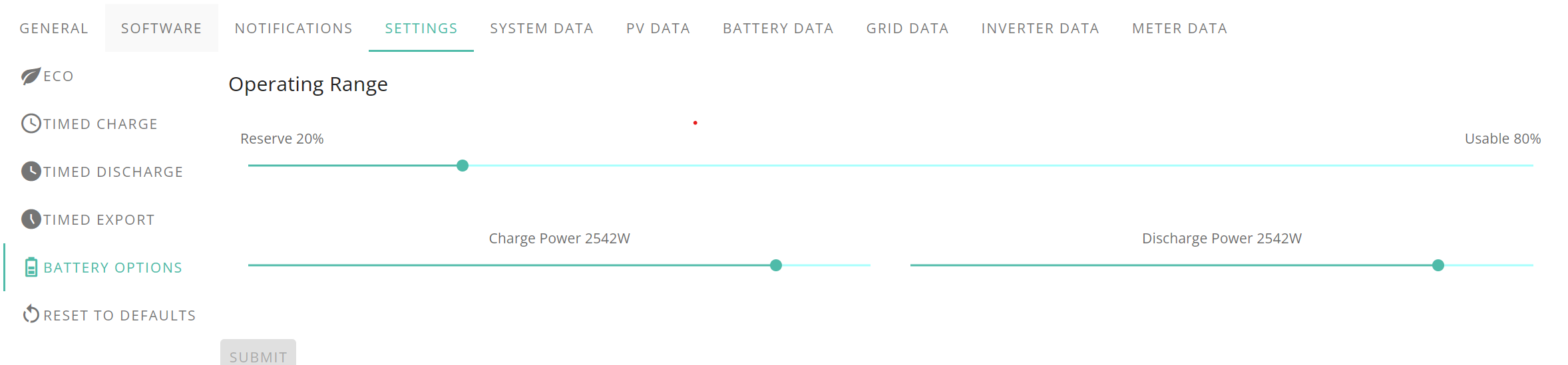
I have also been experiencing numerous battery isolator tripping issues coupled with BMS Over Voltage Warnings. I'm generally receiving the BMS Warnings daily as the battery reaches 100% charge. The isolator tripping was becoming a real pain until I decided to reduce the Battery Charge and Discharge Power from 3000w to 2542w; a sub-optimal situation but the isolator hasn't tripped since.

#7 Simon_C

From the data sheets the maximum current ratings of the battery and inverter combination.

Inverter= GIV-HY5.0-G3. Max battery charge/discharge = 3300 W/ 3600 W, equating to 65/80 Amps
Battery= GIV-BAT8.2. Max stated on data sheet = 80 Amps charge/discharge.

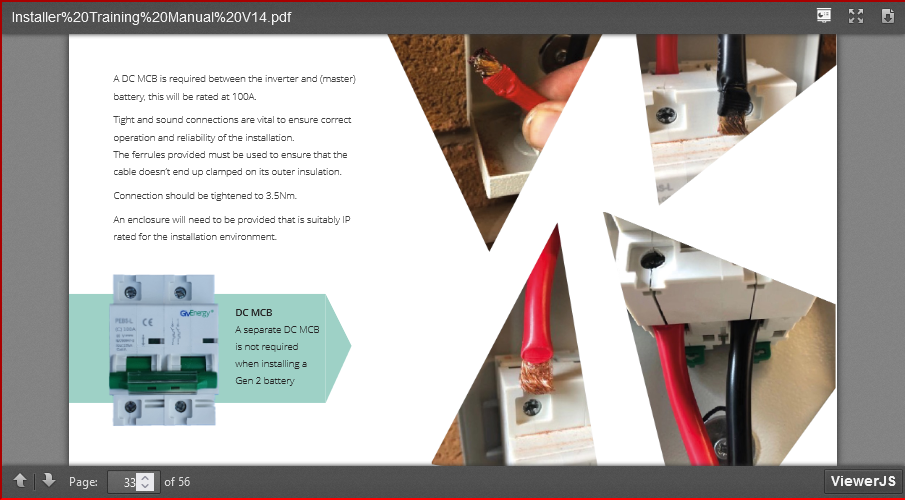
The install guide states that the ferrules provided must be used on the cable ends. These reduce the chances of loose strands in the cables not contributing to the current carrying ability and contributing to overheating of the MCB terminals.

Please bear in mind that any heating effect due to resistance of the cable joints/terminals is proportional to the square of the current.

Heat power = I * I * R

At 60 Amps = 3600 * R
At 80 Amps = 6400 * R, which is 1.77 x the heating effect compared with the 60 Amps figure.

@1aRectoryDrive, does the trip occur after an extended period of charging at maximum rate. If so you could reduce the maximum charge power from 3600 W to say 3000 W and most likely still fully charge the battery within a cheap rate period for example.

Note the photos indicate how NOT to terminate the cables in the MCB.

1
#8 1aRectoryDrive

Thank you for the replies. I've not had any overvoltage warnings, it seems to stay in limits

It varies a bit, but generally trips quite soon when under heavy load/charge.

I'll look to see if I can turn down the rates a bit, need to look up how to do that.
Inspecting it the terminations look good and tight, but I don't think the installer used the ferrules mentioned. Perhaps that's the cause then.

C
#9 comms

Use your mouse to drag the slider settings