
#1 Midlands_Solar
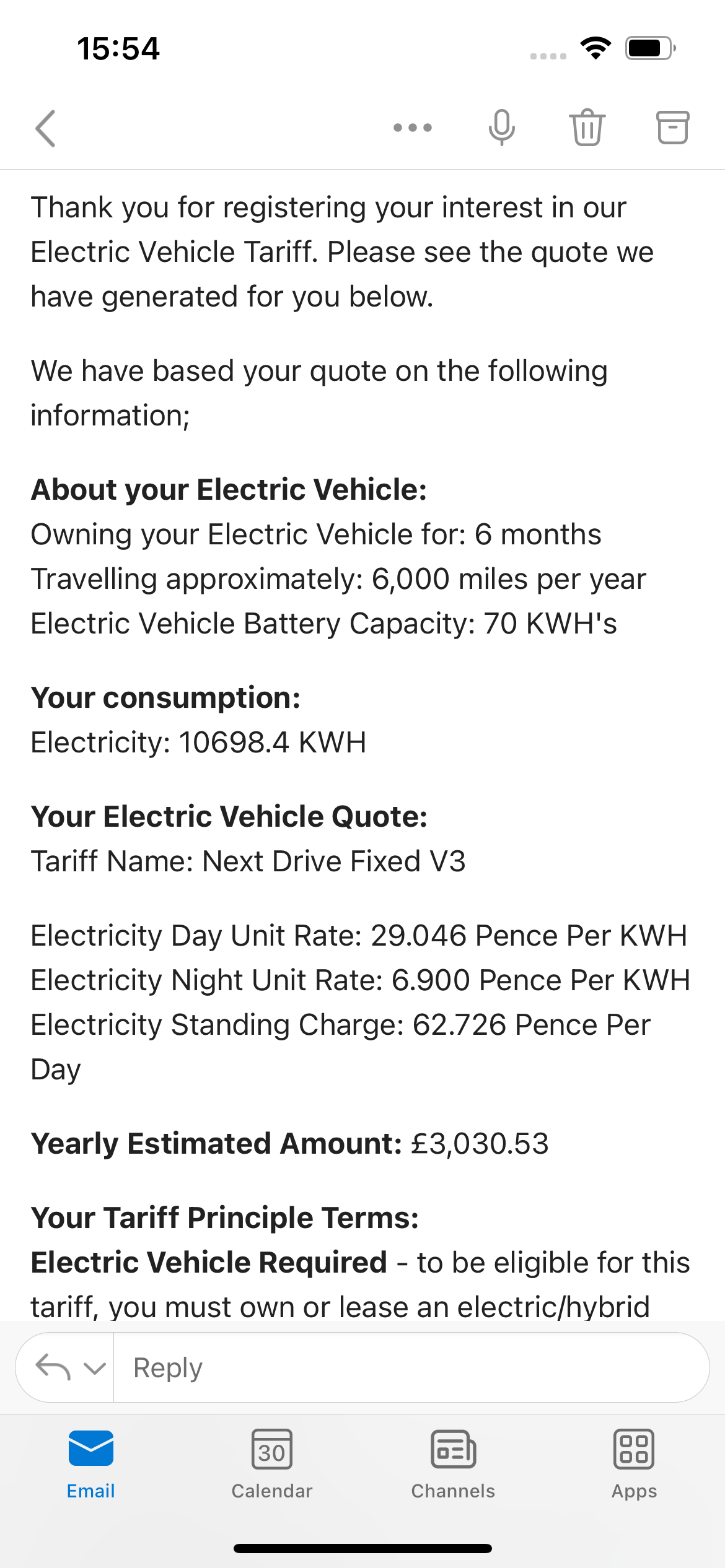
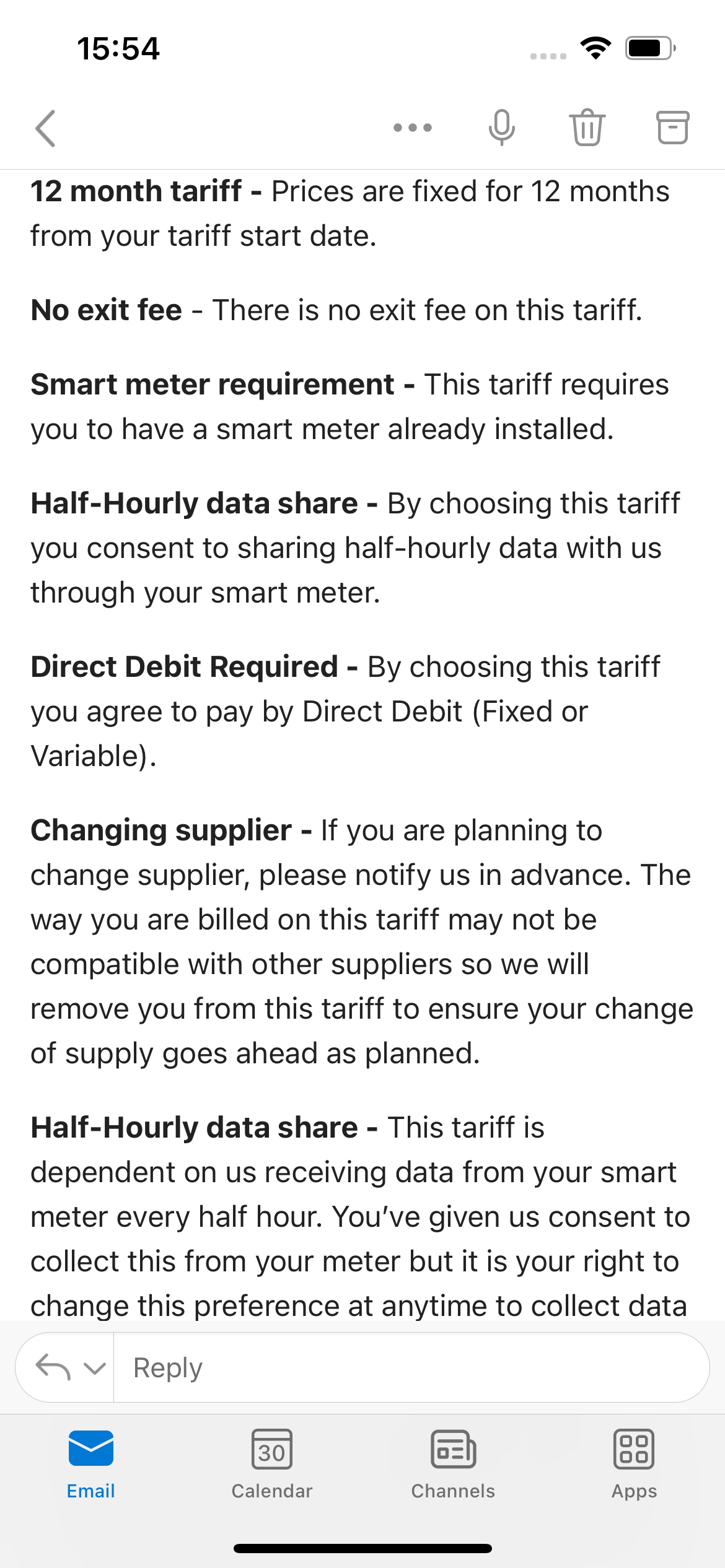
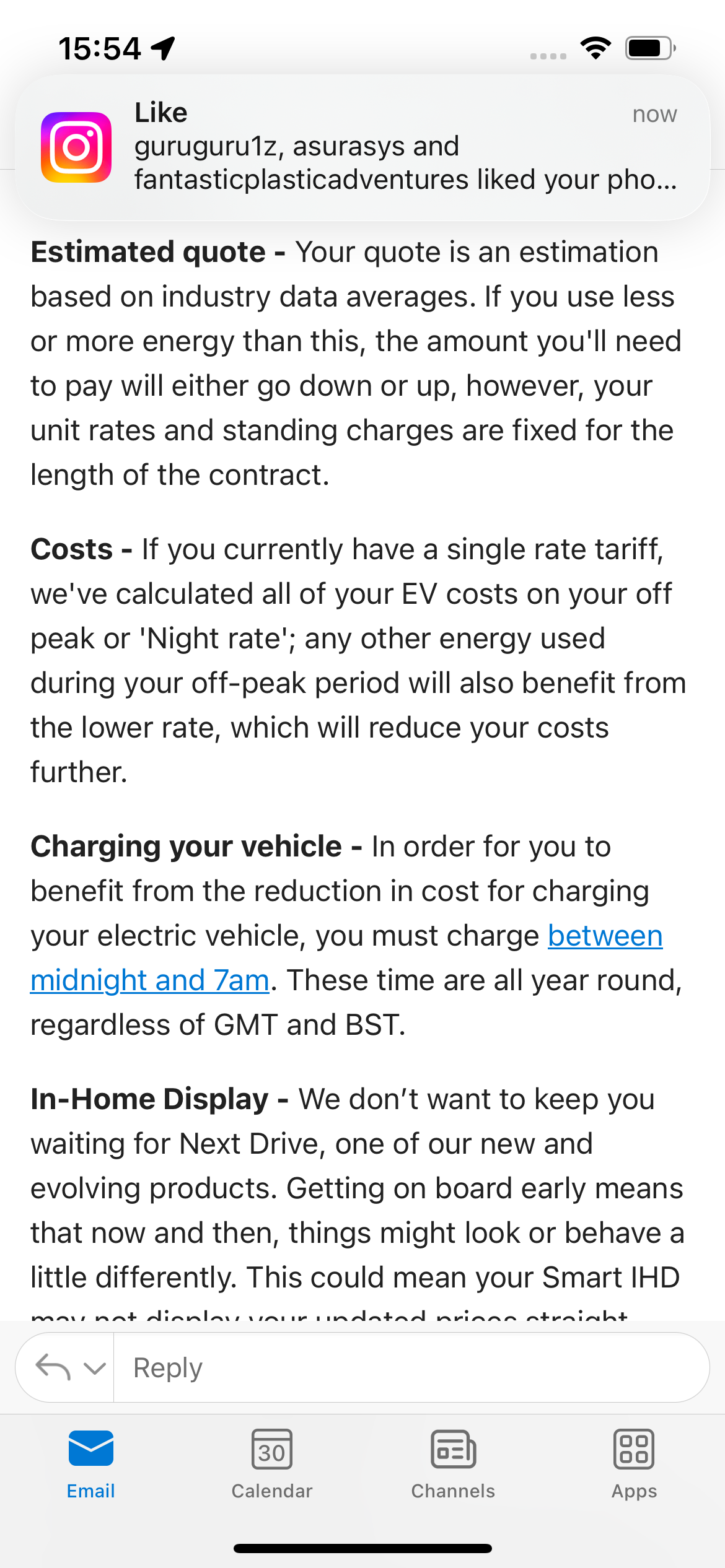
I enquired about this, but looking at the standing charge I’ll stick with the current Drive Tariff I’m on with them

I enquired about this, but looking at the standing charge I’ll stick with the current Drive Tariff I’m on with them
My current daily charge with Octopus is £0.6537 on Agile.
MickWheater wow ok, I thought the .57p standing charge I'm currently paying was a lot
I know, cr4p isn't it. I had my PV and battery system fitted on 5th March, on the 14th March I received an email telling me the good news of my unit rate going down and my daily charge going up, I wasn't happy!
The standing charge increased to pay for failed emergy companies….
Maybe go after the directors of said companies and go after their assets if any wrongdoing.

How can it cost £3000 to do 6000 miles in an EV? My petrol car does about 400 miles per tank and it costs about £70 to fill it up. That is only £1050.
nophead
That includes the house usage.
nophead It doesn't, the estimate is the total spend including the whole house energy required.
Energy supply companies are poor at estimating usage I guess because they are encouraged to make sure they are not understating the cost to customers but also it maximises the monthly budget amount.
6000 miles charging an EV @6.9p/kWh would cost approx £138 assuming 3 miles per kWh.
nophead My petrol car does about 400 miles per tank and it costs about £70 to fill it up.
Just goes to show how expensive an ICE car is to run compared to a BEV.
400 miles would cost me about £7.50
Zakalwe For now. Given every street in the country is going to have to be upgraded to cope with EV charging I doubt it'll stay that way for long - my expectation is that EV charger owners are going to get hit with very large standing charges to pay for this. Edit - either that or £15-20k "tax" on new cars to pay for infrastructure upgrades.
Vestas I do not think that is a given at all and your pessimistic forecast is just that in my view. The people managing the national grid do not agree with a requirement for major upgrades for EV charging either.
killythebid Yes they do. There's no possibility of every house in a street being able to charge an EV without upgrading the wiring to every house plus the local transformer/substation as an absolute MINIMUM. Multiply that up by around 750,000 streets or so and you're getting the picture - NB that doesn't cover ANY upgrades to the transmission network, which on its own is costed at around £100bn.
Edit - there's no possibility of every house in a street having a heat pump without upgrades, never mind everyone having an EV!
Vestas That is rubbish. The House electrics can cope with a 7kw draw without modification and if necessary chargers can restrict themselves at times of high draw in the house such as tea time.
Where I live the incoming to my house is on a 63A fuse so a little low but I have no issue running a 7kw charger even during the day although mostly I charge the car at night. It has nothing to do with how many other houses have a charger either.
There may indeed be hotspots where sub-station upgrades are required for various reasons but that is far from every street as you stated. The high voltage grid and generation is pretty robust but again the use of the grid changes so some adjustments may be necessary but very far from a whole grid upgrade.
The draw on generation peaked some years ago (2016 I think) and for a while has been in decline even with the rise in EV ownership and the like.
The use of solar (a more suitable topic for this forum) is potentially a larger driver of local and grid changes due to coping with exporting from household micro-generation etc. It makes as has been discussed here several times grid voltage a challenge with the fixed transformers. A more smart/intelligent grid with auto-adjustment for instance at the transformer would be a good idea. The transformer that supplies our house I was told by the DNO chap who adjusted the voltage on it for us said it was installed in 1962 so a long-lived device.
Here is what the National grid say about readiness for EV charging etc.
Vestas Not sure I can agree with that
If you look at evening time most households will be pulling 3-4 kWh plus business will still be drawing power so there is already a big spike and it handles that.
Your assuming then each EV owner will charge every-night and all at the same time but most EV owners (based on average mileage in UK of 10k) would need to charge twice a week and then when they do the utility companies will be triggering that so spreading the load so halving the spikes as such.
33M cars / 7 days *2 charges /2 phased charging = 4M cars charging at the same time 7kWh which is around three times less than the 26M homes using 3kWh in the evening
Vestas
You seem to have quite a different opinion to National Grids...
In the meantime I absolutely know that fuelling an ICE car is at least an order of magnitude more expensive than a BEV and it will remain that way for at least the short-term (and probably long-term too).
I'm happy to make savings today versus fretting about something that probably won't happen in the distant future.
Zakalwe Yes petrol is expensive in the UK because of the duty. Even so, we drive so little I don't think I would ever get the price of buying an EV back before I am too old to drive. I only spend just over 6 months of the year in the UK and when there we walk to the shops, etc, to keep fit. A full tanks lasts more than a month unless we go to visit friends at the other end of the country.