EV charging problems on new system

17 comments started 2024-05-14 last 2024-08-05
CommisioningGivEnergy ProductsAC Coupled
J
#1 jo121

I have a recently installed GivEnergy AC coupled inverter and 5.2kWh battery, to go with my existing 2.5 kW solar set-up.

I am having problems charging my EV - both from my PodPoint 7kW charger and also from the Skoda supplied charging lead that you plug into a domestic 3 pin socket.

If the inverter is in 'eco' mode then after about 20 seconds the car charging stops, then restarts after about 10 seconds. This cycle carries on repeatedly but not in any regular pattern.

If I disable 'eco' mode on the inverter then both Podpoint and Skoda charging systems work much better.

Does anyone have any ideas as to the source of the problem and potential solutions?
A
#2 anthonypar

When I first had my Givenergy Gen2 inverter installed I also had problems with my Podpoint charger. Podpoint do have a software fix which I believe stops it trying to load balance with the inverter. Ask Podpoint for the software upgrade and see if this helps.

A
#3 anthonypar

However, this doesn't explain why granny charger is not working. I would therefore also check the inverter log for any specific alarms.

J
#4 jo121

anthonypar
Thanks for your reply. I contacted Podpoint to begin with and they implemented the software fix. However, as you say it doesn't explain why I still get the problem when I try to charge from a ordinary 3 pin socket.

Watching the behaviour of the system on the app, it senses the full demand of the Podpoint charger being switched on to begin with and then, over 20-30 seconds the demand power gradually decreases down to about 2kW and then the system cuts out.

I'll collect some info from the logs and get back to you. Thanks again.

J
#6 jo121


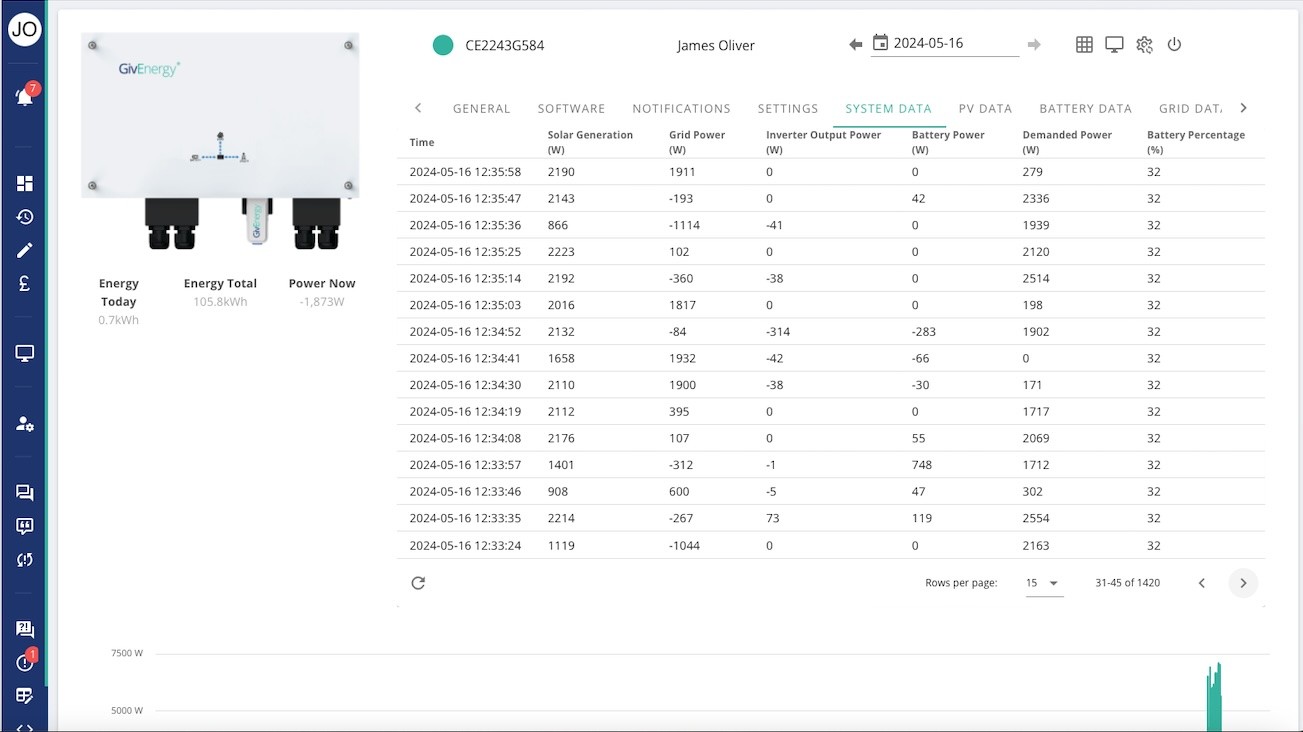
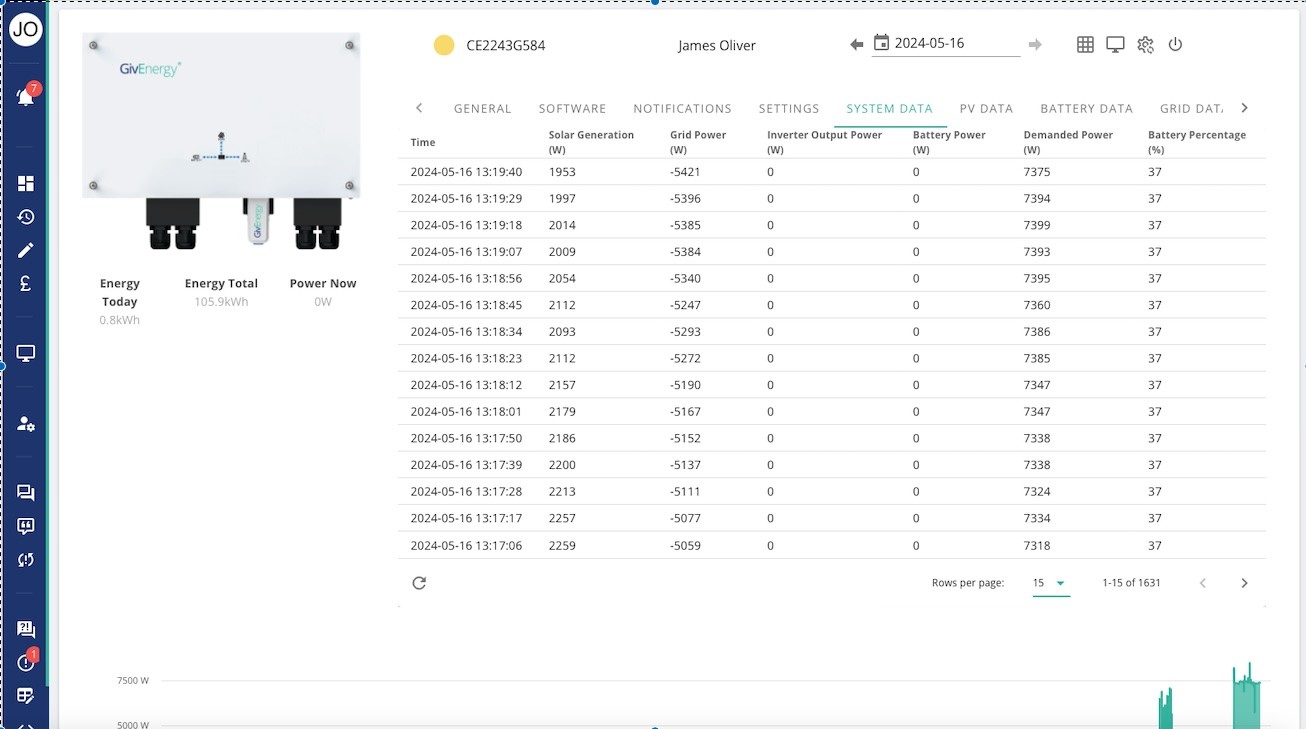
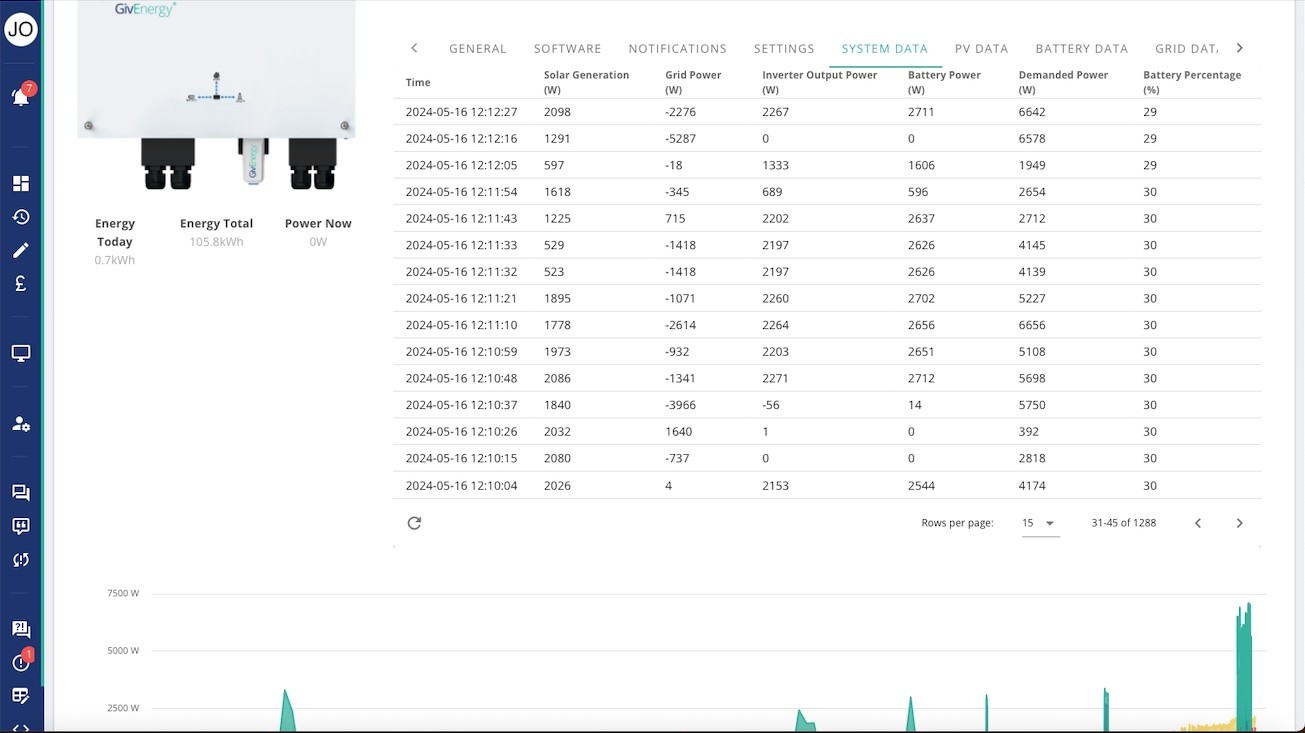
Here are some screen shots of the system data while the car is being charged - one using the Podpoint charger; and one using the 3 pin charger.

I've also included a screenshot of the data with the Podpoint connected but with the inverter Eco mode disabled - which you can see shows faultless charging.

The only notification listed is an incident of 'BMS over voltage' from 5 days ago. (Notifications had been refreshed)

The inverter temp was between 33-34.5 degrees throughout, battery temp was 19-20 degrees. I can't see any clear pattern in the inverter voltage in relation to the stop/start charging behaviour. Grid voltage drops when the Podpoint is working - but not below 236 volts.

On the screenshot of the Podpoint with eco mode on you'll see that at 12:10:26 there is the baseline house demand power of 392 watts. The charger then kicks in with a demanded power of 5.75 kW. Just under a minute later the demanded power starts dropping until it reaches 1.95 kW and then charging stops. The system resets itself and starts charging again at 6.578 kW around 12:12:16.

Any thoughts/suggestions would be very welcome.

D
#7 DD

jo121 not a concrete suggestion, but are you aware that with car charging, the chargepoint tells the car the max power available, but the car chooses how much to take. So unfortunately can't tell whether chargepoint is offering less, or car is taking less. However, the car seems to be the common factor...

A
#8 anthonypar

From your data there looks like a balancing issue is still present. It looks as though the GE battery output is being seen by the charger as a load demand on the house and is therefore reducing the charge to the car to balance the load hence why the charger works ok when the GE battery is inactive. This suggests the Podpoint CT clamp or the inverter CT clamps may have been fitted incorrectly. To test this theory simply reduce the GE battery kw discharge/charge power in the app and see if the EV charger charge rate increases/decreases accordingly. I have my inverter set not to discharge the GE battery when charging the car. You could also try this by setting the parameter in the inverter cloud settings tab (scroll to the end).

A
#9 anthonypar

It would also be worth plugging in a different electric car to see if the problem is car related i.e. the car is sensitive to the power balancing of the inverter. I believe some Mercedes owners have had problems.

J
#10 jo121

Thanks for the information and helpful suggestions.

Last evening my son-in-law was over and he reminded me that in the past we have successfully charged the same car with the same 3-pin lead at his house and he also has a GivEnergy AC coupled inverter and 5.2 kWh GE battery. This suggests that it is something specific to our system rather than the car (although it was a fair point).

At the moment the car is at 100% and I'm away for the w/e so I'll have to wait a bit to try out the suggestion of reducing the battery charge/discharge power.

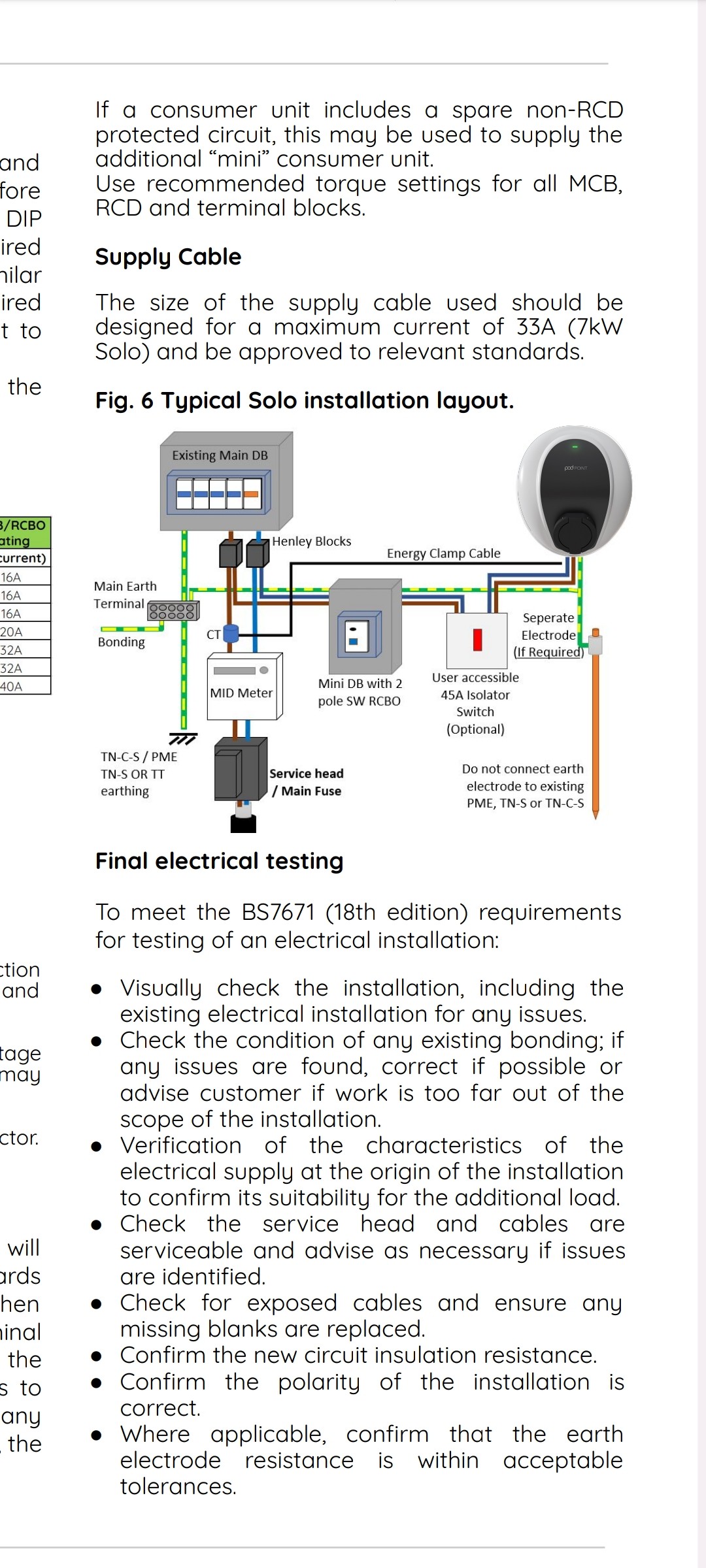
I can only see one of the CT clamps for the inverter - it's on the live cable emerging from the house's smart meter. The Podpoint CT clamp is on the live feed to the stand-alone automatic circuit breaker for the Podpoint. Do those positions sound reasonable?

I'll let you know about the experiment to reduce the charge/discharge power in due course. Programming a pause in the GE battery while charging the car is also a possibility, but I had been thinking about switching to Octopus intelligent charging which would make this a bit of a pain.

Thanks once again for your help.

D
#11 DD

jo121 Programming a pause in the GE battery while charging the car is also a possibility, but I had been thinking about switching to Octopus intelligent charging which would make this a bit of a pain.

It doesn't have... do/would you typically charge GE battery from grid during cheap rate? Charging automatically (effectively) inhibits eco mode during the charging time (even after battery has reached target SoC). And I assume you would typically not want to discharge GE battery into car.

I have GE battery set to charge during the IOG cheap rate, which prevents it discharging into the car. There is always the risk of bonus IOG slots after 0530. Some people just ask for the car to be ready by 0530n which should mosly eliminate that.

What I used to do was configure battery to have a low max discharge power so it could cover base load of 250W or so until around 0700 (when I asked for the car to be ready), but if car did charge after 0530, most of the power would come from the grid. Not sure if that helps you, though, if any discharge at all is enough to upset the charging process. But I've now had the CT clamps reorganised such that GE can't see the (Zappi) chargepoint.

A
#12 anthonypar

My Podpoint CT clamp shares the same live cable from the meter as the GE CT clamp so that it can see the total load being supplied to the house. Did a Podpoint engineer install your charger?

A
#13 anthonypar

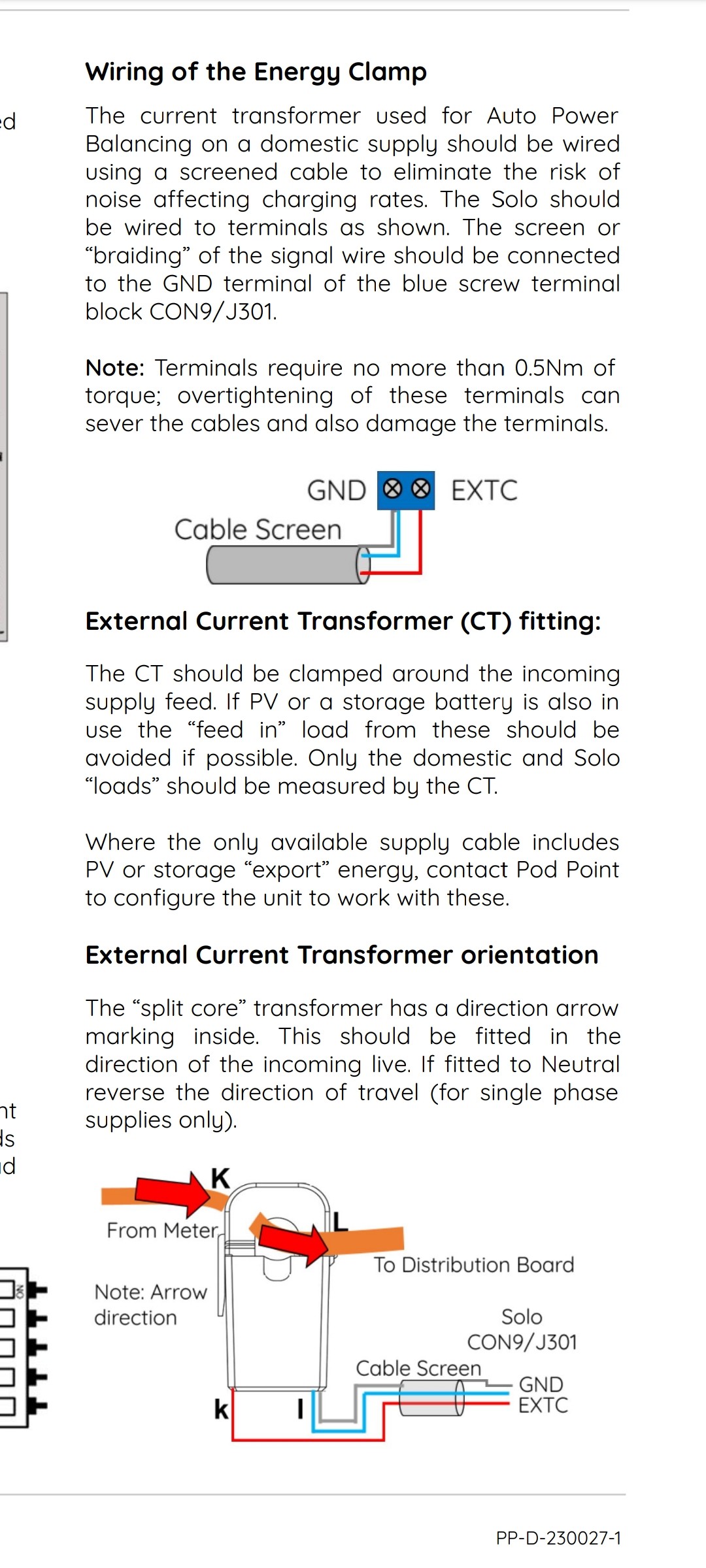
See CT fitting instructions

J
#14 jo121

Again, thanks for all the useful information.

Firstly, the experiment of reducing the maximum charge/discharge rate on the battery to 500 watts didn't stop the problem of the car charger cutting out intermittently.

The Podpoint was installed by a Podpoint engineer four years ago - before the GE inverter/battery was installed.

CT clamp positioning: The live feed from the smart meter goes into a junction box - on the other side of which is the live feed to the house and the live feed to the Podpoint. The GE CT clamp is on the cable coming direct from the smart meter. The Podpoint CT clamp is after the junction box and therefore does not 'see' the supply to the house (or the solar export).

Incidentally, I always thought that CT clamps had a polarity and that there should be an obvious arrow to indicate which way round to mount it. However, with the GE CT clamp (GECT - TA16) there is no indicator arrow as far as I can see.

Thanks for the info on IOG charging. I didn't appreciate that setting a timed charging period would disabled the eco mode anyway. So that might be a workaround. However, I would much rather get to the bottom of what was causing the issue as I clearly don't want to end up breaking the Podpoint - or worse still, the car.

D
#15 DD

jo121 The Podpoint CT clamp is after the junction box and therefore does not 'see' the supply to the house (or the solar export).

That might be wrong - purpose of that CT clamp may be to ensure charging is not overloading the supply. So it wants to see the full load. You'd think the podpoint wouldn't need an external CT clamp to measure just the power going to itself.

Might be a benefit is also moving GE clamp to after the podpoint feed - depends if you want to discharge GE battery to podpoint or not.

J
#16 jo121

Thanks. I agree with you that having the Podpoint CT clamp on the supply to the podpoint seems a bit redundant. I'll get on to our GE installer and Podpoint to see what they think about the position of the CT clamps.

J
#17 jo121

Just a final update (hopefully). The CT clamp positions were okay.

The problem turned out to be due to the fact that there was a degree of 'noise' on the shared earth connection between the battery and the car chargers - which was making the car chargers cut out when the battery was connected to the system. The GreenGen engineer has just installed an additional earth connection adjacent to the battery to provide 'cleaner' earth to the rest of the house and the car chargers are now working fine.

My understanding from the engineer is that minor earth leakage from the battery has been noted on other GE systems.

J
#18 jo121

Unfortunately that wasn't the end of the story. Installing an independent earth rod for the inverter/battery actually wasn't a solution. For some reason the inverter started behaving very strangely - initially taking 2-3 minutes to supply significant battery power in response to any increase in demand from the house and then, after a firmware update, just not supplying battery power at all. Reconnecting the inverter/battery back to the house's main earth connection solved that problem immediately - but then the original problem of the car charger cutting out came back of course.

In the end the problem has been solved by connecting the house to the Distribution Network Operator (DNO) earth in the main junction box (where the supply to the car charger originates) and now everything works fine. I understand that the house is still connected to its own pre-existing independent earth connection as well, just in case of a failure of the DNO earth.