Charging/Import planning

28 comments started 2024-05-31 last 2024-06-19
Forums/Meta
P
#1 philipdawsonladds

Charging strategy - I've been giving some thought to an import/export plan to make the most of my PV array and the Octopus Intelligent EV tariff. Would any more experienced than I care to comment on my general thinking and where I might be going wrong? I have a 6Kw PV array, 8KW battery an EV and EDDI (to heat the immersion). I'm thinking to fully charge the EV and battery each night during the cheap import period, then use Solar power available during the day and export any balance later in the evening (after the load for dinner etc). My average calculations suggest that this will be a cost reduction but I wonder...

#2 Cdent

philipdawsonladds sounds like that's a good choice - especially if your export rate is the 15p fixed.

#3 PianSom

philipdawsonladds
That is almost exactly what I do - automatically with the aid of Predbat.

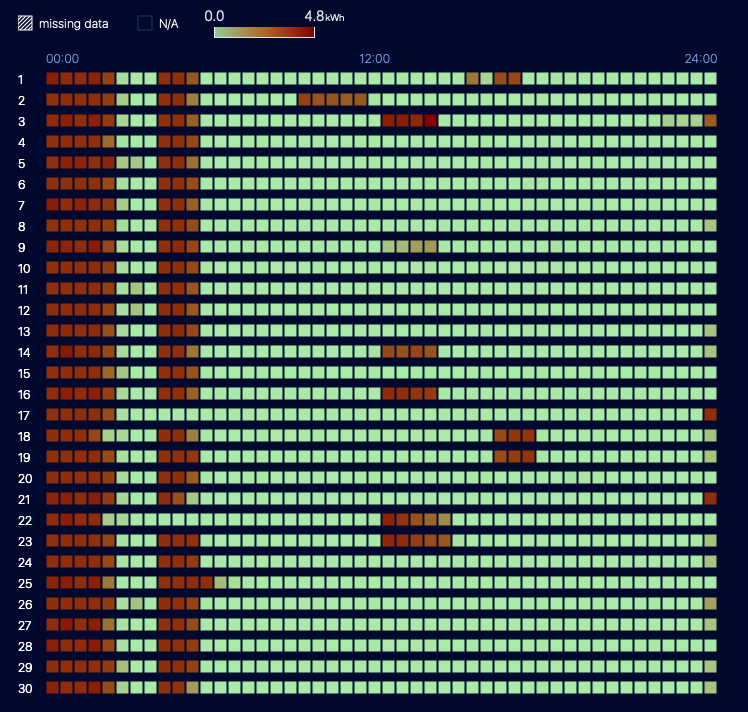
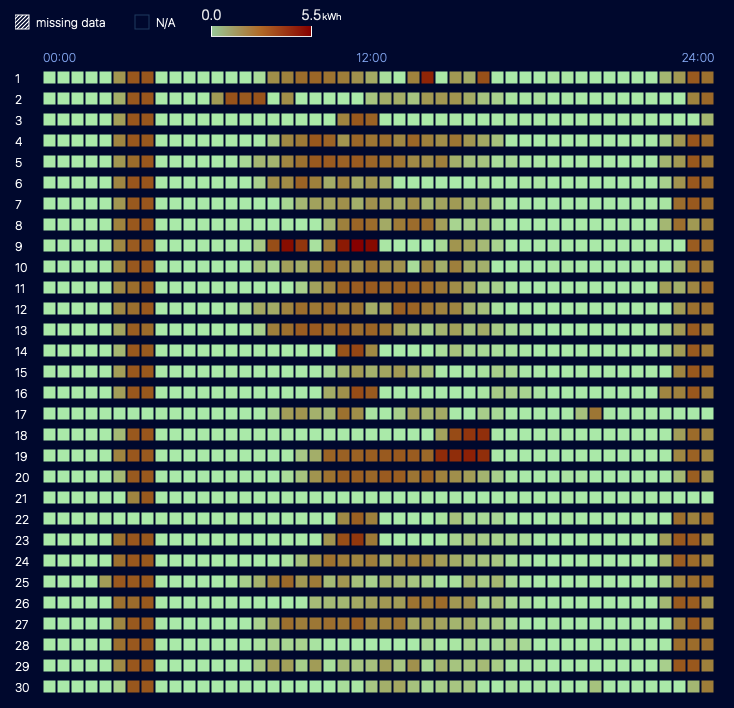
I also usually do a small discharge to grid and then re-charge overnight. I do not use my Eddi, as the gas boiler is still cheapest. I have an AIO, which has a larger battery, and a 6kW inverter with an over-sized PV array. I also have the benefit of Octopus Power-ups several times a month (see if you can spot them below!)

Here is my usage this month.
Import -

Export -

S
#4 SimonClarke

We’ve got a 9.5 battery, 5kw gen1, iBoost, 6.48kw east/west and an EV. For the last few months we’ve been charging to 100% then using the iBoost (because I don’t want to buy any oil as we are getting ASHP quotes), export excess at 15p with a timed discharge 18.30-20.30 which seems to work well so far. Last year we weren’t doing the timed discharge as we couldn’t but still managed to get paid £200 to run the house and 10k miles on the car. Think this year will be better although saving sessions may be affected by the timed discharge. Probably charge the car (tesla) twice a week. All on Intelligent Go.

P
#5 philipdawsonladds

Thanks - all very helpful - the more I think about it, using EDDI even at night is not a great option. If I export 90Kw I get paid £13.50. If I use 100Kw gas to heat the water (90% efficient) then that costs me £4.00 at current tracker rates (Octopus).

D
#6 DD

philipdawsonladds If I use 100Kw gas to heat the water (90% efficient)

How confident are you of 90% efficiency? I've heard that that's optimistic even for condensing boilers when the flow temperature is low enough to allow condensing. And it's not when heating water.

#7 Windy Miller

DD At this time of year when I'm not using the gas to heat the radiators, heating the water by gas is barely above 50% efficient. According to the smart meters I use around 4.8KWHr of gas on average per day to heat the water but if I use the electric I use on average 2.5KWHr to the same temperature. I guess the rest is being lost in heating up the boiler and all its pipework in order to deliver the heat into the water tank in addition to the boiler being around 86% efficient.

As my gas costs 6p per unit, if the electricity rate is under 12p I will use electric instead of gas to heat the water. I never used stored charge or solar to heat the water - always importing the electric from the grid by timing it to the lowest overnight charge sessions. I'm fortunate that my electric element controller can have 4 time periods in each 24 hours so I can choose the best 4 slots to heat the water.

V
#8 Vestas

DD Doesn't matter with the figures he's given. Boiler could be 40% efficient and it'd still be more cost-effective to heat the water with gas and export the electricity.

D
#9 DD

Vestas ?

On IOG, electricity is 7.5p overnight. Depending on region, gas tracker is around 5p. So needs to be 67% efficient for gas to be cheaper.

(But yes, daytime solar is 15p, so that's a different story.)

V
#10 Vestas

DD (But yes, daytime solar is 15p, so that's a different story.)

Its the story he was telling though 😉

Frankly even if its on the Octo variable rate (gas) and a boiler that's not older than 15 years or so then it makes no financial sense to heat water with anything other than gas if you can get paid 15p/kWh for export.

D
#11 DD

Vestas

Vestas Its the story he was telling though 😉

That's not how I read it - "using EDDI even at night is not a great option".

Frankly even if its on the Octo variable rate (gas) and a boiler that's not older than 15 years or so then it makes no financial sense to heat water with anything other than gas if you can get paid 15p/kWh for export.

But the export price is irrelevant - you should compare heating with electricity at the overnight import price (7.5p on IOG) with on gas (5p on tracker).

I can heat water from electricity overnight without having any effect whatsoever on how much I export. (Though my boiler is more than 15 yes old.) Like windy miller, when I used gas for water, efficiency was very low.

That said, gas would the whole tank, whereas immersion probably only top 2/3. And with hard water, need to factor in limited life of immersion heater. But I'm hoping to replace it all with hp soon.

P
#12 Pete UK

SimonClarke

Push your timed discharge back to start at 21:30 –> 23:29 then you’ll still qualify for the winter savings sessions, you’ll cover the house load whilst discharging and won’t run the risk of running out of battery.

  • Adjust only the discharge START time as solar production decreases/increases depending on how much battery you have left to discharge. Target is 4% battery left at 23:29. 👍🏻
S
#13 SimonClarke

Pete UK I was trying to be nice(ish) to the grid and still export while there is a demand! The target has become 5%. Don’t know why something to do with the gen 1 faster software. We very rarely run out even with the current cr*p weather - 13.4c overcast and windy on the east of Norfolk and been similar for days/weeks. When the sun has actually shined we get over 30% left. I’ll stick with it as an experiment to see what difference it makes over a year.
Unless we get an ashp…..

P
#14 Pete UK

You’ll still be kind to the grid because of all the people getting extra slots charging on 3-pin plugs 😂

P
#15 philipdawsonladds

I've now got my IOG up and running - taking on board your collective comments I will use the cheap rate to heat water at night - I've done this using the Myenergi app and scheduled EDDI boost to run during the cheap period - is there a way to stop EDDI charging during the day using surplus solar?

P
#16 philipdawsonladds

Just noticed that EDDI kicks in when I export ftom the battery in anticipation of a scheduled re-charge during the cheap period. I would prefer to get 15p for the export and heat the water during the cheap period. Can I prevent EDDI taking over and constraining it to the schedule only.

P
#18 philipdawsonladds

I think I have solved it - I have set the gas boiler temp sensor to 65C and programmed it to start heating 2 hours before I start exporting from my battery - the EDDI sensor is set to 60C - this should mean that the DHW is already above the EDDI sensor level by the time I start to export and even then, when SURPLUS is available EDDI will not heat water because temperature already reached. That's the theory. I'll check it tonight.

S
#19 Slartibartfast

DD Only the Master can set the export margin - but it does apply to the Eddi as well.

P
#20 philipdawsonladds

When I have surplus during the day it initially goes to the car then EDDI - car is fine, although I am now charging that during the cheap period (23.30-05.30) - I'd prefer to heat the DHW with the gas boiler and not have EDDI step in to utilise the surplus - can I do this by managing the export margin through the master unit (ZAPPI)?

C
#21 CGoode

philipdawsonladds
I have 2 x 9.5kWh batteries a 3.6kW hybrid Gen 2 Inverter, Eddi, 64kWh EV & I still have a gas boiler. I'm on IOGo.
Your logic is sound except for the Eddi. Now I'm on IOGo it's financially better to heat my HW using gas & export as much solar & battery storage as possible back to the grid. Therefore, I charge the batteries every night & export excess solar all day when possible. I pause the battery to the house during the cheap rate period overnight to prevent the EV (if plugged in) draining the batteries. The EV gets charged around 3-4 times per week overnight at the cheap rate. I also force discharge the batteries every night from 7pm to 11pm down to 10% to gain extra export revenue before the cheap rate begins again at 11.30pm.
16th May & 15th June was our first negative energy bill of the year. Even allowing for gas & EV charging we still got paid more for export than we used (gas & Electric). Of course that situation will change come winter.
Since switching to IOGo tariff I rarely use the Eddi now. I don't even use the Eddi during the day with excess solar because it's financially better to export any excess solar & get paid 15p/kWh than use it to heat the HW. HW get heated by the boiler twice a day & that's it.

D
#22 DD

CGoode Therefore, I charge the batteries every night & export excess solar all day when possible. I pause the battery to the house during the cheap rate period overnight to prevent the EV (if plugged in) draining the batteries.

If the GE battery is charging during the cheap rate, that itself should prevent them discharging to the car.

Out of interest, do you have a strategy for coping with bonus IOG charging slots outside of the default cheap hours?

financially better to heat my HW using gas

How much do you think this saves over using electric overnight? I went the other way and heat using overnight electricity rather than gas. I decided gas boiler was particularly inefficient when heating the hot water.

C
#23 CGoode

DD If the GE battery is charging during the cheap rate, that itself should prevent them discharging to the car.

True, but if the house batteries finish charging before the car, the car will suck power from the batteries & leave them less than fully charged or worse still, empty. The car has a 64kWh battery so it's much bigger than my 2 x 9.5kW house batts & takes longer to charge normally. It's just easier to pause all battery to home discharge for the cheap rate period between 11.30pm & 5.30am & accept that my background house load & everything else will run off the grid at 7.5p/kWh overnight.

No I have no strategy (yet) for IOG charging slots. Not seen any evidence of this happening yet & not sure how common these slots are. To prevent the car from scavenging excess solar during the day we don't normally plug it in until the evening so not sure how I could accommodate remote control of the car charging.

Not sure about the actual savings by using gas instead of immersion. However, my gas is 5.62p/kW & the condensing system boiler (runs at 55c) is only 4 years old so reasonably efficient vs 7.5p/kWh for overnight electric. Assuming the boiler is better than 75% efficient it's the same or cheaper than the immersion. The only other snag with using the immersion (top mounted in my tank) is that it does not heat as much water as the the coil fed by the gas boiler. It's OK as an emergency / top up HW device & for quick showers but runs cold if the wife want a bath. Before switching to IOGo I did use the Eddi & immersion on excess solar to top up the HW during the day but now I'm getting paid for export it's not worth it.
I am looking at Heat Pumps & other HW heating options (Heat Pump tanks & Thermal Batteries) but with a reasonably efficient 4 year old system boiler I'm not sure it's worth the investment or upheaval for me at this time.

D
#24 DD

CGoode True, but if the house batteries finish charging before the car, the car will suck power from the batteries & leave them less than fully charged or worse still, empty.

It doesn't matter when the batteries fill, it's the configured time that matters. If you have the charging timer set from 2330 to 0530, then the batteries shouldn't discharge until after 0530, even if they have filled by midnight. They should just sit idle until 0530

No I have no strategy (yet) for IOG charging slots. Not seen any evidence of this happening yet & not sure how common these slots are. To prevent the car from scavenging excess solar during the day we don't normally plug it in until the evening so not sure how I could accommodate remote control of the car charging.

I often get bonus slots on weekend mornings, as late as 10am. Very rarely weekday, sometimes until 0630. I don't currently do anything to exploit the lower rates, other than letting the car charge, of course, since there are plenty of hours overnight to do all I need.

Some people ask for car to be ready by 05:30, but that seems to be cheating a bit.

I've now had my chargepoint (Zappi) wired up such that the GE CT clamp doesn't see the Zappi, so it doesn't make any attempt to discharge the batteries to cover the load. This does mean that the GE doesn't log energy that's gone into the car, but I can live with that. So I just need to avoid discharging battery too early if/when car is charging.

However, my gas is 5.62p/kW & the condensing system boiler (runs at 55c) is only 4 years old so reasonably efficient vs 7.5p/kWh for overnight electric.

It presumably has to run at a higher temperature when heating water ? So probably doesn't get to condense.

The only other snag with using the immersion (top mounted in my tank) is that it does not heat as much water as the the coil fed by the gas boiler.

For us, that's actually an advantage, since we don't need the whole tank heated anyway.

C
#25 CGoode

DD It doesn't matter when the batteries fill, it's the configured time that matters. If you have the charging timer set from 2330 to 0530, then the batteries shouldn't discharge until after 0530, even if they have filled by midnight. They should just sit idle until 0530

"Should"! Maybe, but in the early days of my system I woke up to flat house batteries when the car was plugged in overnight on more than one occasion which is not what you want during winter & have to run the house on peak rates the next day. I could get my Zappi re-wired to avoid this issue but I don't think it's worth doing.

DD It presumably has to run at a higher temperature when heating water ? So probably doesn't get to condense.

Mine's a system boiler so only one flow temp for both heating & hot water. I've turned it down to 55c which is about as low as it will go without short cycling on heating. The HW in tank is set for 50c & I run the immersion at 65c once a week as a legionella cycle. Rads run OK on 55c water unless it's really cold outside. Thinking about upsizing some of the rads which should allow me to drop the boiler flow temp a bit more to save some gas. There again, I'm looking at Air to Air Heat pumps for the future so spending any more on the existing heating system would be a waste of money.
I would agree about only heating the top half of the HW tank except that when the Mrs wants a bath that's only enough to half fill it. Just not worth the ear ache!!

C
#26 CW

DD Gary Does Solar did a video on this very subject, and he also produced a calculator to use. It seems it is never better to use the electric to heat the water, regardless...

This is the video here

Hmm, when I did it again it appears there is a payback period! Still, use the calculator and see how it looks for your circumstances

D
#27 DD

CW Is that specifically about solar diverters ? I'd definitely agree with that, since I pay 7.5p overnight, but earn 15p for export.

His environment cost analysis is based on daytime generation - not sure what it is typically overnight. But just in terms of financial cost to me, it's 7.5p/kWh for close to 100% efficient heating with electric, vs maybe 5p/kWh for gas (on Tracker). I'd be surprised if I was getting 67% efficiency from the gas (old, non-condensing boiler, with quite a lot of residual heat left in boiler and pipes after finishing heating).

#28 Simon_C

CW, surely based on CO2 emissions it is better to use solar generation to heat water rather than burn gas?

Your 'never better' may just be based on relative tariffs for gas, electric import and electric export, so is only referring to cost under certain circumstances. For users with no export tariff or a very low export tariff, it may well be more cost effective to use solar gen to heat water.