
AIO Slow to charge

6 comments started 2024-08-19 last 2024-08-19
GivEnergy ProductsBattery
#1 Dash

Does anybody know how efficient the AIO is expected to be at charging?

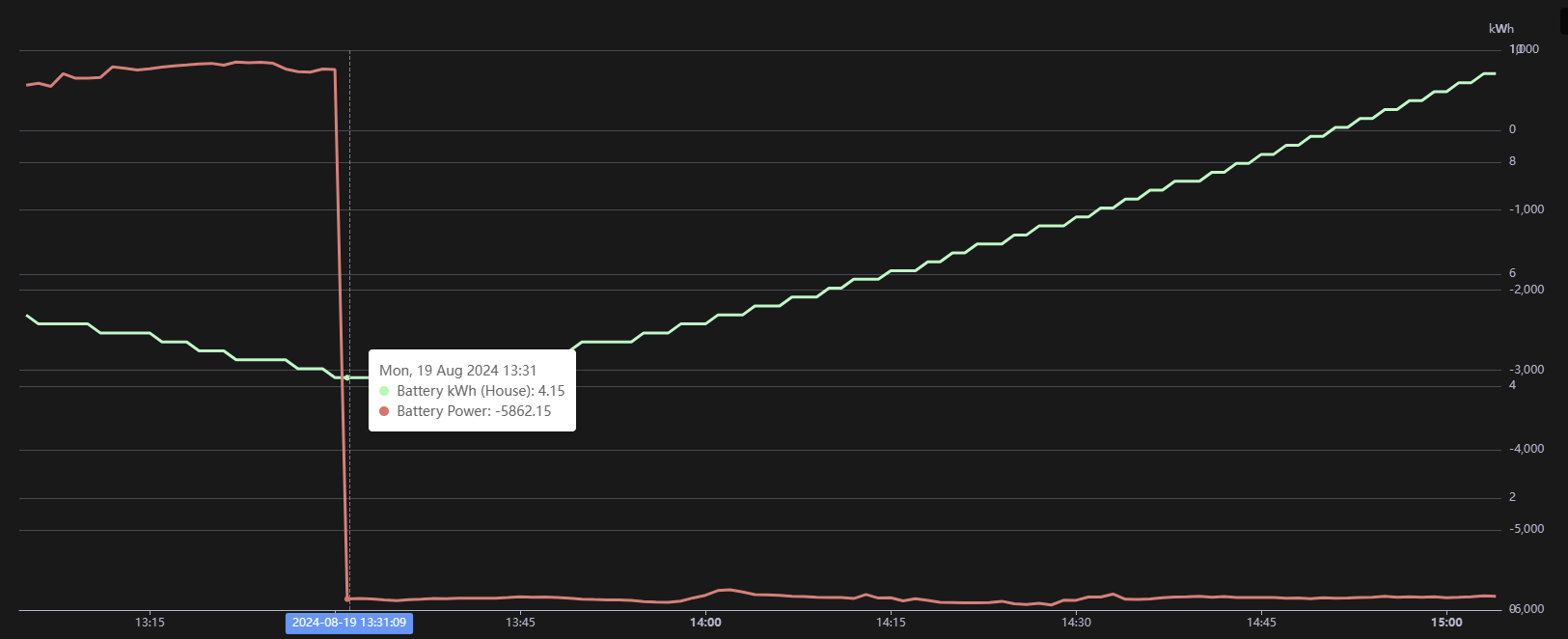
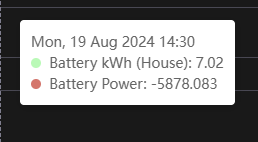
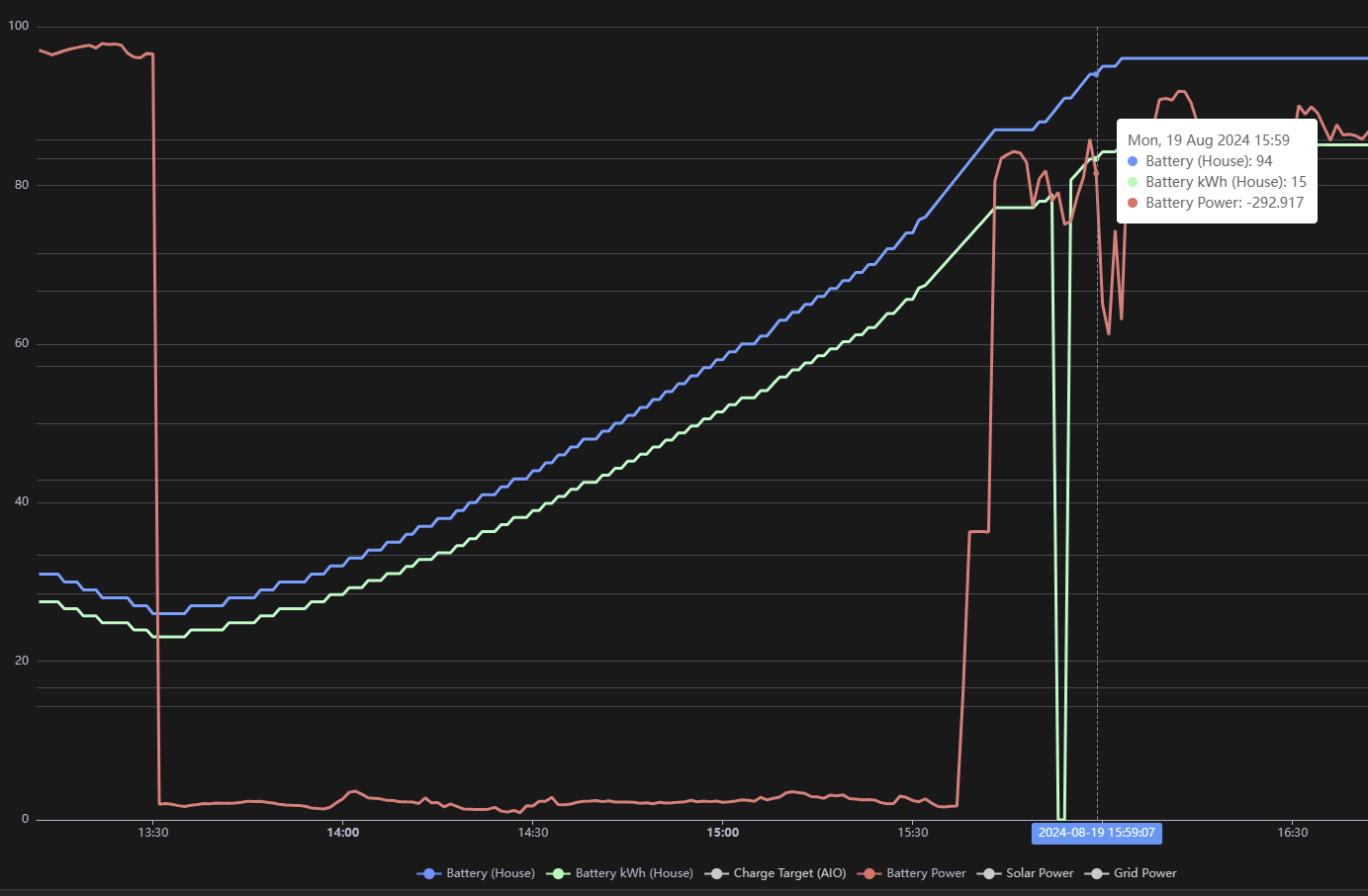
I've got mine on a charge currently, started at 1:30 while battery is reporting 4.15kWh / 26% SOC. It's set to 6kW maximum pull and is bouncing around at just under that (5.7-5.9) consistently. However, an hour later the AIO charge is 7.02 kWh / 44% - a whopping 2.87kWh has been added for 5.8kWh of pull.

That's about 50% efficiency, which seems terrible, I'm buying electricity off the grid, but effectively I'm paying double the rate (assuming I get 100% efficiency when discharging). Ambient temperature is 16°C.
Can somebody sanity check me? Am I being dim-witted, or is this the sort of performance that is to be expected?
C
#2 CW

My AIO is pretty good at charging - I charge overnight (currently at the maximum 6kW throughput) and the battery is fully charged in short order.

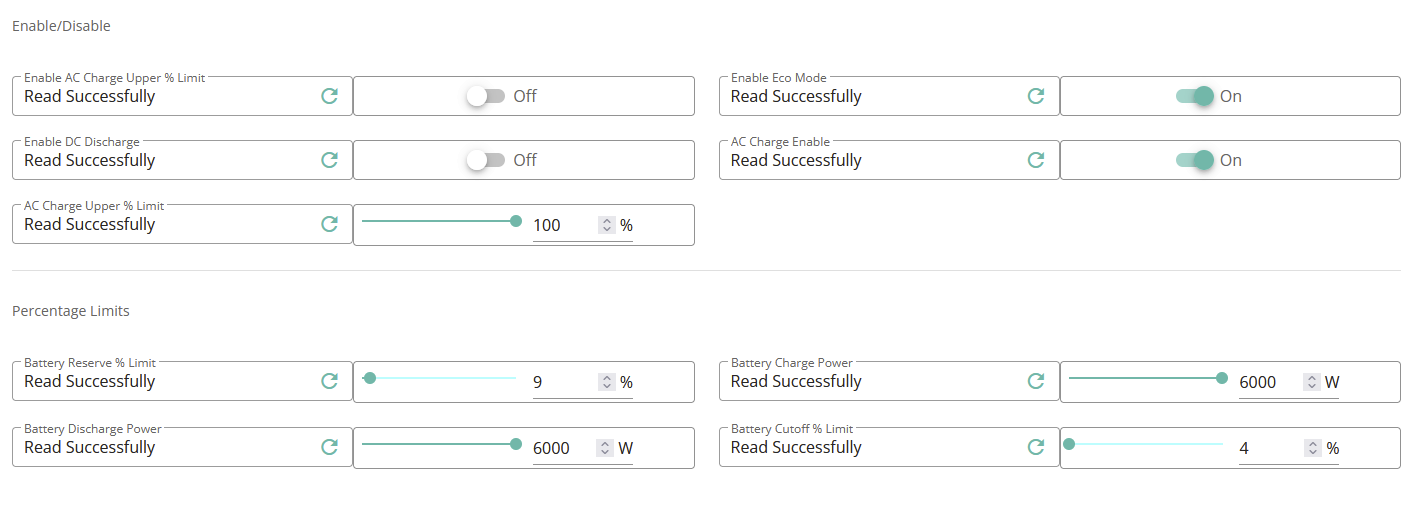
It might be worthwhile posting your remote control settings (or at least the relevent ones) so people can take a look and see if there are any settings there that are holding back the charge rate.

#3 Dash

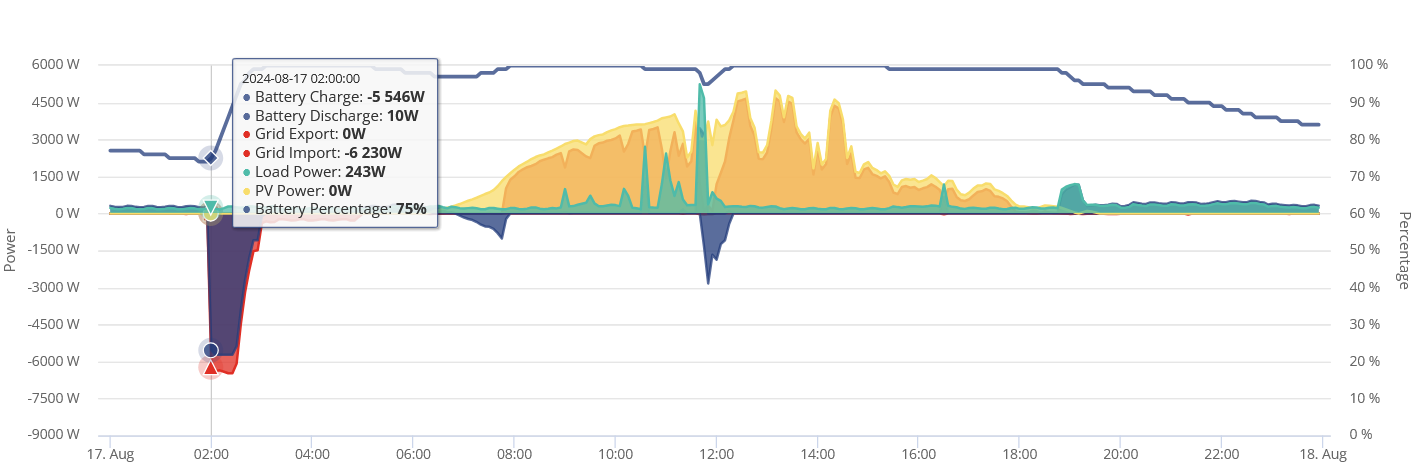
The charge has finished to my target, and looking at the rate of charge, it goes up very quickly at the end, despite the power being imported to the battery dropping down. 15kWh at 4pm vs 5.11kWh at 2pm gives me an average of 4.95kW per hour, 85% efficiency over the period, which is an improvement.

It's going to be challenging to schedule and plan my charges if the numbers jiggle themselves about.

#4 Dash

CW
I do set a Target charge, but with this charge, that's been way off being achieved for most of it - you can see in my second post that it gets reached at the where the charge stops before 4pm as it's reached target. That bit works ok.
Otherwise, all I'm doing is setting the charge start and end times in slot 1. It seems to work well, but I've only just really started paying attention to the rate now that I haven't got sufficient solar to brim it.

D
#5 DD

Dash If you read through the forums, a persistent problem is that the estimate of state-of-charge is typically poor. The reported charge level is often little better than a guess. One problem is that the charge-voltage curve is very flat for this chemistry, which means that it's very hard to infer the energy stored from just the voltage. Once it nears one of the extremes, the voltage changes more rapidly.

I assume what's happened here is that the BMS was underestimating the true state of charge during most of the cycle. As it became closer to full, the voltage started rising and the BMS was able to improve its estimates.

#6 Dash

Do Giv publish the efficiencies anywhere? As arguably it might be more useful if I calculate approximate charge based on how much energy has been sent to the battery. I guess there may be too many variables that go into that, such as ambient conditions.