I’ve ordered a system and having my research (whilst waiting for installation)seems to find a variety of reports with differing inverter response times to a load. Is this something which is tweakable in the settings in terms of threshold or hardwired in?
Inverter response time
Smk82 it’s not tweakable no. In reality, any delays are very short periods of time and have a minimal effect on the amount of grid energy you will import throughout the day. It happens because of the ramping up and down of the battery as it responds to household load.
A real world scenario for perspective, I live in a 4 bed detached house, 2 adults and 3 children. We have a 5 kwp south facing array with a 5kw hybrid inverter and 8.2 kWh battery. May has been a bit variable in weather but I have the system set in eco mode so no additional grid charging of the battery. So far for the month of may, my grid import is 8.6 kWh of electricity, everything else is from solar and the battery. Apart from two days, I’d say the average import has been around 0.3-0.5 kWh per day.
I've done some testing in the past monitoring import on days where I knew the PV and battery would be able to prevent import from occuring.
Again around 300wh imported maximum with lots of transient high loads (multiple loads of washing, dishwasher, kettle etc) over the course of the day.
Because every bit of data you currently have is a snapshot the smart meter etc checking always looks worse than it is.

I am told the ramp up and down speeds are limited by national grid regulations. While GE might be able to make things slightly quicker with future firmware updates for most of us the ramp up and down will always be an issue. Tesla Powerwall is faster due its gateway box though I can not remember why this is

I find that if the inverter is already discharging, then changes to the level of discharge are pretty quick (few seconds) and the same for charging. However, if the inverter is charging and needs to swap to discharging (or vice versa) it can take up around 30 seconds to do this which is really frustrating, especially if the sun is going in and out repeatedly. Also, I find this is the same when the battery is at 100% and showing as idle, and it needs to start discharging it takes a long time to "wake up".
[unknown] I had heard this, I think it’s because the gateway isolates it further so it’s not limited as much.

[unknown] That is longer than I thought? I thought the process is around 10 seconds max. Mind if I ask which inverter you have? (really want sigs working so people can link their kit!)

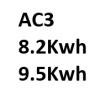
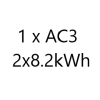
I have an AC3 with an 8.2kWh battery. I've definitely seen this delay on multiple occasions, for example if my battery is full and I switch the kettle on, the givenergy app with local connection will refresh maybe 2 or 3 times (10 seconds each) before I see the inverter/battery respond. This is also shown on the myenergi app and my in home smart meter display too.
I'd echo that. If I spike the load (especially if the battery is idle) it usually takes a couple of refreshes on the app to show the battery delivering.

[unknown] I feel a testing session coming on. It has been a fair while since I have looked but I am sure it was a around 10. I will start the kettle when the refresh says 5 seconds and see if it appears after 2, so 15 seconds. Sadly I wont be able to test that until tomorrow evening :-( Too much work to do.
I'd echo that. If I spike the load (especially if the battery is idle) it usually takes a couple of refreshes on the app to show the battery delivering.
I've got a direct MQTT feed on a 10 second refresh and I've never seen it take longer than that to react to a load.

@browellm Is that a hybrid inverter, just wondering if they are faster to react than the AC3 for some reason?
[unknown] Yes, mine is the 3.6 Hybrid
[unknown] I'd expect the AC software to be easier to code and then subsequently manage the system as its either in or out and it will always be pushed through both a transformer and an inverter.
The hybrid side can have PV charging via transformer only (think I have the correct always get the voltage up/down and AC to DC bits muddled up) with the inverter at low power to support demand via PV generation too. As such the balancing has an added layer of complexity.
I guess the advantage with the hybrid side is that it's never in a standby state for the inverter but could be for the battery - this might drive faster response times.
Still I can live with a 300wh demand daily so despite the appearance of issues via the various snapshot systems we all use it's much quicker than we see it.
On an aside I've got my Zappi and Eddi both running a CT clamp each with the Zappi as the master looking at incoming load from the grid and the CT at the Eddi is looking at the PV/Battery input/output line to give me generation. It's common to see a lag between the 2 sources, ie my domestic import demand via the Zappi doesn't much the generation side from the Eddi. Both of these feed via the Hub which gives me the app data 5 second snapshots.
I have an AC coupled system and 8.2kWh battery, installed just over a year ago now. At first response time was around 30 secs however a firmware update that came out late last year gave a 5 second response time. So in short ensure you are running the latest firmware (can update this from the portal under Inverter - Software).

Ok so I have had a chance to test this, did it twice. Solar generating 1.5kw, battery at 100%. Filled a kettle and turned it on, the AC3 took 50+ seconds to fully take over from the grid. At 30+ seconds 240w was being delivered from the battery, it took 2 more refreshes on the app before it fully took over from the grid. I do not recall it being this slow! So I tested it again, 1.2kw solar generation, 30+ seconds saw 270w from the battery 50+ seconds for the AC3 to fully take over from the grid.
This was an issue for me when the system first went in, but it was faster. Checking an email conversation I had with a friend it was sub 25 seconds. The difference at that time is there was no solar generation?
But yes, 50+ seconds to fully take over from the grid according to the app. I will retest with myenergi once my second harvi goes in at the end of the month to monitor both solar systems.
To be fair though, my daily grid use is between 0.4kw and 0.6kw at the moment. Did see 1.5kw usage on Saturday but that might have something to do with the wife using both ovens and 2 hob rings for cooking! Plus the washing machine and other devices on :-)

THALL are you running the latest firmware updates?

THALL that seems very slow, even my hot mess of a system with a Goodwe Inverter pushing into the Givenergy Hybrids PV strings gets itself up and running from a 0 start within 20 seconds.
I have an AC3.0 running D0.534-A0.534 firmware and 8.2kWh battery, and it seems to respond quicker than that. Today, PV was generating just over 1kW, the battery was full, and when I put the kettle on the battery ramped up at the same time as the load (sampling every 10s, so the inverter lag must have been <10s). However at the time the load was greater than the PV gen - it seems that if it's already discharging, the response is quick. If the battery is charging when the load spikes, there's usually a 1-sample lag between load increase and battery discharge.

I am on
Inverter Firmware Version
D0.534-A0.535
Last Update Time
2021-12-13 11:56:41
Battery Firmware Version
3005
I am sure on previous firmware this was quicker as it bothered me a lot seeing grid usage when the battery was charged when it first came in. I know it was quicker. I will test it again one evening when there is no solar. But I tested twice just to be sure and both times the app had 5 refreshes before the battery showed full load.
Anyone else having forum issues? Posts posting but getting a red errors?

THALL My firmware versions are the same as yours and it sounds like your system performs exactly like mine. Interesting that some people seem to have a faster response from theirs.

[unknown] I am sure I did when the system first went in last July. However I did not monitor with the app at that time, I used the smart meter. I will do some more testing when I get time.
My AC3 is on D0.534-A0.534, is D0.534-A0.535 new? Its not listed in the firmware KB article

D0.534-A0.535 contains a fix for a AC3 monitoring dual solar systems. I had an error where my solar generation appeared as 40kw for extended periods and the graph data hit 70kw making the graphs unusable. This firmware corrected the issue. This was fixed at the end of January! The problem is unique to the AC3 monitoring dual solar systems.
I wouldn’t exactly call this a test but I did time the response from my 5kw hybrid inverter this morning when there was sufficient PV to be charging the battery. By watching the smart meter IHD as well as the app, it was 30 seconds to respond from a charging state to covering the house load. Anecdotally, the change from charge to discharge takes the longest on my system. If the battery is idle or already discharging, the response is much quicker.
Idle to fully covering the house load with some added PV, 21 seconds. If the battery is already discharging I think that’s the quickest to respond, maybe like 10 seconds but I haven’t timed that one because there has been too much PV and the battery has been sat idle. Not a bad thing really 🤣
I see a similar delay of around 3 10sec app cycles before a 100% SoC battery responds to load (AC3, 5.2kWh battery, inverter D0.599-A0.599, battery 3005).
I’ve not done any response time measurements as I don’t see it as being a problem.
Today we have imported and exported 0.3kWh. And it has been a proper on off day with the weather.
I do think some people are looking for issues that don’t really exist?
anglefire I imported 0.7 kWh on the back of 10 consumed and I agree it doesn't seem a significant practical issue. Just unexpected perhaps?
jkazer not sure it’s really that unexpected. The inverter can’t respond to rapid changes so uses the grid to balance it out. I agree that 30seconds seems a long time but I wonder how much is response of the comms rather that the inverter? Given the low import export?
Funnily enough I was working on a modbus system yesterday for work- its response time is about 10 seconds because it’s actually talking to a protocol converter and by the time I’ve sent a command and received a reply it takes 20 seconds or so. It wasn’t obvious on the previous control system as that took 2 minutes but the upgrade has shown how bad it is! I’ve had to add a load of delays so I don’t do things too fast!
anglefire some of it will be down to filtering too. The inverter is basing decisions on spot readings from a messy ac supply so needs to use a short-term average. On the AC3, it also sounds like a relay cuts in when switching between charge and discharge.
anglefire couldn’t agree more. I’m extremely happy with my system and the benefits for me and my family. I’m amazed at how little electricity we are using from the grid, which is precisely why I made the investment and installed PV and battery.
It's certainly useful to work thru these things as a user, both from a general look and feel experience and for practical smart home implications.
Went thru a more intense sort of process of discovery with octopus on the powerloop trial last year. Finding the right balance of app performance and user experience was really hard when you come up against disparate sets of hardware and WiFi.
I'm also very happy with the GE system.

I managed to do some testing today but from a different angle. I measured grid energy use to boil the kettle with no solar, just battery. It used 0.018kw from the grid to boil a full kettle which doesn't make sense as the app still took 5 refreshes for the load to appear. My smart meter shows at least double the grid use of the giv energy dashboard.
THALL You've got a whole load of assumptions there but it looks roughly right. Assuming a 3kW "calibrated" kettle, that's 0.05kWh per minute. If the inverter took about 20 seconds to respond, there you go!

jkazer that's newer firmware
I too se the same as Thall. 30 seconds and the batter wakes up. Then another 2 refreshed before it's full load.
If the battery is already in use regardless of how small. The kettle is fulfilled within 2 refreshes
If the newer 599 firmware drops the 50 seconds to under 30, then that's an improvement.
Does your firmware also bring UPS capability? Ie zero noticable drop in EPS line power on AC fail?
TheDragon (GivEnergy) In my view if you want line interactive (Or whatever its called) UPS options, then get a UPS. The inverter has to sync to the grid to go back to mains operation. Obviously doable, but I doubt with just a firmware update - I would think there would be hardware required to ensure that the local phase rotation matched the grid otherwise a lot of smoke will be let out.
A friend of mine does have an inverter that does it, I'll ask him.
TheDragon (GivEnergy) So far as I know the 599 firmware was specifically created to test a fix for incorrectly discharging below the minimum configured %. This version has consistently stopped discharging at 20% as per my settings, which the official release was failing to do. I tested my EPS and it seems to work after power fail, but haven't looked into it in great detail.

Ok yes my setup ignores the Reserve capacity at 7%. But before I bother with the EPS reserve value, need to know if it actually now works uninterupted. As it was promised at the last meeting we had with GE.
Or I will just wire in to the EPS output a UPS, then power the load from that instead. Introducing losses, but at least the network kit and NAS drives will remain online