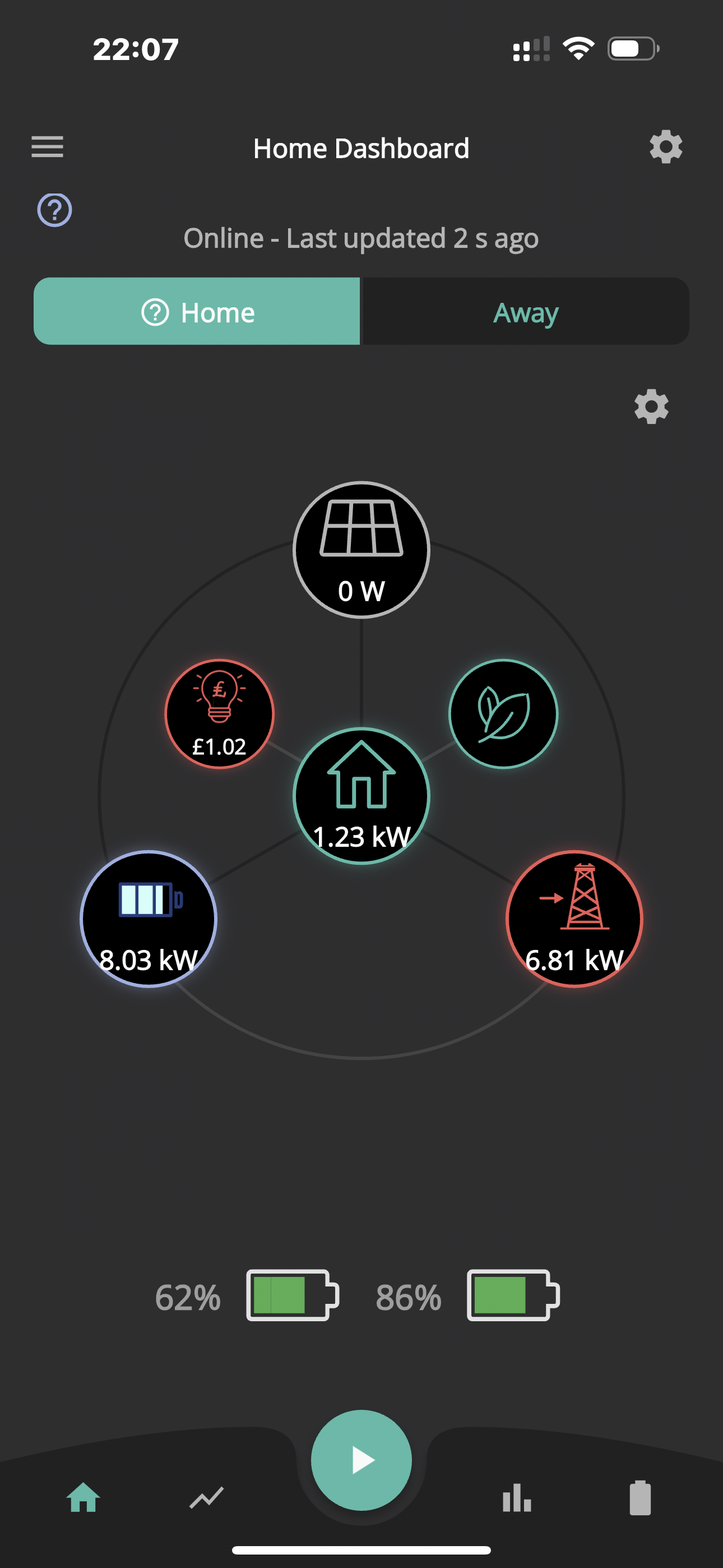
Tonight, for the second time in a week or so experiencing this (in between occurrences all has appeared fine):
Batteries not discharging uniformly, basically 2nd battery holding 100% and not discharging.
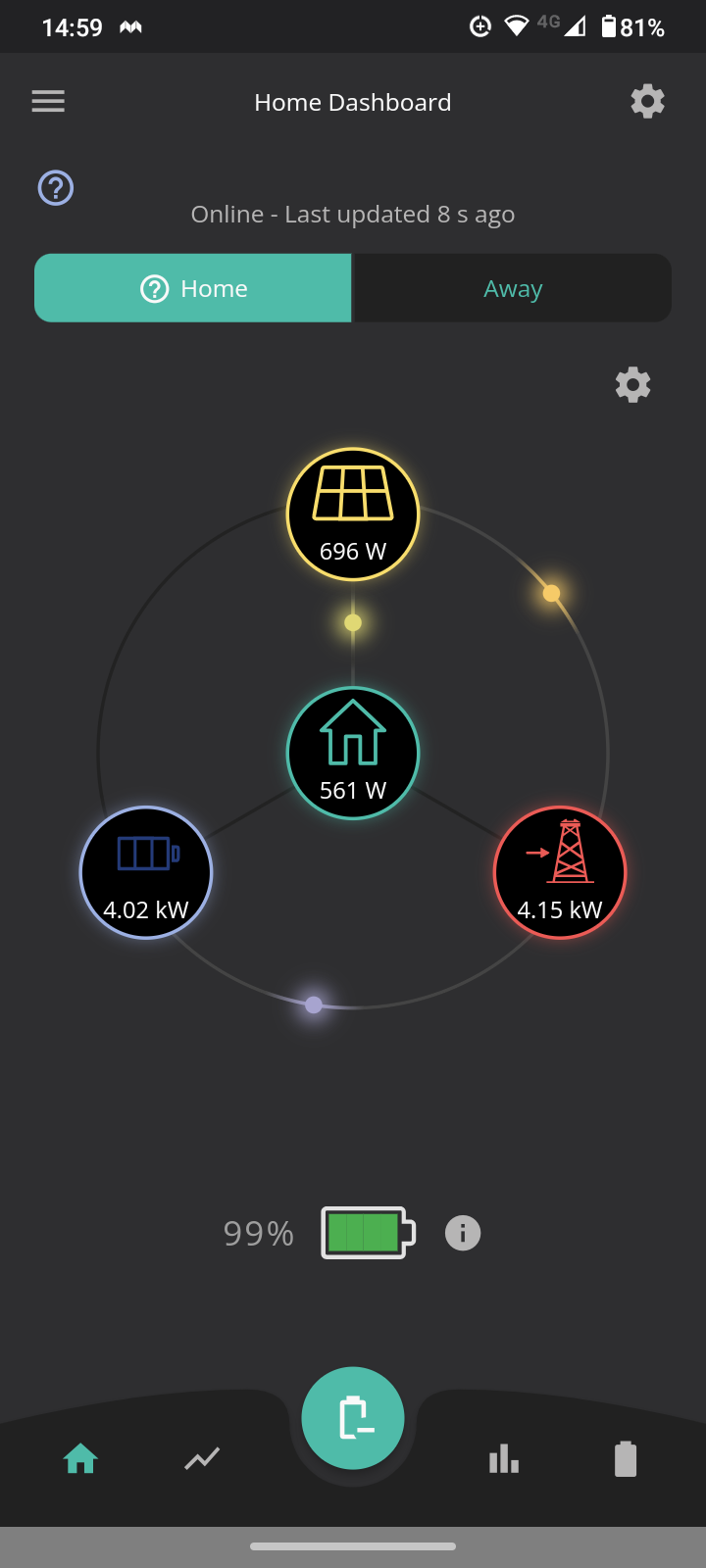
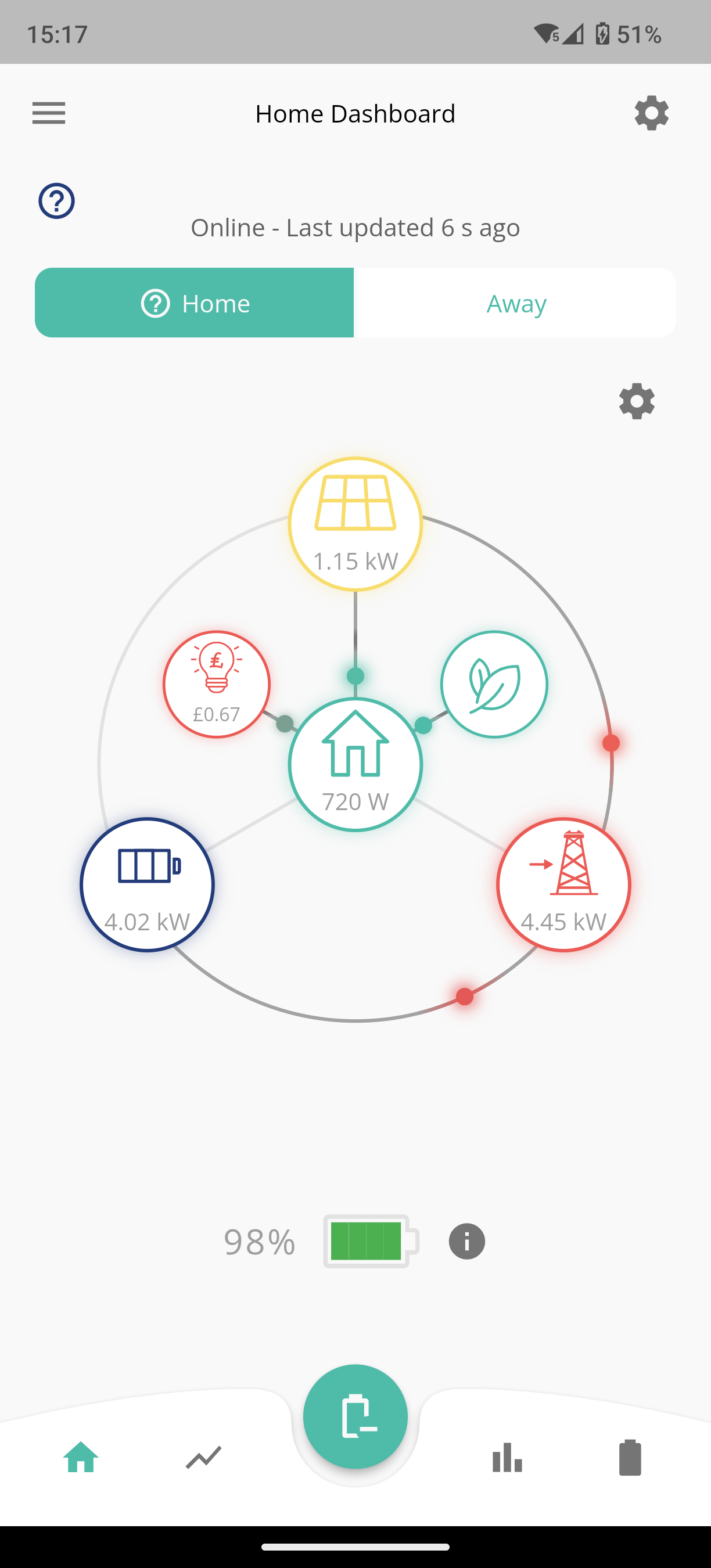
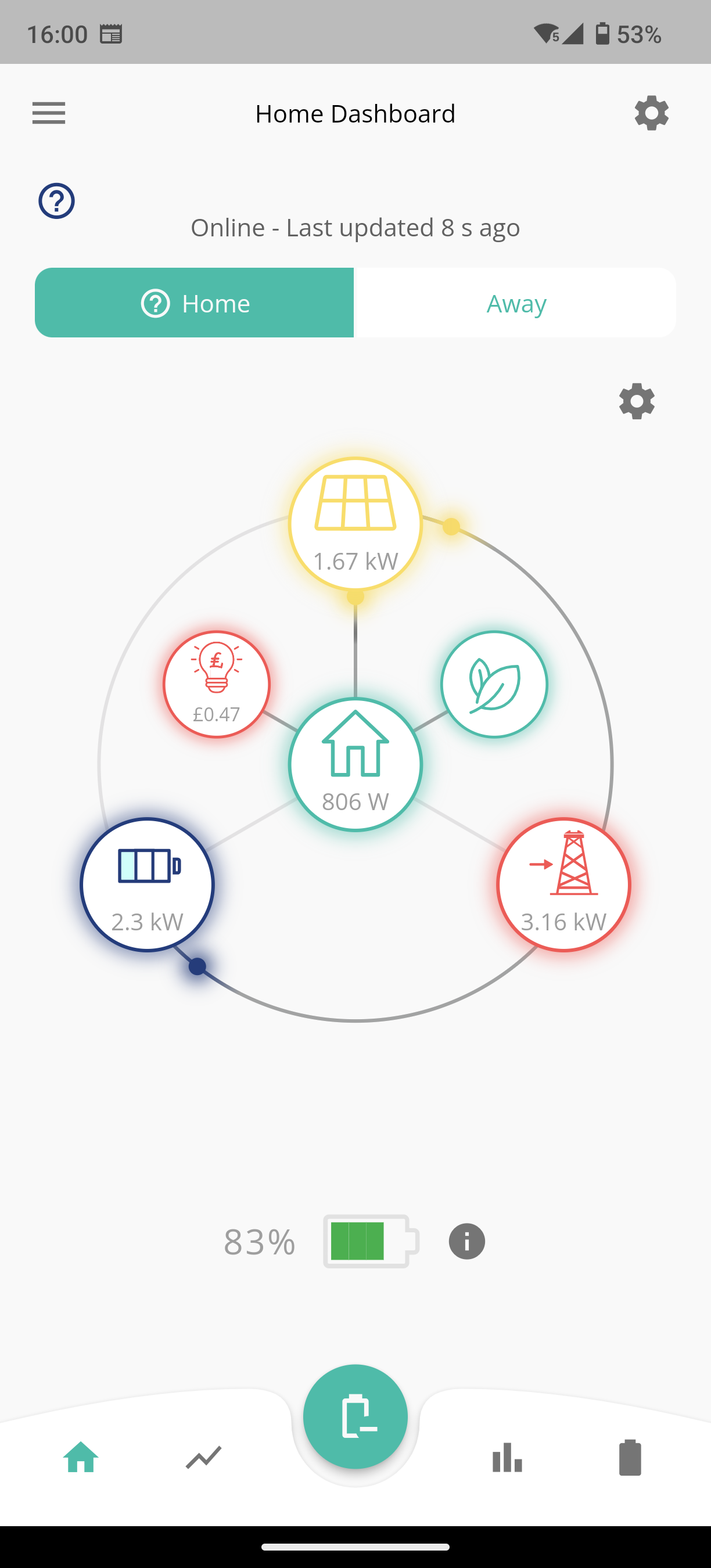
House needs batteries this evening - app showing battery level 41% overall but when going to more information showing 1st at 47% and 2nd at 100%
Tried: re-starting inverter. Switch battery off and on again.
Any helpful thoughts? Thanks
#2Windy Miller
GribinIsaf Did this resolve itself? I have exact same setup as you and one of my batteries stuck at 100% after an overvoltage notification. It came back online after a few hours when its voltage dropped a bit possibly as it cooled overnight. Since then Givenergy have hidden the overvoltage warnings from the log so you might get these symptoms without the notification.
I think the cause might be the state of charge getting out of step between the two batteries which seems to happen if the batteries do not reach empty or full for a few days. New firmware or a recalibration might help but you'll need to contact GE support to see.
G
#3GribinIsaf
Windy Miller
I did contact support and had a response within minutes! I knew I had both an inverter and a battery firmware update pending (I don't rush into these if all is working fine!). Support said they would action these and I can see they did the inverter one (without calibration and the grid draw that would cause, which was good) but not the battery one, perversely. I may will trigger that myself shortly but the issue seems resolved. The two batteries do seem a bit out of sync - by a few percentage points but the secondary has not got stuck at 100% since the upgrade - mind you it was a highly intermittent phenomenon anyway. We will see..
O
#4Ortwin
I had this with my two 9.5Kw batteries when their voltage differed > about 1v. GE technical did a slow battery calibration and all was good.
#5AlanWells
Ortwin could I ask what discharge rate you get from your 2 x 9.5's? I'm only getting 2kW and being told by the installer that that's normal but others have suggested it should be 4kW.
Mine are with a Hybrid 5 v3 inverter.
#6ProximusAl
AlanWells I have to 8.2s and they discharge at 3.7kW, but that’s on a HY5Gen2
D
#7DD
AlanWells I think the original advertised max rate was 3.6kW for gen-3, but a recent firmware pushed it to 4kW under some circumstances. May drop as temperature changes.
T
#8TimHutchings
AlanWells 2kwh is definitely too low. Even my gen1 inverter will discharge at 2600w or 2880w from a 9.5kw battery with the new firmware. Later inverters should all be able to discharge at 3.6kw or maybe more with different firmware.
The only time I've seen it discharge less at full discharge power is when the battery is has less than 10% charge remaining. Then it steps the discharge rate down till it hits the minimum 4%, to preserve the battery, rather than ram it into the buffers at the end (does the same charging at the other end).
#9AlanWells
Thanks all, that gives me some confidence that I'm at least reporting an actual fault. The installer said it was normal and I "just didn't understand how the system operated"
GE have apparently agreed there is a fault when I reported it to them along with some other issues with cell voltages (also discussed in another thread). Will just have to wait now and see if/when I get a date for the promised engineer visit.
After only being in a month however, and seemingly from the history graphs, being like this from day one, I would have much preferred the installer to be sorting this out and not me.
V
#10Vestas
AlanWells Its the installers responsibility to fix this and given the age of the batteries I'd be INSISTING Octopus replace them.
How did you pay for this - any finance or over £100 paid on a credit card? If so then tell Octopus you're getting them involved for a refund. That ought to prod Octopus' crappy customer service (its really bad these days) into action....
With this set up, (I have the same but with 2x gen 3 5.0 inverters and 4x 9.5 batteries) you should get 3.7kW under load from the house and when doing a “timed export” to grid it’ll be 4.0kW. Thats what I’m seeing.
For context, I get the same initially (most of the time).
But then after around half an hour I get this as a sudden drop and it continues to drop slowly while still discharging.
I'm going to hope it's a loose busbar connection and it hasn't done any lasting cell damage, just need an engineer visit, hopefully before any Octopus Export sessions appear.
V
#17Vestas
AlanWells You have a problem with both batteries though? Or have I got that wrong?
#18AlanWells
Vestas I have a cell on one battery that under load drops to - 0.2v below the others and when charging rises to +0.2v from the others. On the other battery one cell is generally 0.1-0.2v below the others and it's individual SOC went as low as 2.2v when the battery was in calibration.
What yours is doing is exactly like the problem I had. Mine was replaced. And I suppose one battery discharges more than the other one, so that they have a large imbalance at the bottom end?
This is what it looks like when working properly (below)
V
#20Vestas
AlanWells Both batteries were faulty at install then. Octopus legally have to replace or refund and I'd push them to do it were I you.
#21AlanWells
Vestas I asked that directly but just got told it was working properly. I keeped pushing and now have been escalated to "Aftercare" (whatever that is) and I guess I'll have to try to explain it all to them again.
If you buy a new car and it only does 40mph instead of 80mph it's quite easy to demonstrate, but it seems that all of the graphs in the world won't convince some people that 2 is not equal to 4.
V
#22Vestas
AlanWells Make a formal complaint. That starts the clock on referring the case to the ombudsman/court.
Point out that the manufacturer says the battery(ies) is faulty.
#23AlanWells
Upadate: Engineer visit this week, I think it was a loose connection in the primary battery, he hinted that this was the case when asked. The primary battery looks flawless now with all cells really close in voltage throughout most of the cycle and I can export at a constant 4kW so I feel a lot better.
Secondary still has a cell that wonders around 200mV low during discharge and was a still a whole volt lower at the bottom of the calibration he performed, I'll see what they say as he said someone would be monitoring it remotely.
Also, still no response from Octopus, I had to sort this all out myself.
V
#24Vestas
AlanWells Secondary still has a cell that wonders around 200mV low during discharge
That's faulty. No ifs or buts. Faulty 🙂
V
#25Vestas
AlanWells Also, still no response from Octopus, I had to sort this all out myself.
Take that all the way to the ombudsman and ask for installation charges to be refunded.
Don't accept less as Octopus didn't "perform the service with reasonable care and skill", nor did they provide any remedy so they shouldn't be paid any labour charges.
All they should get is the cost of the equipment installed (minus any compo for hassle during replacements) and the ombudsman will agree.
Then of course you'll need to threaten Octopus with legal action (because they won't comply immediately) but they should cave in.
You have a pretty much cast iron case to get several thousand quid back from Octopus. Don't be shy about asking for compo.