New GivEnergy System Guidance

9 comments started 2024-09-21 last 2024-09-23
GivEnergy ProductsBatteryForums/Meta
T
#1 T0ny

Hi All, I am a new member and I was hoping to get some guidance. On Wednesday I had a Givenergy system installed with the invertor and 9.8KW battery. Off the bat I have noticed a couple of things.

Firstly the import figure from the GE portal is under reporting my import figure when compared with Octopus smart meter. I mean they are worlds apart by 5-6 KWH. I have checked the data on my smart meter so I believe the Octopus readings to be true. This obviously taints the calculations GE provide and I am not sure I can trust any of them. Is this a common problem?

Secondly I am yet to sign up for a export tariff as I am awaiting my DNO and MCS documents so I want to be using as much self generated energy as possible and limiting import/export. But even on eco mode my battery is drawing from the grid over night when I would rather it be consumed by the house during that period and then charge from the excess PV during the day. Obviously I would rethink this when I eventually get on an export tariff. Is there any way to stop the battery charging from the grid but still charge from the excess PV?

Any advice here is welcomed

G
#2 geoffreycoan

T0ny Welcome to the forum.

  1. Plenty of people report this, some discrepancy is perfectly normal. Part of the problem is that the GE figures are 5 minute snapshots that then assume that the same power will occur for the whole of the 5 minute periods, but the sun may go in, the kettle stops boiling so these can be just wrong.
    The GE inverter isn’t a certified device and is reading current via a CT clamp so they will also induce inaccuracy.
    If you look at the meter data on the GE portal then these tend to be the most accurate. On my inverter over say a month they are pretty close to the Octopus smart meter. If its wildly out ask your installer to take a look as the CT clamp may be picking up stray current from another nearby cable.

  2. You say “my battery is drawing from the grid overnight”. Tiny draws and tiny exports are to be expected, the inverter takes a finite amount of time to detect that the house load has changed and to stop charging/discharging the battery. My own system shows 0.0009p of import so far today.
    Sustained drawing from the grid indicates either your battery has run out, you have a scheduled overnight charge setup (check the portal screens carefully, you can set multiple charge/discharges slots) or something not right

C
#3 CW

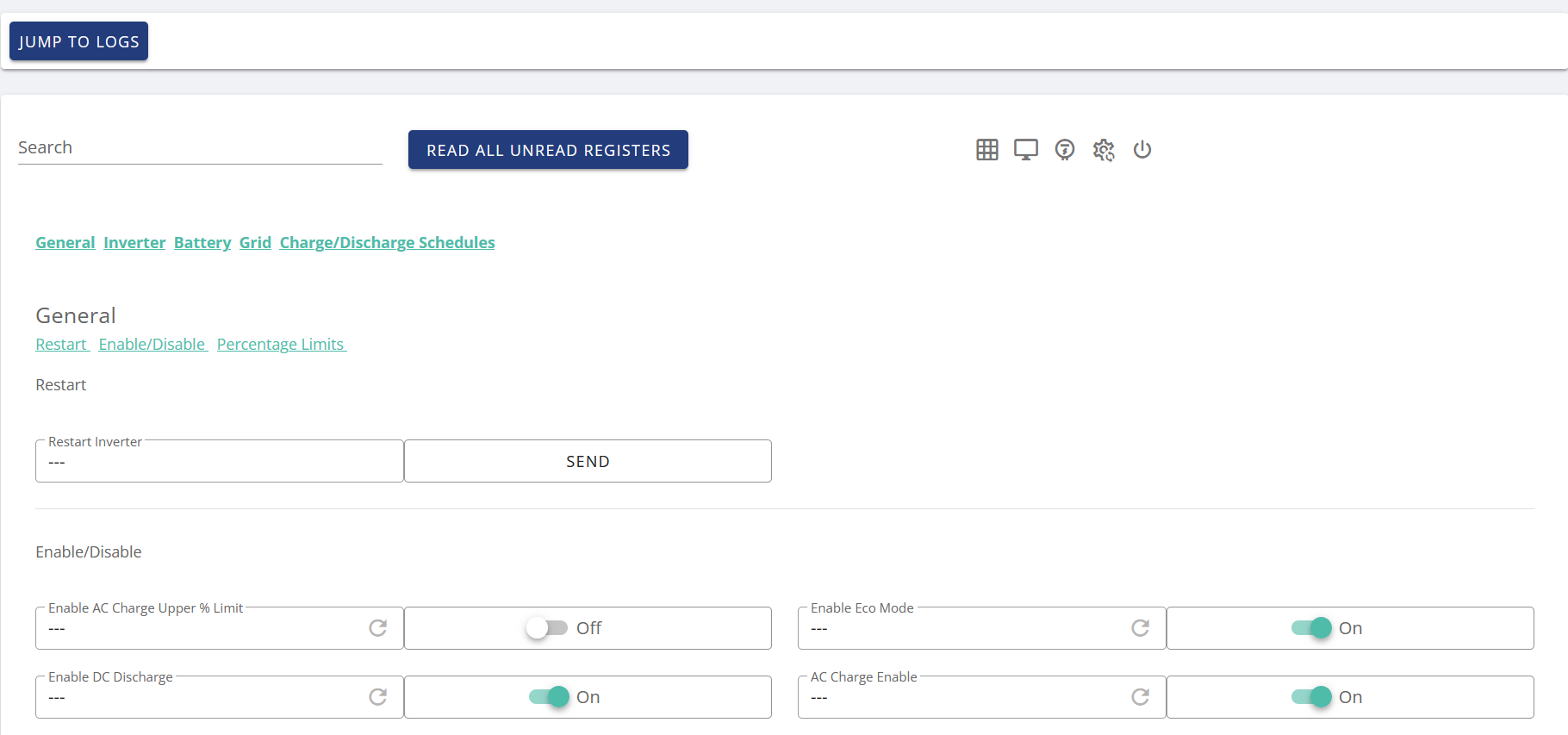
T0ny Hi T0ny. WRT your query about battery charging from the grid overnight, I would suggest you take a look at the remote control settings for your inverter to see if you have any AC charging set, or minimum battery levels etc that would force a charge.

T
#4 T0ny

geoffreycoan
Thanks for the welcome and the advice. I will review the import discrepancy again at the end of the month to give the system time to true up the results. With regard to the battery drawing from the grid. As an example it charged from the grid after midnight last night until we start using power this morning from 33% charge to 43% and from the smart meter reading we used 4KWH during that period. The base line for our power draw overnight before the install for the same overnight period is only approx. 2 KWH.

CW
I haven't actually looked at any remote control settings as it is a new out of the box install and I don't know what I am looking at. What would I bee looking for?

D
#5 DD

T0ny Firstly the import figure from the GE portal is under reporting my import figure when compared with Octopus smart meter. I mean they are worlds apart by 5-6 KWH.

Just in case you hadn't realised this, the energy graph has various different displays showing different breakdowns of source and destination. I think the default one is to show home consumption from various sources, one of which would be grid import. But you'd have to switch to the grid import display to see all of the grid import. Could 5-6kWh being going into the battery overnight ?

If you still have the in-home display that came with your smartmeter, are you able to compare the "instantaneous" import readings on that vs the GE app ?

geoffreycoan The GE inverter isn’t a certified device and is reading current via a CT clamp so they will also induce inaccuracy.

The CT clamp goes first to an external metering device which I think is certified, but only when using a solid CT clamp, whereas GE use a split one. Could also check that it's properly fastened shut.

C
#6 CW

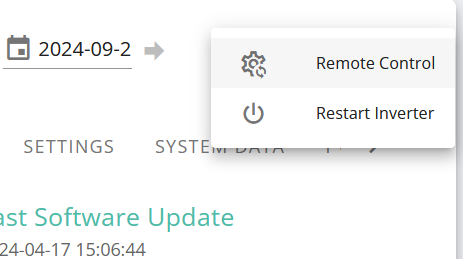
T0ny From the web portal, select the inverter card and then look for the elipses on the right hand side. If you click those (I get)

Once in there you should be able to see all the remote control settings for your inverter (a sample below)

P
#7 Pete UK

T0ny

Hi, welcome.

Regarding 2);

It may be easier to have a Quick Look in the GE app if you’re new to all this.

** Note that any changes you make in the app are not “fixed” until you’ve clicked “submit” and got a tick back (ie the new command/ value hasn’t been sent to the inverter yet!) and occasionally/ rarely you may have to do this twice if there is a communication error. **

To achieve what you want to do currently, I think this is how it should be set up…

In the App home dashboard page:
Click on the cog ⚙️ at the very top RHS
Go into “inverter settings”

Check each of these is set as follows….
1) Eco —> Enabled
2) Timed Charge —> NOT enabled
3) Timed Discharge —> NOT enabled
3) Timed export —> NOT enabled
4) Battery options;
Reserve —> 4% (slider all the way to the left)
Charge power —> max (slider to the right)
Discharge power —> max (slider to the right)
5) Reset to defaults (leave this alone - use this only if needed, if your system isn’t doing what you want and can’t see why).

This should charge your battery from solar when solar is above house demand. House will use solar first, then solar and battery, then battery. If there isn’t enough solar (and at night) the battery will be used to power the house. If/When the battery runs out (gets down to the 4% you set) only then will the house start to pull from the grid.

If you’re on a dual rate electric tariff with cheap overnight, (which you should be!); as the days get shorter you’ll want to modify 2) above to charge the battery a bit (or a lot) overnight in that cheap period so you don’t use any peak rate when the battery runs out. Then when you get your export tariff set up you’ll want to modify 2) above again to charge your battery to full every night and export all the solar in the day for 15p (if you’re with Octopus) or whatever other export rate you are on. Also if you find you are lucky enough to have excess battery left over in the evening, you can also export all that for the higher rate just before the cheap rate starts again.

First things first though. Let us know if making those changes above achieves what you want. You can do the “reset to defaults” - option 5) above first if you want to or need to start from scratch. Otherwise there may be some other things to check/ modify. But set like that it should make your system operate the way you want.

T
#8 T0ny

Pete UK

Thanks for the breakdown. I have checked and this how my system is set. Having said that I think I know what has gone awry. The CT clip had come away from the cable (The installer must not have clipped it in properly) I have reapplied the clip and hopefully this should resolve my question. I will leave it over the weekend and review again on Monday. Thank you for your input everyone.

R
#9 Roy124

Pete UK Also if you find you are lucky enough to have excess battery left over in the evening, you can also export all that for the higher rate just before the cheap rate starts again.

On my OF that is true today, my cheap import rate is 12.997p and daytime export rate is 14.49p

On 1st Oct new rates become 14.261p and 12.558p. In other words there is no benefit in discharging to grid during normal day rate times.

OTOH the high rate export which is 21.81p (against import of 21.65p) rises to 24.964p. In other words you will earn over 10p/kW if you export from battery in the 1600-1900 period.