
Vampire energy - All In One + PV inverter?

19 comments started 2024-09-23 last 2024-09-24
Home AutomationHome Assistant
#1 PianSom

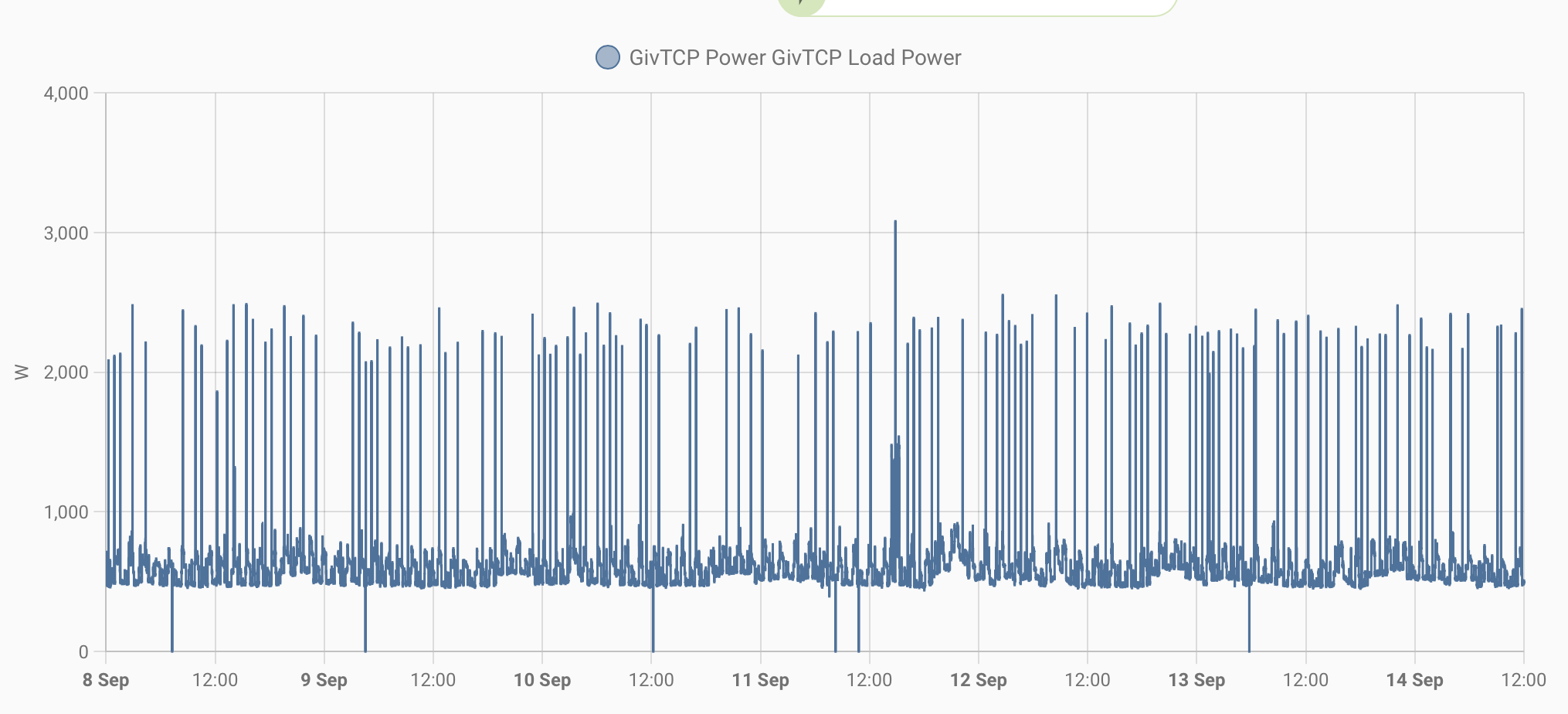
A recent holiday gave me the chance to note how much "vampire power" (power going to device plugged in and active, but not being used by an actual person) my house is using. I tracked this by looking at Load output as given by the AIO (a slightly staggering 625W).

To work out where it's all going, I started off by looking in detail at consumption by my copious amount of IT kit (using smart plugs). Turns out that IT is using far less than I had estimated (only about 200W, versus 400W I had estimated). That leaves a 200W hole in my estimations of where it's all going.

One though that just occurred to me is - the AIO/Gateway combo plus my solar inverter obviously use power, and were actively generating/importing/exporting while the house was empty.

My guess is that these three devices are all effectively self-powering (so the power they consume is deducted as generation losses and so is never counted in the Load calculation). But is that actually correct?

#2 hoggy

PianSom someone on here had it at about 200W patristic load from the AIO I think. Was ages ago, was it @Jellybaby ?

#3 PianSom

hoggy
... would be the correct answer.

<crosses fingers>

J
#4 JasonF

Yeah I have 150-200w I can’t account for in my total house load. So I think that’s the battery system itself.

V
#5 Vestas

Dunno about the AIO but for a G1 hybrid the best way of calculating base load is simply to fully charge the battery and while still in the charging period look at the load power. Alternatively let the battery go completely flat and do the same.

Do this at night so there's no PV input and the inverter (hybrid) will be idle and pulling 20-30W max.

#6 PianSom

Vestas
The load draw (as reported by the AIO) remained largely flat over a multi-day (and night) period, as the battery cycled from full to empty and the sun rose and fell.

Which, with hindsight, is good evidence that the PV inverter does not contribute to the load calculation

D
#7 DD

Vestas Alternatively let the battery go completely flat and do the same.

Or just turn off eco mode so that it stops discharging?

V
#8 Vestas

PianSom Which, with hindsight, is good evidence that the PV inverter does not contribute to the load calculation

Wouldn't expect it would on an AIO, just mentioned it because the PV input will contribute the the power consumption on a hybrid inverter.

Eliminate the battery losses (AC->DC->AC) and you'll get a more accurate idea of the actual base load of your home.

V
#9 Vestas

DD Or just turn off eco mode so that it stops discharging?

Probably, wouldn't like to say that for sure as I'm not convinced that stops all discharge on all inverter/firmware combos.

#10 hoggy

Vaguely recall there being a "dead band" around 200W that the system/gateway simply doesn't report. Can't quite remember if that's on the PV monitoring side or load side though. Although as with everything Giv, that may depend on which of the 8000 firmwares currently in the wild...

V
#11 Vestas

hoggy that may depend on which of the 8000 firmwares currently in the wild...

Indeed. I know the "Load Power" figure changed marginally when the "fast response" firmware was loaded on this inverter but it wasn't by enough to make a note of the figure....

B
#12 Blasteh

Last time I worked it out, the AIO system was using around 100W 24/7, which equals 2.4kWh per 24 hours
I'm assuming it's GW and AIO combined as this was usage I couldn't account for.

I'm rationalising it as ok as long as the power cut feature works as intended.

#13 PianSom

Taking the AIO base consumption as 150W (being half way between the estimates here of 100-200W) means it itself consumes 3.6kWh every day. Or about 25% of its own battery capacity.

Wow.

Am I missing something? Is this consumption in addition to (or simply just another name for) charge/discharge losses? I guess if it is conversion losses that could explain the variety of estimates of consumption.

#15 PianSom

Blasteh
Thanks for sharing (and nice use of Influxdb/Grafana btw!).

Looking at that chart I'd put the "base" load a bit higher than 50W, personally. And for the purposes of working out where power goes my thinking is that AIO power usage should be for a typical day's usage, so including conversion losses.

100-200W therefore doesn't seem too far-fetched. And probably towards the higher side for me, as I work my system hard.

V
#16 Vestas

PianSom I think it was @Woodstock who said something along the lines of "didn't expect to be using more electricity while still saving money when I got this"..... 🙂

J
#17 JasonF

PianSom I think it’s included/ accounted for. I say this because when you charge you see either slightly higher house load in the app and when you discharge you see higher disharge amount. It’s more obvious when doing it at the 6kw. Technically to put 6kw into the batter it has to import more and same for exporting from the battery. So I think it’s inclusive not as well as. Well I’m hoping so or it would be insane!

#18 PianSom

JasonF when you charge you see either slightly higher house load in the app and when you discharge you see higher disharge amount. It’s more obvious when doing it at the 6kw.

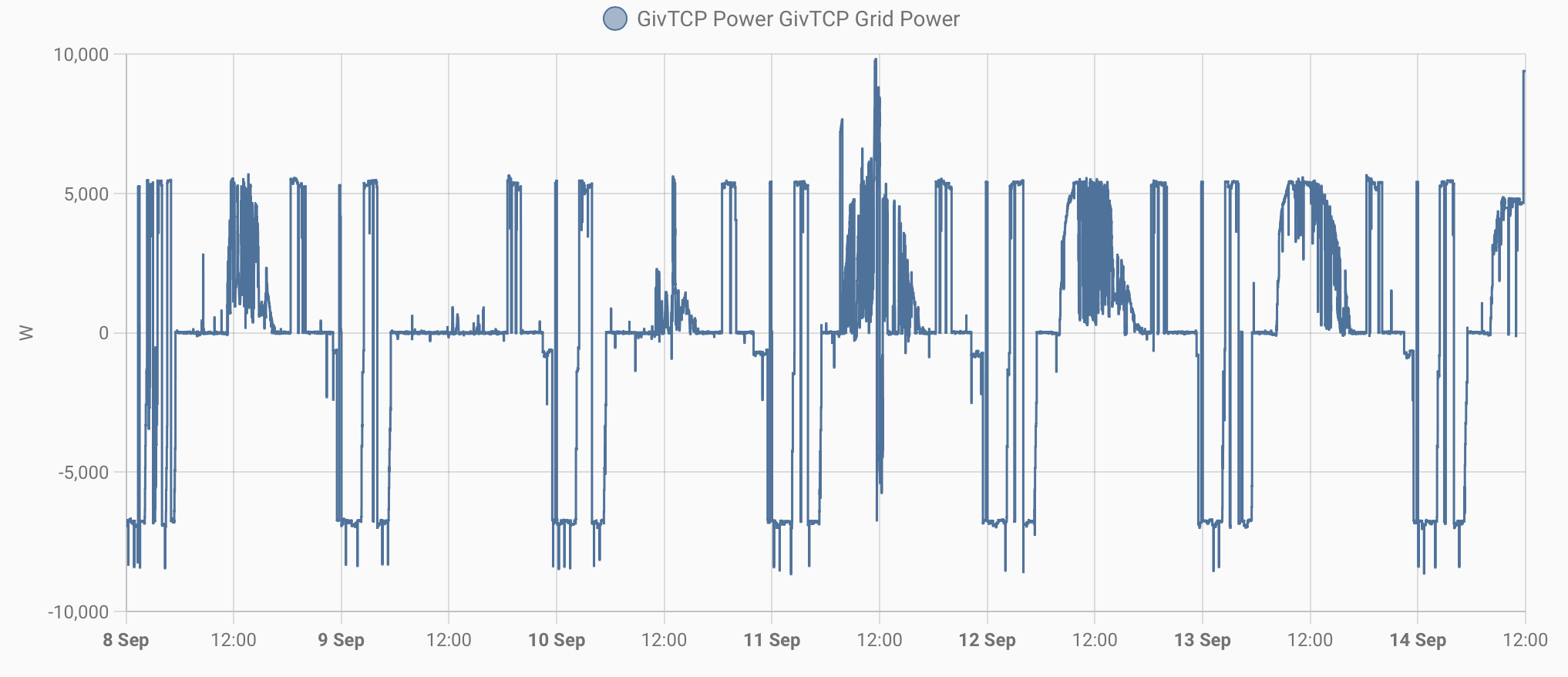
Here's the charts from when the house was empty. Not sure I can see an obvious correlation. (I imagine the consumption spikes are the Quooker keeping warm.) Data feeds from GivTCP.

But yes - I too think it's inclusive too.

J
#19 Jellybaby

Even if battery is flat the system will still add 1-200w on top of baseload, if you want to check make sure you have an in home display and power off the AIO, same if you turn off eco mode, the system is still powered on.