Octopus Tariff

7 comments started 2024-11-05 last 2024-11-08
Forums/Meta
S
#1 Scottishcammy

Hi folks,

I have 4.86kw solar panels and a 9.5kw battery, 3.6kw inverter. I live in the south East of Scotland and am South facing.
Household is 2 bedroomed cottage and it's just me and my wife. No electric car.
Heating is from oil fired central heating.

I'm currently on octopus intelligent flux, but I've noticed a few folk saying that's only really useful during summer.

I realise a lot if this will be subjective, but I'd be grateful on folks opinions on the best tariff for me now we're into November / winter approaching... I don't mind having a fair bit of involvement in a tariff, but I wouldn't want it to dominate all my time constantly having to tweak things / keep an eye on it.

Would like to stick with octopus, but the amount of tariffs is pretty confusing!

Cheers in advance 👍

#2 Watcher

Similar set up and property (Calor not oil - S England).

I use Agile, time of use so you do need to watch it a bit (yesterday and today highest ever half hour rates) but you can automate with H A or my preferred Wonderwatt. These can be set up to do the hard work and avoid high rates by having your battery ready to carry you.

Fixed export @ 15p p kWh, not much of that atm!

12p pkWh for October.

Sure others will have alternatives.

H
#3 hazlad24

Watcher what export rate you get on that? im also on intelligent flux and with only 2kwh solar a day atm its rubbish. im better off going on an ev tariff so charge batteries off peak and use battery energy through next night

#4 Watcher

hazlad24

⬆️
Fixed export @ 15p p kWh, not much of that atm!
😉

R
#5 Roy124

I used Intelligent Flux but I got little export despite a battery at 100%. It just seemed counter intuitive seeing it gobbling power from the grid and minimal export. Now I confess to being ignorant of the niceties and guess that solar was actually doing its stuff running the home, it just did not look right.

In retrospect it was dumping my 5kW battery around tea time when there was obviously a high demand. Once it was empty I was drawing from the grid at high price. With straight Flux in the same conditions I have a full battery at the start of the high tariff period and ensure my usage does not deplete the battery during the high tariff period. I admit I did not stay on IF very long and not sure if my analysis is correct.

I am on Flux. I do not have HA as it is one tech too far for me. I do have a program that allows me to charge in low tariff periods and top up before the high tariff. The net effect is to keep my per kW charge down below the standard rate. In October I paid 20p and so far in November 18.6p against the standard tariff of 23.77p. Flux has a low rate of 14.26p for 3 hrs overnight. In October I used 186kW thus saved £7.

Next week I shall switch to Cosy which has an even lower tariff for 8 hours per day.

W
#6 Weasel

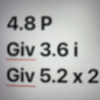
I am relatively new to Octopus smart tariffs having only had my smart meters fitted in September. I chose Cosy Octopus because of the 3 cosy periods spread throughout the day. I too am in SE England and my house faces SW. I have gas CH and HW, a 3.6kW solar array and inverter plus a GivEnergy 13.5kW AIO plus gateway. I initially chose agile outgoing, but quickly switched to Fixed because I can earn more.

Energy use is high because both my wife and I work from home, plus my wife has a 49sqm photography studio apin the garden which has an air sourced heat pump. My ovens in the kitchen and the studio are wired outside the battery circuits to avoid potentially overloading the 6kW AIO inverter.

I use HA and predbat to manage the battery and I try to time heavy loads (laundry and dishwasher) to cosy periods. I use HA to limit the heat pump in the studio to cosy periods and this is working ok.

My battery is charged as much as possible during cosy periods and predbat discharges is to 4% immediately prior to the cosy periods. This means that I benefit from the 15p fixed outgoing tariff. Coincidentally, predbat generally exports my excess battery charge from around 17:15 to 19:00 which means that when I am cooking, I am not paying peak prices, but consuming what would otherwise be exported.

In October, I paid an average of 12.54p/kWh for imported electricity. I have not calculated the net effects of exporting, so my overall costs will be lower and I guesstimate them to be around 10p/kWh once I calculate actual load excluding the exported units and then use that with the import cost less the export credit

O
#7 Ortwin

I've just changed from Octopus Intelligent Flux to Octopus Flux with my 5Kw Gen 2, 4.8 Kw panels and 19Kw batteries (2 x 9.5) as it seemed daft to import energy at a higher rate and then get it discharged with little profit. Now i charge at the overnight cheap rate and if i have any spare export 5/7Kw if I have any spare.