Heat Pump Installation Progress

138 comments started 2024-11-12 last 2025-05-29
Forums/Meta
R
#1 Roy124

Thought a progress report might be of interest.

Following the sales enquiry, payment of deposit, and site survey, installation was booked for 6 weeks later to fit with our diary.

Day 1 the first to arrive was Travis Perkins with a very large lorry to access a very restricted Court. Before he had unloaded an October van arrived - the first of four.
The installation team arrived in separate vehicles, fitter, plumber and electrician. They needed access to the UFH manifolds upstairs and down. They also need access to the toilet.
First lesson therefore is sufficient parking and toilet provision.
The fitter laid a plastic membrane through out the hallway.
In short order the gas boiler was removed and original plumbing isolated. Outside the fitter assembled a plinth block, set it in the prepared area, and set two mounts, two paving stripes about 6 inches wide on a bed of postcrete or similar. The plinth was filled with gravel (I didn't see and weed suppressant which he might have done) and the ASHP employed and levelled. Our hose reel was refitted.
Inside the plumber installed the hot water cylinder and new pipe work. The first to leave was the electrician, then the fitter, leaving the plumber to set up the hot water system.
It tripped the circuit. Power restored he plugged in the power, no trip, and left the system to heat before departing for the day. When I turned on the hot taps all I got was solder fumed air. Once water flowed it remained cold.
Second lesson, check that the immersion heater is actually drawing power using the GE App.

D
#2 DD

Roy124 Second lesson, check that the immersion heater is actually drawing power using the GE App.
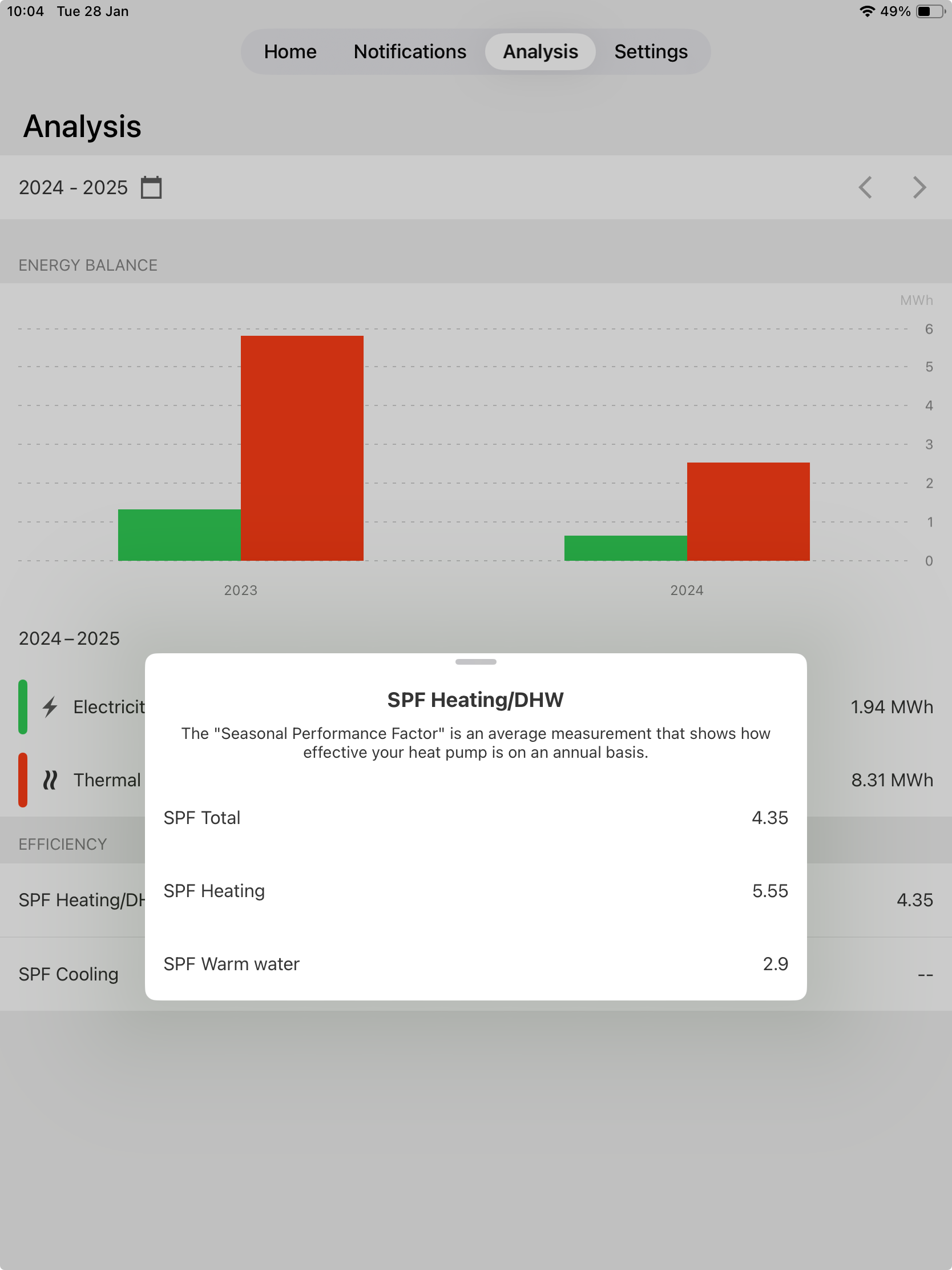
Yeah... our hot water during the install didn't work out quite according to plan.

We had assumed that old hot water tank would be taken out on first day, so turned off the water heating the night before. Turned out they weren't doing that until the second day.

Then after they had put in the new tank on the second day, they set up an electric immersion heater. I was a little surprised to see that they had plugged it into a 3-pin outlet - didn't think you could (should) draw 16A from one of those, so I decided perhaps it was a lower-power immersion heater they had put in. But clearly, it wasn't heating - turned out they had used an extension lead with an RCD, and that only had a 5A fuse in it, which had blown.

Next morning the bloke claimed he had used that same lead many times, but I'm rather dubious about that.

So three days without hot water. (But we had assumed we'd have no hot water for the entire duration of the install anyway, so not particularly bothered... Fortunately, we were lucky and got the install during a warm week in October.)

W
#3 wrefordj

DD Our HP was installed in the same warm week, I think. It went well because they changed the hot tank on the first day and the old immersion connection was still working. On day 2, the two plumbers/heating engineers prepped the HP installation and the hydraulic switching unit inside the garage. All was going well until day 3 when the electrician turned up and went off to get some relevant bits. His van broke down in the lanes near us so he didn't return until day 4. However, by the end of a long day 5, everything was working satisfactorily, and still is!
Main message to others: get a recommendation from someone who has used the installer first. If they can't provide anybody, be well aware...

R
#4 Roy124

Day 2 started with car park duties. We peaked at 6 vans by 10am including the gas fitter to remove the gas meter.

Once the electrician arrived he found that the trip the knocked out the house circuit had also tripped the tank thermostat. He replaced it.

He also chose a different wiring route. We now have hot water. Hot water within 10-15 seconds rather than the minute with the gas boiler.

Today much work wiring the ASHP, and plumbing it through the garage wall. Our garden hose reel and tap have also been resited.

One thing is becoming clear, the number of men involved in the installation, and the HO sales and technical services are not cheap. Given their quote of £9500 and a rough estimate of the equipment the profit element is small.

Finally, apart from toilet facilities, they are all self-sufficient with food and drink.

R
#5 Roy124

DD

wrefordj Main message to others: get a recommendation from someone who has used the installer first. If they can't provide anybody, be well aware...

Our installation team is Octopus in-house and we opted for their service plan which gives warranty for some aspects to 5 years.

It is also much less expensive than a local specialist who would require a preliminary visit, over £200, to ensure the work was to their standard.

#6 Hook

I have also just completed day 2 of my install.

Cylinder is all plumbed in and immersion connected, so hot water available. They also reused my tesla thermostat, so I can control the temp of the water in the tank.

All seven rads are on the wall although I don't think they're connected yet. Pipework is mostly run from the heatpump (cosy 6) to the water volumiser and water cylinder.

I also had 6 vans outside today, and my gas meter was capped and removed.

R
#7 Roy124

Hook have you got Cosy tariff yet. Got ours on Sunday

R
#8 Roy124

My fitters said Cozy 6 is easier to install with just 2 cables. They liked the Daiken

#9 Hook

Roy124

No I’m on IOG. So will see how I get on with that first.

Will depend on how quickly I empty my home battery.

R
#10 Roy124

Hook IOG is of course a different beast.

R
#11 Roy124

Day 3

Last night was the first practical hot water test. My shower was how from around 15 seconds rather than the previous minute.

Not as hectic today as before with the plumber, who we learnt is an ex-primary school teacher and now an apprentice plumber; this is his final plumb.

His work has seemed the major, certainly the longest, part of the job. The electrician had to wait until that area was cleared.

We have agreed that the original UFH room thermostats. Essentially the original system had loops from the boiler to the two manifolds with flow thermostats set at 45 degrees and each room controlled individually.

The new system will have one thermostat at the ASHP control as set, if I am right, at 28. Where a room previously was set for warming at 0700 for 0830 or so the much lower temperature will make more sense for continuous use. It will allow us to increase or reduce individual temperatures.

On domestics they use the toilet but it would have been impracticable to provide hot drinks as and when. They provided their own kettle and frequented our local Coop for Costa.

Obviously removing the old gas flue leaves a hole in the wall. They asked if I had any spare.
They were unable to get a matching brick. They adopted my solution which was to fit a dummy air vent.

Next lesson, if you can, get a matching brick to patch the hole.

R
#12 Roy124

Day 4

Bright Sunshine, one man turned up. At least he made himself useful pending the rest of the team. They are expected to pressurise the system, check for leaks, lag all the pipework and fire up the system. At least it is a bright sunny day. We have been lucky this week with good solar on 2 days out of 4.

The kit delivery included two pallets, one from Octopus with the system and one from Travis Perkins with the plinth material. The pallets are yours to keep or they will take them away. I am palleted out as I had previously made a potting bench and cold frame from previous spares. Plan ahead if you might be able to use them.

More of the team arrived by 11 and carried on tidying up. A waste collection service waggon came at noon and cleared away a lot of the rubbish but several sacks and cardboard boxes remain.

Plumbing had been completed on Day 3 with pressurisation and heating checks to do which were fine today. By early afternoon pipe lagging was progressing. The ASHP was bringing the HW up to Temp.

The electrician and the plumber understood the linkage to the old UFH manifolds but the Team Leader didn't. Finally the electrician made the final connections and lo, at 1630 our UFH system is running. Or rather the UFH Manifolds and valves all operated with each thermostat open seeking heat.

Sadly the system has a fault in both HW and Heating. The Heating is stuck at 19 degrees. Given a late start the team had a late departure when we thought we had heat but the faults remaining. The system is in Installer Mode.

Disappointing but hopefully they will get it fixed tomorrow.

R
#13 Roy124

Day 5

Overnight the heating maxed at under 20.

Plumber, lecky and team leader came and after ringing tech support discovered the wiring instructions for one component were wrong. It was rewired correct and the system was working. Commissioning then required a disinfection regime on the Hot Water system. That took an age.

I then got them to set up the 7 day schedules which will give us a start. HW in the morning and afternoon cheap rates. CH high temp about an hour in to the cheap rate and continuing until late at night, hang the cost.

Will see how that goes.

There followed a walk around the system, "what's that, what does it do, how does it work, what are the codes?" And who do I ring?

We are now on our own for 3 hours and the temperature is increasing slowly. Patience is needed, the house has been cold for 4 days, you can't expect instant gratification.

They cleaned up garage and out door area. I will have to fix the area around the ASHP plinth.

I have yet to receive the sign off or pay the balance.

W
#14 wrefordj

Nice reporting! And at least you seem to be operational before the cold spell next week...

R
#15 Roy124

The Octopus team was led by Costa who has been installing ASHP for 5 months with Ahmed the plumber just finishing his apprenticeship. He had the most difficult job (pipe work and blow lamp compared with the electrican, hammer and screw driver.) The 4th member of the team did the spade work, clearing up, lagging pipes, drilling or filling holes as required.

All in all, an uncomplicated task done well.

D
#16 DD

Roy124 We are now on our own for 3 hours and the temperature is increasing slowly. Patience is needed, the house has been cold for 4 days, you can't expect instant gratification.

Is it a Daikin? If you want, you can speed the process up by temporarily raising the "leaving water offset" in the Onecta app. Normally, weather curve means that it's generating exactly the heat required to maintain room temperature, but that's very slow to raise it.

I have things configured to allow the house to cool in the evening, and then in the cheap rate, raise the LWT so that the house can warm back up overnight. Otherwise, as you say, it can take an age (and still be going come daytime rate).

R
#17 Roy124

DD Daikin indeed. I will browse the manual and then come back for guidance.

R
#18 Roy124

I had a chance to browse the manual, all 185 pages, fortunately only the first 20 are in English.

I found DD's reference to leaving water temperature and Daikin's love of acronyms. One MMI is called user interface, true, but the installer did not know the acronym. I was able to enlighten him.

However my next_Journey into Space_ heating will be to learn WD curves, slope offset etc.

R
#20 Roy124

Had to callout Support this morning as the HW was stuck on its disinfection cycle. He made some adjustments and it now gets up to the 60° and finished its cycle. He also noted the HW/CH change switch was back to front and the HCI settings appeared wrong.

We were briefed by the installation team that the standing display was the room temperature and the setting should be 2° higher - ie room showing 18° and the setting +2° higher. He said the offset should be -2°. He altered the settings.

On the App I changed the setting to 23.5° and the room stats (in 20 minutes) seem to be increasing (possibly too early to see).

Is that the right way round?

D
#21 DD

Roy124 We were briefed by the installation team that the standing display was the room temperature and the setting should be 2° higher - ie room showing 18° and the setting +2° higher. He said the offset should be -2°. He altered the settings.

On the App I changed the setting to 23.5° and the room stats (in 20 minutes) seem to be increasing (possibly too early to see).

Is that the right way round?

Not quite sure which display you mean - the Madoka thermostat perhaps ?
One detail I picked up from other forums is that not only is the calibration on the thermostat a bit poor, but its own LED tends to throw the readings. So recommendation was to set the brightness to the dimmest possible setting.

You can also calibrate an offset for the thermostat - presumably to calibrate it. I think I have it set to -1.5 degrees, and that seems to match external thermometer now. Perhaps that's the offset you mean ?

R
#22 Roy124

DD my device is a Daikin, Human Comfort Interface or HCI, its purpose sounds the same. The -1.5

D
#23 DD

Roy124 my device is a Daikin, Human Comfort Interface or HCI, its purpose sounds the same

Ah, yes, that's the one... aka Madoka.

R
#24 Roy124

I do have a problem turning the wick up. The HCI shows a room temp of 18 but winding the system to temps above 20, even 26, does not get any room above 21.7 and that was the kitchen. The living room is at 21.5.

I don't know what I can do.

S
#25 SteveCook

Does the water temperature go up when you turn things up (will get less CoP).
Are the radiators fully open for max water flow?
Increase pump speed to circulate more water?
Bigger radiators!!!!

D
#26 DD

Roy124 To a first approximation, the HCI is just an on/off control - if the room temperature is below target, the heat pump is on. (There's quite a wide hysteresis - HP will stay on until room is 1.5 degrees above target, then switch off until room falls 0.5 degrees below target.)

There is a secondary effect - an installer parameter called 'modulation'. That can adjust the water temperature depending on how far away room is from target. But it seems quite a minor effect. I think temperature has to drift by at least 0.5 degrees before it does anything.

As @SteveCook says, the important thing is the water temperature. When things are set up perfectly, the heat pump is just replacing the heat the room is losing, so you wouldn't expect the room temperature to rise. So, longer term, you want to tune the weather curve so that the circulating water exactly compensates for heat loss, at any given outside temperature.

  • (To be a little more precise... it's replacing heat loss when room is at the target temperature, so if the room temperature is below target, the heat loss will be slightly lower, and if the room is above target, the heat loss will be slightly higher, so in both cases it will very slowly tend towards target temperature.)

Until then, you can adjust the water temperature using the Onecta app. From the home page, click on the upper box (which is your room temperature control), and then at the bottom, Settings, and then near the bottom of that page, 'Advanced Operation'. That will give you a slider which allows you to adjust the water offset. Increasing that will increase the water temperature, which will put more heat into the rooms.

I'm now using the API to adjust this offset to +3 overnight, to raise the temperature during the cheap rate, and then set it back to 0 at the end of the cheap rate. This gets the house back up to temperature overnight, after the late evening set-back. If you use Home Assistant, there's an Onecta integration which would allow you to do the same. You could probably get Home Assistant to modulate the water temperature with much more finesse than the standard controls allow. Eg I've noticed signficant difference in temperature when the sun is out - lots of South-facing windows - so might get it to reduce flow temperature by 1 degree when it's sunny. I'm sure all things are possible with HA. (But you don't have to use HA to do these sorts of things...)

R
#27 Roy124

SteveCook
I am looking at water temp, it's quite low. 35 or 36. I think I have tweaked it. I will look in daylight. I don't have radiators.

R
#28 Roy124

DD Advanced Operation'. That will give you a slider which allows you to adjust the water offset. Increasing that will increase the water temperature, which will put more heat into the rooms.

I'm now using the API to adjust this offset to +3 overnight, to raise the temperature during the cheap rate, and then set it back to 0 at the end of the cheap rate

That looks interesting. I don't think that had been changed. It was at +1.

I have set it to plus 3.

P
#29 pwdst

Roy124 If you have underfloor heating, all of the zones are on (or have been removed) and you still cannot adequately heat the rooms then you may need to experiment incrementally increasing the maximum flow temperature a degree at a time until the heat loss is balanced against the heat gain and the room becomes comfortable. Hotter water can carry and transfer more heat energy into a space, albeit at the cost of some COP efficiency. Do you have your heat loss survey documents and what was the design flow temperature? The document should show the expected output at those temperatures room by room.

If you set your flow temperature to say twenty then not only would less heat energy be carried by the system, the emitter output would be low and there would not be much heat transfer going on from your emitter into the space of the room to replace the heat being lost to the outside.

The Paris Olympic games actually tried eco friendly cooling by passing chilled water through pipes under the floor to draw heat out of the room and cool it. This might make the space very pleasant in July but would be a disaster in January.

D
#30 DD

pwdst Do you have your heat loss survey documents and what was the design flow temperature? The document should show the expected output at those temperatures room by room.

Don't those only show loss and flow temperature at design outside temperature (-2 degrees or whatever). Running at that flow all winter would generate much too much heat.

Heat loss should be proportional to temperature difference, but flow temperature isn't so simple.

R
#31 Roy124

@dd still learning.

pwdst 21 is indeed the design temp. Now to find the flow temp and how to set it

D
#32 DD

Roy124 Now to find the flow temp and how to set it

It's generally done through the weather curve - simplest is to set two values - perhaps 40 degrees when outside is -2, and 25 at 15, and then the system interpolates a straight line between them. Installer should have set up an initial curve.
Not sure what are appropriate values for UFH.

S
#33 SimonClarke

Shouldn’t this have already been set up?

R
#34 Roy124

SimonClarke Setup maybe, setup to to deliver the right temperature is something else. They probably set if to the design values whereas we need it higher.

R
#35 Roy124

DD Thanks you, seeing it set out like this makes more sense than the detail printed in the book. Now to put it in to practise now that it is -0°

S
#36 SimonClarke

Roy124 but don’t you tell them what temperature you need?

D
#37 DD

SimonClarke don’t you tell them what temperature you need?

There are enormous error bars in heat loss calcs. In particular, the air changes are a complete guess. So while installer can put in an initial guess for the weather curve, it very much needs to be tuned to actually match the house.

I'm currently just collecting stats - observing how room temperature responds to changes in flow temperature and outside temperature, and will tune weather curve later. (But what I have seems to be doing a reasonable job. Slightly high since room temp. generally increases throughout the day. But that's not so bad - means it's warmest when we're relaxing in the evening.)

D
#38 DD

DD simplest is to set two values - perhaps 40 degrees when outside is -2, and 25 at 15,

The first one would typically be the design values for coldest days, initially at least.

R
#39 Roy124

SimonClarke indeed, but only the plumber and the electrician seemed to understand.

S
#40 SimonClarke

DD if I pay someone a large sack of cash I would expect them to get at least somewhere near to my expected temperature and maybe just have to make minor adjustments which is what I have done - changed target temperature by a degree, alter running times for higher and lower temperatures by a few minutes and play around with dhw temperatures. All very minor. Maybe I’ll do some more as in keeping the same temperature 24 hours. We had some minor issues with leaks - a lot of new pipes and rads - but I didn’t have to fix them. Just think it is the installers job

D
#41 DD

SimonClarke Just think it is the installers job

I agree, but... when my HP was installed, it wasn't even cold enough to need any heating on. What opportunity do they have to tune the weather curve for an outside temperature ranging from -2 to, say, 15 ?

In principle, they can log the behaviour remotely, and then return to tune it once they have more data. In fact, I've heard that with the Cosy heat pumps, Octopus have access to a lot of performance data that isn't made avaiable to the end user, so they can keep an eye on it. Don't know if they tune the weather curve remotely.

S
#42 SteveCook

pwdst
_The Paris Olympic games actually tried eco friendly cooling by passing chilled water through pipes under the floor to draw heat out of the room and cool it. This might make the space very pleasant in July but would be a disaster in _January.__
Domestic radiators is a misnomer. The bulk of the heating is by convection, which is why higher output ones have more fins built on to them. Small surface area - high temperature difference room to radiator.
Underfloor heating really works as radiant heating, large surface area -low temperature difference room to floor.
To really understand (not wishing to belittle anyone), the human body "feels" comfort from more than just the thermostat reading. You can feel warm in the snow in the alps in a bikini with air temperature below freezing but the sun shining on you at so many thousand degrees. That is radiant heat.
Similarly sitting in 29 deg C air in shade under a palm tree with a gentle breeze is comfortable.
Comfort is a mix of a number of factors. Air temperature, radiant temperature, air velocity to name a few.
I have designed lots of underfloor heating systems that switch to cool/chilled water in the summer to give a cool floor. This is very effective as the floor is only a little cooler than the room air, but it draws heat from the body. The loss of heat from the human body gets it back to a comfortable place.
"The first statement of the 2nd law of thermodynamics - heat flows spontaneously from a hot to a cold body"

S
#43 SimonClarke

DD mine was put in at the end of August but only needed very minor adjustments to work today ( not done today but weeks ago). Perhaps I was just lucky but I still expect the installer to sort it. Actually contacted him yesterday as I suddenly got some weird looking numbers. Turned out to be a defrost cycle which I just hadn’t seen before. I don’t mind fine tuning but basic stuff should be sorted before they leave and get paid

#44 Hook

DD Good luck finding anyone on the Octopus Aftercare Line who can access the cosy 6 remotely. They just raise tickets for the engineers.

R
#45 Roy124

I have not commented as I got to grips with the Daikin system and fault analysis. The system was handed over on the 16th and failed on the 18th. The engineer came by 1030 and fixed the problem. It failed again yesterday (20th) and I cleared the problem. The same engineer came at 1230, did some checks, but with no fault apparent could only give me some advice. Today 21st, it was off again.

Each time we had the 7H05 (water sampling error) or 7H01 water flow error but that should automatically reset. but did not. The pressure was about 1.2 bar. Today, the overnight temperatures were still -3° but the pressure in the system had dumped as it should. I recharged it but still it failed to reset.

I persuaded the system to run using the engineer's advice to spray warm water over the front and back of the ASHP. For good measure I splashed some on the pipework too. It all worked.

Are there things that can be done to improve the system to stop this happening? If not, the lesson is clear; a heat pump that cuts off at a temperature near -5° is not fit for purpose. A blithe below -5° C is rare. That is nonsense as we will have had temperatures below zero for a week and it's only mid November.

S
#46 SimonClarke

Roy124 why do you think that the system should dump its water pressure? It was one of the few problems we had . It is called a leak!

D
#47 DD

Roy124 Today, the overnight temperatures were still -3° but the pressure in the system had dumped as it should.

What's "dumped" here ? Had the anti-freeze valves drained off some water, or something ?

R
#48 Roy124

DD I don't know enough to say YES but that is probable. I was told that the two valves between pump and garage wall could open and we would need to recheck the pressure. While we had the 7H05 and 7H01 messages before, this was the first time the pressure dropped to zero.

SimonClarke noted. Our previous gas system would also lose pressure over random periods. At one point a Grundfos valve was replaced and that cured the problem for a relatively long time. The frequency had increased of late. The other houses in out Close suffer similar pressure loss. No signs of leaks in our new system (yet). This time, it was not a gradual bleed buy a complete loss.

S
#49 SimonClarke

If the system was running why would it be any where near freezing? I thought the anti freeze valves (which we don’t have) were only to protect things when it is off? Otherwise why would it be cold? Sounds like it was already off for some other reason. Also only being -3 would make them very sensitive

R
#50 Roy124

Engineer tomorrow. They suspect faulty bypass valve?

I am away from home at the moment but temperatures downstairs are just below 20 although the thermostats were set at 22. Power draw suggest the pump is not running.

Just got 7H05 errors now, cleared by resetting.

I then started browsing the installation manual, fascinating. Do others have Glycol in their system? I see also the precautions for areas with low ambient temperatures which involve removing the back grill* and even putting a cover to prevent it being buried in snow. * The last engineer suggested spraying the grill with warm water. This morning it was certainly covered in thick rime ice.

W
#51 wrefordj

Roy124 Sounds like something is not working as normal. I have a Panasonic Aquarea 9kW pump and the last couple of nights have required several defrost cycles which removes all ice buildup. As far as I understand it, it reverses the flow of hot water from the indoor buffer tank until its temp sensors confirm no ice on the grill. It happens quite quickly if you watch it. Scandinavian counties have drier air so it's less of an issue.

R
#52 Roy124

wrefordj I think you are spot on which is why I have got Octopus to escalate the repairs. I was told that they did not use Glycol and temps below -5° are rare; we have just had 5 days below -3°. Last night, while the HP was working and the rear grill was solid with rime ice it was gone by this morning. The system however had failed once again.

It is one of those annoying things trying to fix a fault that is not apparent when the engineer is here. We have positive temperatures reaching sub tropical levels next week +12° even 🙂

If it works properly next week any fix today may or may not have fixed the problem. Only when we experience similar sub zero temperatures will we know.

One thing in favour of Octopus, there has been no request for the balance payment yet.

S
#53 SimonClarke

When you say it had failed do you mean it has lost pressure? If it does I would expect it to shut down ( don’t have the same make but it seems likely). I wouldn’t be paying them until you see it working in the cold again. Supposed to be 16c here at the weekend which wouldn’t put much stress on the heat pump. Normally if the system was fitted in the summer you would just pay up as there would be no way to fully test anything at low temperatures, but you have proven it’s not working at low temperatures so if fixed you need proof in cold weather that it is reliable.

R
#54 Roy124

SimonClarke failed as in the Norwegian Blue.

Seriously, it continually faults overnight with a low pressure fault (pressure is in the right range) or a water sampling issue. It is easy to reset it but in the hour before dawn it is not something I should have to do every day.

At some point this morning it failed with the water sampling error.

Just got a call from the Engineer. Not very reassuring as O has not passed on all the details.

S
#55 SimonClarke

No idea what a water sampling error is? Doesn’t like the taste?
So the pressure is not dropping?

R
#57 Roy124

I should add, they told the Engineer that the external thermostat had been disconnected

"Ah the one on the North side."

?? "Er no, it's on the South side in full Sun"

D
#58 DD

SimonClarke No idea what a water sampling error is?

I think water sampling might be when it circulates the water without running the compressor, to find the temperature. Eg if the HP turns off because it has reached target temperature, it circulates the water from time to time.
(In the settings, you can configure pump speed, and can choose to limit it only during sampling.)

R
#59 Roy124

DD thank you. You seem more knowledgeable than Octopus. Given the two fault codes one would think the solution should clear.

The Engineer today was delayed on a long job. I told him to cancel. He would have been the third engineer with each returning to square one. I have requested a new appointment on Monday.

R
#61 Roy124

wrefordj very useful thanks though in my case the water fault caused the system to stop. When I splashed warm water on it it had been offline for 4 hours or so. With temperatures around-3 it wasn't going to do a defrost easily.

With temperatures over +10 I will have to wait and see. Hopefully there will be an Engineer visit tomorrow.

As a note, I got a 7H05 error about 3pm yesterday when we were away from home.

R
#62 Roy124

After a visit yesterday morning by the original installer the ASHP has been error free for 24hr. After spelling out the symptoms by email Octopus believed the bypass valve was at fault. The valve was indeed leaking and was changed.

There are two issues that they still need to address. There is a sensor strapped to the pipe above the 3-way valve. They now wonder if it is in the right place.

The other issue is an external thermostat. The electrician fitted it high under a gutter on the South wall. Another fitter said it should be on the North wall.

They are returning next week.

Z
#63 Zakalwe

Roy124 The other issue is an external thermostat. The electrician fitted it high under a gutter on the South wall. Another fitter said it should be on the North wall.

If that's for the weather compensation, then it should be fitted on a north facing wall.

R
#64 Roy124

Zakalwe we first started looking at Octopus ASHP back in June. Our lead installer has been with them 5 months. The plumber was on an apprenticeship. The Tech who noted the thermostat had been with them 6 months. The one who said North Wall I haven't met but was on the money.

R
#65 Roy124

Spoke too soon. My 7h05 water pressure error returned.

Hopefully the last issue I have is the operating temperature.

The Daikin manual suggests -28. Octopus say -5.

At -5 it dumps the water from the pump. To me this sounds far to high a temperature.

Why so high?

R
#66 Roy124

Just to update: we have had 3 further callouts. About 12 days ago the installation fitter returned and changed a valve that the experts at Octopus had thought could be leaking and caused the fault. It was leaking and appeared to cure the problem. 36 hours later we had 3 7H05 errors in a few hours though it settled down thereafter.

The same fitter was to return the following week with an electrician to look at resiting the Honeywell thermostat and the external sensor.

In the event a new engineer turned up and did a complete system examination and fixed various settings with which he did not agree. He moved the bypass valve, replaced the Honeywell sensor and ensured the water flow was increased to the correct level. The system worked well until overnight but I spoke with him on the phone and he realised he had not set the Honeywell sensor to the right temp. I changed that and it all works.

Good points:

While all this has been going on I have not been asked to pay the balance. Plus 1 to Octopus.

The other good thing, I have learnt far more of the system with analysing the faults and discussing the working with tge different engineers. Better to learn when it's new than a failure in deep winter and having to get to grips with seeking help.

Tip 1: get the Octopus helpline number on your phone.
Tip 2: call at 0800 exactly else you will be on a queue.
Tip 3: message Hello@octopus.energy which will create a written trail

S
#67 SteveCook

I spent 40 years as a Consulting Building services engineer and was designing very large heat pumps systems in the 80s and 90s. (ASHP, reverse cycle, WSHP (Thames and Clyde)
For my domestic installation at home, I am happy to stick with my easily understood gas boiler until the wild west of heat pump installers settles down.

Hope you get it sorted

R
#68 Roy124

@SteveCook we are glad to get rid of our gas boiler for what is probably a trivial reason. They system would lose pressure at irregular intervals, summer or winter, and the first we would know was a cold shower.

To reset the pressure I had to clear a space below the boiler, change to a pair of reading glasses kept by the boiler, then using a torch peer up into the workings to see the pressure gauge.

The ASHP has a much more accessible gauge though why it is not at a higher, eye level, I don't know.

S
#69 SteveCook

Sounds like a faulty PRV (pressure relief valve) or your expansion vessel (did you have one) may have had a faulty membrane.
The expansion of the system water when it all goes from cold to hot has to go somewhere, and back when it all cools down. Years ago it used to be the F&E tank in the loft, but they seem to have all gone!
Lower temp of Heat Pump circuits may mean less expansion and less of a problem
Glad all is good for you though

R
#70 Roy124

An update. Today (3 Jan) I think we might have finally solved the problem though I need a few days before I am convinced.

The Daikin error code problem was fixed by one engineer who reset the system. Then, about 10 days ago the Climate Heating would stop though Hot Water was OK. At first it would work after a rest and then for 2-3 days. This meant we didn't actually freeze but Engineers did call. By yesterday I had got sufficient observations to identify the issue was the failure to switch to Room Heating after the early morning Hot Water heating.

The Engineer yesterday got the system to run but it needed an overnight run to prove the fault and that yesterday's reset had not achieved a fix. The focus was now firmly on the Honeywell Motorised Zone Valve.

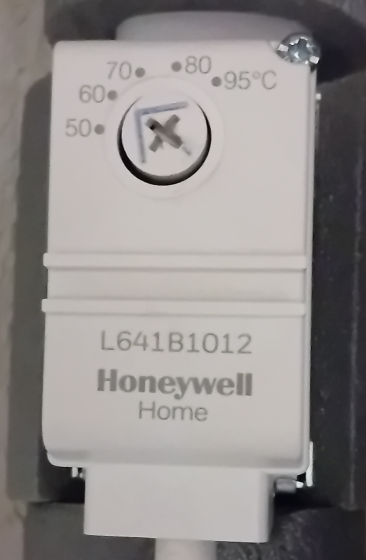
So far, a new valve had been fitted and moved to a different part of the pipework. The valve is controlled by a temperature sensor clamped to the HW Cylinder feed pipe. It is normally set to 50°C and intended stop very hot water being pumped through the UFH pipework. 50°C was the default setting. Today the latest Engineer found the sensor had to be set at 61°C or higher before the MZV would switch. He also moved the Honeywell value further up the pipework.

I think Octopus should write up a post-visit report so subsequent engineers can follow the diagnostic trail (and not rely on my memory). However I am much reassured that their emergency response has always arrived on the day and got the system working. Also, they are not pressing for the balance payment until I am completely satisfied.

One final note, I was asked to fill out a short report for MCS "MCS, which is the UK standards organisation that allows for the certification of renewable products, installers, and their installations." They may also send out an inspector if you are willing and they have one in your area. You are not on your own with just the supplier.

R
#71 Robgy

SteveCook Years ago it used to be the F&E tank in the loft, but they seem to have all gone!

Does anyone know why most systems are moving to a pressure system which needs to be serviced annually? Our copper cylinder has never been serviced and the expansion tank has only needed one ball valve washer in 30 years... It just works without any attention!

S
#72 SteveCook

Well with multi tenanted buildings it allows (allowed - now gas is going) for each tenant/apartment to have a small boiler without needing a roof F&E tank(s) and pipework passing though other residences etc.
Having each tenant having their own boiler also moved all the landlord obligations (heating/hot water/maintenance/billing) directly to the tenants.

In a standard house it saves on a tank in the roof and reduces the amount of pipework making installation easier/cheaper. Some houses these days dont have lofts and really at 80 deg C water (boiler can do that), the tank should be about 3m above the highest system point to prevent cavitation at the pump and across valves .

I would prefer an F&E tank but we moved to a bungalow, and I have to check/drain/fill my expansion tank every year

R
#73 Robgy

SteveCook making installation easier

As far as I can see easier installation appears to be the main reason, a one off labour time maybe saved during installation but at what cost for the life of the pressurised system needing annual servicing by a G3 plumber.

R
#74 Roy124

Robgy I note you had a copper cylinder and an expansion tank (header tank) that did nit require servicing. In our last house I never gave our header tank a thought apart from ensuring feed, inlet and overflow pipes were properly lagged. The cylinder OTOH was a different matter. If had an immersion booster than we rarely used but the water heating was not via a secondary coil but direct feed though its own gas boiler. The latter was new (only 19 years when we sold the house) and serviced by our regular plumber as required.

Home heating OTOH, was a system that definitely required both annual servicing and on-call repair throughout its life. We paid BG around £40 per MONTH to maintain our warm air system. Over its life it required several new circuit boards, a completely new flue chimney, new burners, and a new fan system. We needed British Gas as we could not find any other Gas Engineers that would touch it. Over the 19 year life of this system we spent a fortune but still had a 'new' system at the end.

Returning to the copper tank, it did not have modern foam lagging and over 30 years we had to replace the tank twice and it developed pin hole punctures. It weeped rather than a spurt and would soak the flooring and joists but at such a rate it was absorbed and evaporated rather than flooding the house.

Anyway, the annual service, about £99 per YEAR, from Octopus will cover more than the tank but the fan motor and other valves which I think is not an unreasonable fee. Before we agreed the maintenance plan I checked a local plumbers. Their fee was 3 times that as they also needed to assure themselves that the installation was sound.

#75 Windy Miller

Robgy We changed our hot water to a pressurised system primarily to improve the water pressure for the 2 showers. The upstairs one used to dribble out even though the cold tank was in the loft. Secondary advantages were a better specified cylinder (larger with better insulation) and no loft gubbins required (cold tank nor expansion tank).

Servicing is only re-generating the air gap which is a 10 minute procedure printed on the side of the cylinder (Megaflo). Most of what the industry do during a service is making sure everything is working as it should thus giving peace of mind. My peace of mind is knowing for myself it is working correctly (but then I have an engineering background).

R
#76 Roy124

Latest update. Since commissioning on the 15th Nov we have had 8 different engineers out to resolve faults such as 7H-01, 7H05 and 7H-06 on the Daikin ASHP. At least fault codes give them something to fix. The first two faults were cleared about 3 weeks back the 7H-06 being a new fault. The last engineer gave the whole system a check over including the ASHP Filter. As there are few metal components in the system blockage was not expected and everything was clear.

He replaced the pressure relief valve for a different and better model - second replacement. He also replaced the CH/HW valve again, this to one that operates in the opposite sense to the previous two.

The fault now is one that the previous engineer, the 7th, had identified. This is the Honeywell temperature sensor that controls the CH/HW valve. The sensor is marked 50° to 95° and the recommended setting is 50°C to ensure the UFH is not too hot to damage the floor tiles.

The problem was a 'no indication' failure for the system to switch to CH. Our first indication is a drop in room temeperature. He found that 60°C worked and we could hear the valve 'crack'. The 8th engineer reset it to 50°C. After a failure three days later I tweaked it to 55°C. The failure recurred again a few hours later and I tweaked it further to 60°C.

Either the calibration on this sensor is not exact or it needs replacing. I will be speaking with the Heat Pump Tech at Octopus tomorrow.

Two points of note: Octopus has not requested our final payment yet which is good. Not so good, in my opinion, is the failure to assign one engineer to follow the fault through.

B
#77 Blasteh

Anyone have a heat pump install alongside an AIO system? Where is the supply for the heat pump attached?

R
#78 Roy124

Blasteh Not AIO, but the HP is wired directly to the fuse box. Four extra junction boxes appeared. One outside by the HP, and other outside by the Electricity box, a black one near the tank system and a white one that controlled the HP inside as well.

B
#79 Blasteh

in the middle of an install at the moment, octopus won't connect the supply from behind the gateway; they are splitting the incoming supply and going directly to heat pump.
It means my solar/battery will not know about the heat pump power draw and won't supply it.
They suggested I get another electrician to sort it.

R
#80 Roy124

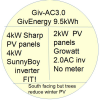
Blasteh As I understand it, my PV, which was installed in 2023, is wired via its own meter to the main box which also has a Smart meter and it is this that Octopus uses to determine costs. The change over grid-Pv-battery is handled automatically via the Inverter.

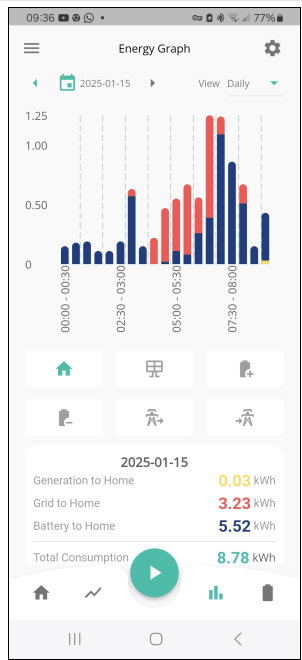
The ASHP is independently wired to the electricity meter as the pump is an 8kW model. The inverter can supply up to 2.6kW. I have attached today's Givenergy panel:
The battery was charged last night at cheap rate until midnight. From midnight the battery provided for demand. At 0300 the battery was topped up by the grid. Battery top up was available until 0700. The red sector shows grid supply to both battery and ASHP. At 0830 peak demand (3 kW kettle) showed grid supply. Any ASHP demand has been from battery.
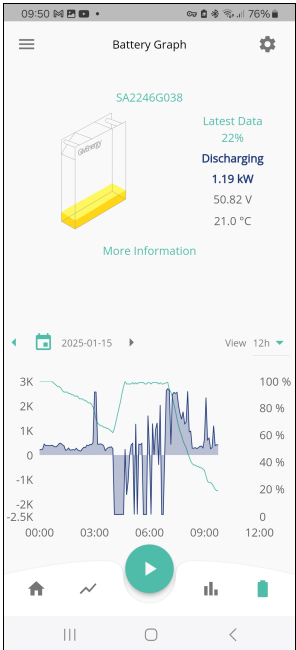
The next image shows the battery status alone. From midnight a constant draw down until 0300 when the grid topped up the battery. From 0700 the battery has discharged steadily to meet home and ASHP demands. The battery has a max 5kW.

I don't think you have anything to worry about. I suggest wait and see.

R
#81 Roy124

@Blasteh a couple of questions so I might have additional info for you.

What kW ASHP are you getting? What kW PV and battery do you have? What heating system will you use?

B
#82 Blasteh

Roy124 it's a Daikin system being installed, should be 4kW or thereabouts (heat loss is 3.5kW)
I have 5.2kW PV and a GE AIO
just regular wet heating system with radiators, no UFH

I just spoke to my original installers and am trying to convince the electrician on-site to connect it up so the AIO gateway can see the heat pump.

R
#83 Roy124

Blasteh take the electrician away somewhere quiet and talk through the issue. I certainly got more sense from when he was away from the installation team leader.

I don't think you have an issue.

Start at the Grid input, ie the meter box. The PV and battery feed in to this box. Home demand is fed from the box and uses the PV/Battery input rather than the grid. The ASHP will draw from the box too. That is my understanding too.

Get him to work through the various routings. I think the issue is he is 'closed' to the solar side and concentrating in the ASHP alone. Get him to work the whole thing through with you,

What tariff are you on at the moment? During the install they will be using lots of power to heat up the system regardless of tariff rates. While Cosy is only 12.477kW 1300-1600 it then jumps to 38.165p at 1600 to 1900. Sods Law is when the installers will be drawing most power charging the system. A standard tariff might be cheaper. Octo can switch quite quickly if you ask them.

B
#84 Blasteh

Roy124 he seems to be very by the book and I don't think his colleagues being around is influencing his decision. His reasoning is that he doesn't want to screw it up and have it come back to him; so he's trying to get authorisation to proceed with what my solar installer is proposing.

I'm already on cosy as I have an a2a system in a couple rooms. I would have been fine with the immersion heater drawing from my AIO last night except that it went from 100% to flat while only providing about 8kWh .. typical.

#85 Watcher

Blasteh

Completely off topic, but, I have a year old A2A system and am thinking about a wet HP system to to replace Calor from Octopus but thought I might have to remove the A2A to get the 7.5k grant. Can you pm me (not sure how) or drop a comment, please. Thanks.

B
#86 Blasteh

Watcher I don't think it's a requirement to remove the A2A system, the grant is specifically for removing gas boiler and replacing with a a2w heat pump.
If you've already contacted octopus (or whoever) to quote for an installation they should be able to confirm.
The subject of removing my a2a was not even suggested.

Back on topic about this install though, the on-site team were unable to get the go-ahead from their management to modify the electrical hookup to be behind the AIO Gateway.
I'm in contact with someone at octopus and will see if they will be willing to come back at a later date to change the connection by sending someone who is solar qualified.

As a warning to others, make sure you discuss how the electrical feed will be connected during the planning phase, as it's not in writing, the team will not do it.

R
#87 Roy124

Through careful management my electricity charge is 19p/kW this month. Solar input has been negligible. I charge my 5kW battery to 100% during the Cosy cheap rates and it generally carries me through 90 -120 minutes of the expensive power rate depending on cooking demands.

B
#88 Blasteh

Final word is that they will not change how the heat pump is connected to the supply, so it will be at my cost to rectify it after they're gone.

R
#89 Roy124

Blasteh probably fair enough. Just watch how it actually works as I have had no issues as far as battery and solar being used by the ASHP.

A
#90 andydsmith

Watcher I have an air to air heat pump and an air to water heat pump from Octopus. There was no issue getting the grant, but we did need planning permission due to the presence of the air to air unit. Octopus did the planning application for us. I think the rules on permitted development for heat pumps have now changed and planning permission would no longer be needed.

R
#91 Roy124

I had a look and found this:

Heat pumps must still pass an MCS noise impact assessment to ensure they won't disturb neighbors
Current noise regulations restrict heat pump noise to a maximum of 42dB within 1-meter of a neighbor's windows.

My assessment came up with 62db from a 'bedroom' window about 8m away. We determined the window was actually a bathroom and persuaded them to fit on our preferred wall.

Curiously their chosen wall had the ASHP facing their property directing cold air towards their patio. We managed to get it installed on our preferred wall and directed away from them.

Always worth challenging the survey.

B
#92 Blasteh

andydsmith yep, I started the process back in october? but we waited it out and the rules changed so the planning permission wasn't needed.

R
#93 Roy124

Latest: System has now been operating fault free for 2 weeks and only today, now I am satisfied that it is probably working has Octopus asked if they can send me the final invoice.

Still too early to determine the relative consumptions as the first 8 days of this month had fault days. December appears to be 3.52 gas to electric and January only 2.79, certainly worse than suggested. With a unit cost difference 12.4p/kW and a saving of 29.43p/day standing charge the difference gas to heat pump is not too bad.

Now that the system is functioning properly I have started to weak the battery management and the ASHP settings. The battery is now charged to 100% by the end of each cheap period rather than at the beginning. I have fitted a new thermostatic shower (provided free though our previous one was out of warranty) which allows a lower HW temperature.

The heating cycle has now been trimmed back to shorter periods before use for morning and evening showers. The Eco heat setting has been trimmed back from 48°C to 45°C with reheat now 43°C. This will make more heat available to the heating system and reduce the draw for HW.

What HW settings are others using?

D
#94 DD

Roy124 What HW settings are others using?

We don't need that much hot water, so comfort is about 46, eco about 43, and reheat turned off. Then heat to either eco or comfort depending on anticipated use for that day. (Not sure it makes very much difference...)

My (Daikin) HP doesn't seem to cope very well after defrosting, so on very cold nights, I've been using immersion rather than HP. But if you're on Cosy, probably makes sense to heat the water during the daytime cheap rate - because I'm on IOG, I'm incentivised to heat water at night, even though the air temperature is lower then.

B
#95 Blasteh

Roy124 What HW settings are others using?

I'm using HA to set the hot water temperature to fit the cosy tariff,
45°C from 4am-7am
49°C from 1pm-4pm
50°C from 10pm-midnight
40°C outside of these times

I've had to set the hot water mode to reheat only for this to work, you can't set the temperature when it is in schedule+reheat mode.

DD My (Daikin) HP doesn't seem to cope very well after defrosting,

Mine doesn't seem to have an issue with defrosting, it will only need to do it while heating hot water, and it only lasts a 5-6 minutes at most while it is 0°C outside.

Also tweaked the legionella cycle to run during cosy period, otherwise it's £££

R
#96 Roy124

DD We don't need that much hot water, so comfort is about 46, eco about 43, and reheat turned off. Then heat to either eco or comfort depending on anticipated use for that day.

We are low usage too. I can certainly shift my overnight heating earlier as we have only dropped 2 deg in 6.5 hours. If I do a second heat in the 1300-1600 period that will certainly carry through to my evening shower around 2200.

Our setting today is 45°C, will see how that works out.

S
#97 SimonClarke

Hot water set at 52c. No legionella cycle. I tried setting it lower but swmbo put in formal complaint about insufficient water for a mega bath at the end of a day so in the interest of not being complained at I put it back. Heats up in the IOG period. House still at 21c throughout with cop of 4.35. Only noticed defrosting once as I just happened to look at the app when it was doing it. No idea how often it does it. Made nice icicles when it was cold!

R
#98 Roy124

SimonClarke Only noticed defrosting once as I just happened to look at the app when it was doing it. No idea how often it does it. Made nice icicles when it was cold!

I had rather more experience of the deicing cycle as I had to pop out to the reset the system with water flow errors. Looking on line, it seems it can deice up to 4 times per hour and take 2-3 minutes each time. One engineer suggested speeding up the cycle, if you notice or have a problem, by spraying water over the grill at the back. Seems counter intuitive but water at 10°C to 15°C is quite warm enough to melt the hoar frost.

R
#99 Roy124

SimonClarke House still at 21c throughout with cop of 4.35

How do you measure COP?

S
#100 SimonClarke

Roy124 I don’t but the app (Viessmann) does. Just waiting for the latest Octopus bill to compare with last January with oil. Really need a full year but I can do some guessing

R
#101 Roy124

SimonClarke yes similar here. Had to do some averaging etc.

Have two comparisons, one is a straight monthly energy bill comparison with no adjustment for costs of energy differences. The difference month to month is about 7.5% higher.
The other is a direct comparison gas kW against electric kW. In the case of electric I have deducted the monthly average kW from the latest. This will give a closer comparison I hope. Two things that I can't factor in are weather variance and holidays.

One other I have just remembered is my grand daughter boarded with us for two terms last year. As a clean freak she enjoyed a steam bath or shower every evening.

S
#102 SimonClarke

Roy124 November was about £45 more than November 23 and December £60 more. January has been colder so I expect it to be a bit more. Bill due in the next couple of days. In the same period pre ashp we would probably have used approximately 750 litres of oil at about £500 so looking good so far.

S
#103 SimonClarke

Forgot to say that includes the car

R
#104 Roy124

Yes oil to air is excellent

R
#105 Roy124

SimonClarke found the Daikin App, Insights, gives me CH and HW breakdown. Comparing last year's Gas the COP for January is only 2.15 so far. December looks to be 3.61. I think our COP is low because SWMBO wants the house at 23°C.

We will see how cutting down HW schedule to just 3 hrs in the morning affects it. Yesterday it was still 42°C at 2200. Today will be untypical as we had the conditioning cycle this morning.

S
#106 SimonClarke

Roy124 the house is set for 19 and 18c but in reality it’s between 20.5 and 21.5. Hot water is 52 c no legionella cycle. I have a shower pretty much every day and yesterday sw mbo had a nice long swim. The app was showing the dhw as being 14c afterwards but it was still hot enough for washing up etc so I don’t think it’s much use.

For some reason the dates are wrong but these are the numbers since fitting Aug24

R
#107 Roy124

SimonClarke I am curious about how to cancel the legionella cycle as Daikin assures me that it will run even if the system is selected to holiday mode.

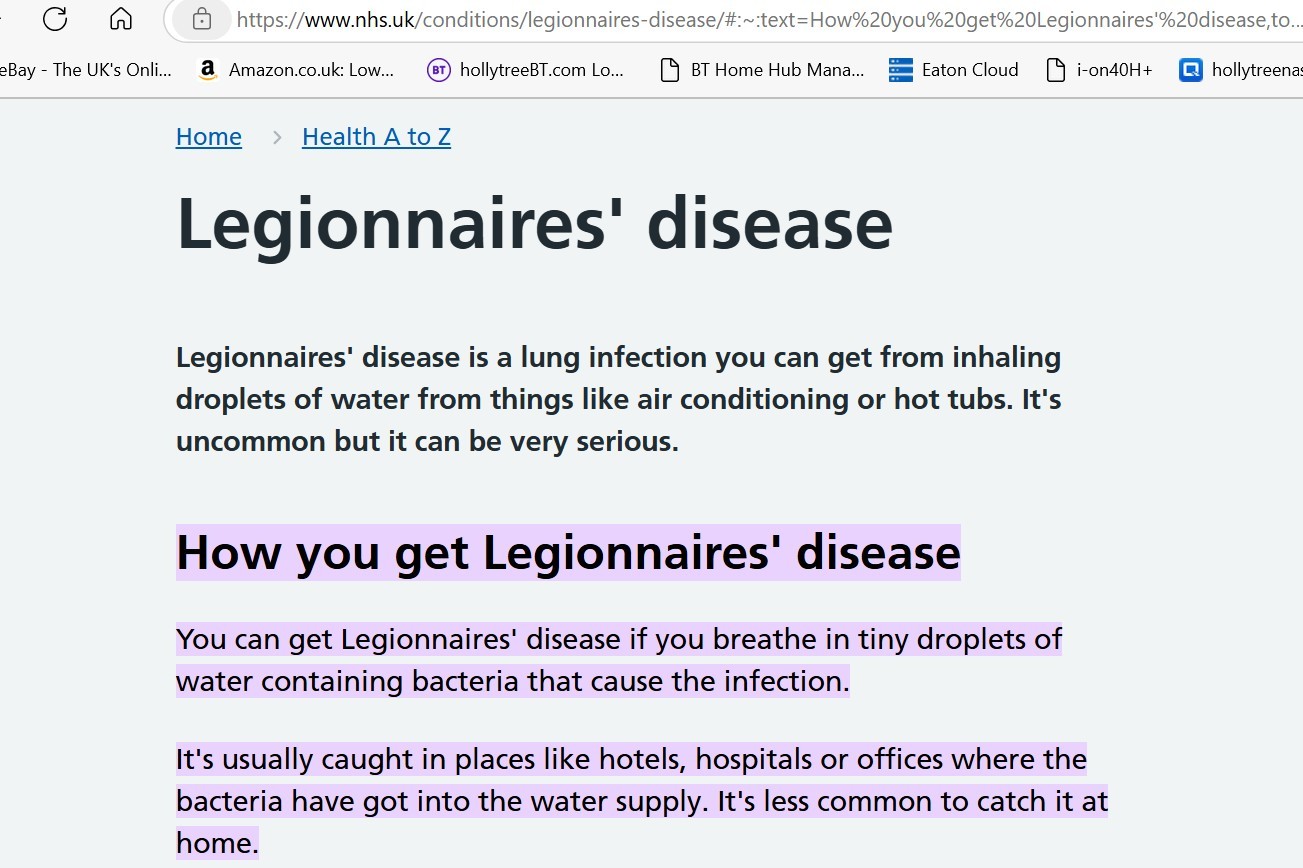
I certainly intend to retain the cycle. Some years ago I was on a course at the Medway Campus at the end of the summer period before the next semester began. It was stinking hot in London and my trip out to the campus. I stripped off and had a shower. Then I ran the wash basin tap to get a glass of water. The water literally ran black. The following week I saw my GP as I had a fever. After a further week I was no better and went back. I suggested it might have been legionaire's. He immediately rejected that notion.
I believe he was saying that to cover up his initial mistake. He returned to India not long afterwards.

S
#108 SteveCook

Legionalla is in most water around us. We can drink it and it passes straight through the body without issue.
It becomes a problem when in water in an aerosol form and gets into the lungs.
I suspect it was bacterial growth in the water you saw and some sort of stomach sickness, but probably not (legionella) Legionnaires Disease.
Still a good idea for regular Pasteurization cycle to kill anything that might be in the water/system.

H
#109 Henry3rd

Legionellae is not normally a problem provided the water doesn't lie dormant for too long. The HSE has stated that the risk is when water is nominally colder than 45 deg. I would personally give it a high temperature run following an extended holiday.

From the HSE
_When water systems can be at risk
Any water system, with the right environmental conditions, could be a source for legionella bacteria growth.

There is a reasonably foreseeable legionella risk if your water system:_

has a water temperature between 20–45°C
creates and/or spreads breathable droplets, for example aerosol created by a cooling tower, or water outlets
stores and/or recirculates water
is likely to contain a source of nutrients for the organism to grow, such as rust, sludge, scale, organic matter and biofilms

S
#110 SteveCook

NHS website

H
#111 Henry3rd

Turning on your garden hose with a spray attachment in the summer without doubt will be blitzing your lungs with Legionellae.

S
#112 SteveCook

Henry3rd
Will certainly spray it about, but I am not sure that gets the droplets small enough to get into the lungs to cause a problem

S
#113 SimonClarke

Any way it normally gets to over 52c every day and is used every day. I agree that I would run a legionella cycle if we are away for any time such as a week’s holiday.
On the Viessmann app it can just be turned on or off.

B
#114 Blasteh

Roy124 you can change the settings for it in the installer profile
go to User Profile -> enter 5678 as the code
once you're done, you can go to User Profile and enter either 0000 or 1234 as the code to leave installer mode.

C
#115 CW

This section is from the HeatGeek video on this topic - might be of interest

#116 Judith

Roy124 we use 48C with a re-heat below 41C in the cosy afternoon slot. Plus just in case we shower mid evening there’s another run at 10:30.
For two if us with a 200L tank the 4th shower in the morning was Luke-warm without the evening re-heat option.

R
#117 Roy124

Judith very useful. We have a 250l tank, more than sufficient for the two of us.

This morning we had the disinfectant cycle. My wife had a shower and the temperature was down to 58C. Now it is 53C. I shower in the evening about 10pm. I am happy with 38-40.

At the moment i have set 45C in the 0400-0700 period. Will have to see how that works tomorrow.

Might need to up the morning temp is 2200 is not warm enough.

S
#118 SimonClarke

Roy124 but is the water actually the temperature being shown because ours is very pessimistic

#119 Windy Miller

SimonClarke I use a separate probe on the hot water outlet pipe on the cylinder to monitor the actual temperature of the hot water. Currently it is showing 53oC but it occasionally shows up to 58oC when the bath/shower is running and the water has just been heated (early morning 6-7am once a day). My wife prefers the higher temperature when doing the washing up but this also doubles as a daily legionella prevention cycle. The bath/shower uses mixer valves such that the temperature at the shower head is generally between 35 and 40oC (adjustible).

S
#120 SimonClarke

I'd like 3 sensors on the tank I think to get a better idea of how much is left. In the early days I told swmbo she had to wait for it to heat up again after I had a shower but now realise that there would have been plenty even if she wanted to use the 3 meter board for diving into the bath! I wasn't popular at the time. We haven't actually run out at all.

R
#121 Roy124

SimonClarke I am well aware of the difference between set and achieved values, this also applies to my shower. It will have the same variance of leaving water temperature (shower control) and delivered temperature as it hits my little pink body.

The displayed tank temperature now is about 6 degrees lower that it was this morning 10 hours ago. If it drops another 2 degrees before my shower this evening it will still be comfortable for me.

As it was the disinfection this morning the starting temperature is much higher than normal. Tomorrow, to have a chance of +40 by tomorrow night I have reset my Eco setting to 50.

Just found we will have guests tomorrow so another 'non standard' day.

H
#122 Henry3rd

Well....my heat pump install has just been aborted.
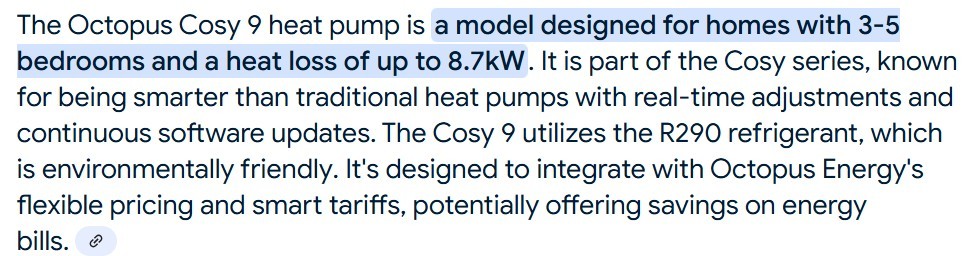
It seems that my house load with the additional cosy 9 could theoretically exceed 100amps, which is the maximum the DNO will allow on a single phase supply. Given its a four bedroom bungalow, I wonder how many other schemes will have, or indeed should have been an issue?

S
#123 SteveCook

Henry3rd
Are people on site actually installing?
Was this identified during the survey/design/quote stage, or has it left you in the lurch?
100A is about 23kw electrical power.
A heat pump with a CoP of say 3 will be delivering over 60kW of heat energy.
I doubt you house ever uses a lot of big electrical power from the 23kw (oven ,toaster, kettle etc),
What is your calculated house heating/how water load?

Say Cosy 9 delivers 9kw heat output. at CoP of 2(poor), that is 4.5kw of electrical input =20A.
How can that be impacting your 100A supply rating?

H
#124 Henry3rd

The surveyor was not given the knowledge or the tools to undertake a load assessment. The issue it seems is that I have 4 lighting and 5 power circuits which could theoretically push up the overall house load.
We did a real time Christmas dinner test which turned on all the appliances; cooker rings, oven, microwave air fryer as well as the dishwasher, toaster, TV and all the the lights. Although unlikely is a once in a year possibility.
This did not include the immersion heater. This produced an instantaneous peak of 80amps.
I suspect there could have been a blind eye approach to some of this but to be honest I am so marginal as to affordability (7.5k after the grant) that that additional albeit unlikely scenario of tripping fuses during the festivities has left me with little desire to proceed.

R
#125 Roy124

[unknown] , indeed outside chance, once in a hundred years seems to the ONE. next year.

R
#126 Roy124

Henry3rd , indeed outside chance, once in a hundred years seems to the ONE. next year.

There is one thing wrong in your assumption, that is the immersion heater. Generally the ASHP will drive heating or water but not at the same time.

There is an immersion heater but we have never used it. If you do have lots of guests and hot water needs, it is likely you need the immersion at the same time?

A
#127 Ange

[unknown] That's a shame to have to abort your install. We already have an ASHP, but are looking to install an EV charger too. I didn't realise before that the DNO had to sign off on these things. We have a DNO surveyor booked in this week to check it out. Fingers crossed we don't push it over the limit too.

A
#128 Ange

Henry3rd That's a shame to have to abort your install. We already have an ASHP, but are looking to install an EV charger too. I didn't realise before that the DNO had to sign off on these things. We have a DNO surveyor booked in this week to check it out. Fingers crossed we don't push it over the limit too.

H
#129 Henry3rd

Ange As I understand it the DNO doesn't need to sign off the scheme but has set the maximum domestic incoming property fuse at 100A. With full electrification of properties and the incentive of hammering the free agile periods feeding perhaps multiple inverters, batteries and EV's, I can see this being a limitation going forward.
Larger properties will probably need to be on a three phase supply.
I could have probably lived with the remote chance of a fuse tripping but I didn't feel very incentivised to do so.

D
#130 DD

Ange some EV chargers (eg zappi) can monitor total incoming current and curtail output to ensure it doesn't exceed fuse limit.

#131 PianSom

DD some EV chargers (eg zappi) can monitor total incoming current and curtail output to ensure it doesn't exceed fuse limit.

I had issues with current monitoring with my zappi. It used a harvi at my CU to measure current and limit the car charge if the current got high.

But I didn’t know that the harvi has a 65A limit. So when my twin AIOs were charging the zappi would slow to a trickle charge on my EV even though I have a 100A fuse and a 17-18kW limit at my Gateway.

D
#132 DD

PianSom But I didn’t know that the harvi has a 65A limit. So when my twin AIOs were charging the zappi would slow to a trickle charge on my EV even though I have a 100A fuse and a 17-18kW limit at my Gateway.

The fuse size is configurable on the zappi. But note that 100A fuse does not mean you have an agreement for a 100A supply, it's just there to protect the equipment. I think standard domestic supply limit is around about 65A (for single phase).

#133 PianSom

DD
Interestingly, my DNO (UK Power Network) website is quite consumer-friendly, and they will quite happily quote for the installation of a 100A fuse if you enter details which require one here - https://smartconnect.ukpowernetworks.co.uk/w/webpage/fuseupgradechecker

(Don't enter TOO much or they will say that a 3-phase is required.)

Why would they do this if there is a domestic limit of 65A?

M
#134 mrand31

When I had our heat pump installed, the installers got the DNO to upgrade the 60A fuse to 80A. I hadn't known that they had done this and pointed out that the 6kW heat pump would only draw 2kW more than our current maximum demand. As it stands, we export more than we import...

The lads from the National Grid did say at the time that they don't upgrade properties to 100A except in special circumstances.

My incoming feeder is 16mm2, which is adequate for the fuse rating.

#135 Tenkaykev

Our planned Heat Pump install ( 6kW Daikin ) documents said that our 60A fuse would need upgrading. After the other checks were completed ( asbestos survey, EPA ) I asked when the fuse upgrade was scheduled for. Octopus then said that the DNO had said that it wouldn't need to be upgraded after all. I'm still leaving the access panel open ( original mains fuse had been enclosed behind plasterboard in the kitchen wall ) in case they change their mind.

R
#136 Roy124

Ange We already have an ASHP, but are looking to install an EV charger too

When you do, I am sure people will be interested in the tariff you chose. The EV charge rate is half the ASHP charge rate offer which itself is half the standard rate. If you EV usage is low the Octopus Cosy rate may be best. If EV usage is high it might be better to pay ASHP standard rate. Either way battery storage is essential to carry you through the peak usage period in winter.

A
#138 Ange

[unknown] Ah yes. I haven't done the calculations yet, don't want to jump the gun, but I'd been thinking the Cosy tariff may still be better in the winter. We definitely use more heating than we would do car charging.

A
#139 Ange

Roy124 Ah yes. I haven't done the calculations yet, don't want to jump the gun, but I'd been thinking the Cosy tariff may still be better in the winter. We definitely use more heating than we would do car charging. Apologies if this posts twice!!