Powering battery to grid?

7 comments started 2024-11-22 last 2024-11-22
GivEnergy Products
C
#1 Coy

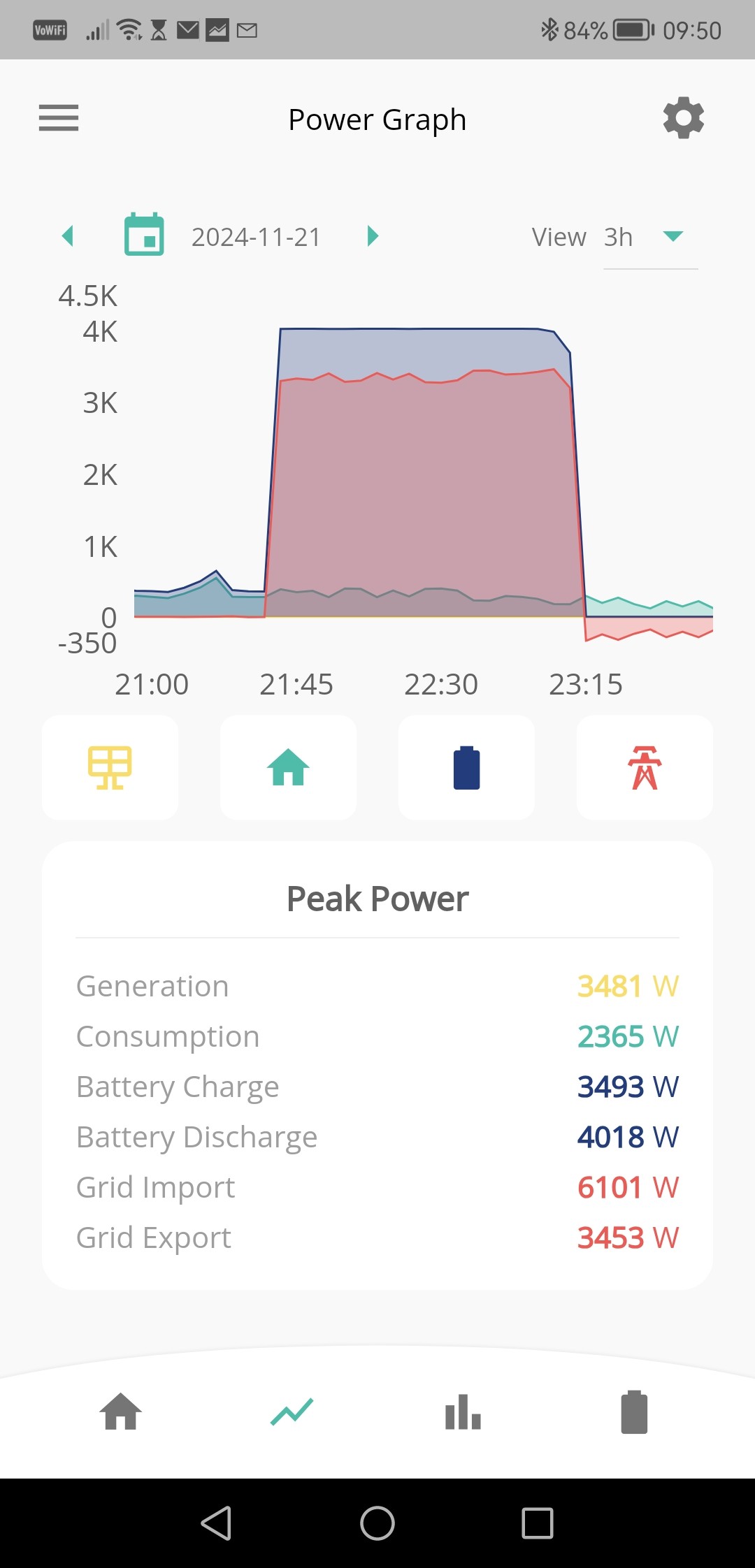
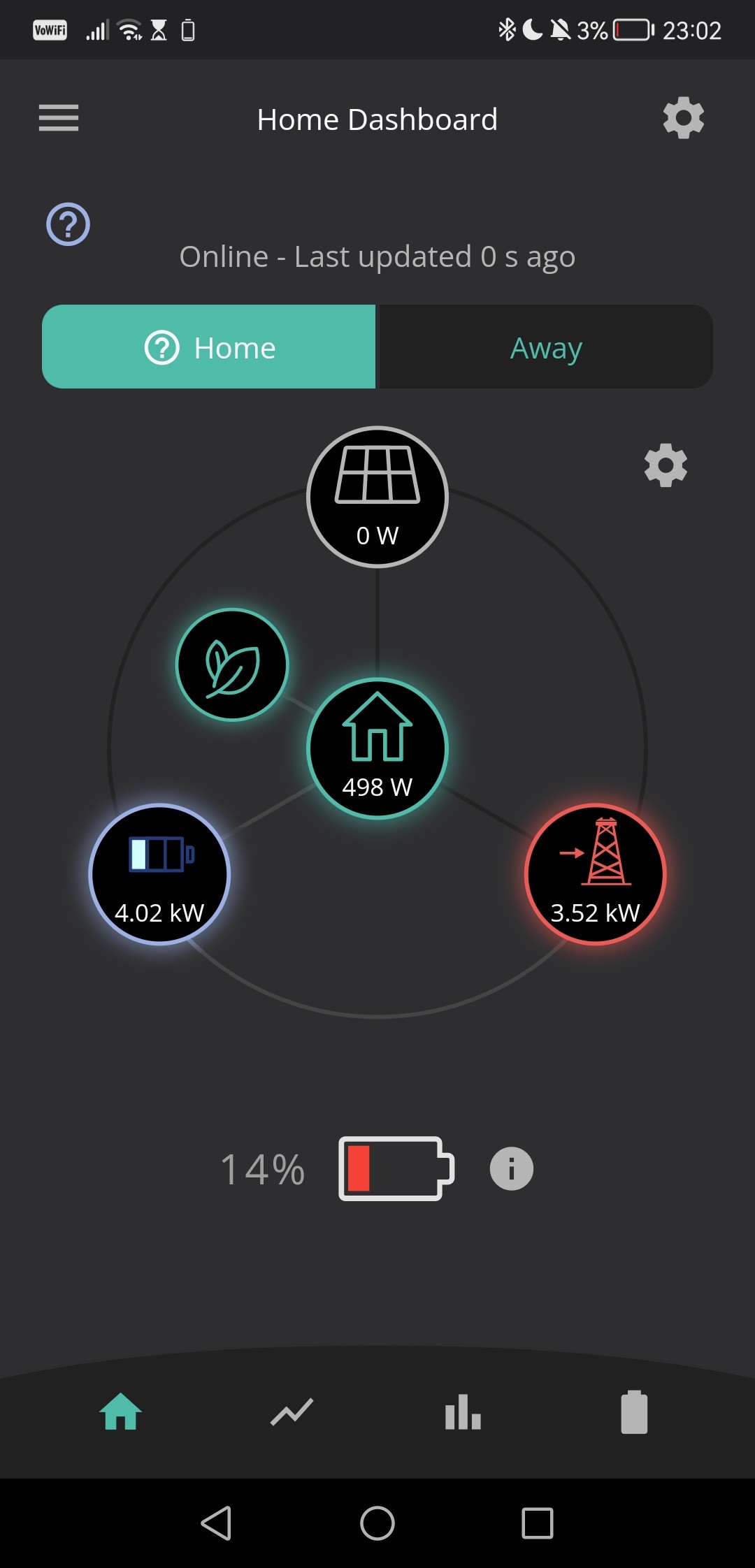
So I was laid in bed last night using the app to watch my newly installed system discharge power from battery to grid. Sad I know. But I have a question: why was my home apparently using 500w of power when no appliances were running and my normal baseload is around 200w? Does it take 300w to push electricity back into the grid? Could someone explain? Am I being diddle?
#2 Tenkaykev

Coy
Snapshot of the fridge / freezer compressor kicking in?

W
#3 wrighar

Battery/BMS/Inverter losses / heat.

D
#4 DD

Coy it does take quite a lot of effort to generate 4kW. It will be much less when just covering day-to-day use.
I figure on about 10%

W
#5 wrighar

I'm currently sat at 1790w Home load,
223W solar
1680W battery
15W export

1680+223+15 = 1918W - 1790W = 128W losses/heat

128/1790 = 7%

Now the kettles off
430W
457W
-48W
3W

412-430 = -18W losses (well gain?) -4%...

As the battery draw rate (or charge rate) increases so do the percentage losses.

C
#6 Coy

Coy
Thanks for all replies. The graph covering the discharge period shows baseload was fairly consistent before, during and after. Peaks and troughs as freezer/fridge/heating pump cut in - between 200-350 watts. The graph shows a fairly consistent 'head' to push power back into the grid. Presumably the 10% mentioned

W
#7 wrighar

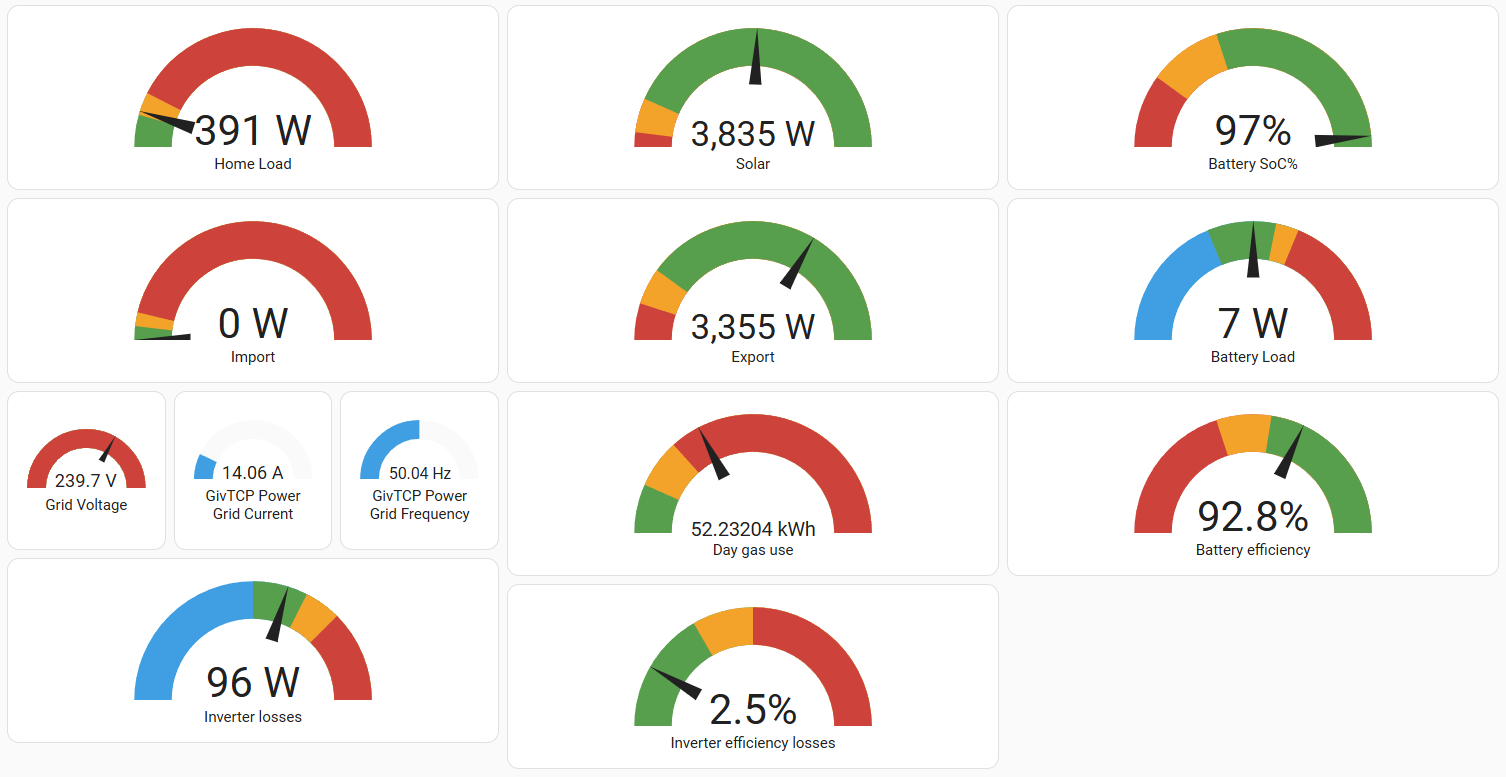
Knocked up a quick/dirty losses and efficiency needle graphs:
Losses are solar - grid - battery draw - home use.
inverter efficiency is losses / (solar + battery)

I'll see how these number run when no solar and battery draw or charge, they may go haywire...