Octopus Energy Tariffs

88 comments started 2022-06-16 last 2025-02-16
Home AutomationGivEnergy Products
T
#1 TurnerSN13

Morning All. I have a query about which tariff people are on, and how to get the most suitable tariff for your needs.

I am in the process of moving to Octopus, and when enquiring about Octopus GO, they stated that I must have an EV and an EV charger to qualify (How they would verify I don't know). I have neither and am unlikely to get any time soon. They're happy to put me on Flex (SVR) or a fixed tariff, but other than Outgoing Octopus for SEG, they say they have no equivalent incoming tariffs for Solar/Home Storage Customers.

Is anyone currently on Agile - or is that just too high to bother with right now?

Does anyone have any experience of exceptions to this EV rule to make best use of Time of Use tariffs to maximise low tariff use via batteries, particularly for the winter. I have 2 x 8.2 GE Batteries.

Thanks in advance.

9
#2 94jdh

TurnerSN13

When I joined recently they didn't ask for any proof ( I do have an EV and charger)
Alternatively EDF have Go electric in different formats, one being 35 which gives you 5 hours a night at 4.5p/kW, again designed for EV but same in relation to asking for proof.

W
#3 wilfleek

Not on Agile incoming, but am on agile outgoing, which has given a much higher average p/kWh than their fixed SEG tariff.
In a perfect world I would be on "go" for the winter, and agile outgoing for the summer. but we don't have a perfect world!

J
#4 JasonCartwright

wilfleek I was under the impression, if you are exporting on Agile you must be on Agile for your imports. I was on Agile but moved to 'Go' towards the end of last year. Has the T&Cs changed?

#5 THALL

JasonCartwright In general yes you are correct. But apparently you can be on their Flex and be on Agile Outgoing too.

I am currently on Go Faster, I do have an EV charger BUT still no EV. I have no idea how they can check if you have an EV, I guess they can ask you to prove it via a order form or receipt etc but a lot people have still been able to join Go without an EV. Agile is currently ok to be on, looking at my data Agile would cost me exactly the same as Go right now, though the export payments would be much better. But I am staying on Go as my EV is due anytime now and I want to make sure I have the cheap overnight when I need it.

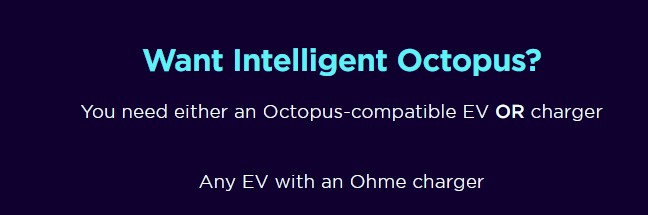
Check out Intelligent Octopus. Again for EV customers and apparently you need a supported EV and charger, but they keep offering it me (neither my charger or EV is on the supported list) saying they are adding more chargers and ev's to the supported list. That gives 6 hours cheap rate. I am going to check that out end of August early September before the next rate rise.

UPDATE just checked current tariff prices for me
Go 4 hour 37.65p standing charge, 7.5p 0030 - 0430 and 35.11p all other times
Go Faster 5 hour 2130 start 37.65p standing charge, 8.25p night, 35.11p all other times
Intelligent Octopus 6 hour cheap standing charge 37.65p, night rate 7.5p, all other times 35.11p

So Intelligent makes a lot of sense

C
#6 c_squared

TurnerSN13 I can only really report the reasons why I chose to go onto agile earlier this year. We had a 5kwp with 8.2 kWh battery installed in remember last year. As the solar generation improved I moved onto agile as I was usually generating enough solar PV to charge the battery and therefore meet the household demand until the next day. The higher import cost was offset by a lower standing charge, then there was the outgoing rates.

I knew I would have a surplus this year as it is a system that I will be adding to, such as an EV. Rather than sending the excess back for a low rate, agile outgoing gives me a good export rate where I can embrace export. In fact yesterday I force discharged some of my battery when the rates were good, creating a bit more revenue and having to space to charge from PV today. Yesterday I was paid £4.8, this accounts for my standing charge and import costs.

At the end of the day, it’s a decision that can only be made for your own circumstances.

As I got an EV last week, I’ll be swapping to octopus go around September time.

#7 THALL

On the export side, I have the octopus seg at 4.1p per kwh. On go my SEG payments are double my monthly usage. But Agile would give me 6x my monthly bill. So at the moment I am hitting about £9 per month and the Agile will pay be £60 ish last month etc.

hope that helps

H
#8 hamilton

I'm on agile import and export. Last week the price went through the floor import average was 0.33p per KWh and export was 6.22p per KWh. That day I made 19p!!
Yesterday import was 32.55 p per KWH and export was 18.47p per KWh which I made £3.16!! cheap electricity does not mean its a good tariff for people who can benefit from high export potential

If you export 2x what you intend to import then Agile is brilliant.
I'm planning on keeping on Agile over the winter to make as much money as I can by importing @35p and exporting @40p+
Total outlay for the year should be £200-£250 ish

D
#9 DeanoC75

I guess they could check with the DNO to see what's been installed at your property, but I doubt they will go into that.
If you install a EV charger it should be registered with the DNO that it's been installed, and I guess they can cross reference IPAN numbers etc.
Having said that I've been on GO (without solar) for a couple of months now with battery storage and just had my SMET1 meter changed to a SMET 2. The only thing I've been doing is charging the battery from 00.30 until its full (normally a 2 hour charge) and I've also got my hot tub to do a filter cycle from 00.30 until 04.30, which is about a 5kw load during the night. So I guess if they see a high demand load at those times, you are topping your car up right?
My EV is on order anyway, so as long as you can prove it they will leave you alone I guess.

Also all these special tariffs are done so people take them up, and they use that information for research so they will know what you use and if you don't use what's expected I think they could ask the question to you to prove it.

#10 Cdent

Just to add to this, if you're on Octopus Go/Go Faster, you can't go onto Agile Outgoing, otherwise you could charge up cheap then sell it back to them at a profit. So you'd need to sign up to the fixed outgoing tariff

T
#11 TurnerSN13

Lots of great insight. I appreciate all your input. Thanks

C
#12 CARLMW

Hi I’m on Octopus outgoing agile and have been really happy so far. I have a charger and EV on the way BUT I’m not intending to do lots of mileage, so during the summer I think I will stay on my current tariff. So far my payments have been remarkably consistent each months since March, as there was less solar production overall but it was worth more per hour. The hourly export rates are starting to exceed the import rates again already so until prices increase in October this looks like a winner.

M
#13 MRich

Just wondering if there's anything to stop you from switching tariffs with Octopus between Go over winter and Agile over summer. That would kind of be the ideal mix for a setup with summer-heavy generation (PV). I'll have to have a look at Octopus T&Cs for tariff switch intervals.

C
#14 c_squared

MRich you can switch tariff without penalty but you have to swap onto the variable tariff for 30 days before going back onto one of the smart tariffs again.

Y
#15 yandards

On Go although my smart meter hasn't been reporting since the last week or so of April and it's still not even been looked at yet.

I do have an EV which is currently covering about 10k miles per year plus a 6kwp south facing array and 8.2kwh battery.

Export wise I'm on 4p a unit but I'm not in a position to export huge amounts with any reliability - the car usually gets the excess or the hot water diverter.

Agile would probably pay over summer but not on winter where I end up using Go to keep the battery full. There are also days where the car needs charging and not from PV (although I've been trying to avoid that with Go not working) even in the middle of summer sadly.

So TL😃R, you need to understand you usage profile, ie what you use per day, what time you use it etc to he able to select the best tariff for you.

I won't be the only one with an Excel spreadsheet to track the monthly data sources in an effort to work out what is optimal!

R
#16 Ra

Thought I would revive this thread rather than starting a completely new one.

I am in the process of switching to Octopus with the pure reason of getting on their 'Go' tariff.

I do not have an EV but when they asked what car I had on the phonecall, I lied and told them XXX

I have ticked the 'ok' box on the form and it looks like it is going through. Does anyone know if they're going to be looking for anymore information at all?

C
#17 cluelesscris

Nope! Not in my experience. I initially emailed their customer service to ask if they allowed non-ev customers onto GO and got a NO. That's the default line.

However, having been completely screwed by EON with the installation of a smart meter their own systems could not use for split rate tariffs (go figure!), I decided to switch to Octopus anyway. I took the line that they are innovative and if anyone was going to come up with the creative tariff suitable for me, it was them. (edit: EON actually tried to charge me £160 to replace a 10 day old smart meter so they could do E7. They are a joke - and the flash on the web site is 'We are Smarter Energy' - yeh, right! )

I started the switch on 10th October and it was completed midnight 12th October. I let the standard tariff run for a few days and triggered a switch to Go online through my new account portal. This was late on 14th and I went live with GO on 15th. All very pain free.

As part of the process you can complete a 'survey' which includes details of your ev and charger, as well as a ton of other devices. I think most of this was a marketing survey to understand their customer base. I didn't complete it.

My guess is that their systems are capable of analysing usage patterns and therefore identify any customers who may not have an EV. The terms and conditions do state that they can switch you automatically to a 'relevant' tariff, if they think it 'appropriate'. It's winter now so I would imagine I will be fully charging my battery at the cheaper GO rate virtually every night. This will look very like a top up of a plug-in PHEV. I therefore don't expect them to be sending me accusatory emails any time soon. It remains to be seen what happens in the summer when I will hardly be charging the battery from grid at all. But really, if you think about it, you may rarely need to top up a PHEV in summer if you have solar panels anyway. In any case I would expect Octopus to have updated tariffs to better suit storage systems and the current crisis - especially the need for as many of us as possible to load shift.

My advice would be: don't ask - just do it all on-line and enjoy.


#18 THALL

I think it is simply a case of if they find out somehow then they can move you to the standard tariff. Or if they drop Go infavour of Intelligent then obviously they will find out 😆

R
#19 Ra

Thanks chaps. I will sit tight and keep my mouth shut 🙂

M
#20 mrand31

Darn, I wish I'd thought of that. 😆

S
#21 Slartibartfast

OK chaps. Loose talk on forums isn't a good idea. Rumour is that Givenergy get a bounty from Octopus - for ratting on anyone who aint got an EV. Damn. Should have asked for a 'donation' from each of you ....

P
#22 pjb904

Ra I lied too, no checks!

W
#23 wilfleek

Oh, I am shocked, what a duplicitous bunch Ge customers are, lol.

W
#24 wrefordj

wilfleek anyone using a battery for cheaper overnight rates is helping to balance the grid against unpredictable renewable energy (and avoids paying wind farms to shut down) so I have never understood the Octopus requirement for an EV (better to live near where you work, really).

#25 THALL

wrefordj I would love to live nearer where I work. Doing 60 miles a day is time I could use else where. Sadly my new job pays far more than my previous employer would offer. Plus housing around where I work is 50% more expensive than where I live.

T
#26 TRBob

I've been contemplating this, just looking at the tariff prices for me, I'm currently on Flexible as up until recently the PV and battery has covered the majority of the house load. In a few weeks I should have my export tariff kicking in at 15p/kWH all being well. I have gas only for the oven and hob (until we get a new kitchen at some point and we can get the gas disconnected - I'm seriously considering more PV and batteries first though) I assume that the gas would stay on a flexible tariff and the electric could be any of these below? My hope is to charge the battery on the cheaper night time rate when there is very little solar (like today) and maybe even run the heat pump to heat the hot water tank and the house, which I usually do in the middle of the day at the moment.

**Agile Octopus October 2022 v1

Electricity
Unit rate:
3.8 p/kWh
Standing charge:
47.9 p/day**

**Octopus Go October 2022 v1

Eco 7 Electricity
Day unit rate:
40.23 p/kWh
Night unit rate:
12 p/kWh
Standing charge:
47.99 p/day**

**Intelligent Octopus October 2022 v1

Eco 7 Electricity
Day unit rate:
40.23 p/kWh
Night unit rate:
10 p/kWh
Standing charge:
47.99 p/day**

**Octopus Go Green October 2022 v1

Eco 7 Electricity
Day unit rate:
40.23 p/kWh
Night unit rate:
12 p/kWh
Standing charge:
47.99 p/day**

So, I'm not sure which way to go, Agile varies and I guess that the highest prices would be 7am to 9am and 4pm to 7pm? Or is it less predictable? After that it looks like Intelligent might be the best option for overnight charging/use.

I've had a quick look in the app at the Smart Tariff bit, but haven't entered my info, I guess that you put your details on and then are you able to control when the battery charges from the grid?

T
#27 Tim

TRBob and then are you able to control when the battery charges from the grid?
Not quite sure which app you are referring regarding putting your details in. If it’s the Octopus app, you could be handing over control of your Givenergy plant to them. If it’s the Givenergy app, you can already choose when to charge and by how much using the timed charge setting (don’t disable ECO).

T
#28 TRBob

Tim Not quite sure which app you are referring regarding putting your details in. If it’s the Octopus app, you could be handing over control of your Givenergy plant to them. If it’s the Givenergy app, you can already choose when to charge and by how much using the timed charge setting (don’t disable ECO).

Apologies, I meant the GivEnergy App on my phone. So do you mean, through the GivEnergy Cloud, Remote Control/Charge 1 Settings, AC Charge 1 Start Time/End Time? I can't see an option for how much here though.

R
#29 Ra

My 'Go' tariff has just gone live...should I now be getting 7.5p for export rather than the 4.1p I was getting on the flexible tariff?

T
#30 TRBob

Ra My 'Go' tariff has just gone live...should I now be getting 7.5p for export rather than the 4.1p I was getting on the flexible tariff?

From the Octopus site;
'Outgoing Octopus comes in two flavours – Fixed or Agile. Outgoing Fixed guarantees 15p per kWh for every unit you export. Outgoing Agile matches your half-hourly prices with day-ahead wholesale rates, helping you make the most of the energy you generate.'

When I spoke to Octopus a few weeks ago, they said that currently the fixed is better as the Agile only gets up to 10p/kWh, I don't know whether this has changed.

T
#32 TRBob

cluelesscris I let the standard tariff run for a few days and triggered a switch to Go online through my new account portal.

Where is the option in the online portal to switch tariffs please?

Z
#34 Zakalwe

Ra

Ra My 'Go' tariff has just gone live...should I now be getting 7.5p for export rather than the 4.1p I was getting on the flexible tariff?

If you are on Go/Go Faster/Intelligent Octopus then the only export that you can use is SEG. This pays at 4.1p/kWh.

T
#35 TRBob

Zakalwe If you are on Go/Go Faster/Intelligent Octopus then the only export that you can use is SEG. This pays at 4.1p/kWh.

Thanks, useful to know, for the flexible tariff I have the following;

**Flexible Octopus October 2022 v1

Eco 7 Electricity
Reduced day unit rate (Energy Price Guarantee discount):
40.23 p/kWh
Reduced night unit rate (Energy Price Guarantee discount):
16.72 p/kWh
Standing charge:
47.99 p/day
Electricity
Reduced unit rate (Energy Price Guarantee discount):
33.03 p/kWh
Standing charge:
47.9 p/day**

So the Eco 7 is looking better, although the night rate is more than the other tariffs, I would still retain the fixed export tariff price of 15p/kWh. This is under the assumption that daytime load will be minimised.

T
#36 Tim

TRBob I can't see an option for how much here though.

Both the Givenergy app and the portal allows you to set the timed charge window and the charge to %. This latter option is the SoC you want in your battery at the end of the timed charge period. If it enters the period with a higher SoC, it discharges to meet house load until it hits the charge to % (give or take), then draws from the grid to maintain the level until the end of the period. If the battery enters the period with a lower SoC, it charges to that level at the beginning and bumps around it drawing from grid as necessary to meet house load.

T
#37 TRBob

Tim Both the Givenergy app and the portal allows you to set the timed charge window and the charge to %. This latter option is the SoC you want in your battery at the end of the timed charge period. If it enters the period with a higher SoC, it discharges to meet house load until it hits the charge to % (give or take), then draws from the grid to maintain the level until the end of the period. If the battery enters the period with a lower SoC, it charges to that level at the beginning and bumps around it drawing from grid as necessary to meet house load.

Thanks Tim, I've managed to find it now

#38 THALL

I think I would aim to get myself onto go early 2023 though. When the price cap ends we would see 100% rise in that flexible tariff. Agile is currently looking good but the new 100p per unit limit puts me off. Though personall if my new panels go up Monday I will switch to Agile late march mid april time.

T
#39 Toogie

TRBob
I think us blog followers should start a campaign to convince Octopus that we are the good guys trying to balance the grid and minimise carbon emissions and they should relax the eligibility criteria for Go and Intelligent smart tariffs to allow those of us with battery storage and anyone who has swapped out their gas boiler for something electric- in my case a Zero Emissions electric boiler (ZEB)- to join in. After all, we are using more leckky by doing this. I have a mild plug in hybrid EV and have been on Go since 2019, but they want me to buy a new smart charger @£1k before allowing me onto IO. The sums do not add up for me. My Pod Point Solo/car settings work fine for overnight charging. I’ve spoken to Octopus about this and they are sympathetic to the argument and promised to escalate it and to send me the address of someone we could put our case to. Watch this space. Don’t expect them to relax the IO criteria anytime soon though!

Z
#40 Zakalwe

Toogie

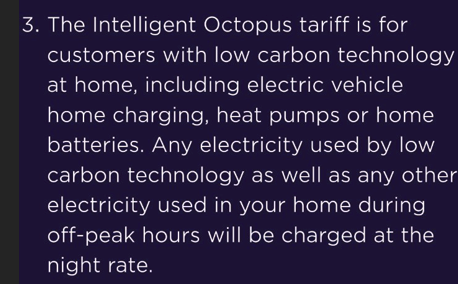
The Terms of intelligent Octopus specifically include home storage batteries and heat pumps. however, it's still a beta product, so these integrations aren't there yet. As I understand it, IO will not be specifically for cars (it refers to low Carbon Technology which includes cars, batteries and heat pumps).

The terms also say that there's no guarantee that IO will work with all equipment and that only compatible equipment will qualify.

As I said, it is still only a beta product and is in active development. They are concentrating on adding more cars and EVSE kit.

T
#41 Toogie

Zakalwe
Thanks, I haven’t read the T&C’s but will do so now.

V
#42 Vitali

Does anyone know how to switch to Octopus?
Are they now accepting new customers or not?
Tried a phone they put on hold, sent a few emails they didn't reply.
It's not clear what to do... 🙁

#43 THALL

Vitali They are taking new customers and you can still use someones refferal link to get t£50 credit. But you have to do it over the phone. Because all companies offer the same prices now online switching is dead/disabled. Sadly all you can do is retry the phone. I have a refferal link if you do not already have one? ;-)

R
#44 Ra

I've found Octopus to be pretty decent on replying to my DMs on Twitter.

V
#45 Vitali

THALL No, don't have a refferal link. How I can get it? 🙂

F
#47 Fridgeman

dcsh
Cheeky 😆

#48 THALL

Vitali https://share.octopus.energy/snow-brook-829 though you may have used the one above lol. When you phone you can say you have a refferal and they will ask for the bit afte the last slash. So snow-brook-829 for me or lotus-quail-441

Both parties get £50, I checked with Octopus recently and they said they are still honouring the refferal system but only via the phone.

V
#49 Vitali

THALL Thank you for the link and explanation. I'll try the phone.

K
#50 Karen

I have just moved to Octopus from British Gas. I wanted to go onto their ECO7 flexible tariff as I don't have an EV. You have to switch to them over the phone. I have had to switch to the standard flexible tariff to start with (took 2 days) and then they fiddle around behind the scenes to change the settings on your smart meter to change it to the time of use tariff. If you phone just after the office opens (9.00am) the wait time is usually quite short. But, be ready with your previous bills because they have to go through a formal quote process, so they ask what your predicted annual consumption will be (it's shown somewhere on your existing suppliers bills). I explained that this prediction was useless because I've had solar fitted this summer, but they say that is the process they have to go through regardless. So far I have found their customer service team to be excellent. They really know their stuff (unlike British Gas who told a pack of lies about the governments price fix and said I would need a new meter for ECO7 even though I have a second generation smart meter). It's also easy to get a variable direct debit, so you don't have to worry about how they are going to take solar into account when predicting a monthly fee. They also offered to switch me from the 4.1p rate for export to one of the Agile export rates without me even having to ask!

V
#51 Vitali

Brilliant. Thank you Karen.

V
#52 Vitali

Karen What are day and night unit rates of the ECO7 flexible tariff? Thanks.

K
#54 Karen

As with any provider, the electric rates vary with where you are in the country. I'm in the south. I'm getting off peak at 14.53p and premium rate at 43.37p (I don't anticipate using much at the higher rate because my battery can take me through most day/evenings unless I have a "baking day" with the oven on a lot).
Try this link - about half way down the page is a pink table that shows all the rates for different parts of the country.

https://www.octopusreferral.link/octopus-energy-tariffs/

If you choose to go with their export tariff, the Agile outgoing fixed rate is 15p or you can gamble on the Agile outgoing that varies with half hourly pricing. They give you a graph on your export account so you can see when is the best time to export.

T
#55 TRBob

Karen So far I have found their customer service team to be excellent.

I agree, I am quite astounded at how good they consistently are, one example is that I have poor phone signal at my house despite being in suburbia, after being on hold for about 10 mins (that's the longest, usually its a few minutes) when the operator answered she couldn't hear me and cut me off, but then called me back straight away, I guarantee that most other suppliers/any company wouldn't do this. Every member of staff that I have spoken to knows their stuff and it feels at least like they do actually care.

D
#56 DickB

Zakalwe

Hi. I have searched for Octopus T&C s for Io with no luck to find where home storage batteries are mentioned and included. Please would you post a link to where you have found them as so far, it seems unless I have an EV, i am not eligible for IO.

Many Thanks

Z
#57 Zakalwe

DickB

DickB Hi. I have searched for Octopus T&C s for Io with no luck to find where home storage batteries are mentioned and included. Please would you post a link to where you have found them as so far, it seems unless I have an EV, i am not eligible for IO.

The terms that I quoted are in the mobile Intelligent Octopus app.

1667382309658.png

1667382562432.png

On their FAQ page they do say that you have to have a compatible car or compatible charger:

Screenshot-2022-11-13-111939.jpg

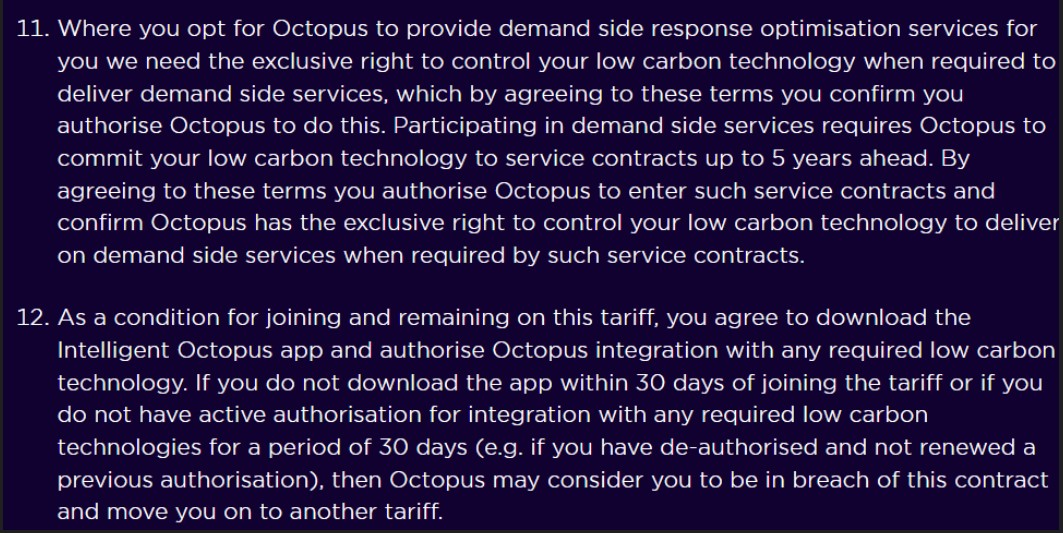
There are lots of people "gaming" the system to get longer off-peak charging periods or trying to get on without an EV. The terms also include this:

Screenshot-2022-11-13-112244.jpg

so if you do not set up the integration or do not run it in a 30 day period they can boot you off.

D
#58 DickB

Thank you for that information which hopefully should prove helpful in persuading Octopus that my usage would be compliant with their requirements. Whilst I can copy and paste the above to them I would appreciate a web link I can use should I need to further clarify what they actually quote.

DickB

Z
#59 Zakalwe

DickB hopefully should prove helpful in persuading Octopus that my usage would be compliant with their requirements.

You must have missed this bit...

Zakalwe There are lots of people "gaming" the system to get longer off-peak charging periods or trying to get on without an EV.

At the moment, IO is a beta service and you currently have to have a BEV. When it goes fully live I expect that they will allow homes with no BEV but other LCT such as batteries and heatpumps on.

B
#60 billG

I checked with Octopus yesterday about switching and they also confirmed that you can be on GO and the new COSY tariff together, presumably as the time slices are separated though there is a curious overlap at 4.00am to 4.30 am???? The scenario I suggested was for someone who had an EV ( using GO) and a Heat Pump ( using COSY) Plus anyone out there using dual GE 9.5 batteries to feed daytime power to their heat pump? Checking out another scenario just using ECO7.

B
#61 billG

billG This assurance was afterwards revoked !!! by my Octopus call centre person!

G
#62 geoffreycoan

billG Disappointing but I'm not surprised. I could imagine this would cause all sorts of confusion behind the scenes as the tariff is associated with your import MPAN (and potentially export tariff and export MPAN). You want two tariffs with the same meter but different tariffs effectively operating at different times of day.

I was looking at Cosy as I too have a Heat Pump, but it would have needed external automation to manage the multiple charge slots. In the end I went for Octopus Agile managed by Home Assistant. So far its working out well, about half the cost I would have been paying on Flux. Doing a cheap rate overnight charge and a secondary charge in the afternoon - so similar to Cosy.
ECO7 didn't work for me as I don't have enough battery capacity to run the house and ASHP for the 18 hours or so "peak" rate

B
#63 billG

geoffreycoan OVO are doing Anytime tariffs for both EV’s and Heat pumps,but “normal tariff charges for “other “ household usage. I think ? The only way to do that would be to have a data widget in the ev charger or heat pump transmitting to the OVO billing data base on the internet in parallel with the data via the Smart Meter.?

If this is so why don’t the others do this?

D
#64 DD

billG For the EV thing, I think OVO require particular brands of chargepoints which can report the power usage. I don't about their heat-pump offering, but I see that "Heat Pump Plus [tariff add-on] is only available to customers who buy a heat pump through this new launch."

G
#65 geoffreycoan

DD there’s a few of these tied offers coming out, special rates if you buy your solar, heat pump, car charger etc from the electricity company. I guess they take away any compatibility issues

R
#66 Roy124

geoffreycoan pulling this thread forward another year as it asks the question I am interested in and the tariffs have changed. The EV we are interested in might be available to the back end of this year so our setup would be approaching yours.

I am on Cosy and happy with Cosy import and the fixed export tariff. Come next winter, if we have an EV the sums would change. I have a 5kW battery and a 10kW ASHP. What are you doing at the moment?

Come this summer our balance will change. Clearly we shall have no heat demand and more solar export. The advantage of a cheap battery charge overnight and appliance use will remain. However on many days solar generation will meet our HW needs and top our battery up for late evening. This, to me, suggests that a low standard tariff will is better than a Cosy one.

What do other use?

G
#67 geoffreycoan

Roy124 I spent all of last year on Octopus Agile with the fixed 15p export tariff. It suited me really well for winter 2023/4 as I had high ASHP consumption that exceeded my battery capacity by some measure. For quite a bit of the winter I only had the single 5.2kWh battery which was a squeeze but it worked OK.

This year I went into the winter on the same tariff combo, then about a month ago I changed to Outgoing Agile because I was exporting very little and the Outgoing Agile rate was really good on the DFS sessions which was the only time I ever exported.

And then about 10 days ago with consistently high Agile prices (lowest was 22p overnight) I moved to Cosy. Been very happy with Cosy, filling the battery up at 13p three times a day, and the 27p day rate is not much different from what I was paying on Agile during the day.

In terms of what to recommend for you. Cosy has the advantage of the 13p rate so you could run appliances, heat your hot water overnight, etc but after battery losses its probably not worth charging the battery too much overnight - just enough to get you through the morning period before the sun comes up, then fill the battery and export the rest at 15p.
Economy 7 might be worth a look at for similar reasons or look at standard variable rate which will be slightly cheaper in the day than any of the smarter tariffs

R
#68 Roy124

geoffreycoan your conclusions for this winter are exactly what I deduced and I am getting an average 18p/kWHr. Glad you mentioned the very high ASHP consumption 🇦 On a very cold day I am using around 40kW. If the sun shines that drops dramatically to 25kW as our main sitting room is not unlike a conservatory but with slightly less glass.

The battery chart I posted yesterday has been very consistent, topping just over 80% at midnight, bottoming at 18% at 0500, 100% at 0615. I run out of battery at 0845. Afternoon charge starts at 1430 and peaks at 1600..

I am still tweaking and will delay the starts a little more.

Thanks again.

G
#70 geoffreycoan

Roy124 we can go up to nearly 100kW for the heat pump on a really cold day :-( and bobbles around 20-40kWh on more typical days. Unfortunately not a massive amount of solar gain in our house but it is pretty good at retaining heat.

So my strategy with Cosy is to charge the batteries in all 3 slots (predbat does this for me as I only have a gen 1 inverter with 1 charge slot).

Overnight the heating is setback to 17 degrees. At 4am, start of the Cosy period I heat the hot water, then at 5am the heating goes up to 19 degrees until 7am when it goes back down to 17 degrees. The house won't warm 2 degrees in that time as the weather compensation means the flow temperature is quite low, but it puts some heat back into the house and stops it getting colder on the cheaper rate.

From 7am the battery is on Eco mode so can supply the house and heating if it comes on (which it will on a cold day). I set the battery reserve to 27% so that the battery doesn't drain to empty.
At 10:30am the heating goes back up to 19 degrees so that heating will come off the battery or grid import when the battery runs out. At 1pm I set the battery reserve back to 4%. The 27% is chosen because this means I can fully charge the battery to 100% for the peak in the 3 hour afternoon Cosy period.
The heating remains at 19 degrees through to 11:30pm.

This approach although it sounds complex means I heat the hot water entirely from cheaper Cosy electricity and I maximise use of the battery. On a cold day it will run to the reserve during the daytime, usually at about 12pm, but milder days it will see me through to the afternoon charging period.
Evenings the battery runs out just after the Cosy peak

R
#71 Roy124

geoffreycoan very similar to you though we have pared back the HW to one hour slots at 2300 and 1500. This morning, pre-shower, it is 43°C against a setting of only one degree higher. It is probably not worth paring back further. As for heating, we definitely need it higher that 19°C and at night have settled for 20°C. By day just 3°C higher.

Our greatest power usage has been 50.1kW on the 12th January with most peak level in the 40kW range on just 12 days in 2 months and average 34kW which is total consumption. ASHP is drawing an average of 24kW/day. COP last month against 2024 is around 2.3.

A
#72 Ange

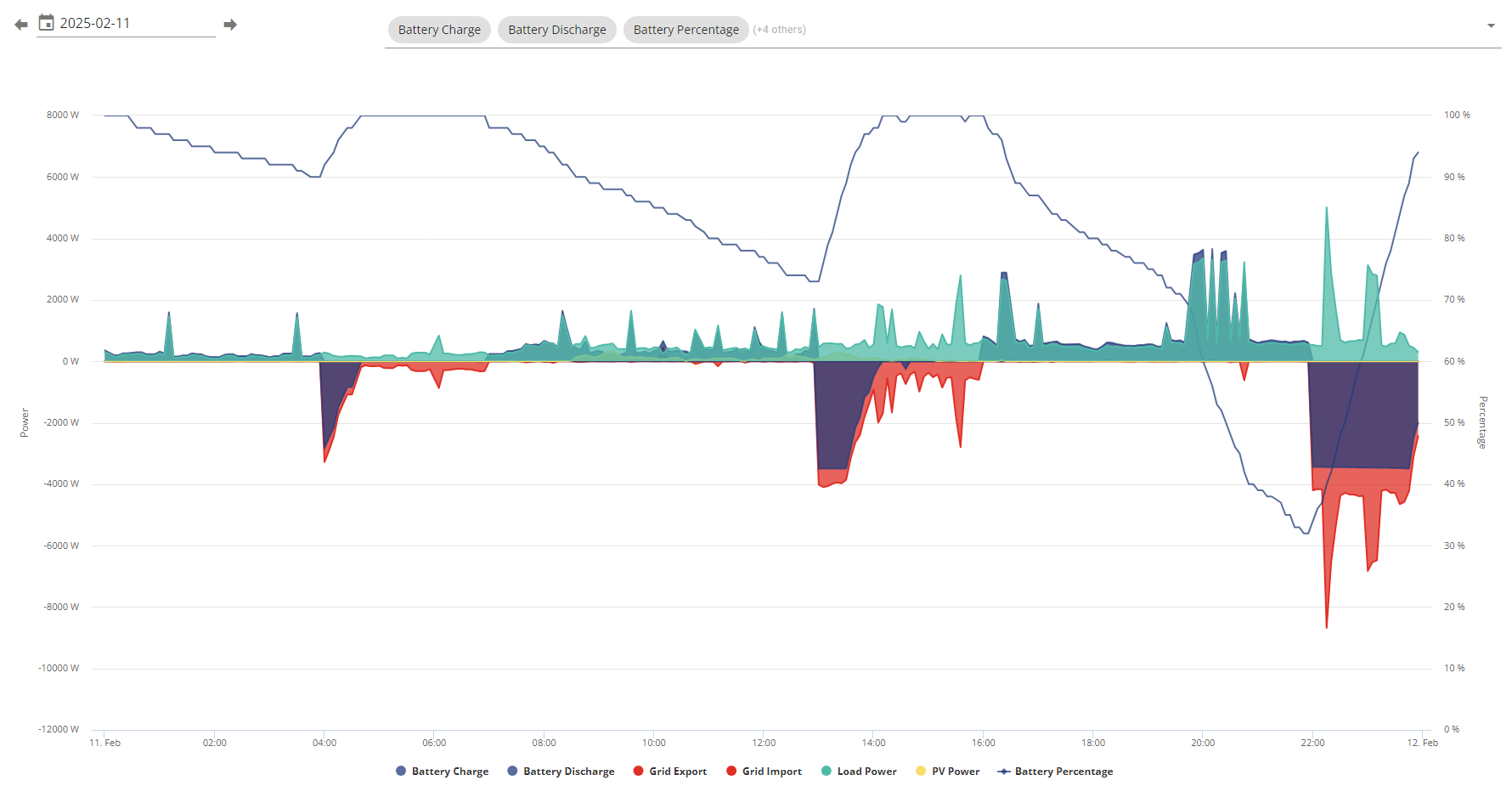
I am on Cosy too. 5kW inverter, 9.5kWh battery 12kW ASHP.
I am able to fully charge my battery at the three cheap periods with hardly any import outside of these times.
Our highest daily import was 45 kWh on 4 Jan, but is often 25 up to 35 per day on a cold day.

Our ASHP is Samsung with the Tado app. I don't want to pay for their auto assist which shows more figures, so I'm not sure how I know specifically how to determine my ASHP usage (or how to set the time of the water heating up?).

I plan to switch back to different tariff later in the Spring when the heating goes off and we start generating again.

A
#74 Ange

I thought a screenshot from a recent typical day would be helpful to compare to others.

W
#75 wrighar

We too are on Cosy, and use all three charge slots to refill the battery.
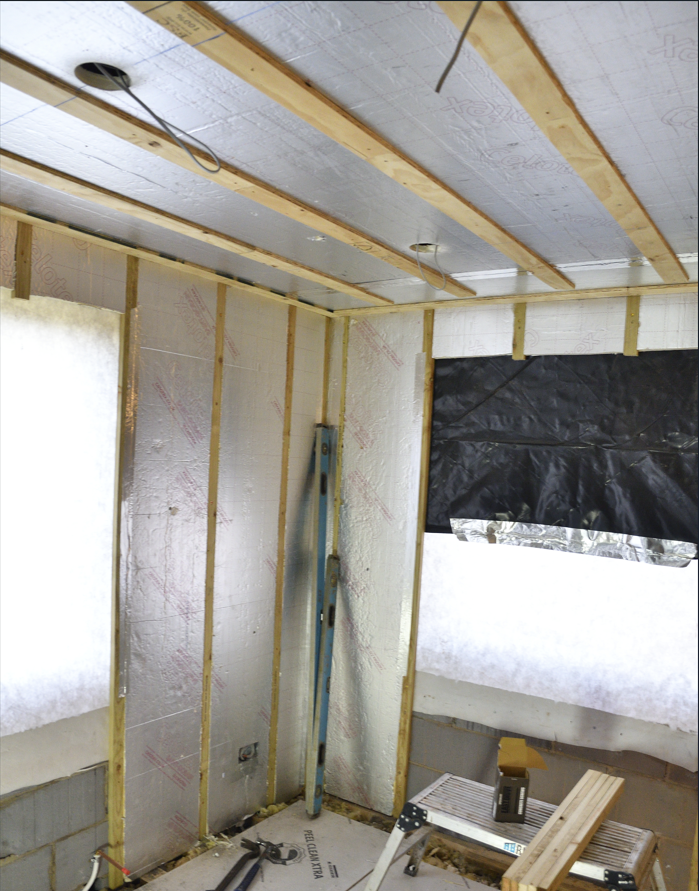
We've spent the last few months adding an extra 25mm cellotex+ plasterboard to the insides of exterior walls and ceilings to improve insulation, and new double glazing.

G
#76 geoffreycoan

Roy124 very similar to you though we have pared back the HW to one hour slots at 2300 and 1500

Sorry I didn’t make the hot water heating clear, we’ve done the same, we heat the hot water just twice a day at 4am for an hour and 3pm for an hour and we only heat it to 48 degrees C. We were heating it once a day which was fine, it retained the heat in the tank, but my youngest son is living with us at the moment and the number of showers being used has increased dramatically!

I have no idea of my CoP value for my ASHP. The design CoP was 2.6 but I’ve paired the flow temperature back considerably. There is annoyingly no app for the LG Therma V ASHP that I have (well maybe there is but I’d have to pay £290 for the LG Wifi module so **** that!). No data on the control panel as to COP.
I have an energy monitor and am in the process of of fitting a flow temperature probe so am hoping I can workout COP or at least an approximation of it from that data. All fun

R
#77 Rbor

Ange
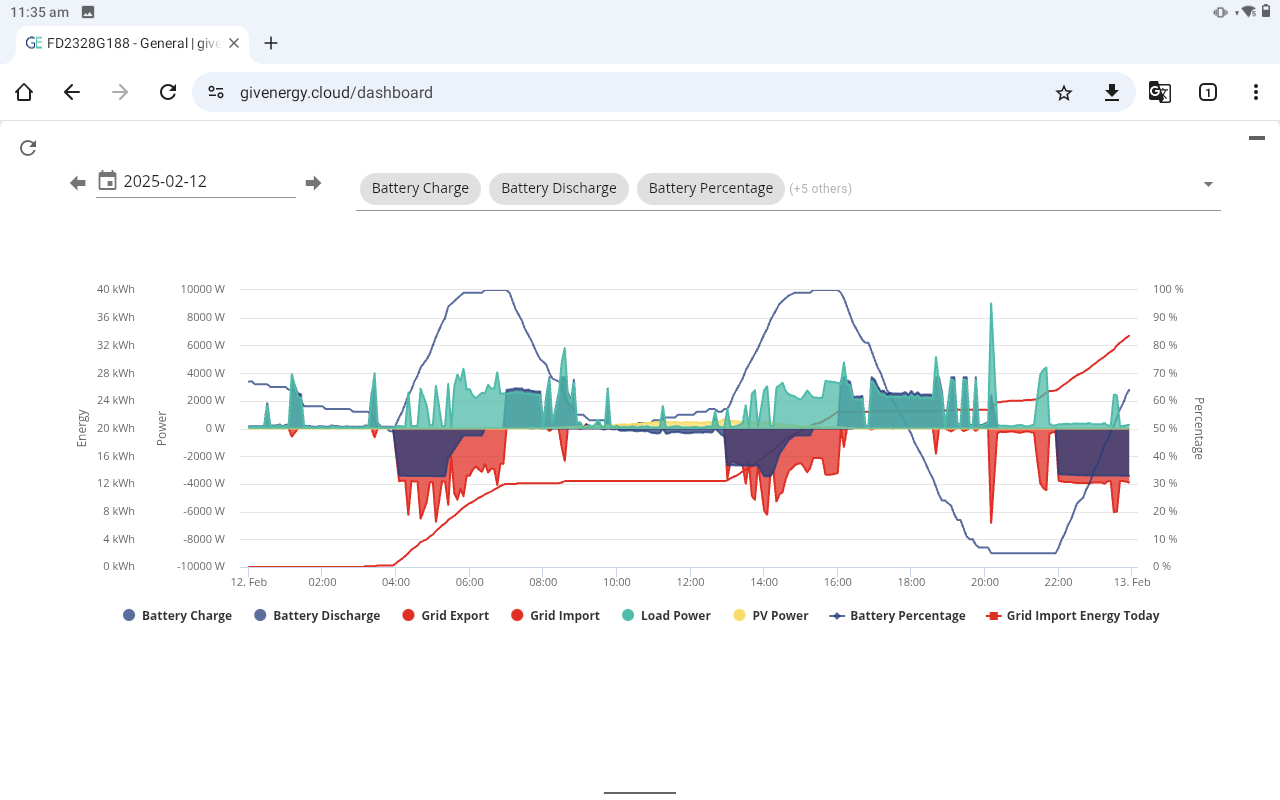
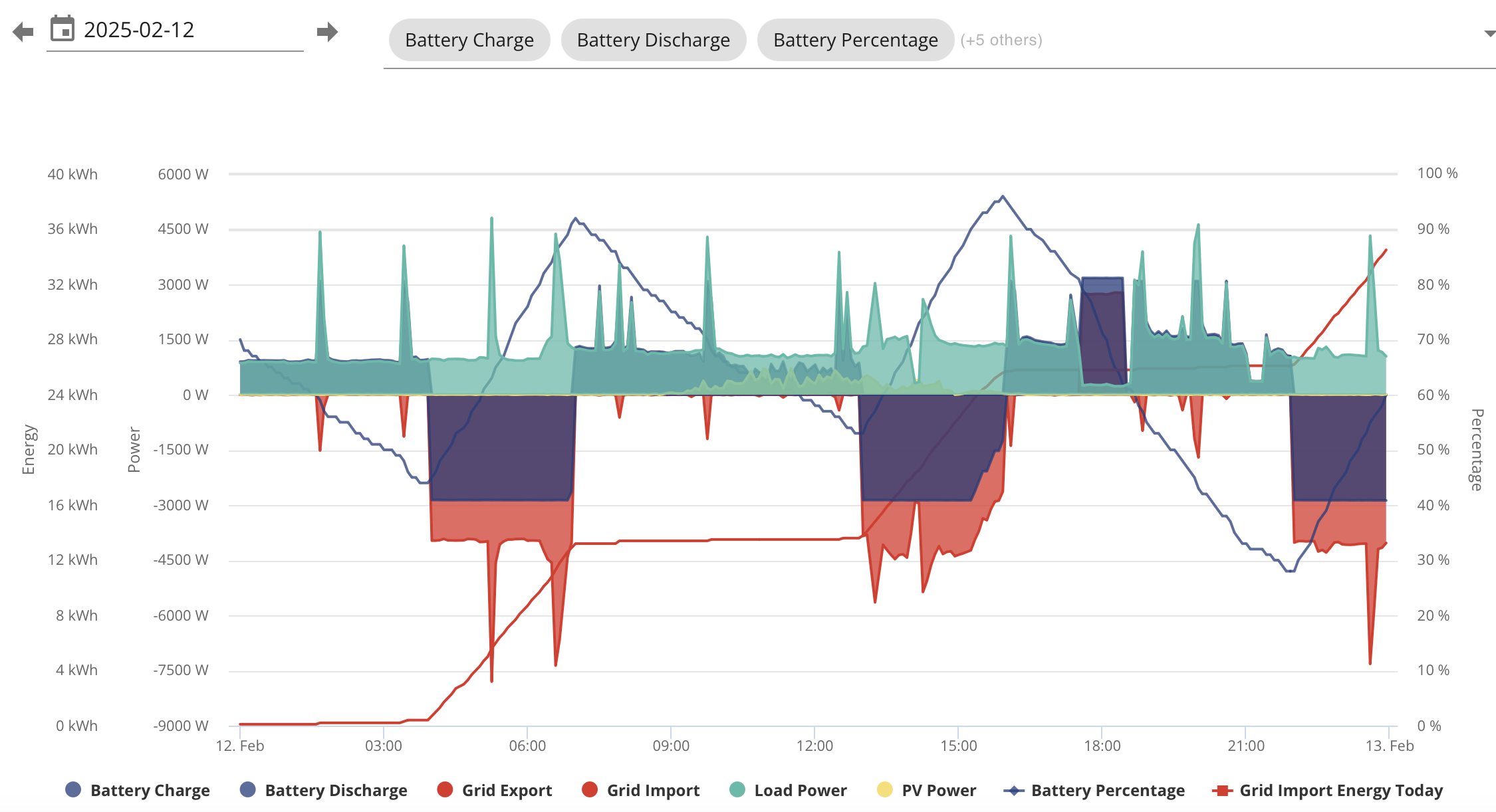
For comparison, this was my GE power for the same day as yours (12th Feb).
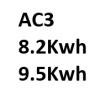
I am on Cosy too. AC3.0 inverter, two 8.2kWh batteries 10kW ASHP.
On the 12th Feb, my ASHP used 25 kWh and my total import was 35 kWh.
We have very similar power profiles for the day.

I also took part in DFS between 17:30 and 18:30 when I exported 2.8 kWh (the most that my AC3.0 can realistically export in an hour). I switched my heat pump off for an hour which saved just over 1 kWh. Otherwise, I would have exported 1 kWh less.

Your 9.5 kWh battery is nearly enough to get you through the day on 3 slot Cosy.
A year ago, I was on 2 slot Cosy and I was well short of lasting.
On 3 slot Cosy, two 8.2 or 9.5 kWh batteries is a bit of overkill but useful for other tariffs.
I would be better off with an inverter capable of exporting more per hour. But I have a separate PV inverter with optimisers for my multi-orientated roofs.

Rob

R
#78 Roy124

[unknown] we heat the hot water just twice a day at 4am for an hour and 3pm for an hour and we only heat it to 48 degrees C.

I have now tweaked the HW down to 44°C and after its heat cycle at 1500 it was still 43°C after my shower just now. The other thing, more expensive than gas or not, is we get two benefits from the ASHP. The first is the system does not lose pressure. The old boiler would lose pressure randomly and frequently. We could return from a few days in winter to a cold house. The other is we get hot water in the shower after 9-10 seconds from the tank compared to 30 seconds from the 'instantaneous' hot water from the gas combi.

G
#79 geoffreycoan

Roy124 We had an oil boiler that was replaced by the ASHP. Hot water was via a gravity fed hot water tank so the water pressure was 'ok' but not brilliant and it took a noticeable delay for the water to flow from the tank through to the shower.

Like you I'm loving the mains water pressure hot water tank, much better for use in a shower although it did kill off our ensuite shower as the Aqualisa mixer tap couldn't take the pressure from the new hot water and started leaking at the back of the fitting. Was going to replace the shower but not just then so had to bash a hole in the tiles to get to the fitting and disconnect and cap it off.
Oh and to fit the mains water pressure cylinder the installers wanted an emergency valve and overflow that vented to outside. They declared that this was outside of their scope of work and they'd fit a low pressure system for me. I wanted the mains pressure so had to lift the bedroom floor and drill through all the floor joists and then the outside wall to put a 22mm overflow pipe in. Bit of extra work for me but at least I got what I wanted

Might try tweaking the hot water down a bit further myself. Was doing it to 48 when we only heated it once a day but now its on twice a day it might be OK at a lower temperature

R
#80 Rbor

geoffreycoan Might try tweaking the hot water down a bit further myself.

Mine's on 43C. I have hysteresis on 5C so cylinder starts reheating at 38C.
I did try 42C but no heating then till 37C.

I think 43/44/45 is the sweet spot.
For me, the important thing is not to have to mix the hot water with cold water for a shower, which seems a waste.

Rob

G
#81 geoffreycoan

Rbor hot water has been turned down to 44. Still on two heats a day of the hot water, 4-5am and 3-4pm.
The hot water is set to only heat by ASHP, the default setting was to do some of the heating by ASHP and then the remainder by immersion heater. Why, I don’t know as this is less efficient but that’s the manufacturer’s defaults.
Hysteresis is +/- 4 degrees which is the most I can set on mine

R
#82 Roy124

At 0800 my HW is showing 43°C having lost just one degree since midnight. Will see what I have tonight after the afternoon charge. Getting close to the point with heating LWT being equal to the HW.

R
#83 Rbor

[unknown] My water heating is all from ASHP.
With COP ratio, I would have thought this would always be more efficient than 1:1 efficiency from immersion heater.
I am getting a sensor added to my open energy monitoring kit so that I can compare COP for my space heating and hot water heating.

Rob

R
#84 Rbor

geoffreycoan My water heating is all from ASHP.
With COP ratio, I would have thought this would always be more efficient than 1:1 efficiency from immersion heater.
I am getting a sensor added to my open energy monitoring kit so that I can compare COP for my space heating and hot water heating.

Rob

C
#85 CGoode

My experience of Intelligent Go when I joined this time last year was that you had to input the make/model of your car & your Charger make. Initially in 2023 my EV / Charger combo (Kona/Zappi) were not "approved". Later on they got approval enabling me to switch to IG in Feb 2024.
Octopus communicate with your charger / car for saving sessions &/or cheap rates outside of the normal 11.30pm-5.30am OIG cheap rate hours. If, after numerous attempts, they cannot communicate with you car / charger then they might send you a warning that you may be migrated away from IG to another tariff. I know this because it's what happened to me. Charging my car at random times / days outside of the normal IG cheap rate time slots was draining my house batteries, I had to disable my charger (Zappi) until 11.30pm when my house batteries went over to an auto discharge pause program & start their normal charge cycle. That way I could charge the car & the house batteries without any conflict. However, Octopus picked up the fact that they could not control my Zappi outside 11.30pm-5.30am IG cheap rate periods & sent me an advisory that unless I allowed them to charge my car when they wanted to (as per their T&C's) then I would be migrated to another tariff. I have since got around the unwanted battery discharge issue by manually pausing my house batteries during the saving / cheap rate sessions or, manually charging the batteries at the same time as the car. Currently I'm still on OIG albeit my export tariff is no longer fixed at 15p/kWh (1 year contract ended). It's not an ideal situation which relies on manual intervention &, being forced to plug in your car every night even if you don't need to is a bit of an imposition IMO, but it is what it is.
I'm still looking for a proper low / no cost solution to the unwanted battery drain issue when the car is charging outside the standard OIG cheap rate time slots. As much as I like Octopus & what they are doing I'm also investigating alternative supplier tariffs in case there is something out there that is more flexible for my situation.

G
#86 geoffreycoan

CGoode I'm still looking for a proper low / no cost solution to the unwanted battery drain issue when the car is charging outside the standard OIG cheap rate time slots

the fix for this is to get your home battery and EV charger and their CT clamps wired such that the inverter can’t “see” the EV charging load.

This could be as simple as just moving a CT clamp (which you can do yourself) so you end up with something like this

Grid supply —— CT clamp for EV charger —- EV charger —— CT clamp for inverter —— house fusebox and inverter

May require a bit of electrician work to change the feed cables and Henley blocks for the different devices, but not a big job.

D
#87 DD

geoffreycoan The hot water is set to only heat by ASHP, the default setting was to do some of the heating by ASHP and then the remainder by immersion heater. Why, I don’t know as this is less efficient

I've been experimenting with using immersion for HW. Yes, less efficient, but on IOG it's almost too cheap to care. Reason is that Daikin doesn't seem to recover gracefully from defrosting - goes full pelt to get back to temperature asap, which tends to frost it up, and gets a bit stuck in a liop. So while it's close to freezing overnight, trying to leave it in a stable state rather than getting it all over-excited.

#88 Tenkaykev

Rbor
As I get closer to getting quotes to replace our gas CH / HW I wanted to ask about the best way of implementing Open Energy Monitor. Is it something that can be done at installation time for, I assume, extra cost, and are there some systems that don't have the ability to interface, Octopus Cosy for example.

G
#89 geoffreycoan

Tenkaykev if you look at the open energy monitor website you can see the equipment available to monitor a heating system. They are compatible with any heating system, it’s just that some manufacturers you can get the data direct from the heat pump so wouldn’t need their flow temperature monitor for example.

Total cost for the standalone kit is about £500 plus fitting which I didn’t think worthwhile as a retro install.

I would suggest you look at what’s available with the manufacturer monitoring, it might give you what you need without needing open energy monitor

R
#90 Rbor

Tenkaykev
I have the Open Energy Monitor kit and it gives a great analysis of my heat pump use (especially compared with what you get from the heat pump manufacturers).
Useful urls:
1. https://heatpumpmonitor.org
Loads of systems, installers and COP efficiencies to compare. You can see details of the setups via the blue 'list' button to the right of each install.
2. The bar chart on the far right of an install gives access to efficiency, electrical use, etc for any period of time. This is my link, which you can investigate: https://emoncms.org/app/view?name=viessmann_combined&readkey=d9fa0b89bb710d76148a53d979624a2f
Each spike is a defrost. With current low temperatures, drizzle and damp air, I have experienced a lot of frosting up. Usually I may only see 2-3 a day when it is cold. Above 4C, I have none.
I use this url all the time!
3. https://openenergymonitor.org
This is a summary of OEM and the available kit. Details via the Shop and Docs icons at the bottom of the page.

I would recommend the kit but you have to really want it because of the expense.
If you do want the kit, get the installation done with your heat pump installation. A retrofit would be more expensive.
There are different tiers depending on how much information you want. I have the Level 3 Monitoring bundle.
I mainly monitor via the web link but there is a Home Assistant integration which is good.

There is a shed-ful of youtube videos,. Just search on Google for something like:
'youtube open energy monitor'

PS. Make sure you select an Installer who knows what they are doing. Mine was a Heat Geek. Costs more but they really do know what they are doing.

My heat temp is controlled by Weather Compensation via an external sensor. I have TRVs but they are all fully open. If the heat loss survey has been done properly, the size of the radiators should balance the heat loss.

Rob