Changes to the functionality of Eco Mode & Timed Discharge

15 comments started 2022-06-28 last 2022-07-01
BugsMobile AppCloud PortalGivEnergy ProductsAC CoupledBattery
H
#1 Heilghast

Has anyone noticed just recently, as in the last few days, a change to the functionality of these two options.
Eco Mode - When there is insufficient PV active, the battery power falls short by approx 100w of the home load, therefore importing from the grid. I can have a 1kw or 500w home load, i'm importing approx 100w regardless.

Timed Discharge - Seems to have adopted the same functionality as Timed Export. I seem to recall that Timed Discharge would only discharge what the home consumption required during the timed period. However as i noticed the issue with Eco Mode, i enabled Timed Discharge, the grid import dropped to 0, however, the battery started discharging at the full 3kw, exporting the excess to the grid. I know i can limit the battery discharge, but i have not had to do this previously. when i have enabled Timed Discharge. this i can say for certain, as my battery would have been flat in the morning.

UPDATE - Overnight 00:00 - 06:30, the grid import was 700w. This is a vast difference to the first few weeks were it was less than 100w overnight. The electricity meter has recorded a 1kw usage during that period. I did assume the recent software update was causing this issue, however, i am now questioning whether there is a hardware issue.

T
#2 Tim

Heilghast We had our plant installed late January with the inverters set to ECO mode. They have always minimised grid import and prioritised house load (including EV), battery charge and then export. Due to the time the inverters take to ramp up and down in response to load changes, there is always a residual grid import of 6-800Wh/day, but some weeks it's only 4-5kWh for the seven days (from my Smart meter data). I have been impressed by how closely the inverters follow demand (having two means they only have to ramp up/down half of the demand each, so should perform better than a single inverter).

We don't use timed discharge as we have Octopus SEG tariff at 4.1p/kWh, so it makes no difference to us what time of day any surplus is exported. We do have the EdF EV tariff and will roll over to the Time of Use tariff in the autumn when we will probably need to charge the EV (and house batteries) overnight at 4.5p/kWh using Timed Charge mode.

The EV is charged from a Zappi and that is set to ECO+ mode with 100% Minimum Green Level, which means that the EV starts charging only when export exceeds the 1.4kW minimum needed by the Zappi for charge. This means that the EV only starts charging when the house batteries are fully charged.

Other than in response to dynamic load changes, I wouldn't expect your inverter to import anything unless there was insufficient PV and battery. Where are you deriving the import data from (Smart meter or Givenergy portal)? If you are importing 100W continuously, that would translate to 2.4kWh/day import. If that ties in with your DNO meter reading (ie the one you pay your bill on), then there is something wrong. If the data comes from the portal (and your DNO meter says your actually importing less than 1kWh/day), I'd put it down to sampling of the Givenergy data, but it should be more accurate than that.

S
#3 sparky77

Tim it would be nice if giv energy gave a response to the slow ramp up/down, it must be software
with the unit up to date
example from a kettle switching on, using independent monitor system ShellyEM ramp/load times are:
Ramp Up 00:12.53 sec
Load from battery 00:37.20 sec
Ramp Down 00:18.34 sec
Total time kettle on 01:08.00 min/sec
using normal mode with
1.8Kw solar
1.4Kw Battery
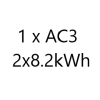
inverter/battery Giv AC 3.0/8.2

#4 judgepd

sparky77 I see similar behaviour which I've noticed is much worse if the battery is at 100% and in 'idle' state.

T
#5 TX200

sparky77 think its a grid requirement. I believe Tesla power walls don't have to do it as they use a gateway which protects the grid.

S
#6 sparky77

TX200 Nope, only requirement will be the grid disconnection for safety G99 that would be a minimum disconnection of 0.4 and a max time of 2.5 seconds.

Victron inverters are instant, I'm going to guess it's something to do with the delay in E115, as i believe it will only transmit every 5 seconds, but that still would not explain my test results.

T
#7 Tim

judgepd sparky77 This has been a topic of discussion before. From memory, there are design standards for inverter equipment to ensure that ramping up and down doesn't cause grid instability or "hunting" as they follow each other. When a steam iron is in use at our house, it's no issue as long as we are exporting more than 2kW. Any less and import spikes every time the iron pulls 2kW for the 10 seconds it needs to boil that small quantity of water to steam. An hour of ironing can add 1kWh to consumption.

H
#8 Heilghast

UPDATE 2 - FIXED: Further to my original post. I think i have found the cause of the issue. The clip on the CT clamp attached to the EM115 had sprung open causing part of the clamp to drop away from the cable. Secured the clip, and voila the grid import on my home monitor dropped to 0.
I tried the Timed Discharge function, with the discharge setting set to 3kw, and it functioned as it had done previously. Just discharging the amount of power consumed by the home.

Thanks to everyone who replied, and apologies to GivEnergy for thinking it was their software update

#9 TheDragon (GivEnergy)

The ramp up and down times, I've raised a ticket a few weeks ago about it. Hoping for a faster response time.

After all, the inverter can react to supply EPS instantaneously on power failure. So can switch from charge to discharge, in the time it take a device to notice, just like a UPS does.

#10 hoggy

A few weeks back I got a firmware for the Hybrid PV bug i posted about before which (via word of mouth) would also improve reaction times. I've not particularly noticed a difference but neither have I really spent time looking. I was more bothered about the bug being sorted.

B
#11 browellm

TheDragon (GivEnergy) After all, the inverter can react to supply EPS instantaneously on power failure

Can it? The EPS was always known to lag before being able to switch over. Even early Powerwalls did not give seamless transition.

#12 TheDragon (GivEnergy)

Mine is deffo seeing no switch delay.

Feature is coming in the future ,this is a beta test

#13 judgepd

I go from thinking it's really not an issue to get bothered about to be really frustrated by it. For example yesterday we exported 0.7kWh when the battery was not full because although it was sunny the sun was going in and out lots. This time of year it's really not a problem but at other times of the year every last Wh counts.

T
#14 Tim

TheDragon (GivEnergy) I thought the inverter reconnected the EPS connection 20mS (ie one ac cycle) after loss of mains ac, or maybe it just reconnects when the voltage would have next passed through zero. If an EPS-attached device had a mains power input with smoothing capacitors on, they could potentially maintain power for this short duration of time by discharging the capacitors for the disconnect time. I've seen plenty of devices which still appear powered on for several seconds after the mains switch is switched off.

A UPS usually has a built-in battery and inverter which powers the load. When the mains is lost, it'll beep to alert you but continue to power the load without interruption, until the battery reaches it's low level when it will shut down. If the mains is restored before the battery is depleted, it will re-charge the battery and there's no loss of supply. There may be more modern designs of UPS which supply the load directly from the mains and only switch in the battery/inverter when supplies are lost, I don't know.

#15 TheDragon (GivEnergy)

Tim

Cheap UPS (OffLine) Do as you describe, switch. So the GE Inverter is acting like an OffLine UPS
Mid Range (Line Interactive) - Regardless of Input, output remains in a tolerance window, UPS taps up or down.
Best (OnLine) - Load is on Battery all the time. The Mains charges the battery. 0 switch over, used for sensitive electronics.