All-in-One gateway fails/restarts when grid fails and off grid frequency is 54hz

15 comments started 2025-09-24 last 2025-10-07
GivEnergy ProductsAC CoupledBattery
#1 Joe88

It took me a while after installation before I realised the short (minutes) outage that occurred every time the grid failed wasn't normal and that the AIO gateway is supposed to keep the house running, switching to battery very quickly. I've previously been fobbed off with back-end config changes that I was told would fix the problem next time but it didn't. Eventually Giv asked my installer to replace the gateway and then later asked them to rewire the battery<>gateway comms cable but the problem remains.

One thing I have noticed is that when I'm running on battery with the grid switched off (inside the gateway), my SMA Sunnyboy 3800 complains that the grid frequency is 54hz which I'm advised is quite high compared to when on grid when it's 50hz. This means my solar inverter will not run on battery when the grid is unavailable. I'm not sure if I should be trying to focus Giv support on the 54hz or not so opinions/advice welcome.

The main problem is that when I switch off the grid the gateway will power off/go dark (no lights on the front or inside). The battery/AIO itself stays on. After a few minutes, the house will get power from the battery and the gateway will light up again, although I can't work out which comes first (i.e. is the gateway rebooting and the power comes on when it finishes, or is the AIO battery starting to provide power and therefore the gateway powers up).

I'm currently going through the painful Giv WhatsApp support (y'know: busy, busy, please wait while we connect, back to busy, busy, loop!) but would welcome all thoughts...

V
#2 Vestas

Joe88 The 54Hz business is to shut down your inverter (Sunnyboy 3800) output when the AIO battery is full/above a certain level - I don't have an AIO and can't quite remember which one it is. Basically there's nowhere for the PV to go to, so manufacturers put the frequency out of spec so the external inverter shuts its output down.

The rest I dunno, there's been a fair few issues with the AIO/gateway over the years and the fact your gateway was replaced and rewired suggests you were affected.

G
#3 geoffreycoan

Joe88 I believe (from previous people discussing this) the high grid frequency is deliberate by design. The AIO increases the grid frequency so that this causes any PV inverters to stop operating.

Hybrid inverters donโ€™t do this, they will continue to convert DC PV to AC and charge the battery, but the AIO canโ€™t and has to stop PV generation.

C
#4 CW

This is how my AIO behaves. If the battery is fully charged and there is excess solar being generated (i.e. more power than the house is consuming), then the AIO changes the frequency to 54Hz and shuts the inverter off. This usually takes around 20-30 seconds (which I presume is to give time for the inverter to switch off) and then the system restarts and the battery starts providing power.

I am led to believe that if the battery is not full (around 80% SoC - never tested this myself) then you would get an instantaneous cut-over (assuming you have the relevent settings).

You could test your AIO behaviour by cutting the grid after dark and seeing if you get the quickk cut-over, and/or try emptying the AIO on a sunny day to 80% SoC and trying a cut-out.

(edit) On my system, if I do the cut-out when there is no solar I do get the expected behaviour.

#5 Joe88

Ah, thank you both. Having just done a bit of digging I can see others referencing the 54hz when the AIO battery is above a certain level and I was above 90% all morning when the installers came to rewire comms, so I think I'll re-test that when I'm less than 50% some day!

In terms of the gateway not doing what it should, if anyone else has thoughts, please do chip in. I see lots of AIO owners saying theirs works as designed so I know it's possible and I'll keep banging on the door of Giv support (4 hours wasted on WhatsApp today and not got anyone yet)

(edit) CW thank you that's really helpful to know, however strange a user experience it is (lots of solar plus full battery = power outage when grid fails!)

C
#6 CW

Joe88 (edit) CW thank you that's really helpful to know, however strange a user experience it is (lots of solar plus full battery = power outage when grid fails!)

My understanding is this is to do with the fact the AIO is AC-coupled and cannot talk "quickly(?)" enough to the inverter to tell it to ramp down, so it bascially ramps up the frequency and shuts itself down to protect itself until the inverter is off

#7 Joe88

[unknown] thanks, that certainly makes perfect sense and matches my experience and I'll do some more testing to confirm - it's just that it's not mentioned in the sales and marketing information (when I was deciding on AC coupled Vs DC coupled) but then neither were all the other issues ๐Ÿ˜‰๐Ÿ˜

H
#8 Hopeful

I have found that there are a few scenarios where the Gateway delays cutover

  1. When the battery charge is low, for example 7% SOC
  2. When the battery is quite full, maybe above 80%, and there is more solar than home usage.
  3. When there is more than 6Kw of solar generation above home usage

I have had a few occasions where I haven't been able to work out why the AIO failed to cutover seamlessly which didnt hit the 3 reasons above too ๐Ÿ™

#9 Joe88

Hopeful - out of interest, what solar inverter have you got? My gateway works as designed if my solar inverter is switched off (I use the AC isolator to do this)

Based on everyones info regarding the 54hz I now better understand why the gateway does and I don't think it's anything to do with my gateway failing/restarting (no leds at all) if my solar inverter is on/generating when the grid fails, resulting in the whole house going dark.

H
#10 Hopeful

[unknown] I have 2 Solis inverters for front and rear of house panels. When the sun is high all the panels easily exceed the 6k excess but it doesnt seem to be an exact science and all readings are averaged so there is always a bit of the unknown involved.
I dont know what levels your failures are happening at but at say 50% SOC, on ECO with the battery charging from solar and around 4Kw generation your cutover should be seamless. Maybe you can find a time when you can meet that criteria even if you have to turn off 1 of the strings on your inverter to reduce generation?

I have UPS on my router hardware which helps when playing with power outs as you dont have to wait for everything to start back up after a power cut out.

M
#11 mikes01666

In the GE Portal can you see both the AIO and Gateway as being online? Both with solid, green circles next to them?
I've been having an ongoing discussion with GE about the Gateway being offline (while the AIO is online) but the system as a whole appearing to work OK.

D
#13 duplada

mikes01666 I've been having an ongoing discussion with GE about the Gateway being offline (while the AIO is online)

Good luck with that, I have a Gateway with Dual AIO's, Mine does the same, complained but usual not interested attitude from GE. I can go to the gateway installed in my garage and watch the green light, with the portal showing on my phone or tablet, every so often I can see my Gateway drops off the portal but only for a few seconds, a refresh brings it back. Looking at the Gateway connected light its solid green all the way whilst this is happening. I have enterprise class routers and access points, and fixed IP addresses with ethernet cabling to all devices. GE always wants to blame your WiFi sorry I am not using it. To attempt to locate where the problem was, I setup a test that I ran for 24 hours where I was pinging the IP addresses of each of my devices once a second, the Gateway, each of my two AIO's, my Local router gateway address, a remote internet site, the GE portal and GE data collection server. Each device recorded data into a separate file for later analysis. The results of the tests were that there was no communication issues whatsoever. Though since day one I did have some gaps in my SOC recordings 10 or twelve a day. My system is on a 60 second refresh now rather than 5 minutes so its a lot easier to spot issues like that. I jumped through all the GE hoops to get to the bottom of it, install new communication software on all of your devices etc. Finally they admitted why this sometimes happens.

GE Quote "its just a missing or late data packet, as the battery data and Inverter data are processed separately and re-combined in the stream server the odd gap is normal, large gaps could indicate issues. If the data arrived too far out of order, the SOC is discarded till the next one"

Just another instance of something that could have been written up in the user documentation.

Joe88 Based on everyones info regarding the 54hz I now better understand why the gateway does and I don't think it's anything to do with my gateway failing/restarting

With regard to the real discussion here my Gateway and AIO's work exactly as described above by user Hopeful. When my system was installed this year one of the AIO's was faulty on delivery, after a lot of support calls from my installer eventually (6 weeks later) GE sent out one of their senior engineers who fitted a new BMS PCB and updated the firmware. When he finally got it all working, both AIO's where at 10% and charging the sun was out my 2011 Sunny Boy 3.84kw inverter array was working and charging the batteries at that time. He demonstrated the EPS by turning off the grid power in the Gateway, it worked perfectly instant switch over no issues. When he restored power you could hear the relays kicking in with a delay, he said it is waiting to get the grid frequencies back in sync. So there you have it.

I really sympathise with your problems with support, Sending them a copy of your soon to be posted Trustpilot review usually gets their attention, or to brighten your day modify your Contact Screen on the APP like mine.
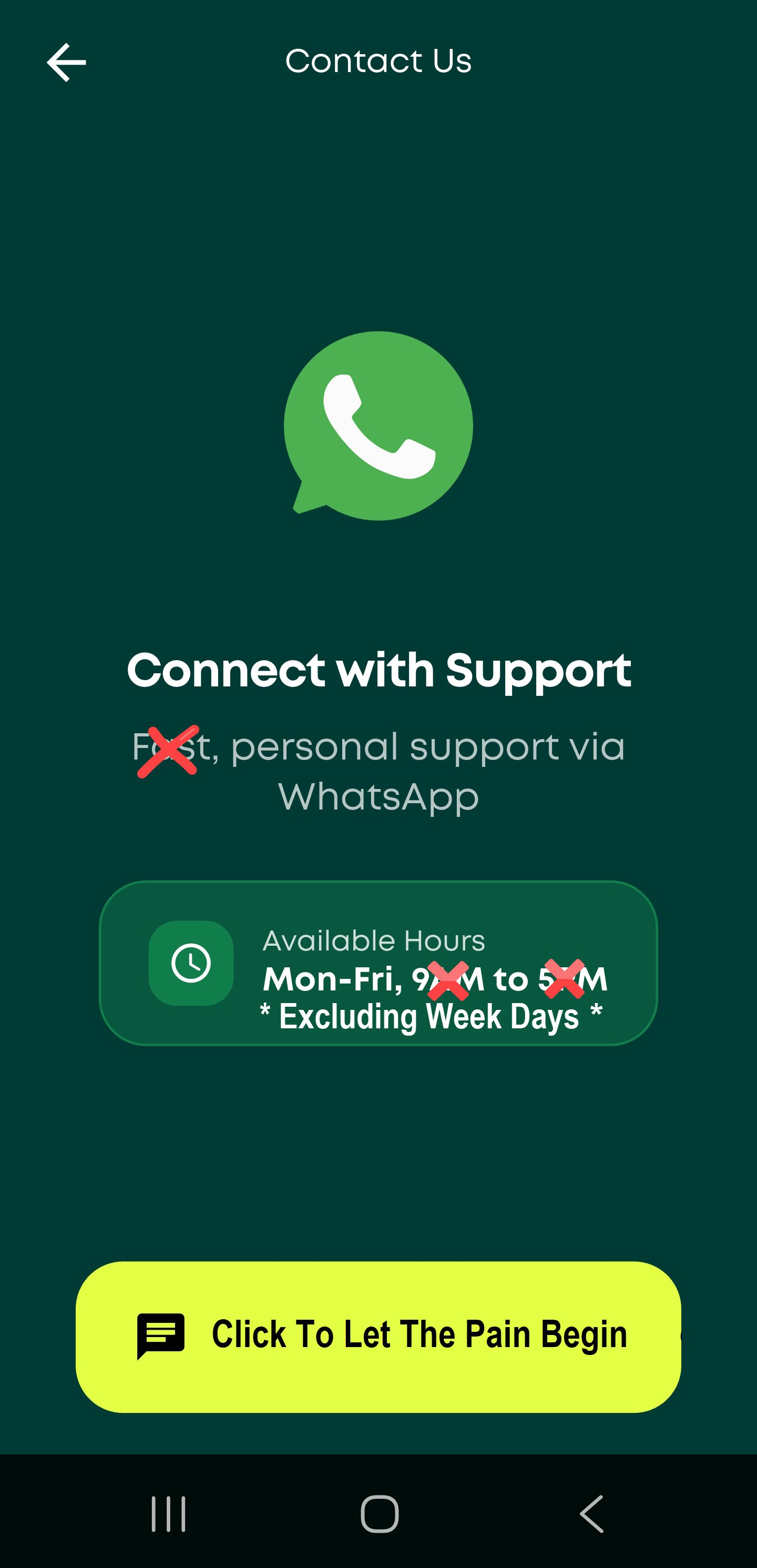
So GE support when you read this and feel angry try to imagine how angry all your users are that cannot get in contact with you. I have an open support ticket from May, its mile long, look up the number and reply to me will you, instead of ignoring me every time I update it. I have also got an interesting rendition of the App Splash screen you now cannot turn off. I can assure you that you will not want me to post that.

G
#14 geoffreycoan

duplada So GE support when you read this and feel angry

GE support don't read this forum very often, and respond even less.

In some respects its good that they run the forum where customers at least can help each other with advice, but its not good that they leave a lot of support activity to the customers.

D
#15 duplada

geoffreycoan

You would be suprised I have just had a reply via email

#16 PianSom

Reverting to the topic, if the GW/AIO starts delivering current at 54Hz after a short interuption (because of high PV generation combined with grid outage, low load and 80%+ battery) then does anyone know if it returns to 50Hz when the battery empties? And then presumably cycles (with some preset hysteresis)?

Follow-up question - is there a load interruption when 50Hz is resumed?

My own experience is that at grid resumption 50Hz resumes, and it does so without anything more than a very brief load interruption/flicker. But I have no knowledge of what happens as the battery empties.

Also, just to mention here: I saw this subject posed over on Facebook, and discovered an interesting nugget. My networking kit uses APC UPSs. The spec for these is that mains should be 50Hz +/- 3Hz. I was told that a user there has seen his APC UPSs refusing the AIOs 54Hz power and continuing on their own batteries until 50Hz returned. This leads to the situation that I might find my whole house is successfully powered by my AIOs apart from my network kit, which will fail when the individual UPS batteries run down. Not ideal.