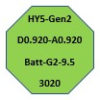
Multiple Giv-Bat 9.5s

14 comments started 2022-07-14 last 2022-07-15
GivEnergy ProductsAC CoupledBattery
I
#1 infamous84

Hi all,

I'm new here, and was hoping to get some advice/help please. Please forgive my naivety, I'm neither very well informed on solar technology, nor am I very technological, so please go easy.

We have a detached, 3 bedroom 1960s house, which is South facing and enough room for 16 solar panels. However, I am very hesitant about investing in a solar pv system (more than a decade after my father did) as I'm not sure where the technology is headed.

We are a high electricity usage household, 3 of us working from home, electric heating, and a SwimSpa to power. Energy usage approx 15,000 kWh per year.

Instead of solar pv, I'm looking at getting 3x Giv-Bat 9.5 batteries, and charging them from the grid. We might opt for solar down the line.

Do I understand correctly that the Giv-AC 3.0 charges at a rate of 3kWh, and I could/would need to add one to each battery to enable all 3 batteries (total 28.5kW) to charge within the 6 hour off-peak of Intelligent Octopus tariff?

Is the Octopus Agile worth looking into?

Thanks

Andy

#2 THALL

Hi Andy

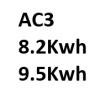
The AC3 can charge a battery at 3Kw per hour. So 2 AC3's would be enough, they would charge those batteries in 4 hours 45 minutes.

I take it you have an electric car already to be on Intelligent Octopus?

Without PV I would not consider Agile, Agile import price is pretty much stuck at 35p day and night these days. Agile is currently good if you have decent PV and would export a lot to the grid. But by the sounds of it you would use all the energy you generate.

Can I ask what puts you off PV? I had PV installed on my previous home and added it to my new home when I moved last year. I can not recommend it enough. When combined with batteries it can safe a lot of money.

D
#3 DIG

Like you I have high energy usage.
I am on an economy 7 tariff and current usage is 10000kw/nightime and 5000kw daytime.
In mid January we installed a 3.6Hybrid inverter and 2x8.2 batteries with 4kw of solar panels.
Our generation has been:
Jan 72kw/hrs
Feb 162
Mar 424
Apr 511
May 507
June 562
In the winter months we utilise the economy 7 night rate to charge the batteries, which usually last till mid evening.
March/ April we have been nearly self sufficient.
May/ June we have used 3kw daytime and no night rate.

Since installation in mid January 2022 we have saved just over £800 compared to usage data I have from the last 11years. I would expect this to continue for the remaining months. My projected 11year payback is looking much more optomistic especially looking at the current and future tariffs. Current thinking is nearer 6years.

Knowing what I now know I would have gone for the 5kw inverter, the same two batteries but additional solar panels in preperation for the inevitable future electric vehicle.

It would be nice to have the extra third battery to cover more of the winter consumption, but the economics didn't stack up for the few winter months usage as not require for probably 9months of the year.

I would whole heartedly recommend PV as part of your installation.

J
#4 johnnutton

I agree that PV is simpler and more reliable for most people. Wind is possibly better if you buy the more expensive windmill and have the space to site it in a field away from buildings and trees, which can cause turbulence which affects the efficiency of the windmill. Also be aware of possible vibrations and noise and possible planning requirements. so do your research thoroughly and look for user comments online. I have 4kWh PV with a 8.2kW battery. On bright summer days we generate enough to satisfy the house (including laundry, dishwashing, ironing, and baking using electric ovens). Using all the appliances the battery still charges by early afternoon. We still export to the grid as well. The battery then powers the house during evening and night until PV takes over in the morning (we do not use any high power consumption at evening/night apart from electric kettle). Most sunny days we consume only 300w in 24hours, which I believe is used for "handshakes" between bits of the system. In the winter we charge the battery on Economy7 and draw from the battery during the day. We consume between 15kW and 19kW per day so most of our consumption in the winter is half price as we tend to use 10 to 14kW E7 + battery with a further 5kWh full price. In the winter we tend to use washing and dishwashing appliances in the early hours E7 using the built in timers. With power prices increasing it is a "no brainer". But as with everything due dilligence - research systems, suppliers and online user comments. A general rule is have a battery that is double your generation rate, although this could be higher to ensure full charging overnight if fuelling EV, especially if you require a high charging rate as most mid range EVs have approx. 80kW batteries. That raises more thoughts about using your EV as a "house battery" ................! Good luck.

T
#5 Tim

infamous84 If you're planning to stay in the house for a few years, the sooner you make the investment, the sooner you'll feel the benefit. If you've not got cash in the bank, then return on investment is something to be worked on. Eon were offering interest free PV systems (my daughter is having hers installed this month). I haven't heard of anybody saying that they put too much PV on the roof, only people kicking themselves that they didn't squeeze as much on as they could when the scaffolding was up.

We are using 6,000kWhpa but since our installation in January we've been importing less than 1kWh/day from grid. We do have 12kWp of PV though and two HY5s and two 8.2kWh batteries. We also have an EV which has been charged exclusively from the PV since March. We export more than 20kWh/day currently and could produce more if we had a larger load or the 3.68kWh export limit was increased. We will probably have to go onto the EdF time of use tariff in late autumn to charge house batteries and EV overnight. We are currently on the standard EV tariff with a single rate 24x7 but can switch back and forth as needed.

We had also been dragging our heels but when we heard that prices were due to go up by 40% last April, we took the plunge and don't have any regrets.

T
#6 Tim

THALL The AC3 can charge a battery at 3Kw per hour. So 2 AC3's would be enough

I know you can connect AC3s over a single Modbus to control them as one plant but I assumed that a battery could only be connected to one inverter, although more than one battery can be connected to one inverter. Your response seems to suggests that the batteries can also be connected in parallel across multiple inverters?

If batteries cannot be connected to multiple inverters, then one AC3 and one battery would charge in (9.5/3) about 3 hours 10 minutes and the other with two batteries would take 6 hours 20 minutes?

#7 Simon_C

The 15,000 kWh/annum is high, that works out at 41 kWh/day assuming no seasonal variation.

I think the first step in determining the optimum solution is to understand/quantify both the time of day consumption profile, the time of year seasonal variation, and what loads are the most significant.

For example if it is Winter heating that uses the most energy, then some investment in insulation improvements, and more efficient heating with say a heat pump may be more beneficial than just trying to cover all your existing load with a battery system.

#8 THALL

Tim I might be wrong..... I assumed they could be clustered, bank of inverters bank of batteries. Ignore me, I know nothing, omg my wife is right! 😁

S
#9 stevelewis

infamous84

Tim Agree. As well as "free" electricity, adding PV reduces the amount of battery storage needed as the batteries can be double-charged each day for much of the year: once overnight on off-peak and again during the day from PV to cover evening use.

T
#10 Tim

infamous84 16 solar panels

If you had one AC3/9.5kWh and one HY5/2x9.5kWh, since the Gen 2 HY5 can charge batteries at 3.6kW, the overnight window would be big enough to charge the two batteries. If you installed as many panels as you could, then the HY5 would also be able to charge from solar.

PV would add to the cost of the project but ironically, since the energy source is free (rather than off-peak), the RoI on that aspect should be better than the other parts; all of which are essential of course in any case.

T
#11 Tim

THALL omg my wife is right!

Of course she is. Same as mine! 😅

I
#12 infamous84

Thank you all for your replies. It is very much appreciated!

THALL

Thank you for your reply.

THALL The AC3 can charge a battery at 3Kw per hour. So 2 AC3's would be enough, they would charge those batteries in 4 hours 45 minutes.

Is this simultaneously? And if I wanted 3x batteries, I could use 3x AC3s simultaneously too? Or as Tim mentioned, is it one at a time?

THALL I take it you have an electric car already to be on Intelligent Octopus?

A Tesla on backorder 😄 I'm not with Octopus yet

THALL Can I ask what puts you off PV?

Nothing really, other than initial outlay cost. I am considering Solar PV, but wanted to go down the battery/off-peak grid charging route first, and wait for Solar PV tech to reach the levels where self-sufficiency is more achievable... I know that's a long way off though

DIG

That's very interesting. Thanks for sharing! Mar/Apr/May/Jun all look great, I'm assuming Jul/Aug will be productive too. My concern is that, because we have electric heating, our usage outside these months is high (last January was 1,000kWh alone), so solar would not even get close, hence why I'm looking at such a large battery install. I guess the solar would always help contribute

DIG I would whole heartedly recommend PV as part of your installation.

Thank you!

johnnutton A general rule is have a battery that is double your generation rate, although this could be higher to ensure full charging overnight if fuelling EV, especially if you require a high charging rate as most mid range EVs have approx. 80kW batteries. That raises more thoughts about using your EV as a "house battery" ................! Good luck.

Thanks, good advice!

Tim 12kWp of PV though and two HY5s and two 8.2kWh batteries

This sounds like a nice set up.

Tim If you had one AC3/9.5kWh and one HY5/2x9.5kWh, since the Gen 2 HY5 can charge batteries at 3.6kW, the overnight window would be big enough to charge the two batteries. If you installed as many panels as you could, then the HY5 would also be able to charge from solar.

Does the HY5 Gen 2 allow for faster charging over the HY 3.6? I thought they were the same rate? I'm confused...

Simon_C

I know, it is high, and only likely to get higher with a Tesla on the way. It is an old building 1960s with cavity walls where the insulation has degraded. We are extracting and refilling soon, so hopefully that'll make a difference. Our seasonal usage is roughly 15kWh per day during Spring/Summer, roughly 40 kWh per day during Autumn/Winter. We have a Tesla on the way, and a SwimSpa too. Thank you for your advice though, adding insulation is high on my agenda!

#13 THALL

Just a note to say the PV will be far better in terms of value than all the batteries. Generating your own electric will work out better than charging at cheap rate especially as that cheaper rate keeps increasing too.

T
#14 Tim

infamous84 HY5 Gen 2 allow for faster charging over the HY 3.6

No, they are both 3.6kW but your original post referred to AC3. The HYs are hybrids which can take PV and either port it directly to battery or to house load/grid by AC. The AC3 is an AC-coupled inverter which cannot take DC in from PV but allows for a battery to discharge and charge as needed to/from the house supply. Even if you didn't want to go for PV at this stage, installing an HY3.6 or HY5 would give you the higher battery charge rates.

I spent a long time researching how much energy we could potentially get from roof-mounted PV. We are roughly at the same latitude at Liverpool where there have been solar surveys carried out for years. From their data, I was able to estimate that our south facing roof at 44 degree inclination could potentially generate just under 1,000kWh/kWp installed. I was able to check this with a friend who lives nearby with a similarly-oriented roof. He had 4kWp PV installed just over ten years ago and his FIT meter showed a total generation of about 38,600kWh.

If you could get 6kWp of PV on the roof, you'd likely generate 5-6,000kWhpa assuming similar orientation and latitude. The higher your annual consumption, the more likely you are to be able to consume all of your generation and the sooner you will reduce your exposure to electricity price fluctuations.