Hello, this is my first post. I recently enabled Eco Mode to minimise the import of energy from the grid because I was noticing that my batteries were being charge from the grid and then sending back to grid when they were full. Setting the mode to "Eco" resolved the problem but now I see my batteries going to 2-4% because they are not being charged sufficiently. How can I set the system so battery level doesn;t go down below 20%..if the battery level reach 20% it should use the grid rather than battery? Thanks, Vik
reserving the battery level always to a defined level

In the Inverter, battery settings, set reserve to 20% and hit save
Portal | My Inverter | Settings | Battery Options | Operating Range Slider
However, I'm not sure why you would want to do this in any case. You are basically reducing the capacity of your batteries to serve your load. Setting this will never use the 20% so if you have a 10kw battery you might as well have bought an 8kw battery.
If you have a split tariff with a cheap period than use the timed charge option to force a charge during your cheap period. Keep ECO enabled at all times so that outside of your chosen charge period you can be sure it's not dumping to the grid as well as only charge from Solar (if you have any) in the day time.

cluelesscris reserve for power cuts. EPS will be powered from this reserve capacity
Singhse9 What is it that you hope to achieve? As cluelesscris said why do you want to limit your battery? What are you saving that 20% for?
Going down to 0% battery doesn't harm the battery (and technically it isn't 0% as the battery keeps a small amount which you can never access).
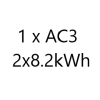
If you have an 8.2 or 9.5 battery then you have unlimited "cycles" and even on smaller batteries with approx 6000 cycles assuming 1 full cycle every day you would see 16+ years of battery life (3 full cycles per day = 5+years life, 2 full cycles per day = 8+years life).
ECO mode simply tries to balance your system.
I am going to assume that you have a Solar PV and Battery installed.
Obviously at the moment (November 2022) there is limited PV generated by Solar.
In ECO Mode your system will first use Solar to power your house load --> then any extra will go into your battery first --> then if battery is full then will export to the grid.
The settings below ECO can be used to OVERRIDE specific parts of the ECO settings:
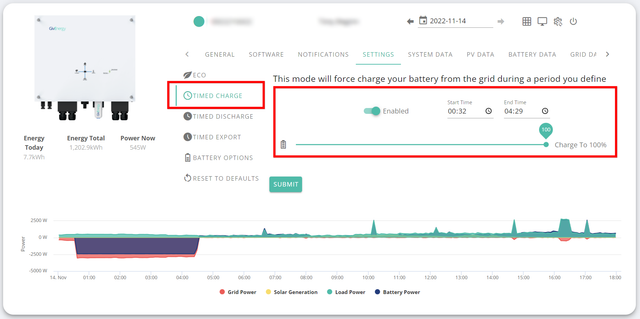
If you have a Time Of Use Tariff such as one offered by Octopus then you should set this up under Timed Charge.
This will ensure that your batteries use the ECO settings but will not import from the grid into the battery until the time period you have set.
Effectively Timed Charge can be set just for a minute and will prevent your system from importing from the grid to charge the battery EXCEPT during this time.
So even if you don't have a Time of Use tariff if you set the start time to 00:01 and end time to 00:02 then you system will no longer import from the grid to charge your battery.
****
If you aren't an Octopus Customer see if you can make savings if you are able to sign up via the internet use code:
https://share.octopus.energy/open-yak-351
If they are still limiting sign ups to phone only then quote "open-yak-351" instead.

If you use my referal code then you get £50 when you switch and I also get £50
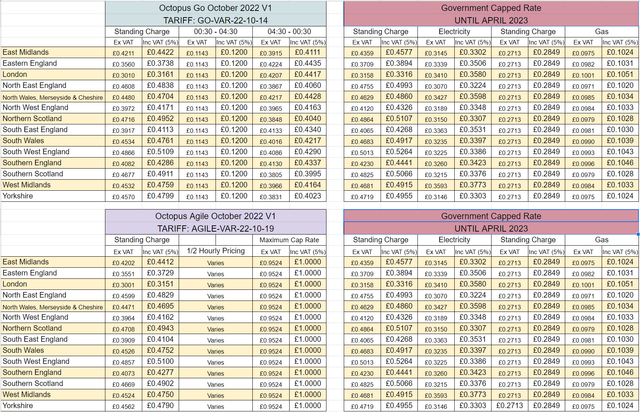
Here's a comparison of Regional Rates and Government Capped Rates (which expire April 2023)

TheDragon (GivEnergy) - EPS? Then set the reserve when you know there will be a power cut (or likely to be?). There will be at least 24 hour warnings - unless there is a major failure somewhere. You can reset the reserve after the danger has passed.
If you use automation (Home Assistant?) then you could easily set up a couple of buttons that set and unset the reserve - making it easy to react if there are any late warnings.
Apparently the reserve setting doesn’t currently work.
Thank you everyone for your help. My concern was the battery going into deep discharge mode so prevent going down below a certain level. But I see some of you have suggested it's should not be a problem, if this is discharged to really low level.
@magician2905 I tried to switch to Octopus but they don't allow online. I will give them a ring tomorrow and see.
Thanks
Vik
You can switch to octopus on-line but the process seems to imply you need to call them. However, just look for the 'I don't care' options and you can eventually initite a switch. It's fast too - I switched last month from EON Next to Octopus in 5 days and then to Octopus Go in a day or so. All on-line.
Singhse9 thanks for the switch referral.
Just remember that as soon as you are a customer you will need to change from the standard variable tariff to one of the beneficial ones.
There is also a Gas Tracker Tariff which may or may not be of help. We worked out that we would have saved £25 (50%) of our last months bill using this so are switching now.
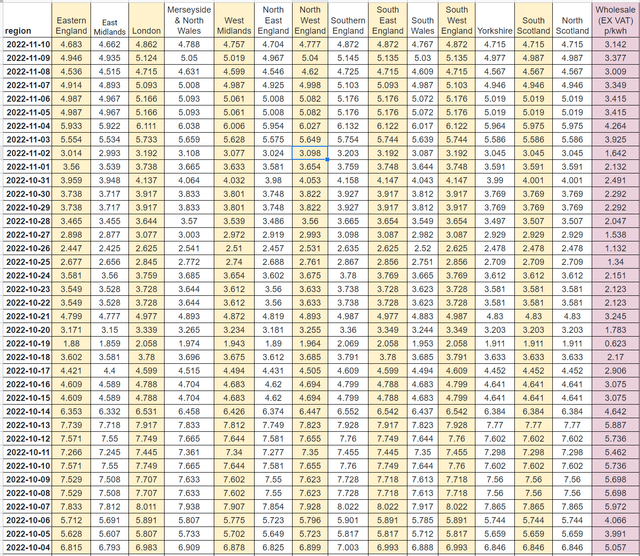
Please note that these are Variable!
It's very unlikely my battery is going to charge to 100% in a single day until next spring so if I'm only going to gain 60% charge at best why not have a battery reserve of 20%? It's still unlikely the battery will fully charge and that leaves enough reserve for some lights during an unexpected power cut.
It's a bit of a pain but until the actual reserve works I've been adjusting my battery export power at the end of each day depending on how much charge I have
Shatch If you are only using solar pv then yes its pretty unlikely you will see an appreciable charge going into your battery until spring 23 onwards.
IF you experience power cuts then that's a legitimate use case.
However it only works if you have the system installed so that it provides emergency power functionality. If you have got this installed like that there is typically a limit on how much energy it will provide through the specified circuits. There are too many ways it could have been installed, but they typically install it such that it powers a socket or two and then you can plug things in like the Fridge/Freezer.
If you haven't had it installed SPECIFICALLY with this function then your inverter will shutdown when there is a power cut . This is required by law to ensure the safety of workers that may be restoring powerlines etc and who would have no idea if, or how many, micro generators are connected to the system.
Typically a solar array & battery system is a "double prong saving measure". During high pv generation you are charging your battery to then power your house when night falls. Works great in summer.
The problem arises what happens in autumn/winter?
Well IF you also combine this with a Time of Use tariff such as the Octopus Go/Intelligent/Agile or from one of the few other Suppliers who offer them, then you can charge your battery up each night during that period and gain a significant benefit that way too.
We saved over £80 just by using this last month.
That is simply from the difference in cost between the cheap rate versus the peak rate. That's 3 adults in the house most of the day. Our bill for the month was £52 and could have been £39 but were still waiting on the DNO to approve the G99 application so we can claim the SEG on exported energy (hopefully comes through in a couple of weeks)
In an ideal world we would have been able to afford an 8k inverter (not that GE have one but others do) and about 15kw of battery storage. The combination of those with our 6kw Solar array would enable us to either use Solar during summer almost exclusively and during winter using off peak rates. Sadly that was beyond our budget.
Although its a pain to sign up to Octopus having to call them, you can still sign up via telephone. If you are currently on the standard variable rates with another supplier you will pay the EXACT same amount with Octopus.
BUT as soon as the switch has taken effect you can then immediately switch to one of the alternative tariffs offered by Octopus.
Obviously I cannot tell you whether you will save money or not. You would have to do some math to work out whether shifting your use to charging the battery at the cheap rate saves you money over the day.
But you at least have the option to switch tariff which is almost certainly something that you can't do with an alternative supplier (unless you want to fix your rates at a much higher price).
Plus, if you use my referal code then we both get £50 when you switch.
If you aren't an Octopus Customer see if you can make savings if you are able to sign up via the internet use code:
https://share.octopus.energy/open-yak-351
If they are still limiting sign ups to phone only then quote "open-yak-351" instead.

I thought that the health of these batteries was maintained best by keeping them between 20% and 80% charge? It's certainly the advice given to EV owners who want to maximise battery life. The top limit is also due to the effort it takes to push power into that last 20% as the resistance increases.
But I agree that it makes no sense to have a large battery and not use large portions of it. We set our reserve to 7% but the system simply ignores it and is always down at 4% at the end of the day so, irrespective of the pros and cons of setting these limits in the GivEnergy app, my experience is that they don't work anyway.

JeremyGooch We set our reserve to 7% but the system simply ignores it and is always down at 4% at the end of the day so
My reserve is set to 4% but the battery always stops at 8%...another thing that isn't working properly and is due for an imminent fix 🤣
Mine is set to 8% (because with a 4% percent reserve, it self-discharges overnight so I have to pay to refill it to 4% - I'd rather the sun do this in the morning.. Plus I'd rather not have the battery regularly get discharged all the way, for the health of the battery.), and it respects this reserve level until the early evening, then it seems to forget about it and start discharging down to 4%, where it stops again.
Also, why is the self-discharge rate so high? I make it around 20W - this seems excessive for something that is essentially off.
JeremyGooch I thought that the health of these batteries was maintained best by keeping them between 20% and 80% charge? It's certainly the advice given to EV owners who want to maximise battery life. The top limit is also due to the effort it takes to push power into that last 20% as the resistance increases.
Not at all. Cars with LFP batteries (same chemistry as the GivEnergy batteries) are recommended to charge to 100% at least once per week to maintain accurate battery monitoring. LFP batteries have no issues charging to and being stored at 100%.
In addition, the GivEnergy batteries (along with most BEVs) also have spare capacity above the rated value to provide a "buffer".
House batteries don't experience the same stresses as EV Batteries. The charging and discharging is much gentler than can be applied to EV's.
Also those House batteries that have 80% or 90% DoD have already reserved 10/20% to protect them. The stated 100% DoD batteries are in reality higher capacity but it looks better on paper/for marketing to say 8.2kwh/9.5 with 100% DoD rather than saying 9.11 with 90% DoD (8.2) or 10.55 with 90% DoD (9.5).
The reason why you should charge your Lithium Battery EV to 100% once per week is that it allows the battery system to Top Balance, so that all the individual cells can be balanced to the same voltages. This prevents extra wear on individual cells.
That's also part of the reason why when you commission the House Battery it fully discharges and then fully charges (the other is to allow the BMS [Battery Management System] to recognise & register the individual cell capacities).
That also explains why GE will suggest force discharging/recharging your battery if there is a fault, such as 0% or stuck %'s on the reporting.
If you are experiencing issues regularly its likely that there is a fault with the internal BMS.
judgepd Perhaps my setting has been applied to your battery and vice versa 🤣
magician2905 If you haven't had it installed SPECIFICALLY with this function then your inverter will shutdown when there is a power cut
The inverter will specifically disconnect itself from the grid when it sees there is no grid frequency to follow; that's the design requirement. The EPS output will reconnect in island mode a short while after and feed the circuit connected to the EPS connection from PV if available and battery until depleted. If you make a specific request to Givenergy, they can reduce the EPS disconnect time such that it becomes effectively a UPS, feeding the EPS circuit.

Tim The inverter will specifically disconnect itself from the grid when it sees there is no grid frequency to follow
hybrid or ac inverter or both?
positor1 All inverters whether AC-coupled or hybrid; it's part of the type testing that they should disconnect from the grid-tied circuits as soon as grid is lost.
I assume that if Powerwall can continue to feed the premises in the event of a grid failure (that's what I've come to understand from others posting here), then it must be because they disconnect the premises between the DNO fuse and the consumer unit, keeping the Powerwall energised. The end result is the same; the microgeneration at the premises does not back-feed into the distribution network. They must also have some means of resynchronising the Powerwall inverter to the grid when reconnecting.
I have made use of the EPS system so all my lighting and socket circuits are backed up. I have a separate DB which isn't backed up for the oven and Immersion heater as this would exceed the 20A limit. It works well, there's a few seconds as it switches over and then everything comes back on again. When the power is restored everything returns to normal with no interruption. If you have kids you'll understand the need for the WiFi to stay on 🤣
I have considered switching to Octopus and I'm waiting for an email as we speak, although without an EV I don't think they'll offer their best deals.
Are you saying you saved £80 in total including PV or just from making use of off peak electric? If it's the latter then you might want to double check you calculations. My electric bill was £36 last month and £89 in October '21 with no PV at all (both based on the current prices) and I have a smaller PV system than yourself with an east west split. Every penny counts but doubt I would even save £8 let alone £80. But yes, If I could get cheaper night rates I would make use of it and with the battery always topped up I wouldn't need the reserve anyway.
As I said that's 3 adults at home most of every day.
Numbers are correct for ONLY making use of the off peak by charging our battery up to full every night.
That's the off peak usage from the Octopus bill x difference in cost between peak & off peak (obviously there is some in there that is actually used at night we think maybe 400w background load / hour)
Off Peak - 259.4 kWh * (39.4-7.5p) = £82.74
Peak - 49.2 kWh
Total - 308.6kwh
Total Solar Generation was 225.2kwh (although that's a bit under reported as we had some connection issues and lost data)
IF you are already enjoying lower or fixed prices from another company then you SHOULD NOT switch.
IF you are paying the Standard Variable Government Capped Rates then you ABSOLUTELY SHOULD switch to Octopus, you will, at the very least, be in the exact same position but ready to switch as better rates become available.
AND IF YOU USE THE REFERRAL CODE BELOW YOU WILL GET £50 CREDIT JUST FOR SIGNING UP!!!
As soon as the switch over to Octopus has happened you can then switch Tariffs IF there is a better one for you.
You Can switch to Octopus Go even if you don't have an EV just tell them you have one or have one on order - thy don't really care and don't even ask you for a Registration - just a make and/or model.
If you want to switch to Octopus and see if you can make savings have a look at the tables below.
To sign up via the internet use code:
You will need look for the 'I don't care' options and you can eventually initiate an online switch.
https://share.octopus.energy/open-yak-351
Alternatively you can sign up vie phone just remember to quote "open-yak-351" instead.
If you use my referral code then you get £50 when you switch and I also get £50
Here's a comparison of Regional Rates and Government Capped Rates currently available (which expire April 2023)

Intelligent Octopus Rates By Postcode
Octopus Go Rates By Postcode

Christ almighty that's a high base load. I'm not even using that much right now with all the lights on let alone when everyone goes to bed. Who's leaving the heated blanket on all night lol