
Timed Charged

9 comments started 2022-11-15 last 2022-11-16
GivEnergy ProductsHybridBattery
J
#1 Jianchew

Hi

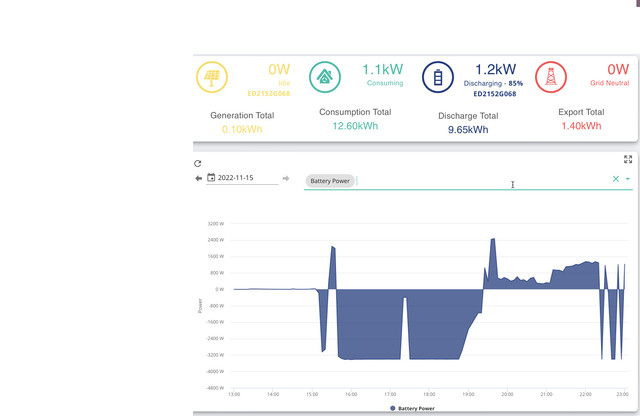
I have just had my Hybrid 3.6 and 9.5 Battery installed with Solar PV. It has gone through the calibration process today. I have time of use octopus tariff so it starts at 2130 and ends at 0230. I have changed on the web portal for timed charged during that period. Is it normal for the battery to keep charging to the level and discharging at the specified charge level? It just seems like a waste of energy to keep charging and discharging at around 85% (which is where I set it as). Is this normal behaviour?
Z
#2 Zakalwe

Yes, totally normal. You have told the system to maintain the battery at a certain level during the Timed Charge period and that is exactly what it is doing.

J
#3 JeremyGooch

I've found it only takes about 90mins to charge a 5.2kWh battery to >80%. So we've got our schedule set to start at 4am and stop at 5:30am, which is when our cheap overnight period runs out. Seemed more efficient than having the system having to keep it topped up for several hours.

There's a 10-20% loss in energy between charge and discharge, which is another reason to try to make sure that the end of charging meets the start of your more expensive rate.

Z
#4 Zakalwe

JeremyGooch

Indeed, though that's answering a slightly different question than was asked.

Yes, it would be more efficient to only charge the battery when it;s needed and to fit that charging period into the shortest possible period. There's lots of variables though- for example, my BEV charges during the Timed Charge period so I tend to keep the battery at a constant level rather than dumping battery charge into the car. Even more so at this time of year when the charge in the battery has come from imported power.

J
#5 JeremyGooch

Zakalwe Yeah, that was another reason why we pushed the charge right to the end of the cheap period, as otherwise the car just drank it all. In fact, given that we're on Intelligent Octopus so our charge schedule can be quite variable, I'm writing a script that will actually turn overnight battery charge off when the car is plugged in, as it just seems a waste if the car might take it.

J
#6 Jianchew

Thank you. I just want to make sure, I thought the battery would just be idle once it reaches the battery percentage required during 'timed charge' and let the grid take over during that period but I was mistaken.

T
#7 Tim

JeremyGooch If you're writing an automation, then it might be useful to concentrate on charge rate rather than period? If you need to put say 4kWh into your battery to get it to 80% and you have a 4 hour EV charge window, you could align the EV and Batt5.2 charge periods and vary the Givenergy inverter charge power each night. To put 4kWh of charge in tonight; use your automation to reduce charge power to 1kW and it will take the 4 hour charge window to do that. If the number is say 2.8kWh tomorrow, vary the charge rate to 700W. Slowing down the charge rate should reduce the amount by which the inverter charge/discharge bounces around although the house will be being fed from grid during the period anyway.

T
#8 Tim

Jianchew but I was mistaken.

You're not mistaken, the battery is supposed to idle but the voltage measured changes slightly with temperature and as charge/discharge current reduces. The charge/discharge overshoots slightly and is a continuous "hunting" of voltage. As per the previous post, reducing the charge rate to complete the charge at the end of your window would reduce this but really only lends itself to an automation unless you want to do a calculation and manually set it each night.

S
#9 SilverArt

Tim I've been thinking that "Start Time" of "Timed Charge" should have an automatic option to achieve the specified level by the specified time to avoid any hunting. e.g. empty 5.2 kW battery with a 2.6kW charge rate would automatically start charging from 2hrs before the specified time but automatically start charging 0.5hr before the specified time if it was 75% full. etc.
ECO would take care of whether grid power was needed to maintain the 2.6kW charge rate.