
Immersion advice

43 comments started 2023-03-26 last 2023-05-23
Home AutomationGivEnergy ProductsSmart Plugs
#1 Daniel

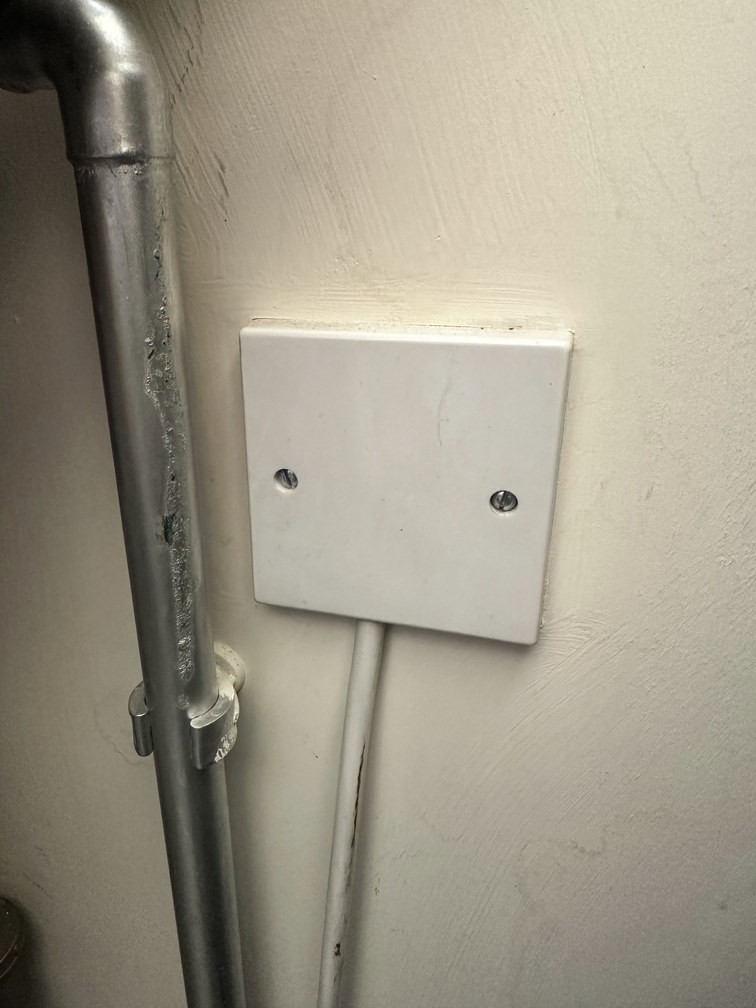
I have a gas boiler and combination hot water tank with 13 A immersion with built-in thermostat.

It's wired in to the wall as shown in the attached pics.
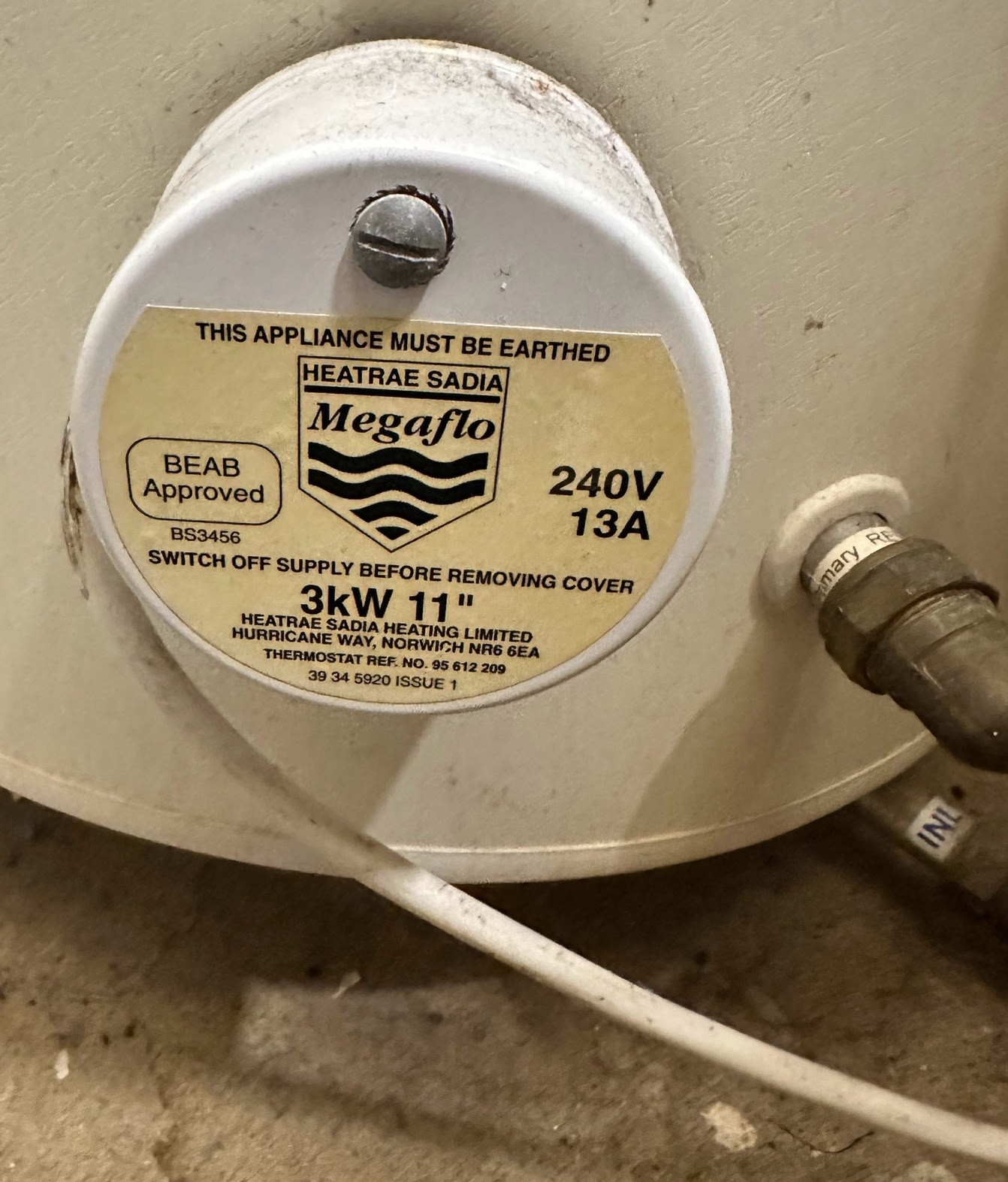

Could I just replace the wall plate with a 13A mains socket, use a GivEnergy smart plug and then set up an automation (when GivEnergy release that feature - or set up Home Assistant) to turn it on when there's excess electricity? Or when electricity is cheap such as 2am.

I am not that comfortable running 13A through a 13A mains socket - I'd like there to be some headroom like the smart plug would have.

If not how do I do it without spending £100+ and without having to maintain a local server with Home Assistant on please?


S
#2 stevelewis

Daniel buy yourself a £20 immersion timeswitch from Screwfix. It is permanently wired. Not as smart as PV diverter (either on or off), but a fraction of the cost and your battery will compensate if PV isn't producing 3kW when the timeswitch comes on.

#3 Daniel

stevelewis it's a good option. The smart options can take a long time to pay for themselves. At the moment I wouldn't have it switch on during the day - not enough sun most days. However once on Agile, say, 2am running for an hour would save a lot.

If there's a smart option that's not stupidly expensive I am still interested too. For example this: https://www.amazon.co.uk/gp/product/B0BFGWQPGH
But it needs integrations with something like Octopus R&D and GivEnergy automations.

#4 hoggy

You can also look at the Tesla Smart immersion head (no not that Tesla)
I have one, works with Home Assistant (by an add on from the same person who did GivTCP)

Allows you a bit more flexibility in regards to target temperatures but depends if those features are worth the extra cost over and above a smart fused spur.

S
#6 StuartWaudby

There are a couple of options. The easiest is a smart fused spur switch which can be app controlled or timed. The other option is a fuseboard switch / power monitor which can be added to the DIN rail of your fusebox. This is a more technical install and should be done by an electrician if you are not competent. Both these options can be set up with Home Assistant but the process can be very complicated.

I have a DIN switch and use Home Assistant to power up a SOLIC diverter when the battery inverter trips out on voltage. It powers the SOLIC down when it sees the inverter exporting to prevent battery going to hot water.

#7 TheDragon (GivEnergy)

Personally I wouldnt run 3kw from a plug for long periods. This is the reason Immersions are hard wired.

As other say, WiFi smart spur, I use a 40A DIN Rain switch on mine, controlled by HomeAssistant. Perfect. I can turn on during the day when solar is surplus, off when not, to make double sure the iBoost cant grab any battery.

In your more simple case, it would be ideal, on when surplus exceeds 3kw, off when not, else it will drain the battery

Z
#8 Zakalwe

TheDragon (GivEnergy) Personally I wouldnt run 3kw from a plug for long periods. This is the reason Immersions are hard wired.

Absolutely.

The other advantage of a dedicated diverter is that they will only divert the excess to the immersion, so they can mop up relatively small amounts that would otherwise be exported. With a timer you are supplying full power to the immersion or nothing.

#9 Daniel

Lots of good ideas. Thanks. The more expensive ones are better but will they ever pay for themselves? It'll take a long time.

The easiest is a smart switch like the one I linked or the more expensive ones others linked. Or a smart DIN rail switch.

Other than the iBoost+ everything else requires running my own Home Assistant to get everything I want. I gave up on running my own servers at home long ago when the server room became a nursery. So the question is which smart spurs or switches will GivEnergy or Octopus integrate with now or in the near future?

Z
#11 Zakalwe

My iBoost has used over 700 kWh in 12 months. I pay 10.3p pkWh so that's >£70 worth of gas saved in a year.
More importantly, that's 700 kWh of gas that I didn't need to burn to heat the water and 700 kWh worth of CO2 that I didn't send into the atmosphere. Not everything is about payback.

#12 Hook

Zakalwe I suppose it’s how you approach ‘green energy’ some people are in it to cut down on carbon footprint and not so bothered about cost. Others are trying to save money in todays unstable energy market, whilst others are looking to make money by selling energy.

Different scenarios for different people. The OP is looking at the cheapest way to power his immersion though.

#13 Stevef1964

The other water heater on the market is the MyEnergi Eddi. It wires up from your immersion plate and the immersion element wires to that. You will probably need a Harvi so that you can extend the CT clamp over wi-fi.

The Eddi takes the excess solar being exported and diverts it to your immersion. It has an app that allows you to monitor whats going on and stop/start it.

Z
#14 Zakalwe

Hook

Indeed.
Everything in this game is variable. There's a myriad of possibilities and options which will drastically affect final outcomes. My post was sort of a counterpoint to the linked thread about the Myenergi Eddi which showed, for that user, a ROI stretching into decades (not that there's any chance of the electronics lasting that long!).

For me, the ROI on the iBoost will be less than 4 years. And due to the way that it only siphons off excess generation, I would expect the ROI to be cheaper than a "dumber" system that just turns the immersion on/off at set times and at full power. Even a smarter system using HA to switch a "dumb" switch on and off wont modulate the power going into the immersion, so it's always going to draw full power.

It's all swings and roundabouts in this game! :-)

#15 positor1

Hook
wow that is shocking, had I have seen that before buying Eddi I may not have.
However I do love a gadget and expect to have to have an electric car one day and the myenergy infrastructure and app are very good.
since eddi was installed in December it has given me £36.10 savings against eco7 prices. that will of course jump up massively in the coming summer months.

T
#16 Tim

Daniel I gave up on running my own servers at home long ago when the server room became a nursery

Don't blame you! I resisted the Home Assistant vortex for ages (although I was running RPis) but eventually caved in and now wished I had just jumped sooner. I blame @hoggy for pointing out the £30 ex Wyse terminal on eBay which offers so much more than a RPi for a fraction of the cost and you can actually buy them. Since you hosted your own servers in the past, I fear it may only be a matter of time before you also get drawn into the vortex. At least with a HA/Wyse terminal, you can plug it in behind the broadband router where nobody will ever see it, and manage it remotely.

S
#17 simont

I've also been using one of these for a while now. It does have a HA custom component that works well:

https://www.teslauk.com/product/7795/t-smart-thermostat

Simple to switch out the existing thermostat without removing the heating element and thus not having to drain down.

D
#18 dragon2905

I tried the Smart Plug with Immersion option (Drayton Wiser as its the same brand as our heating controls) and the smart plug tripped every time.

It appears smart plugs (this is a generalisation) can not handle the surge when turning on and off.

The Tesla Smart Immersion is a very good, cheap, option to get an approximate Immersion Diverter. You need to make sure your immersion is compatible and purchase the correct piece of equipment as there are a couple of options.

#19 Simon_C

Unlike the OP, my immersion element is top entry in to the hot water tank, so it can only heat the top half of the water content.

This makes the relative cost calculation more complex. With my Eddi I have a choice to use electric to heat just the top half of the tank which is sufficient for 2 quick showers and a bit of washing up and uses around 2-2.5 kWh per day depending on the residual heat from the previous day.

Typically once a week SWMBO prefers a bath, so the gas boiler is activated which heats the full volume of the tank and uses around 7 kWh (from meter readings taken last summer just for heating the tank).

The standing losses from the tank will be higher when the whole tank is heated rather than just the top, even with the extra insulation I have fastened around the tank.

My cost comparison then is:-

1/ Electric = 2.5 x 16.6p (Eco7) = 41.5p/day worst case with no solar top up for 6 days of the week.

2/ Gas = 7 x 10.25p = 71.75p/day on bath day, or every day if electric immersion not used.

Some people may use the full tank every day, so the comparison becomes different, as well as with different tariffs for elec vs gas.

I also use the 2nd output from my Eddi to power 2 oil filled radiators, that help out the gas boiler heating in 2 regularly occupied rooms on sunny but cold days, so it is not just about what you can do with the immersion.

A
#20 aniseedvan

Tim I’m looking at a Tesla immersion heater too - given it works with HA (my little wyse is running beautifully behind the shoe cupboard 😂). I’ve got some very old economy 7 switched thing on the wall I’m not sure we’ve ever used, but keen to get off gas in the summer for the hot water.
Will probably be speaking to a friendly electrician I know soon…

T
#21 Tim

Simon_C my immersion element is top entry in to the hot water tank, so it can only heat the top half of the water content

Sounds like it's a short one. Replace it with a long one. They're the same wattage but can more-readily heat the whole tank?

#22 Simon_C

Tim , but replacing an element in a tank over 20 years old is high risk for buckling the tank, and we manage with the water content the existing does heat. A longer element would then consume more electricity as it has to heat a larger volume of water.

I am considering fitting a Willis heater wired on the 2nd output of the Eddi, for Summer heating of the whole tank. It may not be worth it though, as it is better for the gas boiler and pump to be run once a week for bath day during the Summer to avoid the components seizing up.

The other useful feature of the Eddi is the device current limit. I have mine set to 6.0 Amps, so the existing 3 kW immersion element is limited to around 1.4 kW even on boost rather than drip feed from solar excess, which means there is less temperature stratification in the tank and more even heating of the top half water content. This also ties in with the 1.4 kW minimum charge power of the Zappi car charge-point.

A
#23 andrew_bond

I agree - I wasn't keen to swap out the element either! I had some spare Shelly 1 wifi switches, so initially used one of those to power the immersion directly. They are rated at 16A (and it did work), but I worried it would get hot in extended use so added a contactor - the Shelly now controls the contactor (so the Shelly only takes a very small current). It's timed to run at cheap rate, and it senses the immersion temperature so turns off when it reaches my set temp. In total it cost me under £50 and has been working well (though it would be nice to have the option to run at less than 3kW). We also have solar thermal so hope that will provide most of our HW needs over the summer (and I can now monitor things to see how it's doing)

M
#24 mwilliams2

Just an observation on usingplug/socket for the immersion heater already commented on. The plug will be permanently in the socket and probably rarely unplugged. The contents will inevitably corrode and make poor contact without the cleaning effect of removal and insertion. At 13A this will get hot and cause problems. I had this with just a washing machine after 10 years.

#25 Daniel

I wanted to calculate how long before return on investment on any diversion of solar to water heating. I wonder if it's a false economy. Here's my calculations:

Buy back from the grid is 15p (with Octopus) per kWh. The cost of 1kWh of energy in gas is 10p. Electric heaters are 100% efficient. Gas are at least 80%. So adjusting values to get 1kWh of energy in to hot water costs:

  • 34p when it comes from grid
  • 15p when it comes from excess solar
  • 12.5p from gas

So using excess electricity to heat the water costs me 2.5p per kWh. I.e. better off not to do it and get 15p buy back per kWh.

Unless there's something wrong with my calculations?

S
#26 SteveCook

I use my immersion with iBoost + and by your figures are probably not maximizing my financial position, but I put in PVs and battery for 3 reasons.
Save energy cost
Have EPS backup
Reduce CO2 emissions..

For reason 3, that is why I use my excess solar for the immersion heater, but auto turn it off 16:00 - 19:00 so I don't ever get stuck with peak Flux import if it has been a cloudy day

P
#28 pacemaker

Yeah this has been covered a couple of times recently... but your maths is right. I did the same for heating oil and it's extremely more economical to heat it via oil at the moment. But as others state, there is a good reason to do it climate wise... I do the same on Flux, turn mine off at 4pm to take advantage of peak export prices.

B
#29 billG

Zakalwe a timer is ideal for winter offpeak timed charging of my 10kwSunamp heat battery😊, or timed early afternoon charging for 100mins on sunny summer days as the 9.5 kWh GE battery is usually full by noon.
Bill G

D
#30 DD

Daniel Gas are at least 80%.

Is that something you've measured for yourself, or read ?
When heating hot water, boilers tend to be a long way from condensing temperatures. And there's a lot of heat left behind in the boiler and pipework. When I actually measured gas usage for heating water, I found it used a lot more gas than might have been expected.

34p sounds like SVT (which will be coming down at the start of June). Have you considered any of Octopus's other tariffs ?

#31 positor1

DD SVT

what is svt?

T
#32 TX200

positor1 standard variable tariff

D
#33 DD

positor1 what is svt?

Standard Variable Tariff. The default one if you don't fix or choose something else.

BTW it's July when the price cap will be changing, rather than June - got myself confused...

#34 Daniel

DD something I have read. My gas boiler is less than a year old too so I'd expect reasonable efficiency. Measuring myself would be very hard. I'd need to know the volume of water in the hot water tank and the exact temperature and the exact amount of gas used. The volumes could be approximated but I've no way of reading the temperature - it's covered in a hard foam layer. Although I could run a hot tap and measure from that..... nah not worth it. Whatever the case the efficiency would need to be much worse or gas prices go up for it to be worth using electricity at 15p a kWh.

34p is SVT yes. I have considered import agile and I can see the average price of that is lower and even the peak prices are rarely higher than that too. I am undecided if it's worth the risk or not. There are other advantages such as when the price drops low enough at about 2am it WOULD be worth turning on the immersion. To an extent the agile tariffs bring effort or stress monitoring them and worrying about using the oven at 6pm. And I question if it's worth it. I am still considering changing to agile though.

#35 positor1

Daniel I'd expect reasonable efficiency

dependent on the temp setting. seems to be a bit of a smoke screen from manufacturers. read more on the other thread.

#36 Hook

I’m on the tracker tariff and my gas is currently 3.7p, with my electricity at 17p. But I get paid 15p for export.

Not even worth considering using solar for my immersion at the moment.

D
#37 DD

Daniel Measuring myself would be very hard. I'd need to know the volume of water in the hot water tank and the exact temperature and the exact amount of gas used

Ah, I didn't have anything that complicated in mind... just use gas to heat the water for a couple of weeks, and see how much that uses. Then use electric for a couple of weeks, and see what that uses. Or look back at last years summertime use of gas, since heating water was probably the main use of gas ..?

This assumes a smartmeter that takes readings half-hourly, and running immersion for a fixed time overnight when there's little other use so that you can isolate its usage. (I run it 3:30 to 4:30 am which is the last hour of my cheap overnight tariff.)

R
#38 Rogerbu

I am on Octopus Flux with an EDDI.

I ran the Hot Water on the boiler for 3 days and averaged £1.21 per day (Exc, cooking usage, Standing Charge & including VAT)
I ran the EDDI using solar during the day but with a scheduled top up during flux 02:00 to 05:00
I used on average 3.4kWh per day.
With Flux import overnight being £0.2011p & Flux daytime export being £0.2252 - say £0.21.5p/kWh (inc VAT)
The Flux 16:00 to 19:00 £0.3593 p/kWh is not relevant as I am virtually always at 100% at 16:00 so using EDDI does not limit my export during 16:00 to 19:00.
So if Gas boiler hot water heating cost me £1.21 per day on average.
and, Electricity Overnight + export lost costs me 3.4 x £0.215 = £0.73p per day average.

For me the Immersion Heater cost 60% of the cost of Gas Boiler.

#39 Maxwell

Has anyone considered changing their 3KW electric immersion heating element in the tank for a 1KW one ? My thinking being that that would put less strain on the house load and in the event that you have excess solar and the water temp is lower then you are at least pre-heating the water and reducing your demand on gas or oil. In my case with single tariffs for gas and lecky it is cheaper to use gas than grid lecky.

D
#40 DD

Rogerbu I ran the Hot Water on the boiler for 3 days and averaged £1.21 per day

So if your gas is the SVT 10p/kWh then that's around 12kWh per day. That's the sort of thing I was finding - it seems to take an astonishing amount of gas to heat hot water.

W
#41 wrefordj

Maxwell I was hoping to change from 3kW to 2kW since I have my immersion on all day apart from a few hours prior to the GO period (0030-0430). I wanted to avoid using the grid when boiling a kettle etc at the same time. However, the plumber found the element was so tightly screwed in that we decided to avoid risking damage to the tank and left it alone... Previously, the HW was from the oil boiler.

D
#42 DD

Yes, I'd have concerns about buckling the tank when trying to remove the element. (One possible downside to increasing use of immersion is shortening its life, esp. in a hard water area.)

I wonder if there's an option to use a simple step-down transformer to reduce the voltage, and hence the power. 110V transformers should be easy to obtain, but unfortunately drop power by a bit more than desirable. (Power is proportional to square of voltage, and so would drop 3kW down to 0.6kW.) Not sure how efficient this would be.

#43 Woodlands

You can add a 4kW or 5 kW dimmer into the circuit and set it to reduce the power to what you want. They are available on auction sites. Just make sure you fit it complying with wiring regs and in an insulated box.