dragon2905 I ran some numbers based on my own calculations, and taking some worst case scenarios into account as well. This is based on 8.2kWh battery, 2.4kW charge/discharge rate (2.6 from inverter translates to around 2.4 in reality to/from battery via grid), and 0.7kW constant load (my average usage per day is 16-17kWh so seemed fair to start here).
The calculations I ran also assumed 0 solar generation for the whole day, though I've also added some calculations at 5/10/15/20 kWh generation for a day. Go can get very cheap no matter how inefficiently you use it by virtue of allowing cheap import rates, but export payments are awful.
Eco7 was surprisingly good on the whole, though tracker or agile may be able to win out in general depending on how you use it.
Where Flux started to shine was as the generation starts to tick up. If I assume no solar as a baseline, then any generation is valid for export, or can be offset against usage at the prevailing export rate. I don't think it's an entirely unfair comparison anyway.
For the purposes of comparing apples with apples, I've set my rates at the current Go/Eco7/Flux values when I ran this, rather than back-dating legacy ones. I am on the same 7.5/40p rate you are, so my actual numbers on Go will be slightly better, but this rate runs out end of August for me.
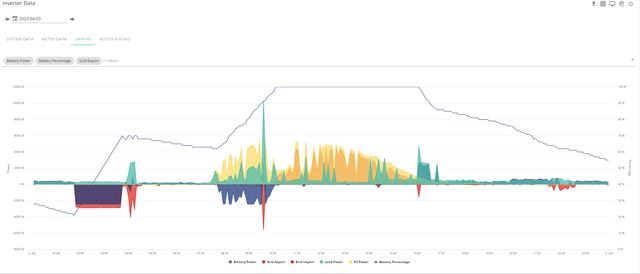
Flux values across any given day, where it's charged and held until discharge time, this isn't 100% efficient, just a baseline. Having a 2nd charge slot that tops up battery just ahead of peak rate should improve this a little.

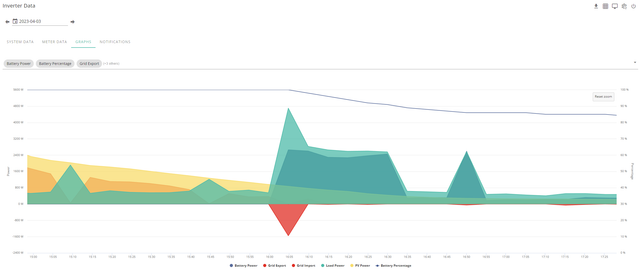
Go values where the battery is charged and then discharged in the day, at my usage this would run out with 0 solar and have a deficit of around 5 kWh in the day. This means I need at least 5 kWh of generation to really make Go as reasonably cheap as possible, or to avoid most peak usage.

Summary for all 3 options, can see that at lower values of say 5 kWh generation in a day, Go is cheapest for me, but it just doesn't really scale much beyond this value. At 10 kWH generation, Flux starts to take the lead, and is the best one for negative relative unit pricing for my input parameters beyond this point.