General Dogsbody No worries.
On the SAHP, did your installer show you how you can control what times it comes on to heat the water, or can you have a fiddle with the control box and see if you can adjust the timings.
I have an ASHP but I think the logic of when to run it would translate over to an SAHP.
When you run the heat pump to heat the hot water there is always going to be a bit of wasted energy as the heat pump has to heat the water in the pipes between the heat pump and the cylinder before that water in turn can start heating the cylinder water. So it makes sense to not run the hot water heating too frequently.
My thinking is that I have a large new well insulated hot water tank (replaced as part of the ASHP installation) that is capable of holding sufficient hot water for a day. Obviously if you run lots and lots of baths then this may not hold true for you.
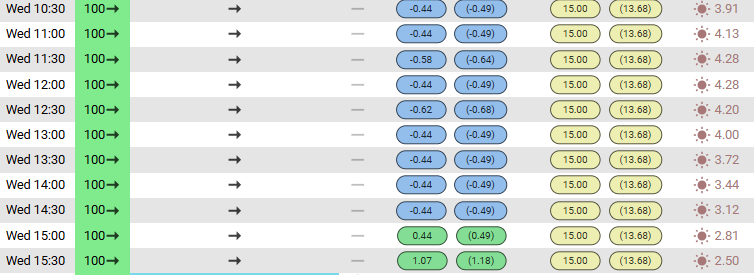
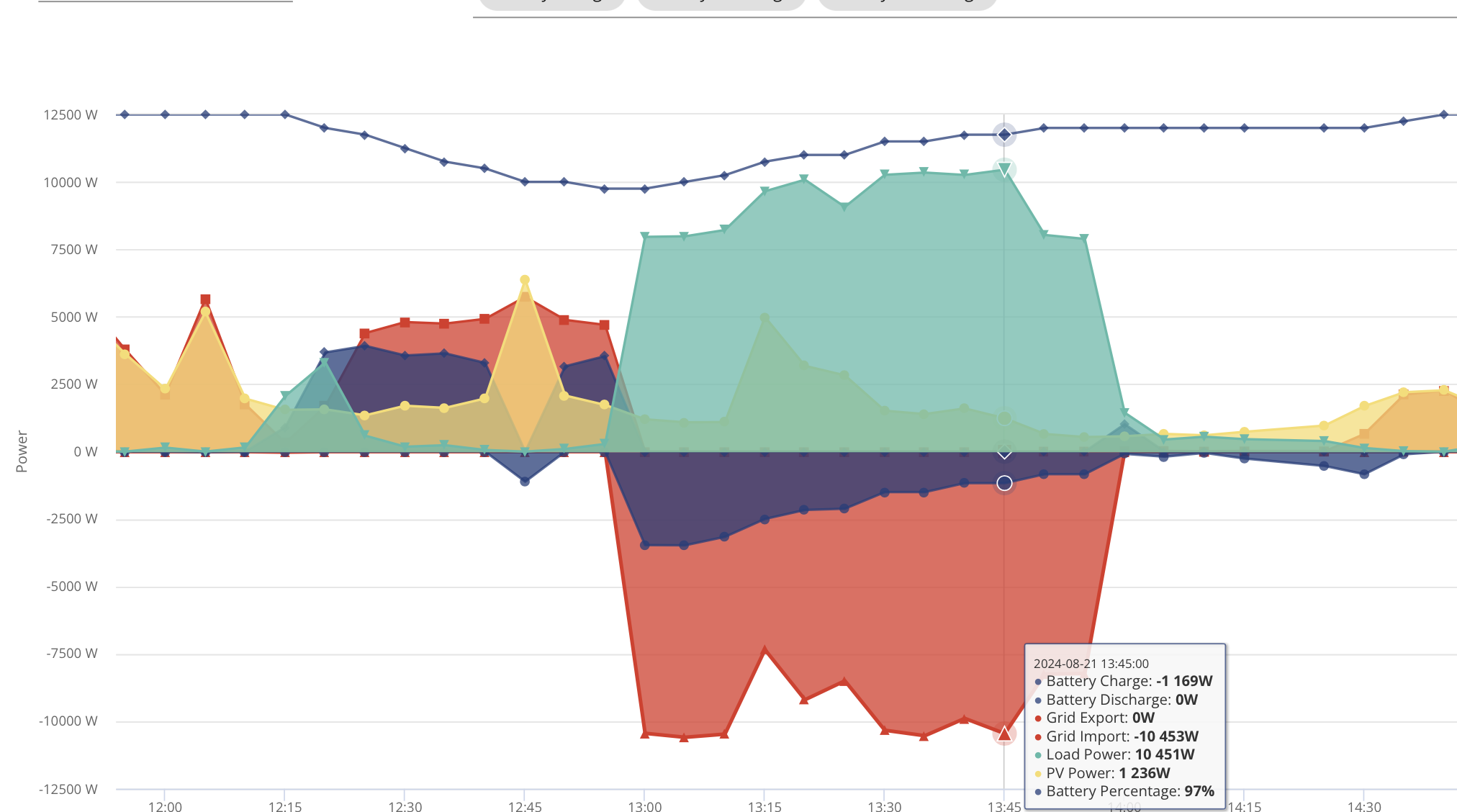
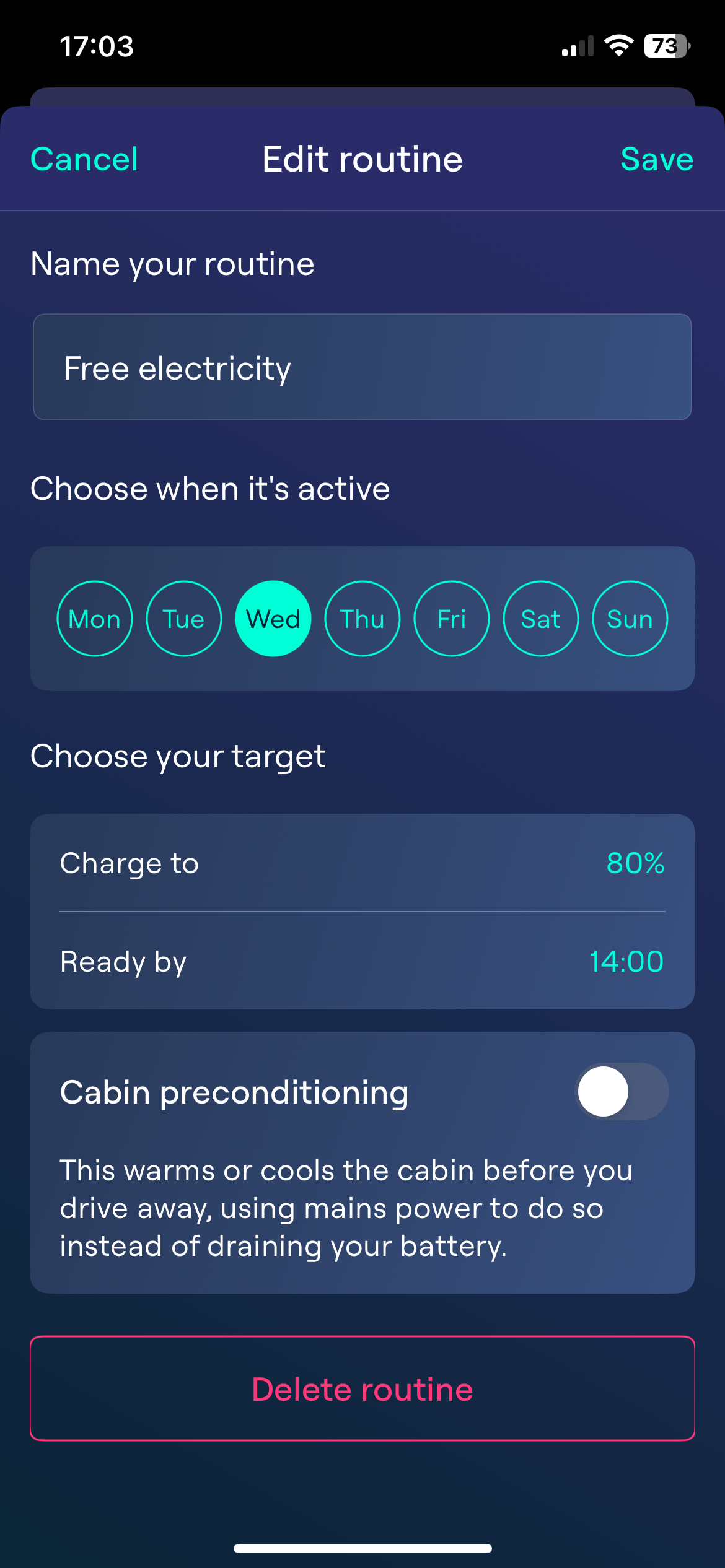
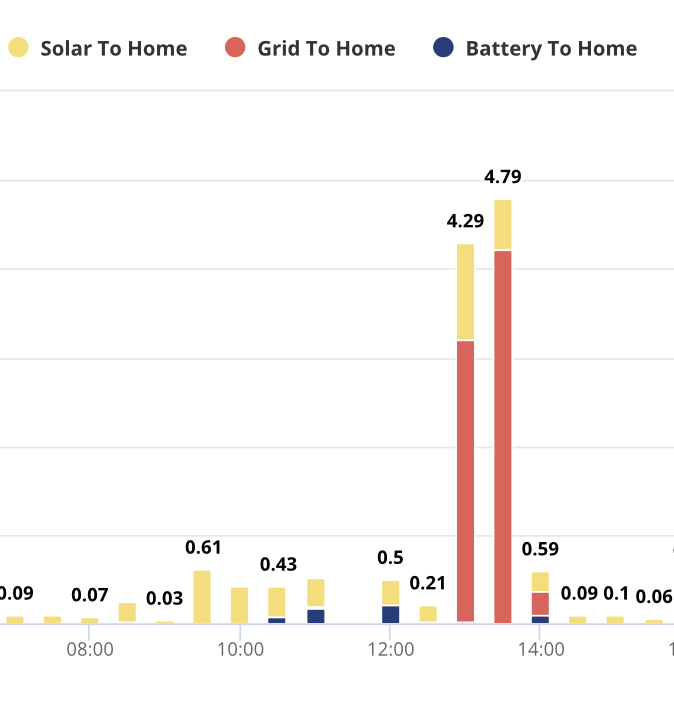
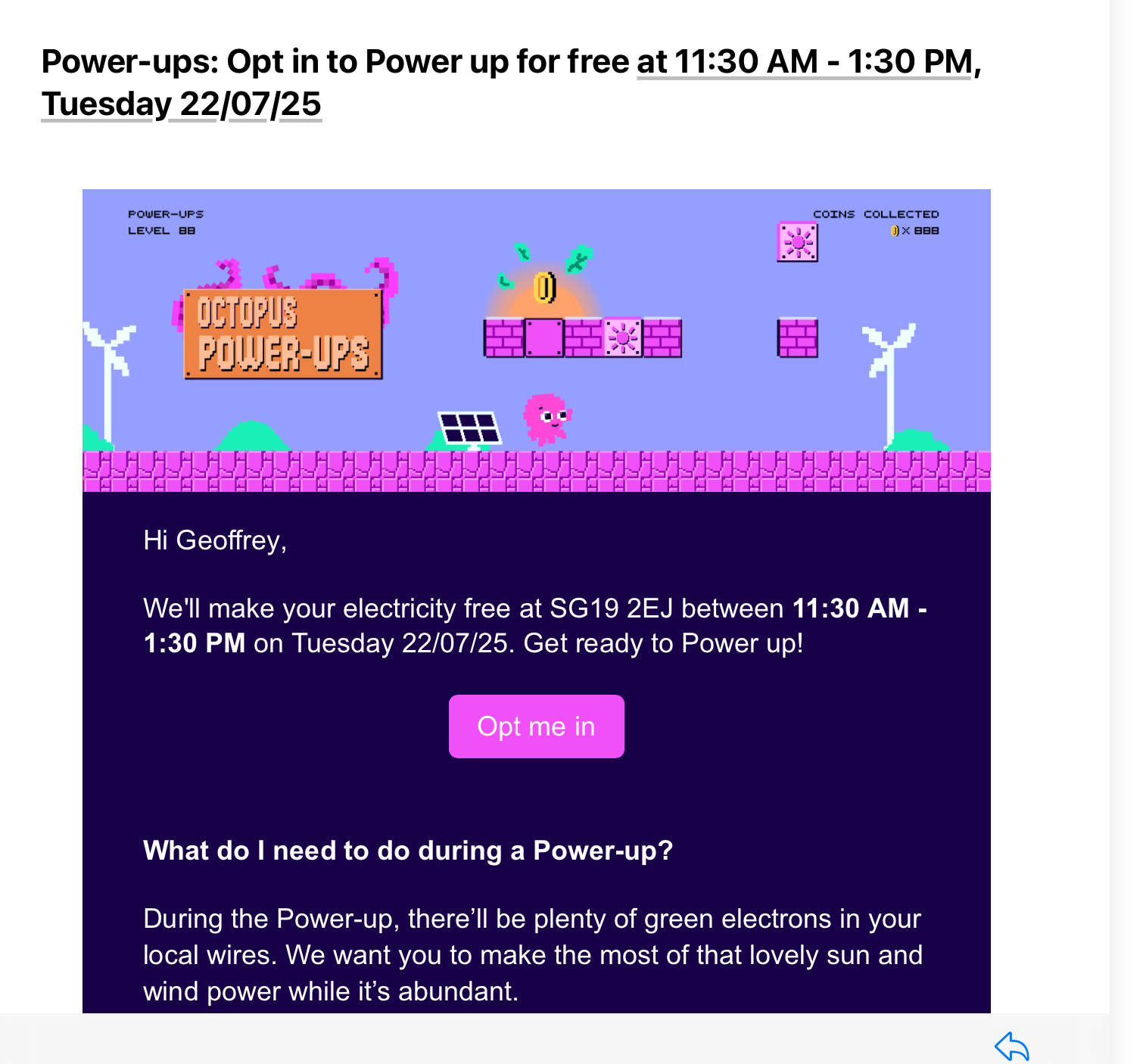
Combining both of these together I only heat my water once a day. At the moment I am heating the water around lunchtime every day as there is lots of excess solar but in the winter I will switch to most likely heating the water in the night time off peak period. As the ASHP consumes quite a bit of electricity throughout the whole day and evening and there will be little solar generation (certainly no excess) I may well switch away from Flux for the winter, but the principle will still be to heat the hot water with the cheapest electricity I can.
I’m assuming you don’t have solar panels? If you don’t, then yes, makes sense to fill your battery with cheap rate electricity overnight and use that during the day. You want to avoid using the expensive peak rate electricity from the grid so depending on your day-time and evening electricity use you may want to pause discharging (using) the battery during the day and preserve the stored electricity for the night-time 4-7pm peak.
Again, depends on whether you have solar panels or not and what your home usage is, but with a 5.2 battery you may well not have enough spare capacity to export during the flux peak period. I have a 5.2 and a 9.5, so 14kW in total usable (remembering that the 5.2 is only 80% usable), and I discharge my batteries down to 60% (retaining 8kW) to see me at least through to the overnight cheap rate.
Final thing, Home Assistant is a home monitoring and automation system that you can run on a PC or Raspberry Pi to monitor and control systems in your home. Things like turning on the lights and the heating when you're coming home. I use it to automatically schedule charging and discharging my batteries to take advantage of cheap rates for import and high rates for export.