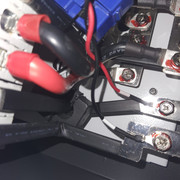
Gateway compliance with regs

11 comments started 2023-08-29 last 2023-09-04
GivEnergy Products
#1 26Left

I had to call on the help of a trusted local electrician while I was away from home as we had a power cut and the gateway stopped delivering power to the house from the grid once the power returned so we were at risk of losing the contents of our freezer (again)...

His observation was that the GW device doesn't comply with latest regs - would be keen to hear what any other electricians think:

“They have spd's on the output side of their control board but not on the intake so are vulnerable to mains spikes which are likely with overhead lines. The bypass links under the mains isolator and the bypass switch are uninsulated but are always live as there is no upstream isolation so they should be insulated or guarded.”

Thoughts?

A
#2 anglefire

26Left Do you have to remove a cover to access the bypass links with a tool? If yes, then I would think it complies with regs.
I thought input surge protection should be by a device on the intake side in the consumer unit as that is where I've usually seen them?
(Oh and I'm not an electrician, but do have an electrical background, competent person etc)

#3 hoggy

I've tried to stay a little out of this as I'm aware I come across as captain criticise GE quite a lot but I guess there's not many takers on this one.
I think for some context some images of what the gateway actually looks like with lids on & lids off are needed:
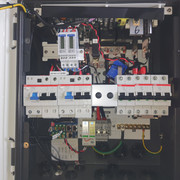
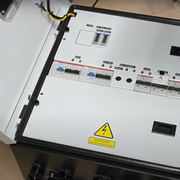
So you first need to open the front door using the key, you are then presented with the breakers and their covers, once those are removed (thumb screw locks these in) then you do get to the insides with exposed parts. But to get that far you have gone through several steps & warnings.
I presume his concerns relate around the incoming unshrouded bars on the right which yes would technically be live even with all the MCB's switched off. I'm half and half on this, personally I'd prefer those to be shrouded, these are new and somewhat confusing layout. Your electrician is likely talking about the regs around basic protection & also enclosure of live conductive parts?

Basically following ALARP would I expect someone who has never worked on these (or worse an enthusiastic DIY owner) to be able to put their hands on something still live in there beyond the incoming tails - probably not - is it reasonable that a form of isolation/insulation could be provided -yes - therefore it would be safer for them to be shrouded (the ones on the left hand side are so this does seem an oversight - room for improvement on V2?)

Beyond BS7671, I guess you could ultimately work this back to Electricity at work act:
Regulation 14
“No person shall be engaged in any work activity on or near
any live conductor (other than one suitably covered with
insulating material so as to prevent danger) that danger may
arise unless:-
(a) it is unreasonable in all the circumstances for it to be
dead; and
(b) it is reasonable in all the circumstances for him to be at
work on or near it while it is live; and
(c) suitable precautions (including where necessary the
provision of suitable protective equipment) are taken to
prevent injury”

I do however have a little more concern as to the EM meters being fed straight from the busbars (so basically protected by a 100A MCB) which did seem an odd choice (told it's fine from GE's stance.)
Also had some comments about the Type AC RCD's being used for the AIO & PV inverter, mitigated by the fact that the Givenergy AIO has it's own built in protection (IEC62109-2) however it's up to the installer to check that whatever PV inverter they use is equally the same standard lest it blind the breaker.

A
#4 anglefire

hoggy The use of thumb screws on the cover over the internals to me is right on the edge of compliance - the use of the key on the door means only people with that type of key can get in - unfortunately that key is readily available - to be fair, a screw is undone with a screwdriver so a tool - but also readily available.
Many years ago one of the controllers I worked with had thumb screws on the cover - and were changed to screws due to regs and there were no exposed mains under the cover.
There is nothing to stop the cover being removed with the internals live - there is no door interlocked isolator for example - there is a label.
Going back to this though, the busbar on the right hand side bottom of the breakers isn't shrouded - and the live/neutral connections through the breakers swaps over twice - live/neutral/neutral/live/live/neutral.
Cable colours are not current standard (Red and Black to my knowledge is not compliant- though I prefer the colours TBH)
Top busbar into the breaker on the right by the CT is not shrouded.
Internal busbars similarly are not fully shrouded.
Bit of Perspex over the top half would be the easiest way to make it IP2X internally together with the link on the bottom of the breakers to the right being shrouded.

#5 26Left

hoggy I presume his concerns relate around the incoming unshrouded bars on the right which yes would technically be live even with all the MCB's switched off. I'm half and half on this, personally I'd prefer those to be shrouded, these are new and somewhat confusing layout. Your electrician is likely talking about the regs around basic protection & also enclosure of live conductive parts?

Yes this was his first concern - it seems a simple thing to do for these bars to be shrouded. There's no isolator prior to the GW - so effectively anyone working on this is exposed to live even with all the MCBs off.

HIs other issue was with the location of the surge protectors. These aren't visible / accessible to the consumer. So you'll never know if they been used and so you've lost surge protection without regular inspection... Or will these be flagged up in the software?

#6 26Left

anglefire The use of thumb screws on the cover over the internals to me is right on the edge of compliance - the use of the key on the door means only people with that type of key can get in - unfortunately that key is readily available - to be fair, a screw is undone with a screwdriver so a tool - but also readily available.

As my electrician pointed out yesterday - the lock and key on the GW are utterly pointless. Push down on the top right hand corner of the locked door and there's sufficient "give" (pun intended) in the hinges for the door to pop open...

#7 hoggy

26Left Surge protection has an alarm wired back to a comms board (red & black twisted pair out the bottom.) You would assume that it should flag up as an alarm given they've gone to the effort.
I just have the GW, no AIO so couldn't say really.

As for external Isol you should hopefully have a DP switch after your smart meter (or atleast have one put in as part of this install)

anglefire forgot about colours from last time I went through this: https://community.givenergy.cloud/d/2441-all-in-one-launched-and-price/70
The incoming busbar after the MCB is partially covered but stops when transitioning to the PCB. Wasn't personally too fussed about the other bars in the back/protected side given you can isolate all those before taking the cover off but that's just me.

#8 26Left

hoggy As for external Isol you should hopefully have a DP switch after your smart meter (or atleast have one put in as part of this install)

I do not. Smart meter tails to Marshall blocks to gateway. No DP switch. So no isolation.

hoggy Surge protection has an alarm wired back to a comms board (red & black twisted pair out the bottom.) You would assume that it should flag up as an alarm given they've gone to the effort.

Interesting, thanks. Hope so!

M
#9 mrand31

26Left I do not. Smart meter tails to Marshall blocks to gateway. No DP switch. So no isolation.

I'd have strong words with the installer about that then...

V
#10 Vestas

hoggy "I do however have a little more concern as to the EM meters being fed straight from the busbars"

Especially when GivEnergy have a requirement for the busbar to be cut between the EM and the rest of the circuits in the consumer unit on an inverter install to prevent that occurring.

#11 26Left

mrand31 have asked the question of the installer and to their credit they’ve said they will add a mains isolator.

From my trusted local (and independent) electrician FWIW:

The specific BS7671 regulations that I felt the exposed bypass links were contrary to relate to isolation rather than basic protection

462.1 Each electrical installation shall have provisions for isolation from each supply

462.1.201 A main linked switch or linked circuit breaker shall be provided as near as practical to the origin of every installation as a means of switching the supply on load and as a means of isolation. A main switch intended for operation by ordinary persons, eg. of a household or similar installation, shall interrupt both live conductors of a single-phase supply

462.2 Every circuit shall be provided with isolation means for all live conductors, except as detailed in Regulation 461.2

The gateway would comply if there was a mains isolation switch on the supply (many households have these already) AND if the gateway lower panel was labelled ‘isolate elsewhere before removing this cover’. It is the presence of what appear to be a full set of isolation switches when these still leave live parts within the enclosure, AND no warning that there will still be live parts. The electrical warning symbols currently used indicate the presence of a hazard, but it would be reasonable to expect that hazard to be isolated once all the switches are off as there is no warning to thecontrary.