Recommended best solution

62 comments started 2023-10-15 last 2023-10-20
GivEnergy Products
T
#1 Tiredeyes

Having a survey completed mid November for a GivEnergy 9.5kWh Batt and 3.6kWh inverter.
10x Jam54S31 405w panels
SSE facing field roof.
3638 kWH per year.

I currently use 4600kWH with Scottish Power.

A couple of questions
Would I be better off going with 13.5kWh All in one ?
I have a 19 degree pitch roof on the extension on the back of the house with 3 velux windows in. Would I be winning if I can get another 4 solar panels on this roof.
Will they have to make brackets to point panels at a 30 degree or ?what degree incline.
Would this be a good solution?
So 14 panels in total.

Thank you for your assistance with this.
I understand there is a lot of long term knowledge on this forum. I appreciate your reply’s and guidance.

Glad to be part of the electrical revolution.
Next on list, but need to find out more about how it will tie in with our family life, is a heat pump.


C
#2 cluelesscris

Tiredeyes I have a 9.5kw battery and inverter. This was put in before the AIO was released. If I were you I would go AIO. No question.

R
#3 Rich31k

I have a 9.5 and 3kW coupled inverter. It works well for us, but would 100% get the AIO if I could do it again.

G
#4 geoffreycoan

Tiredeyes put as many panels and as much battery storage as you can afford and fit in.
Panels are only £150 each and whilst the scaffolding is up it’s worth maximising your roof. Put them on the extension yes, and don’t worry too much about the angle or orientation. South 30 degrees is best but having them at different positions is not the end of the world and can help to spread solar generation over the day.

T
#5 Tiredeyes

geoffreycoan I think with Octopus energy doing the install the panels work out around £400 each (I guess for labor)
But I will ask surveyor to see what can be done.
And yep, extension will be a good amount of solar energy, the sun is very bright on the roof from 08:00 to 14:00 in the winter.
Just going to measure the extension now.
Octo mention they need a minimum of 4 panels to an array.

T
#6 Tiredeyes

Thanks for the push towards AIO, I see a few issues with FW / SW, but it’s always expected at the start of a new bit of kit. I work on $1/2M machine that discovers new therapeutic drugs. So know the FW / SW cycle so well. Great fun to unlock new features though!

G
#7 geoffreycoan

Tiredeyes just to also say, read other peoples feedback here on the different kit options. There have definitely been teething troubles with the new AIO product, some people it works perfectly but others like @Jellybaby have and continue to have lots of issues with the battery not correctly reporting charge level and charge “disappearing”.
GivEnergy are working on fixing this but from what I have read I personally wouldn’t buy an AIO until these issues are resolved.

Do look at Gary does solar YouTube channel, he has lots of great videos on the choices and decisions

G
#8 geoffreycoan

Tiredeyes another thing, don’t get a 3.6kW inverter, they’ve old stock get the 5kW. Same money but more future capacity and less chance of clipping in summer

There’s pros and cons on hybrid vs ac coupled vs AIO. I have hybrids, less energy loss than AC and cheaper than buying a separate inverter for the battery and the solar panels

And your main house and extension can be on the same array, they don’t need to be separate, they can be chained together

S
#9 SilverArt

Tiredeyes AIO I would have thought would be the way to go, the more battery capacity within reason the better IMHO but compare quoted prices, I've ended up with a 5.2+9.5 and that works very well for me.
I think you would need planning permission for any panels that are not within 20cm beyond the plane of the roof slope, you can't just do it under permitted development. I would also question how good it would look from the upstairs windows (assuming there is an upstairs.
SSE facing front roof indicates a NNE back roof. That is a benefit in the summer as you pick up early sunlight but with the sun sinking this benefit gets later and later. and smaller and smaller so with 4 panels (although on cloudy days you do get additional benefit of reflected rays) Worth while, perhaps a look at a forecast prog.

To give some idea, a clear morning today my 10 x 395 NNE panels peaked at 9.45 this morning at 1164w: (214w now at !3:00). In July a clear morning peaked at 2673w at 9:25 (the 10 x SSE panels peaked at 4074w at 15:10).

T
#10 tomorrowman

Have had AIO for just under a month now and it's not yet fit for purpose. Although rated at 13.5kWh it typically delivers several kWh less (seemingly an ever increasing amount less). From what I can see main issue is you discharge X kWh from 100% and then it charges back to 100% with less than X, which is physically impossible. After a few days of this the battery suddenly realises it's empty plummets from 50% to 5% (my minimum), ultimately resulting in a further drop in capacity.

Powerwall 2 prices have dropped to be comparable. If you not happy having NMC Lithium batteries in your house and would rather have the more stable LFP batteries wait until 2024 and get a Powerwall 3.

Unless of course you like wasting your money on a product that doesnt perform as advertised and causes you undue stress.

Don't be fooled by all the awards GivEnergy wins, they ain't no Tesla ie provider of products that just work

T
#11 Tiredeyes

Been quoted £10’300 for 10 panels and hybrid 3.6 gen 3, and a 9.5kWH batt.
So if I’m too understand correctly the
Inverter (3.6kWh) is £1k and 9.5kWh Batt is £4500
So that’s £5.5k
But a 13.5 AIO is £7k
So in real terms I get an extra storage amount of 4kWh (and 6kWh inverter) for £1500

I’ve seen a AIO with backup gateway.
What’s a backup gateway ?
And do I need one?
Thanks in advance.

T
#12 tomorrowman

Backup gateway means if there is a power cut, you have no interruption to your power supply, also you solar panels (if you have them) will still provide power (the associated inverter needs power to run).

That's my understanding anyway.

With the AIO you need one as it handles all the Grid/Solar/Home power distribution (don't think GivEnergy sell the AIO without the Gateway)

T
#13 Tiredeyes

SilverArt all panels and extension are facing SSE. 10 panels on rear of house. So nobody see it. And I’m not fussed looking out my bedroom window and seeing sun gathering panels 😉

G
#14 geoffreycoan

Tiredeyes the backup gateway enables the AIO to act as a whole house battery supply in the event of a grid supply failure.
Hybrid inverters have this emergency power supply built in but they are limited to what current they can supply so are not “whole house”

T
#15 Tiredeyes

tomorrowman very interesting, thank you! But would the powerwall 3 be an exuberant amount of money? As its brand new tech?
Yes am slightly worried having this amount of stored energy inside the house.
Where as a PW3 could be put on the back wall of the extension. With cable round to fuse / DC inside the house.
Could I get the solar installed now, while I have the money and then get the PW3 later ?
What interface would be the best for future proofing now. I guess I’ll need an AC to DC invertor ?

J
#16 Jellybaby

geoffreycoan 100% charge today from flat overnight was 7kwh, down from 9.2kwh from 2 days ago, by this time next week I wont be able to charge it at all.

J
#17 Jellybaby

geoffreycoan Just a shame their storage is too unreliable for this to work as intended.

T
#18 Tiredeyes

Who’s the best to speak with regarding a quote for PW3 ?
I’m in the midlands.
So checked out Tesla website.
Around 15 different UK fit and supply.
Will need to read each one reviews!
Wot fun !
And a separate solar install ?

T
#19 tomorrowman

I went GivEnergy AIO:

  • It's price was more reasonable than the PW2 (that has since changed PW2 is comparable but installers are taking the p!ss on their margins)
  • It's SW control appeared to be as good as, and if your a tinkerer, better than PW2 (The Octopus integration is not currently much use in my opinion unless SW development is your thing)
  • It uses the more stable LFP battery chemistry (PW 2 used NMC)

I would not worry about having 13.5kWh of stored energy in the house. I am not aware of PW2's burning houses down and they have an install base worldwide of over 500K. But agreed as stated above I felt more comfortable with a LFP solution (in my garage with a fire/smoke detector). I know PW's have no issue being installed outside and theoretically GivEnergy AIO's can also be installed outside but it has a lower IP rating than PW's 65 vs 67.

Most people install battery at time of solar because they they save VAT on the battery and it's install costs, but adding one later is easy enough (but more costly).

As far as PW3 costs no idea.

Strangely though if I have understood it correctly the PW3 is an unusual beast because it's internal invertor can be used by multiple solar panel strings ie the DC power can be plugged straight into the battery meaning only one invertor in the whole solution - apparently makes install easier.

There is a chappie called 'Gary Does Solar' on youtube who is a good source of info on this whole solar, battery and associated energy tariffs topic.

T
#20 tomorrowman

Tiredeyes It's too early, not going to see before 2024
https://www.spiritenergy.co.uk/tesla-power-wall-3 is a nice summary of it's capabilities, but if the estimated pricing is for real then it's to be high.

Worth baring in mind Spririt Energy's suggested install price for a PW2 is over £9K when the wholesale price is under £6K

T
#21 Tiredeyes

Jellybaby have you spoken with Sarah-go-green on X
She is in constant comms with a guy called Alex Schoch @shocky100
Not sure if you can get in touch and shake it up a bit. Always takes time to implement a new product. But if it’s good and first time takers of new equipment then we are beta testing for them and you should have the right amount of support. Start shouting on X

G
#22 geoffreycoan

@Tiredeyes couple of other thoughts: with Tesla you are paying a premium for the name and they are much more of a closed ecosystem. If you want to be able to control wha5 your battery does and when the GivEnergy are as I understand it a much better choice.

GivEnergy are a British firm. Manufacturing is currently in china (and there were pos5 covid supply issues about 9 months ago) but they are building a uk manufacturing plant.
They are growing rapidly, arguably too quickly and their support is suffering as a result. People have reported long delays getting a GivEnergy engineer to replace faulty hardware.

They are definitely continuing to improve their products and fix bugs, but again some issues like the state of charge bugs are taking months to resolve. In my view from what I’ve read the AIO is really still a beta product and you should be eyes open to it.

I’m pretty happy with my gen 1 hybrid inverters, 9.5 and 5.w battery. I did have some initial issues but they were more a result of my installer and the grid having too high a voltage. My only real gripe is that I can’t self install additional batteries, something I could do with say pylontech.
From what I see of other installs in YouTube I don’t see a product I’d rather have bought.

#23 PianSom

Tiredeyes
+1 for the health warnings on the AIO

Mine was installed just a few weeks ago, and it is not currently fit for purpose. The reported charge on the battery steps down on a very regular basis - sometimes more than once a day. Only purchase if you are very happy to take the risk that a future firmware development will solve these issues, in the knowledge that Givenergy is not a highly capitalised, well established business.

(I am currently trying to decide whether to RMA it and get a Powerwall instead.)

T
#24 Tiredeyes

PianSom got you, thanks!
I wonder if I have it fitted in January, then a good 6 months of FW updates should have been done, ironing out the bugs.
It’s going on the credit card for part of the cost so they will be liable also. That’s if it’s not FFP. It’s one of those juggling scenarios.
And yep, happy to provide feedback to them so they can get the bugs ironed out.
Is the 13.5 AIO battery a good one though? I’m just trying to work out the difference.
My only knowledge base of batteries is in my campervan. Which is known as gel, but not to be confused with LifePo. Which is a form of gel.
But my standard Batts are Acid in gel.
Gets confusing.

#25 PianSom

Tiredeyes
I don't have any knowledge of battery chemistry, so will leave that for others to comment on.

In terms of capacity, my AIO has a stated 13.5kWh capacity, and shows 15.96kWh capacity on the online spec page (for headroom for future degradation). Is it a "good" battery? Well, if it worked then maybe! Bit hard to tell right now.

I am a new user. Right now I charge it up at night at the cheap rate and top up with limited Autumn solar, and hope I have enough to keep me going until the next charge. I keep on thinking I'll be fine - and then my charge disappears

J
#26 Jellybaby

If I was you id look at last flat>full charge and start doing the math on discharge/charge so you don't get surprised.

Last firmware the AIO didnt know where the floor was, with current firmware it seems it doesnt know where the ceiling is so as it progresses the capacity gets lower and lower, currently it takes 7kwh to fully charge to 100% from flat. iirc this morning on solar sub 2kw being charged in 2 hours it went from flat to 43%.

J
#27 JMA

geoffreycoan @Tiredeyes
If the panels do not have the same yield (different orientation, different pitch, shadow from a tree,...) and you have 2 strings on your 3.6kW inverter you should not string them all together, but rather feed them in separately. The weakest link in the chain (i.e. the panel producing the lowest voltage) will pull down the production of the other panels. Ideally all panels producing the same voltage are in separate strings. The GE inverter then deals with them separately and optimizes yield. The inverter also only kicks in after a minimum voltage is reached (see your specs), so if you have e.g. only two panels, it may take until 11am (just an example) before the array actually kicks in. You do need to do a few simple multiplication calculations to check that. There's another way dealing with the different yield and that's working with microinverters (one per panel mounted on back of panel), but that's a completely different approach.

G
#28 geoffreycoan

JMA yep agreed. It’s an area where the installer needs to do his sums right.

The Gary does solar videos are useful for covering these subjects

T
#29 Tiredeyes

Jellybaby on X @sarah_go_green said to contact @JasonEHowlett if you want to find out more and get them to fix it… Good luck

#30 positor1

geoffreycoan
advantages of ac coupled
Measurement of power in and out .
solar output added to battery output as opposed to maximum hybrid output only ( ie 5kw).
Separate CT clamps enables zappi or Eddi devices to divert power intelligently.

P
#31 Pandorian

My IO is working pretty well. I flatten he battery to 4% each night and then charge to 100% in the early hours on Intelligent Octopus - this consistently takes around 14.0 to 14.2 kWh of energy to charge. As it's cycling I don't see any SOC drops.

J
#32 Jellybaby

Pandorian Mine went flat a few times last week, one of the full charges was 9.2kwh and the second was 7kwh, from current info im down to around 5.5kwh storage and that wont last me til midnight so ill do another flat to full charge and it will probably only put in 4kwh.

I am seriously considering just cutting power to the AIO so im not getting the extra 80-150w draw for it being idle because by this time next week im not going to have any storage.

G
#33 geoffreycoan

positor1 I could have gone either way on AC or Hybrid inverters. I have a pre existing FIT array and inverter so by going Hybrid I continue to not be able to store excess power from that array.
But then I had to have two inverters due to the size of my new array and buying 2 solar inverters and 2 AC inverters would have been quite a bit more expensive. My installer proposed hybrid inverters and at the time I knew less of the implications of the choices. If I was doing it from scratch now I’d by tempted by micro inverters as giving more longer term resilience, less single points of failure and less shading issues (not that that’s an issue for me).
But I understand that multiple AC inverters and batteries in a plant configuration have real cross charging issues whereas my gen 1 hybrids don’t.
So swings and roundabouts

T
#34 tomorrowman

Jellybaby I had been trying to track down phantom electricity usage and based on your observation I may have found it ie the AIO (the rest is standby devices, mesh network, google home devices etc)

A
#35 Avenir

Tiredeyes If you're thinking of getting a heat pump in future, it would be better to get more battery storage now, and benefit from vat exemption. 9.5kwh will probably cover most of your house base load, but maybe not the additional draw from the heat pump. Another poster on here reckoned 13.5kwh was a good capacity for running an ASHP. There's also the question of peak discharge, where the GE hybrids might not be able to meet peak house load plus ASHP from battery.

If only doing the 10 panels a 3.6 hybrid inverter would be basically fine, in my opinion. On a cool, sunny, mid-year day there will be some clipping, perhaps 250w, which can avoided if the battery is still charging. If doing the extra 4 panels – which you should – a 5kw inverter would be better. There is plenty of time for the required G99 application.

I wouldn't bother tilting the panels on the extension. Just fit them flat to the plane of the roof so you can do it under permitted development.

My 9.5 battery and 3.6 gen 1 inverter have been absolutely solid. But if I was doing it again now I'd be looking at AIO vs the discounted Powerwall 2 for their higher discharge rates, future proofing of battery capacity and an out-the-box whole house backup.

In terms of financing, if you have a mortgage with Nationwide, they offer additional borrowing at 0% for 5 years for green home improvements.

T
#36 Tiredeyes

Avenir some great advice Tom, thank you. Very much appreciated. Mortgage with NatWest, I’m hoping Octopus do another 3 year 0% finance option which will be perfect.
I can manage £1200 a month, so I can pay off easily in 1 year, and reap the reward for 25 to 30 years.
Maybe have to buy new batteries in 20 years and an inverter in 15 years.
My only worry is the AIO FW.
And if the inverter is in with the batteries.
How will they know it’s the inverter or batteries, and will an AIO be able to have just the inverter replaced after 12 years ?
I’m getting similar prices for PW2 and more panels. But can I use a PW2 with octopus feed in rates. ?
And who will change my version 1 smart meter ?
I don’t think it will be compatible with feeding in electric to the grid….

T
#37 Tiredeyes

Avenir I have a current account & savings with nationwide. Mort is with NatWest. Fixed for another 4years ( dropped lucky at 1.59%) then only 3 years left of mortgage.

J
#38 Jellybaby

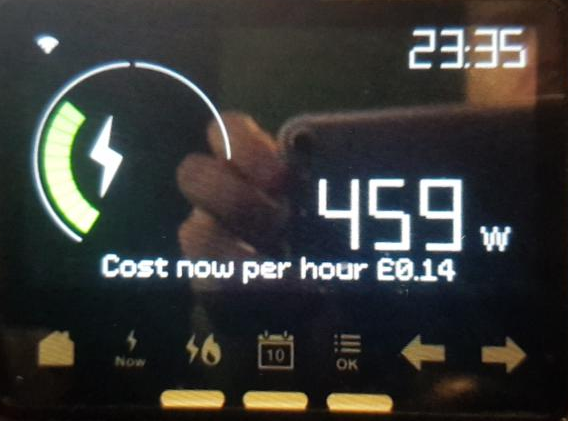
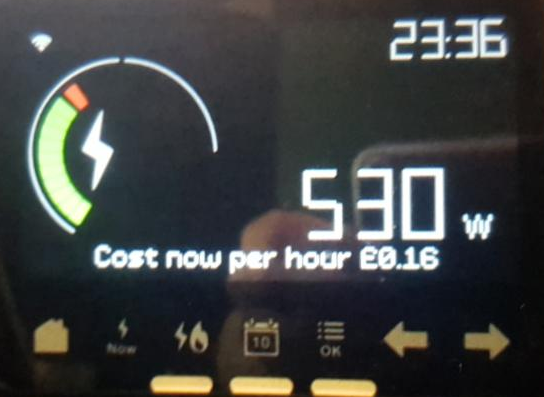
tomorrowman Got a couple of pictures here from when I shut down the AIO last night to reboot it incase that helped somehow in in current situation but in all honestly Home Load = what your home is using, Discharge = includes the inverter load.

AIO Unit off

AIO Unit on

J
#39 Jellybaby

Avenir I wouldn't recommend touching the AIO currently, it is not in a good state.

I am close to shutting it down via breaker in gateway til they either come look at it or post a firmware update because im barely getting 7kwh charge into it from flat on 2-3 separate occasions and its just adding extra idle consumption to home.

T
#40 Tiredeyes

Is the time out on your AIO
It’s only 23:34 GMT

T
#41 Tiredeyes

Jellybaby would you recommend getting two 9.5kWh Batts instead ?
But I guess you are that P1thed off with GivEnergy, you’d say go PW2 ?

T
#42 Tiredeyes

Jellybaby how you X’d (tweeted) that bloke on X I said ?

J
#43 Jellybaby

Tiredeyes What exactly would I say to them?

Also I have no experience with any of the other batteries im afraid, I would have gotten 2 of the 9.5's but I wanted something high capacity output, didn't see why I should draw from the grid if the kettle happened to go on hehehe.

T
#44 Tiredeyes

Jellybaby “what exactly would I say to them” you need to approach the situation with a direct “this is happening” & “why is it happening”
Write a log every day.
Get a free excel sheet from open office if you have a pc, laptop.
Write every day in a column.
Ask the good people on this forum for what headers to write in the excel sheet.
Then present the findings to GivEnergy.
They won’t send someone to your house and get them to sit there for two weeks collecting data.
This is your job, to present them with clear concise hard documented data.
You need a base line, a foundation.
To start from.
Then go from there.
The product AIO is not available to me in The Midlands from Octopus.
They wrote and told me.
If I could be a beta tester for them in the Midlands, I would.
You are the beta tester.
Do your testing and find out and enjoy!
It doesn’t work, when you berate the product and company. I work for a ground breaking R&D company in the US. Installing an amazing product to help save millions of lives. I do this day in, day out so it’s easy for me.
If the installer (who was it) didn’t tell you this (AIO) is a new product we need to do more beta testing on. Then yes explain it’s not fit for purpose and you want it changed out.
But write the data sheet to explain your findings.
They’ll have a base line to go from.
Hope that helps & good luck…

A
#45 Arg0t

Tiredeyes

My advice is to do everything you can to get as much generation as possible on the main roof. Can you get 425W panels, can you come closer to the edges and fit more panels etc. I'd also suggest going up to the 5kw inverter and ensuring it is the Gen3.

I have a split of 10 and 5, front to back, with the front mainly SSE. Yes, the back 5 panels generate, but they generate 75% less than the front panels. Two panels additional facing SSE will be the equivalent of 4 on the rear.

T
#46 Tiredeyes

Arg0t so maybe stick with 9.5kWh, but go gen3 5kWh inverter ?
They quoted me for a gen3, 3.6 kWh inverter.

T
#47 Tiredeyes

Can I put the battery in a large cupboard under the stairs where my gas meter residues ?

Not sure if it will need a vent outside for the battery ?
No worries about escaping a fire.
Can climb out of roof and down onto the extension out the back.
Then out onto a wall.
Also the heat produced by batt will keep middle of house warm in winter.

A
#48 Avenir

Tiredeyes AIO and PW2 are AC-coupled systems, meaning the inverter contained within them is to convert the DC battery energy to AC for use in home / grid and vice-versa. You need a separate solar inverter, e.g. a Solis or micro inverters on the panels, to convert the DC energy from the panels to AC which your home and AC-coupled kit can use.

Unlike the PW2, the AIO has ‘a modular design for ease of handling and installation’ but in terms of replacing the inverter, or any other part, after 12 years – who knows?

You can use a PW2 with most Octopus tariffs; the exceptions are Intelligent Octopus Flux (currently only GivEnergy) and if you wanted to do some automated scheduling for Agile via Octopus R&D labs (sounds a bit flakey to me).

Octopus will check out your meter remotely to see if it’s compatible. Some SMETS1 are OK, apparently.

@Jellybaby Sorry to hear about your AIO woes. Hope it gets sorted soon!

A
#49 Avenir

Tiredeyes I think it will depend where your electric meter is, where the inverter is and the practicalities of cable runs. You'll need some ventilation if putting a battery in a cupboard. My 9.5 battery gets warm – probably OK to put that in a ventilated cupboard – but the hybrid inverter gets quite hot (up to 55C) and really needs some good airflow. It's changed my unheated garage into a toasty room!

The 9.5 is LFP so non-combustible. The PW2 is more of theoretical fire risk, though I've never heard of any incidents and you can fit it outside, no problem.

S
#50 SimonClarke

Seen 68c from gen1 5kw but the battery remains maybe a degree or two above ambient in the same cupboard. Had to add ventilation for the inverter but not needed for the battery.

A
#51 Arg0t

Tiredeyes

3.6 is the max AC throughput, so in your scenario you could have the 9.5kWh battery full and the roof generating over 4kWh. Everything above 3.6 would be dumped as DC cannot be pushed to Battery and Inverter cannot convert the DC to AC to use in the house or export.
This is really an edge case with the proposed system you have, if you add panels I'd go up to 5kWh Gen 3.

I have a Gen2 5kWh and 2 9.5 batteries under the stairs, no door. The inverter gets toasty when going hard and I've hit 70c, without issue but not good long term. If you go in an enclosed space plan something to force air over the inverter as relying on natural convection is not enough. Batteries do not need cooling.
The Giv technical install documents require a minimum clearance around the devices, my installer overlooked them....

S
#52 SimonClarke

Arg0t yes mine were also incorrect and GE told the installer to move the inverter or the warranty might be defunct. Made no difference to the temperatures

T
#53 Tiredeyes

Great information All, keep it coming. Thank you.
I have nothing installed yet.
I’m investigating all avenues.
Also thinking of adding car charger now for something in 2 years time.
What about ASHP?
What system would you recommend if I were to go that route ?

A
#54 Avenir

Tiredeyes Wouldn't bother with the car charger until you need it, the tech will move on. Maybe GivEnergy will have brought theirs to market in 2 years!

ASHP: loads of useful info in the 'Whole house refurb' thread. Seems like the options are Octopus (currently fitting cheap but slightly loud Daikins, own brand 'Cosy' heat pump coming soon), British Gas (refundable heat loss survey), Ovo (own 15p/kwh heat pump tariff) or contact a local Heat Geek approved installer and get a nice Valliant or equivalent.

Look into the planning permission issues for your part of the world. To be done under permitted development in England they must be >1m from property boundary and must be under certain peak noise output as calculated by MCS installer. Different rules in the other nations! Since I have a terraced house, I'm holding off installing one in the hope of planning reform…

T
#55 tomorrowman

Tiredeyes Currently on the 'go electric' journey.

So far:

  • EV Purchased
  • Podpoint charger Installed
  • Filled wall cavity with EPS bonded carbon coated beads (should have done this years ago the drop in heat loss is eye opening)
  • GivEnergy AIO installed. This was to help offset costs of next steps by running everything on off-peak electricity (7.5p vs 30p makes a hell of a difference)

Next Steps:

  • Induction hob (replacing gas)
  • ASHP (Valiant via British Gas)

TBC

  • Triple Glazing/Replacement doors etc
  • MVHR mechanical ventilation with heat recovery. Basically ventilation in my house is currently via trickle vents in the windows and the idea of drilling holes in super efficient windows strikes me as nuts.
  • Another AIO, assuming GivEnergy sort their shit out, or PW
  • Solar - last on my list as between shading and orientation challenges payback was just not worth the price, but if super efficient multi-junction PV panels become a thing, maybe
T
#56 TX200

tomorrowman careful re the induction hobs, some of them turn on and off so quickly it's hard for the inverter to keep up and it mostly uses the grid.

Not sure if better on an AIO, but one to be aware of.

T
#57 Tiredeyes

I see people complaining about PW2, they cannot schedule the PW2 to not charge up in the day if there is no solar. PW2 does what it wants, when it wants. I think this is why I’ll swing towards GivE. It will be nice to take some control, as both of us work in the day and if no solar, then not a biggy.
I might swing towards two 9.5 Batts at the same time as solar though.
Can I install Solar on my garage roof in the garden and use that to power up the 2nd Batt?
Would that generate me money by selling to grid at peak time 17:00 to 19:00
Or is the juice not worth the squeeze / not worth it. ?
Garage roof is double apex, around 25 degrees pointing East and West. No shading.
Should get around 4kWh of panels on it.

Or shall I concentrate on just the house, and get that working with 1 Batt…

G
#58 geoffreycoan

Tiredeyes if you can afford the equipment then yes I would put panels on the garage.
We have an East/West aligned house, 4kW on the rear West facing roof, then a further 10.4kW, 22 panels on the front of the house (East) and 6 on the gaps in the back.

Advantage of East West is that you get a good generation spread from first thing to end of the day

P
#59 phoenix

Jellybaby

That's why I'm bailing. A battery will be sitting at the heart of you home electricity supply. If you can't trust it to be there when you need it, what's the point ?

T
#60 Tiredeyes

phoenix what’s the time frame that the SOC issues have been happening with GE? And isn’t with the 9.5 Batts?
I might do one for a year and sit and wait to see what PW3 is doing.
Really don’t want to fit a system (GE) and be away from home and the wife is stressing as I’m stressing about nothing is working correctly and I’m 4k miles away. Not a good look. Glad I’m doing my research…

P
#61 phoenix

Tiredeyes

I believe it was first reported in 2021, though I was not here so can't confirm.
This thread has been running sine July 2022. I would recommend anyone to read it before 'investing'
https://community.givenergy.cloud/d/713-firmware-3007-has-not-fixed-sudden-soc-drop-to-0-problem

No, not just 9.5, all battery capacities were involved IIRC. To an outside observer it looks like the AIO has the same issue, but this has not been confirmed or denied by GE to the best of my knowledge. Not sure which would be worse - being the same problem, unresolved in a newly marketed product, or a different, serious sounding problem!

Good luck with your decision! Personally I would not trust it not to need babysitting, which holds no interest for me YMMV

G
#62 geoffreycoan

@Tiredeyes

There clearly are some soc issues with GivEnergy batteries for some people but I’d point out that people regularly posting here are generally the more switched on, the more detail focused, and are more likely to be the sort that would create a spreadsheet to track what’s happening with their installation.

In my experience it is not all bad. Other than some screwy load and generation figures in the portal for my own system and a cable came loose, I’ve really had no issues at all.
The figures are resolved by capturing the data via home assistant.

I’ve never seen any unexpected soc jumps up or down. 5.2 and 9.5 batteries.

There does seem to be more issues on the AIO but equally there are people here and that post on YouTube for which it works perfectly.

Geoffrey