W
#1 WillC
Can anyone explain this? When the battery started discharging (Axle energy controlled) our load shot up, so it's mostly being consumed rather than sent to the grid, but there's nothing out of the ordinary running in the house.
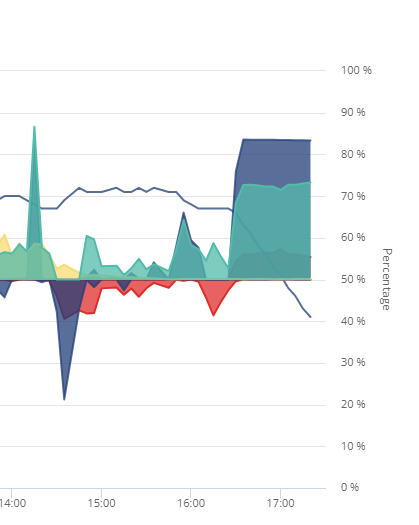

Can anyone explain this? When the battery started discharging (Axle energy controlled) our load shot up, so it's mostly being consumed rather than sent to the grid, but there's nothing out of the ordinary running in the house.
Just put something similar on inverter load post
Our background load is usually 500-600w, and now we're drawing 2.2kw to discharge 3.3kw, so that's 1.6kw above normal.

You don't have anything like a solar iBoost do you? that jump is huge, I was seeing +500W on house load but not that much!!
No, nothing light that, no cooking happening. I even switched everything off at the fuse box with the exception of the 32A ring to keep the internet up.
Nearly everything off and using 600w

I had this but quickly spotted my Zappi was in ECO+ mode which saw the discharge as solar. Doh!
Put Zappi in stop and everything went to grid. 10 minutes I missed 🙁
Ignore - page didn't load properly so only got first reply!
Looks suspiciously like the inverter uses about 400w to export with about 200w base load so can only actually export 2kw not the 2.6kw advertised (gen1 and 9.5)
Looking at meter data, we discharged 5kw of battery to export 1kw of electricity.
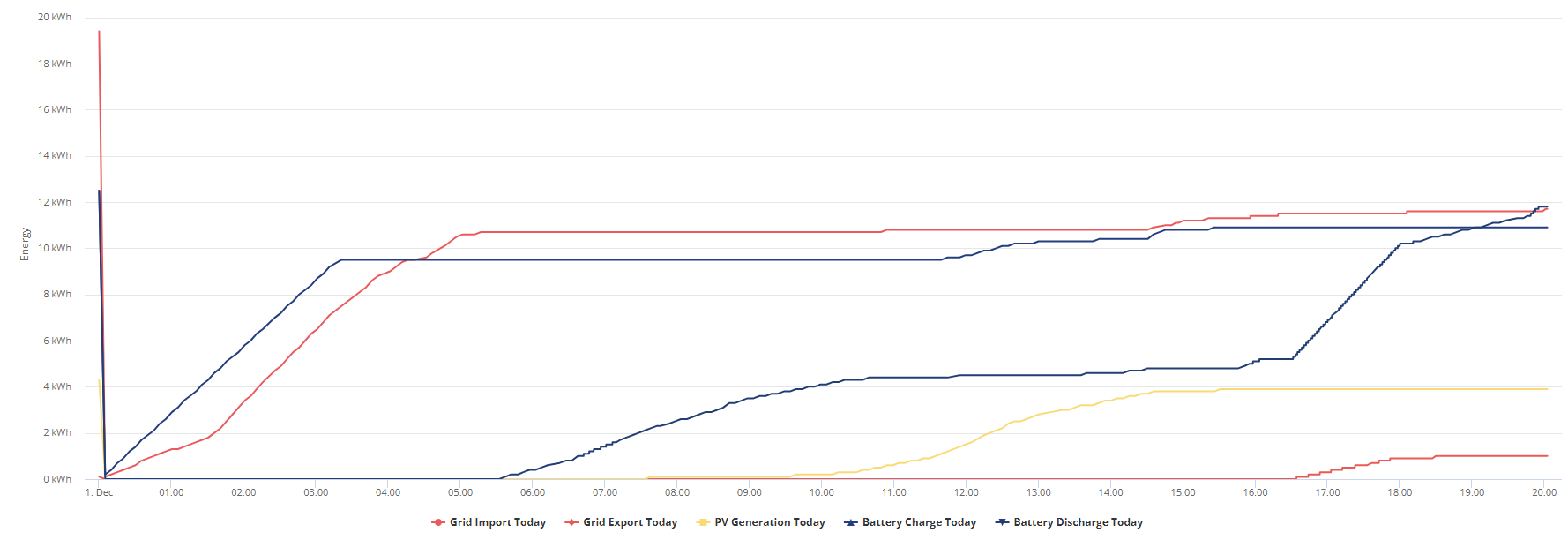
I think that what looks like the inverter using power is at least partly losses in the battery during discharge. These will also occur during charging and are just resistive heat losses which is why it gets warmer. The inverter itself will also use some power and have some loss in the conversion process from DC to AC. A total of something like 10 -15% would not be unreasonable at full power and is about what I see.
The much bigger 'loss' that some are reporting must be power going somewhere or the battery / inverter would get very hot. It can't just disappear.
So over 15% to export 2kw from the available 2.6 with the base load being under 200w. Not very good. Would probably help if the inverter didn’t run so hot although it immediately used 400w before it heated up going from 39c to 49c over the saving session. Battery went from 22 to 23c
WillC
kW is a rate of energy flow, it is not an amount, Think of it as speed.
kWhr is the amount of energy that has flowed.
You might discharge at 5kW for say 1 minute and that will be 1/60 x 5 = 0.0833 kWhr of energy.
If you have a 9.5kWhr battery that is 0.0833/9.5 x100 = 0.877% of it. Say less than 1%.
I can't see how you conclude "we discharged 5kw of battery to export 1kw of electricity"
SimonClarke
It doesn't use 400W to heat up.
It must use 400W x an amount of time to give kWhr of energy.
Look at other posts where people question big power spikes and cant figure them out until someone says something like " motor might only be 500W (500/230 = approx 2 amps), but on startup it could be 16 amps for 1-2 seconds"
16amps = 3.7kW but only for 2 seconds. That is 2/3600 x 3.7 = 0.002kWhr.. Half of nothing!
SteveCook it appears to use 400w continuously while exporting 2000w while the house uses 200w. 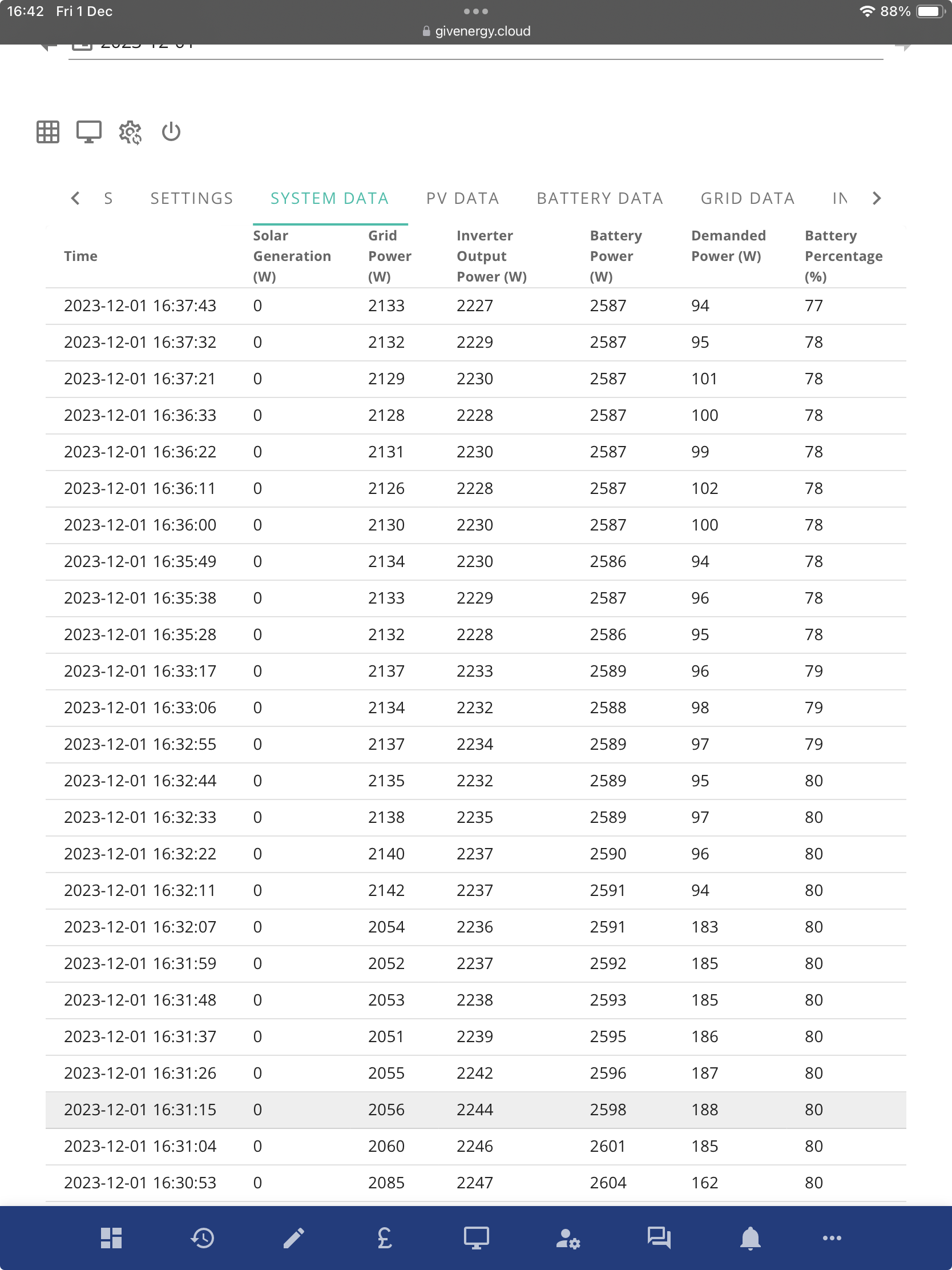
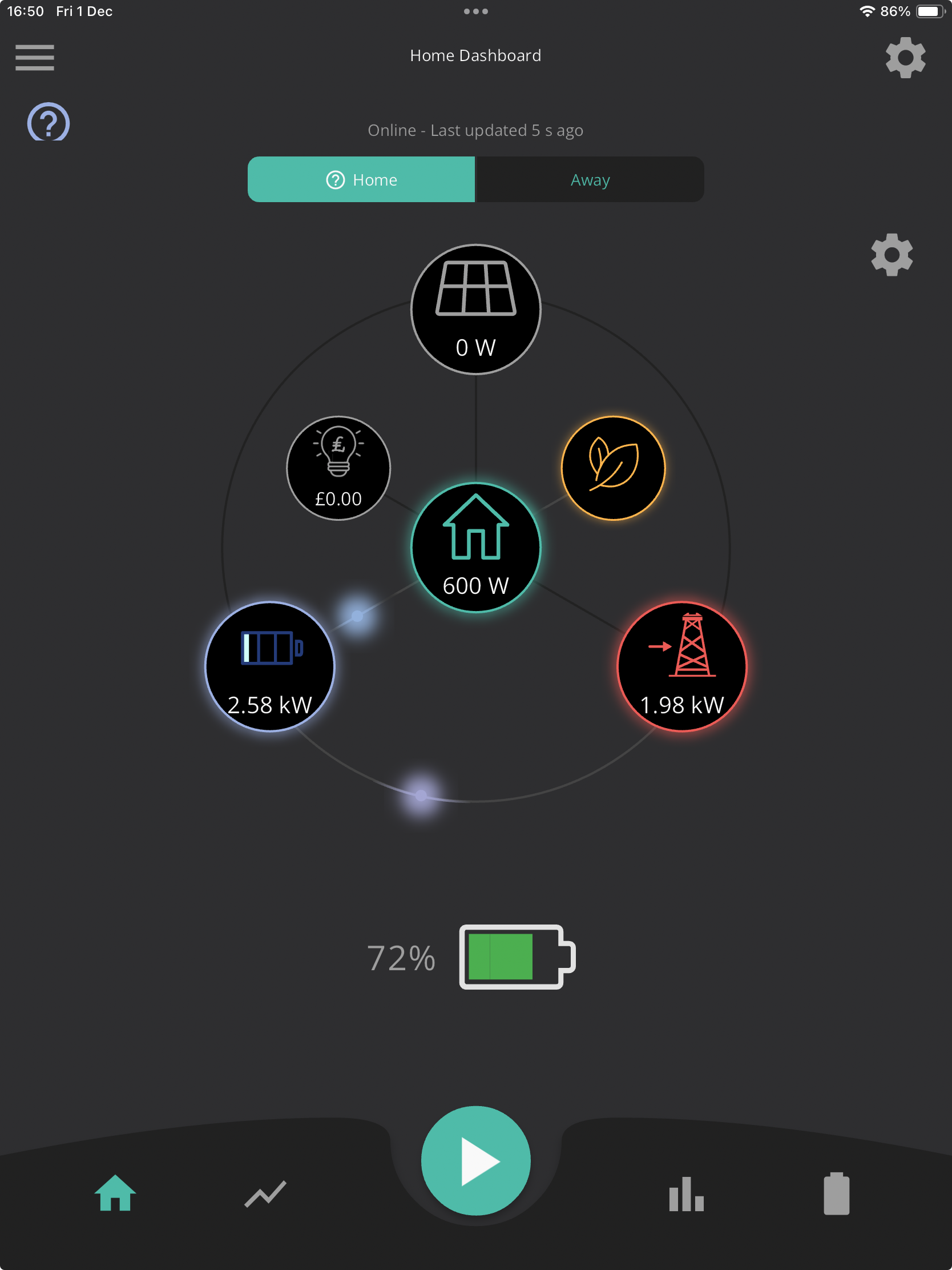
I didn’t take the screenshots at the same time but it didn’t really vary over the 90 minutes
SteveCook Yes, I missed my 'h's off the end. I apologise for the untold amount of confusion that's caused you.
WillC I don't think you need the r on the end?
Isn't it:
kW for power input/output - charge rates/discharge rates
kWh for energy used and billed
SteveCook I used to have to explain to people wanting to put domestic fridges into caravans etc with low power systems (sometimes solar and inverter) that the fridge that used 1-200w running used maybe 1500+w when starting off therefore tripping their systems so I do understand short term high loads such as kettles etc but in this case I guess I am quite disappointed with the lack of efficiency. I have a GE person coming on Monday who is now going to be asked even more questions!
SimonClarke
Simon
Thanks and good luck.
Please report back
WillC
Sorry
Just trying to help.
Cleary something is wrong there.
Was the battery recalibrating or something?
Did you have a car plugged in on charge?
SteveCook np - I was just messing around with that response.
There was nothing running, the car wasn't charging, we have no solar diverters, the immersion heater was off. I switched off everything on the fuse box with the exception of the 32A ring running the router (so that I could see what was going on via the wifi). Neither the battery or inverter were excessively hot, so it wasn't resistance losses within those (although they would have melted if that was the issue), so I have no idea where the power was going. It also started as soon as the discharge started and stopped as soon as the discharge stopped, so it's clearly linked.
WillC
Thanks
The point I was making (for the benefit of others) about kW and kWh (kWhr) was about looking for a short term instantaneous kW spike or a much longer kWh (kWhr) power consumption.
A short term kW spike can just be a kettle coming on or a pump or fridge starting.
A long kWh draw like you have is energy going somewhere.
Electrical energy typically gets used in motive power such as big motors (fans, pumps, lifts etc) which I assume you don't have OR into resistive loads like lights and heaters. Unless you are lighting a stadium as your back garden it can't be that and you 5kWh of heat you should notice.
Could it be battery out of recalibration and/or recalibrating?
Could it be an error in your EM115? Was that off when everything else was off?
Can you get any manual readings from that?
I know sometimes when I have turned power off to do some work and then turned things back on again the data "catches up" but in a slightly different time frame making things look odd - though I dont think it is that.
This is one way to pull off data into excel sheets
https://community.givenergy.cloud/d/2881-report-data-download-as-excel-file/61
We went round turning everything off before the last event. Got our household usage down to 130W.
When the discharge started, the app reported the house usage at 800W and just 1.8kW going to grid. This could have just been a snapshot.
I'm waiting to see the results from Axle, to determine how much kWh actually went to the grid in 1.5 hours.
I will be very disappointed if it turns out my 3.6kW inverter which I bought, and turned out to only be 2.6kW because of some small print about battery discharge, ends up being actually only capable of exporting about 2kW due to internal consumption.
Add to this, the fact that my 3.2kW solar array only peak charges at 2.8kW due to the current being too high and voltage too low for the inverter.
The Gen1 inverters are really very poor. I feel the need to replace it, for something fit for my needs, but the money is spent and its hard to justify the extra cost for what will be actually only a few £100 benefit.
It feels just a poor show all around.
The em115, that’s an interesting point. If that was turned off, I guess it could confuse things!
BenS I knew my 5kw gen 1 could only do 2.6 but now it seems to so inefficient that it needs 400w just to run and therefore can’t do even that so I can’t see why it is rated at 2.6 if it will never happen!
SimonClarke Exactly!

Twin Gen 1 Hybrids here. During the last few savings sessions:
House AC load - 600W
Battery DC power - 5100W
Export - 3950W
So that averages losses at about 275/300W per inverter.
Gen1-3 are quite lossy as they have buck-boost setup to take the 51.2V battery DC upto over 300V before inversion to AC (basically the battery DC is inverted up to the same voltage you'd expect your PV strings to be as it sits on the same bus internally)
Likewise if you grid voltage is quite high already the inverter becomes even less efficient as it needs to take everything even higher before inversion to AC.
The big slab in the heatsink (in the middle on Gen1, to the right on gen2+) contains several inductors, which all add to the losses as part of this process and generate heat.
AiO being HV removes the need for this large step up/down setup and as it has no need to try and follow PV string voltage - it can be set to be most efficient in the normal expected grid voltage range instead.
So about 10% loss on export 🙁
Can I assume the grid to battery efficiency about the same?
Worryingly, that seems to blow most of the possible savings using Intelligent Flux tariff in winter.
Import at £0.24, export at £0.32 = 8p/kWh , but if you add 20% to the import costs you're down to 3p/kWh 'profit', or about 30p per battery cycle.
rjp we’re on Intelligent so not so bad at 7.5p and 31p but still irritating
rjp If you're charging from AC and then discharging then the round-trip overheads are around 12-15%, bit less if you're charging from PV.
I just use 20% as a rule of thumb as the battery wasn't free 🙂
Also, the losses are greater at higher power levels so particularly noticeable when exporting at full power.

Vestas I am losing 17+% on just battery in versus battery out. This is over and above the AC-->DC-->AC inverter losses.
Since having the battery installed my annual grid import has gone down but my electricity consumption has gone up quite a bit. Good for my pocket but arguably not so good for the planet. Solar PV generation that I used to export to the grid is now wasted heating my battery and inverter! 😢
Looking at the data on the Octopus app, we exported a total of 3.34kWh that day, which is a lot better than what's being reported by the inverter "Meter Data" tab (1kWh). I was assuming the export on the Meter Data tab was the same data that Octopus were getting, but I guess not. Where does the Octopus data come from?
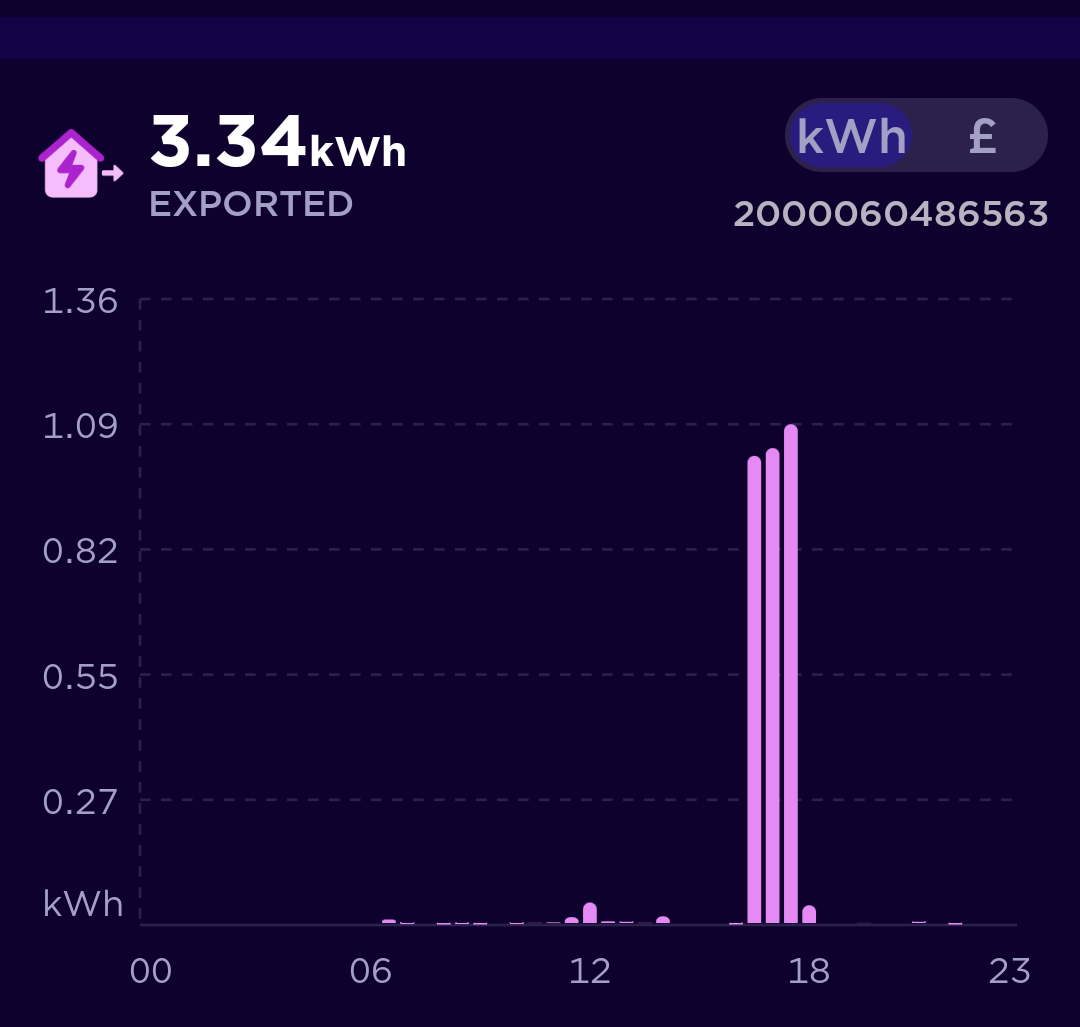

Octopus get it from your smart meter. I don't think GE don't have access to that.
WillC the GE data on the meter tab is coming from the CT clamp I believe (or some combination of that + what's going in/out battery/inverter maybe), but it isnt exact. The Octopus data is source of truth in terms of import and export, as that is what the smart meter is telling them.
To be out of whack by multiple kWh between the GE meter tab and the Octopus data is a bit surprising. Mine aren't exactly the same but they are relatively close!
Inverter shows 3.2 exported and Octopus 3.3 so pretty close but while looking at this I noticed the inverter meter info is showing export before the saving session when it is already dark and the battery isn’t full
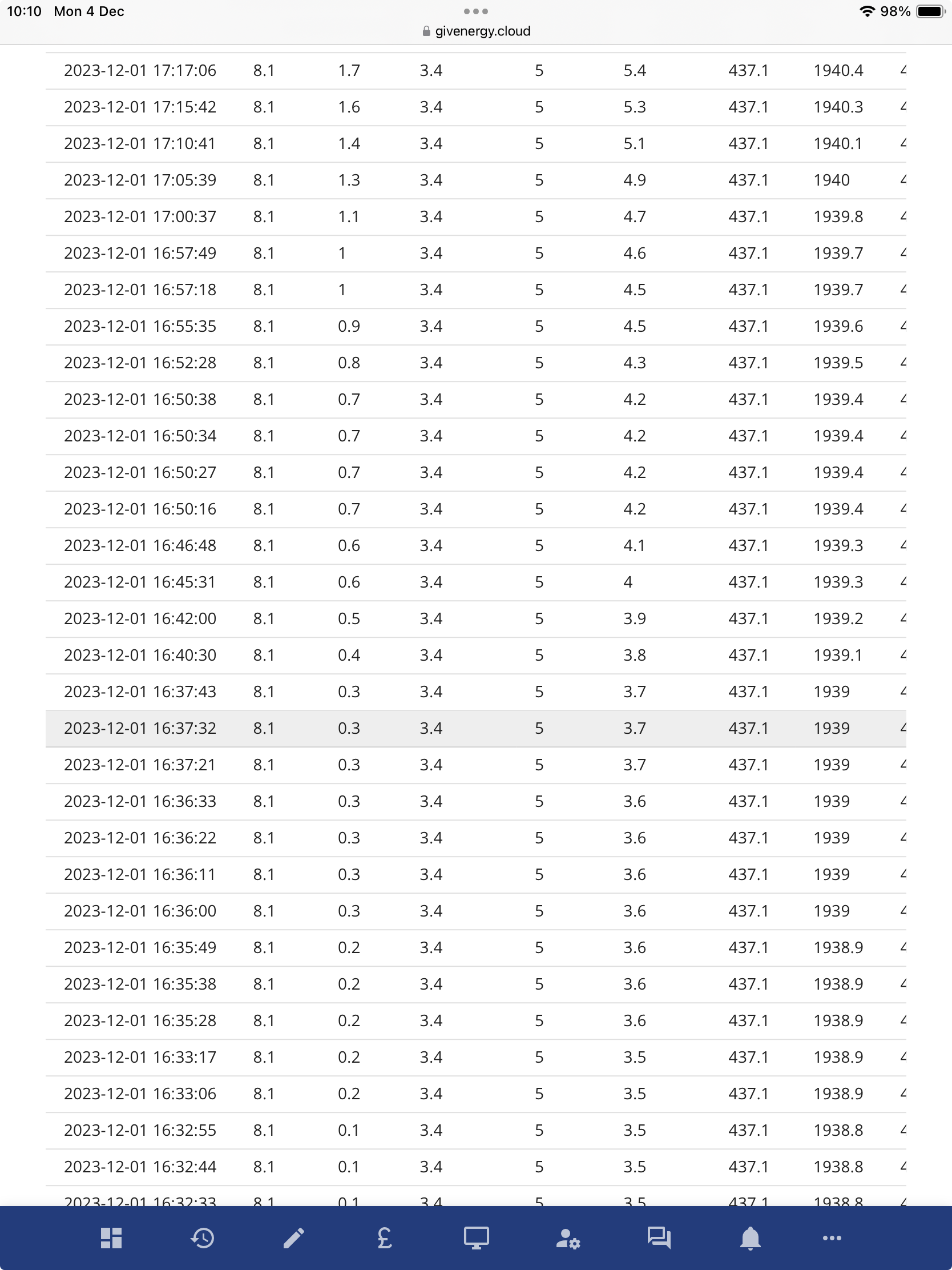
It’s possible there was something earlier in the day but not post 16.30. Other days look more normal.
SimonClarke seems your forced export/discharge definitely started pre-1700 based on this data.
Interestingly you have the same oddness with the log interval as I do. It used to be every 5 minutes, but now its totally random... sometimes every 5 mins, sometimes every few seconds.
I'd be happy if Octopus were giving me double the export, as long as there wasn't double the import too 🙂
pacemaker started at 16.30 didn’t it! Der please ignore my previous post.
SteveCook GE guy said using about 400w to export 2kw is about right. Also running at about 50+c is normal. He also found the problem with my EPS tripping…. I’ll put that on the relevant post.
I've finally got this resolved - it was a faulty GivEnergy meter. They've replaced that and all seems to be working correctly now.
Glad you found the cause of the issue. I’d also point out that the data in the GivEnergy portal/app can’t be relied upon as its sampled every 5 minutes and interpolated between so the portal says “exported 2kW”, it might well not be.
The smart meter is (more) accurate!
pacemaker Interestingly you have the same oddness with the log interval as I do. It used to be every 5 minutes, but now its totally random... sometimes every 5 mins, sometimes every few seconds.
I think I read on here that while the app is running, its 10-second updated readings also get sent to the cloud.
geoffreycoan technically exporting 2kW, not exported 2kW - as it's a live measurement of power it's showing, not energy exported?