Giv-Bat 9.5 max discharge

12 comments started 2022-04-01 last 2022-05-09
GivEnergy ProductsHybridBattery
S
#1 sponev

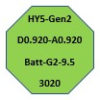
Hi, new here and just evaluating GivEnergy versus a Powerwall. I'm keen to go the GivEnergy route but one of the questions I'm struggling to get a definite answer for is the max discharge capability for the new Giv-Bat 9.5. I see there is a 5KW inverter but I've seen a thread elsewhere which suggests the max discharge from the battery is 3.6kw? I'm worried that this may be a bit low versus the 5kw of the Powerwall.

What would be the best way to increase that please? Two batteries and two inverters? Sorry for the newbie questions.

Any help appreciated!
Cheers

T
#2 Tim

sponev Can only offer that we have two 5kW hybrid inverters, each with its own 8.2kWh battery and together they can support a house load of 5kW from battery or 10kW (if there's enough sunshine) from PV, or 5kW from battery plus whatever you can get from PV. We have 12kWp of just-west-of-south-facing PV and have seen this sort of output this week.

S
#3 sponev

Hi Tim, thanks for that. My guess at this stage is that we'd be limited to 3.6kw max and will eventually need a 2 battery/2 inverter configuration. We're quite power hungry due to a large home office so I think we'll fall well short in winter. I know it's more capital cost but pay back isn't our main criterion. Cheers

S
#4 stevelewis

sponev Overnight charging on Octopus Go limits the useful battery size to 12kWh with a 3kW inverter (we have an AC-3.0 with 2x5.2kWh batteries alongside a legacy PV system). You're right that going any bigger would need multiple inverters and batteries to charge overnight; however, the discharge capability tends not to be the limiting factor in the winter if you are a heavy user, it just means you'll be using the battery for a few more hours at a lower rate.

If you're not going to be a heavy user in the summer, you could be buying a lot of lithium that doesn't get much use for half the year - smoothng out hourly peaks and troughs with PV doesn't need anywhere near as much capcity.

If your main criterion is backup power, the emergency outputs from individual inverters cannot be paralleled up with the GE system, but they can drive separate circuits. Also, the emergency output on the GE inverters cannot be augmented with a separate AC-coupled PV system (if you already have one). Not sure if the Powerwall can do this, Victron's offering claims to have this capability (but doesn't look as neat).

#5 TheDragon (GivEnergy)

I wouldnt try and cover the odd occasion you need more than 3kw. Look to cover the 60% scenario.

We are an all electric house, ASHP, induction hob etc etc. Loads of IT and kids. Base load is around 700W. We find 3kw on teh AC coupled cover the majority. Yes sticking the washing machine on in the evening, while cooking and the heating is on, we pull from grid and flatten the battery in just under 5 hours at full load.

S
#6 sponev

Thanks for that, useful. I'm busy collating usage profile across the day and I see the point about covering the general base load rather than the peaks - makes sense. I'm figuring a decent first step is a single battery but plan a second depending on the first year's results. I don't want an expensive piece of kit not properly utilised and I could always increment with a second smaller unit as required.

The main challenge at the moment seems to be getting any batteries at all! Cheers

P
#7 pjb904

TheDragon (GivEnergy) just a thought - our system in last Christmas - and am learning to use it differently now as the skies open up for summer. We're on Go, and our plug-in EV finally arrived this week.
Washing machine now goes on during the day if it's sunny, PV powered, rather than overnight Go. Dishwasher on about 9pm, to using battery full up from the day of sun (free). I now put the kettle (got a 2kW one after the 3kW one died) on before the toaster so they aren't on together and avoids pulling from the grid. And, to my surprise, the EV can get a full charge from the PVs (13A Granny charger - waiting for Zappi).
I'm fascinated how it's possible to maximize the benefits of my PV/Batteries - all from a 3kW inverter!

M
#8 MRich

TheDragon (GivEnergy) sponev Seconded - the one room in the house that'll always mess you up is the kitchen - i've seen load spike just running a toaster or kettle up to near the load limit of the Hybrid 3.6 inverter. The oven is just game over, as an element that size is a beast. On the other hand those spikes are very brief and even the oven, once heated, drops load to way inside the capability of the inverter.

For reference, the Hybrid 3.6 inverter definitely supports a max charge/discharge rate on the battery of 2.5kw. I believe the Hybrid 5.2 ups this to 3.6kw but there is obviously headroom for the panel output so it's easily possible to get up to I think 4.8kw or so on the Hybrid 3.6 if either you have the panel output for it or the combination of generation and battery.

S
#9 sponev

Thanks for the hints and tips. I'm seeing that the kitchen (plus the kids 10.5kw shower!) are the killers. However, the kids will be moving out soon and with a reorganisation of kitchen activities as suggested, I reckon we can come in under the 3.6kw most of the time. It will be fascinating learning how to optimise the system. We're also getting an Eddi(?) to divert excess to the hot water cylinder and upgrading our car charger to a Zappi. With our fixed rate tariff changing next week, it can't come soon enough!

W
#10 wilfleek

I have found that peaks of power usage over and above what the batteries can supply are quite short-lived. So it is not, as you have already gleaned, worth sizing panels or batteries to deal with the peaks.

Also, you will have the combined power of the soalr panels plus the batteries (assuming they are charged) during sunlight times to supply peak loadings - in our case that is over 8kW, more than enough for what we use (but we don't have leccy showers, lol).

#11 hoggy

You can if absolutely desperate to cover your peaks add on a separate 2nd hand inverter and battery from eBay.
Pylontech 2.4s pop up fairly regularly in the 4-500 mark. An inverter to go with another 3-450.
You need to do your sums as to whether this is worthwhile
(I found it worthwhile but then I'm a spark so fitting is free and I'm on the 5k hybrid so battery only discharge was a bit lower than I wanted)

#12 Simon_C

Some of the previous posts may be referring to the Gen1 inverters.
The datasheet for the newer Gen 2 hybrid inverters describes a limit of 3.6 kW from the battery, with the 5 kW hybrid inverter able to make the ac output up to the maximum 5 kW from the solar PV at the same time.