Quick Question
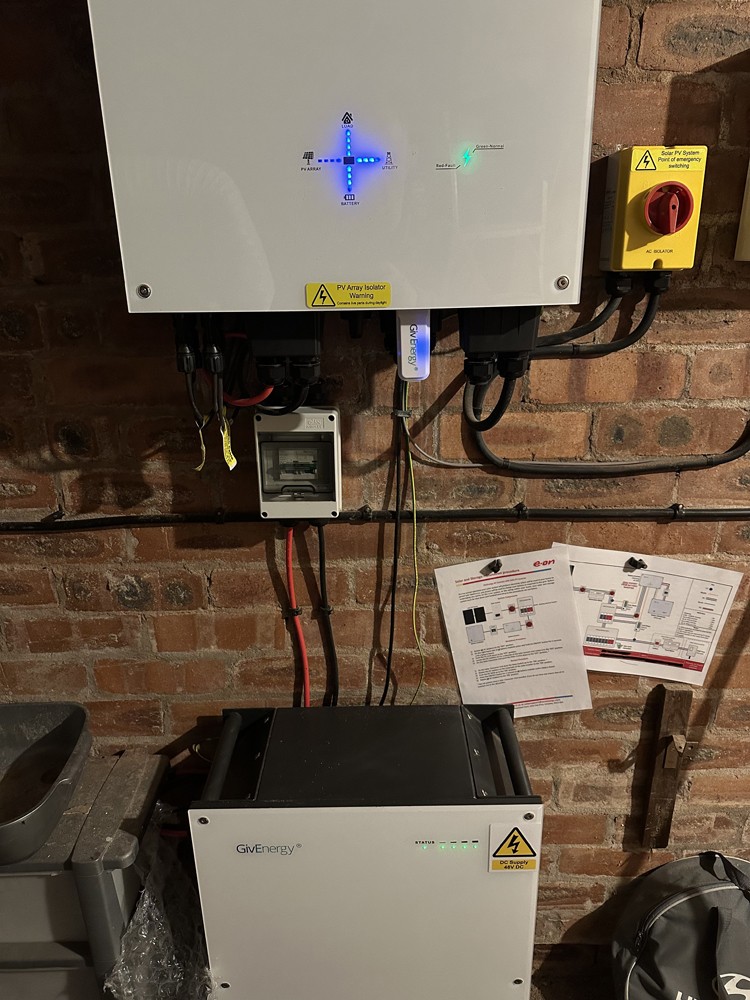
Can an 8.2gb battery (Vrs1) be mixed with an All-in-One battery. Either as a slave to the all-in-one or as it's own master on original inverter that also supplies power from the solar panels...?

Quick Question
Can an 8.2gb battery (Vrs1) be mixed with an All-in-One battery. Either as a slave to the all-in-one or as it's own master on original inverter that also supplies power from the solar panels...?

I think the excellent " Speak to the Geek " YouTube channel had something about that quite recently.
Ahh he wired it up himself, and uses home assistant which I can't get my head around! So that's no good to me.
If I can't get the 8gb running with the AIO I'll just drop the AIO and get a 9gb battery instead, and make that the master and the 8gb the slave. I'll just need a new vr1 to vr2 cable I believe. The installer should be able to do all that.
GazzaGreen If you get the the AIO so you have it and 8.2 and cant get them running together why would you drop the AIO and not the 8.2?

GazzaGreen The other consideration is the charge / discharge rate. With the AIO I can import / export at 6kW. With the other GE inverter / battery setups I think you're limited to 3.6kW in/out of the batteries in total. So you might have more storage, but it will take a lot longer to charge/discharge.
Yes that was what i was trying to say on previous post. If I could afford two AIO's that would be ideal, but I can't justify that expense.
My thoughts on use. Change my car charger so I can use Intelligent Octopus Go. This means next winter I can charge my car on 7.5pper kWh (or whatever rate it is then) instead of 16-17p that I spend now. I need as much battery as possible to last the day as I also have a heat-pump. On very cold days it uses A LOT of electricity! On Cosy tariff I charge battery 2 times a day and it tend to run out of charge before the next charging schedule on very cold days! Days at 5C or higher is much better.
During the Summer i use the Flux Tariff so I get payback for my Solar panels. I will also be on GivBak. The AIO would have been better here with its higher volume discharge rate!
Yes, that’s definitely the upside of the AIO. I have a GE hybrid AC gen3 5kW inverter in front of the AIO so I suppose I add a legacy battery to the inverter to improve storage. I’m unlikely to need to import / export faster than 9.6kW to/from battery.
But maybe another AIO is the way to go when the time comes - provided GE have worked out how to handle multiple AIOs. Were still burning oil in the winter so yet to move an ASHP.
Re tariff - why aren’t you using Octopus Go in the winter? Then at least you can charge the EV and house battery at a lower price of 9p/kWh between 00:30 and 04:30?
Or is the heat pump that thirsty outside of those times and beyond your battery capacity for the other 20 hours a day?
OK here are some numbers from 1st Dec, which the temp never got over 0C...
Charging the home battery twice was 13.53 kWh. Battery to home usage was 14.35 kWhs before battery ran out and then house used Grid. Normally 14kWh battery use would enough to run the house...
Running the house outside of the Cosy hours, which consists of normal house use (very little), and the heat pump needed 10.72kWh of extra Grid input! Some of this was when the battery ran out, but the heat pump can also use over 2.5kWh which is the battery output limit so the grid has to take that extra!
5kWh of that total was between midnight and 4am to just run the heat pump from the grid. The battery long since empty.
Cosy hours was running the heat pump, heating water and charging the car once over two 3 hour sessions. Total Cosy Grid input was 35.44 kWh that day. I use the car for a delivery job so can use about 12-20 kWh to recharge battery. (NOTE: It's just a 27KW battery on car).
I don't think two normal batteries will be enough either on cold days like this as working it out the best I can, I think the house used between 20-25kWhs from battery and grid outside of the cosy hours! (But this was a very cold day). In cosy hours i use Grid power exclusively to run the house, charge the car and charge the home battery.
Hope all this makes sense....
Just charging the battery once, even at 9p would not have much impact when your talking so much usage on a cold day... it staggering!
OK working out how much it cost for each tarriff based on this day.
Go
usage 24.92 kwh @29.78p £7.4211
Car and heat water 30.84 kwh @0.09p £2.7756
charge battery 8 kwh @0.09p £0.72
£10.9167
Minus battery power (8kwh 1 charge) £10.1967
Cosy
usage 24.92 kwh @26.76 p £6.6685
Car and water 30.84 kwh @16.06 £4.9529
charge battery 8 kwh @16.06 £1.0326
£12.654
Minus battery power (16 kwh 2 charges) £10.5888
So a little cheaper using the Go tariff..... However i feel a lot more electric is used later in the evening when it gets colder, and the extra charge at 4-7pm on cosy has the chance of using battery longer during this period?
Thoughts
If I understand, house + heat pump is 24kWh. 5kWh of that is between midnight and 4am. So for Go, you should have priced that as 5x9p + 19x29p, rather than 24x29p
Also, 8 of the 24 usage came from the battery, so isn't that roughly 10p/kWh (allowing for losses). You priced in charging the battery but not the saving from discharging it. (But I may have misunderstood - maybe it was 24kWh plus what's in the battery? Though doing it that way makes it harder to compare one Vs two charging cycles.)
I tried to keep it about equal, they aren't true values. You can't really compare well between Cosy and Go using just one set of readings because practices would be different for for each tariff. However, I know the battery on a very cold day is depleted by about 10-11am, lasting just a few hours if the heat pump is going full speed, then its 29p a KW after that using GO.
Note that the solar income is almost non-existent on these kind of days.
That does concern me when your using over 2kWh an hour with the heating. At least with Cosy you have two charge-ups, even if 3 hours isn't quite enough to fully charge a depleted battery, you get about 80-85% of battery. You really need 4 hours at 2.5kwh charge rate to get to 100% from empty. The new 9.5 battery can charge at 3.5kWh so that should get to 100%
Most days aren't that bad though and I'm paying about £6 a day on average with Cosy. The right Tariff is a difficult one to pick. Perhaps I should try Go for a month?...
Current usage: Battery was 100% at 4pm, its now at 43% discharging at this moment at 682W. Rads are warm to the touch and temp is 17C (set to 16C). It will probably run out about midnight as i go to bed, but Heat Pump can't be turned lower than 16C so will burn electricity throughout the night until next charge cycle at 4-7am)
Is your hybrid inverter g1 or g2? While the 9.5kWh battery can accept charge at 3.5kW, I think that g1 inverter still limits battery interface to 2.5kW ? (Vague recollection from when I was speccing my system.)
GazzaGreen in the cosy calculation, you allowed for the battery storing 8kW twice, whereas in the text you mentioned that 3hrs isn't enough to fully charge the full 8kW. Also, should probably allow for 10% round-trip losses from battery.
I don’t have GE kit, but have a 13.5kWh AC battery and a stand alone solar.
Get a high charge/discharge battery (if you want GE, the AIO, and you can charge that overnight. It also plays better with solar enabled car chargers as you monitor output to stop discharge in certain modes.
The battery will get topped up or load reduced by a couple of kWh of solar bar the very worst of days. You then load shift some of the power use to the overnight period.
Your hybrid will send power to the battery via DC, so the AIO will never see it charging so that shouldn’t be an issue.
How they discharge might be the question, although you should get an answer from GE.
Also don’t forget second hand batteries still have a reselling value.
I’m not saying the AIO is the right solution as I don’t have one and only see what’s in the threads here. However a battery that can only add 3.6kW/h can only really charge up about 19.5 kWh in a 6 hour cheap rate period.
If you heat pump requires say 15kWh of electricity (eg 35-40kWh of heat output with an SCOP of 2-3), then I would think you have quite a lot of heat loss. Personally I’d look at draft proofing, insulation, making sure you have low flow temperature radiators. Then check your hot water tank is closer to 50, but boost to 60 during the 7.5p rate to reduce legionella risk and maybe again if there is solar production being exported. Finally try to get the radiator flow temperature down to 35-45 (even lower if you have underfloor heating) as the higher flow temperatures use massively more electricity to get to due to needing resistive heating to get there.
kram Gen1 inverter is specified at 2.6kW max battery output. But from what we have observed during the givback sessions, it seems to use about 450kW internally when doing a discharge, therefore I think you are unlikely to see more than about 2kW effective discharge from a Gen 1 hybrid inverter.
450W. Of course!
It's a GIV-HY5.0 -
I believe Gen 2? It can knock out 5kWh from the panels.
"you allowed for the battery storing 8kW twice"
True, those calculations are all probably way out..... there's no way to be sure. I don't think there will be much difference though as I can get two batteries with Cosy, but at almost twice the kW price. The day rate on Go is about 3p more per Kw.... But Go doesn't have a peak rate which is 0.43 per kW (I don't really use any of this though, needless to say).
I would have to try Go for a month. Perhaps all of January and hope for a day pr more of very low temperatures like we got at the beginning of DEC?
I didn't understand some of your post, but I do know that my bungalow is insulated to best it can be, and I believe I have the heat pump working at max efficiency. I would think my scop is 3 or more on normal days but not really sure how to work it out.
Don't forget the readings I have shown was for an extreme freezing day on 1 Dec, where is was about -3 or -4 and never got over 0C.... The heat pump was humming as the fan on it was spinning so fast lol!
Most days at normal temp (4-5C), I am just spending £6-£7 or so, that includes charging the car for about 50 miles. Last night the battery didn't run out until 2:30am and charging took place at 4am til 7am. Then the battery was at 85%. It's full ATM (12:30pm) because the sun is out and solar is running the entire house. 🙂
I still think because the AIO won't work with my current battery, that the 9.5GB battery is the way to go as that CAN work with my 8Gb. I believe it will still work at 3.5GB peak if it needs too? Is that right?
GazzaGreen Make sure you read the long posts about all the problems with the AIO before you even consider it. Even on its own it is riddled with trouble. Try to marry it with another battery (regardless of what the Geek says), likely will drive you bonkers like is has for lots of us.
If you want your heat pump to work as advertised then have a look at these guys. I have been following them for a while and increased my SCOP and I have a gas Boiler.
https://youtu.be/RlcvncWvNUQ?si=Wp5zv89Yat_zvEeW
This guy is also good as he was sceptical about heat pumps
In case you weren't aware, battery-only installs may become vat-free next year.
If your current system only runs out of battery on the very coldest days of the year, I wonder what the payback time would be for an additional battery. Though if it would allow you to use run entirely at Go/IOG prices, might well be worthwhile.
GazzaGreen As I understand it, the 8.2/9.5 battery family is low voltage and cannot be run in series with the high voltage AIO. If you try and run them in parallel they are likely to cross charge. The forthcoming EMS unit may help with this.
Maybe leave it until next winter. You won’t be buying anything before Feb, to benefit from the VAT relief, and from then on the benefit diminishes as spring arrives. By autumn there will be a clearer picture of the performance and availability of the EMS and the AIO issues may or may not have been resolved.
You could try using the Octopus Compare app with Consumption Shifting enabled to compare Go against Cosy.
DD if it would allow you to use run entirely at Go/IOG prices, might well be worthwhile.
Agreed, I think a full day on Octopus Go rate will be the way to go, and Flux in the summer months. I am not looking at the costs of the equipment as such, I love technology and can afford to get it to a point, I just want the annual heating bill down to a reasonable level so I don't have to worry about it through my retirement.
Avenir Maybe leave it until next winter. You won’t be buying anything before Feb, to benefit from the VAT relief, and from then on the benefit diminishes as spring arrives. By autumn there will be a clearer picture of the performance and availability of the EMS and the AIO issues may or may not have been resolved.
I think they are wise words indeed. I wont be looking at a new battery until at least mid 2024, then I will decide which way to go. Even in summer a bigger and faster battery system could be a good idea, as I can get A LOT of money back for export during the peak periods and from GivBack Events.
GaryS Make sure you read the long posts about all the problems with the AIO before you even consider it. Even on its own it is riddled with trouble. Try to marry it with another battery (regardless of what the Geek says), likely will drive you bonkers like is has for lots of us.
Yes, good advise. By mid 2024 it may be more stable but I still need it to wok with my 8gig battery. I don't fancy the hassle of trying to sell it.
If you have a gen2 and you’re getting 3.5kW output, adding a second battery to that inverter does not increase your maximum output.
HY5 + 8.2 = 3.5kW max output.
HY5 + 8.2+9.5 = Still only 3.5kW max output.
HY5 + AIO = 6kW max output
The COP changes, however usually when heatpumps go to purely resistive heat you’ll be looking at some fairly substantial electrical heating.
I would imagine it’s worth checking the flow temperatures and definitely the hot water schedules to make sure you’re not trying to heat things hotter than required.
I've got a heat pump as well. Its a large house so I have two 9kW units working together.
Flow temperature is 48 degrees with AI (weather compensation) turned on, so in practice it should be less than that unless its really cold.
The house is comfortable at 18-19 degrees through the day, a bit lower overnight, but it can chew through electricity on cold days. Today for example was 17kW but its often 20-30kW in the winter, and on really cold days like 2nd December it was 96kW. I find it incredible it can use so much, but it does, despite all my tweaking.
Overall across the year with the solar panels and export I reckon I'll still roughly break even, but my takeaway from analysing the consumption prior to the winter starting was to choose the most cost effective tariff I could. I was on Flux for the summer and it was good to me but coming into the winter I looked at all the options and eventually settled on Agile on the basis that I could never have enough battery capacity to serve the home demand on winter days.
So far, working out OK, been some horrible peak 60p/kW periods on those really cold days, but my average import price is about 22p/kW. I check with the Octopus Compare app and its about £100 a month cheaper than Flux or Cosy. Tracker I might have saved a little more, maybe £30 over the month, but can't rejoin for 9 months so would be locked out for next winter.
kram HY5 + 8.2 = 3.5kW max output.
HY5 + 8.2+9.5 = Still only 3.5kW max output.HY5 + AIO = 6kW max output
Hi Kram.
Just so you know that an 8.2 battery has a peak of just 2.6kW.
The 9.5 has an out put of 3.5kW which is a kW more than the former.
The AIO is not going to happen because it can't talk to my 8kW battery. I can't afford two of them and I have no idea how to sell my 8kW battery and imagine I would not get a good price for it.
geoffreycoan I've got a heat pump as well. Its a large house so I have two 9kW units working together.
Flow temperature is 48 degrees with AI (weather compensation) turned on, so in practice it should be less than that unless its really cold. can chew through electricity on cold days. Today for example was 17kW but its often 20-30kW in the winter, and on really cold days like 2nd December it was 96kW. I find it incredible it can use so much, but it does, despite all my tweaking.
I looked at all the options and eventually settled on Agile on the basis that I could never have enough battery capacity to serve the home demand on winter days.
First of all what a great post!
I have looked at my records on the giv-energy cloud, and I used 62.5kW on 1st Dec, which is about 2/3's of what you used. This included a car charging session betweem 1-4pm, which is a cheaper Cosy period.
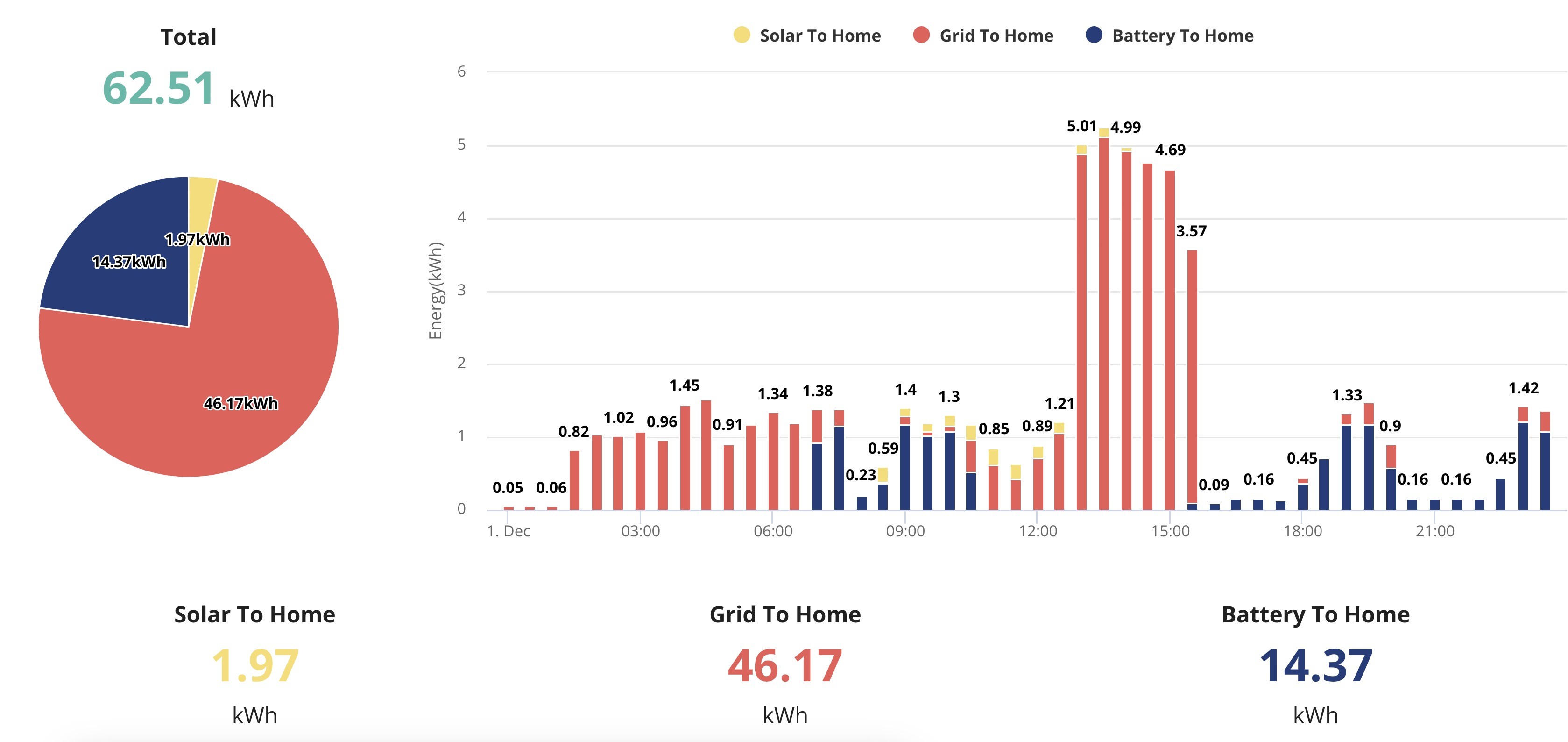
On this day there was no battery until it was charged at 4-7am, after which the two cosy sessions kept it charged until at least midnight. Looking at the records for 2nd Dec the battery ran out at 2am. There was virtually no solar (2kW) and the battery with its two charging sessions put 14kW into the house.
I spent £11.56 on this day, which is about twice the average for other days in DEC when the temperature was 4C or higher.
Here is my heatpump settings and curve, of course i have weather compensation on.
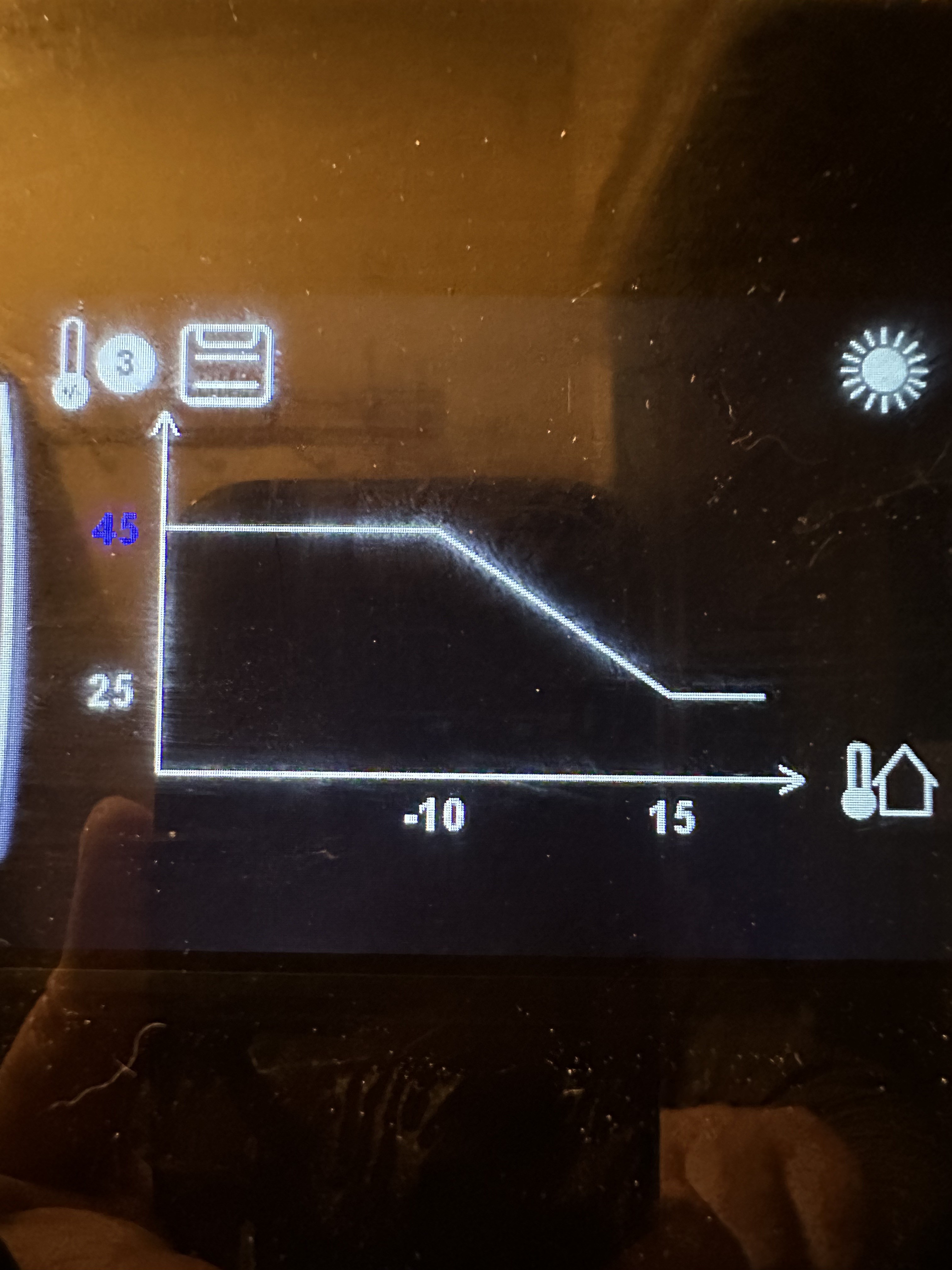
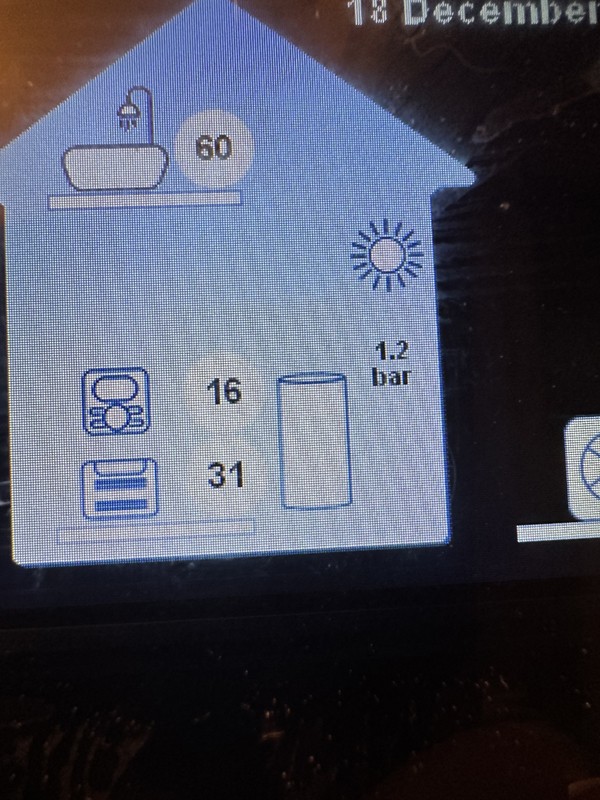
I think they are about right, or are they?
These pictures where taken this morning. Water temp is usually 46C, but on every Monday it heats to 50C+ for hygiene control. Sorry I missed it on pic but outside temp ATM is 9C, not bad for 6am on Monday morning. I have internal heating set to 16C.
GazzaGreen I don’t think it’s correct that the 8.2 has a max discharge rate of 2.6. It’s rated for 80A, same as the 9.5. Both these batteries could discharge at around 4kw in theory but are constrained by the inverter.
Does your inverter have a white dongle with GE logo sticking out the bottom? If so, it’s a Gen 1.
GazzaGreen The AIO is not going to happen because it can't talk to my 8kW battery.
What's the nature of the conflict between the two systems? I understand that they can't integrate to co-ordinate operations, but I wonder if they can just operate independently to achieve your needs,
I assume the big problem is if they feed off each other - the AIO perceives excess on the grid, and tries to charge from it; the other then perceices this as a load, and discharges to cover it. I wonder if you can prevent this with judcious control of charge/discharge windows: if you can prevent the AIO from charging from excess solar, and charge only from the grid during cheap periods, then it should not feed from the HY5 system.
In the summer you might be using the AIO only to charge from grid overnight / discharge to grid during flux peak period, so it can operate entirely on time-of-day.
A 9.5 battery will only charge/discharge at 2.6kW with your inverter.
It’s the charge rate that is the limiting factor. Even if you replaced your inverter with a gen 3, you still wouldn’t be able to fill 2 batteries within a 3 or 4 hour charge window. Intelligent Octopus Go would give you 6 hours, which would be enough.
If you have two solar strings, dual hybrid inverters would be an option to consider. There are folks on here running two gen 1 inverters in parallel to achieve 5kw IO. Apparently they don’t cross charge but later generations might. EMS v2 will try and solve this. Maybe you can find another gen 1 at a bargain price. DNO approval may be required.
You know, the more I think about it, the more I am inclined just to get 2 AIOs and have done with it, it would solve all the problems probably for the rest of my life....
Or two Powerwalls. That is an option that actually works in multiples right now, unlike the AIO. Don’t know if you could use your GE inverter as a solar only inverter, or if you’d need to replace that too.
Avenir Maybe you can find another gen 1 at a bargain price. DNO approval may be required.
My inverter can input from solar at 5KW so naturally I assumed it could input from batteries faster than 2.6kW. I believed that was just the battery speed and the 9.5 would perform at 3.5kW.
I am now thinking about just biting the bullet and going for the AIO... 2.kW is just not fast enough. Let me speak to my installer about it and see what they say....
Bit of an off-the-wall suggestion - get an EV with V2L capability, and run the heat pump from that ?
DD get an EV with V2L capability...
There aren't that many of those available with V2G capability. The old leafs maybe but who wants on of those stuck in front of your house? LOL! I would say the batteries aren't that great and will have lost a lot of their capacity by now anyway. So not really vaiable....
It's all getting way to complicated I feel.
Any AC coupled system, whether Powerwall or AIO, requires a separate solar inverter. Whether your current hybrid can do that that job well without a connected battery, I don't know.
DD Bit of an off-the-wall suggestion - get an EV with V2L capability, and run the heat pump from that ?
There aren't that many of those available with V2G capability. The old leafs maybe but who wants on of those stuck in front of your house? LOL! I would say the batteries aren't that great and will have lost a lot of their capacity by now anyway. So not really viable....
GazzaGreen No, by V2L I do mean V2L, not V2G. V2L aren't uncommon.
Cdent No. Primarily because V2H is not easily available. V2H is more or less the same as V2G and requires all the extra hardware to synchronise frequency and voltage with the grid supply. V2L comes built into some cars, and just needs to generate approx 230V at approx 50Hz to power a single, isolated appliance. Akin to a generator, I guess.
Would require having a switch, to switch the heat pump circuit between home supply and V2L, but that shouldn't be a big deal. (Automatic switchover would be a lot harder, but probably don't need that. I'm assuming the car would only be utilised on the coldest of days when existing system is insufficient.) Probably also requires earth rods and things, but you'd need those anyway to configure HY inverter for EPS, so you get a double benefit.
Would lose the benefit of being able to export additional power to the grid during Flux peak, of course.
GazzaGreen Tomdg Any AC coupled system, whether Powerwall or AIO, requires a separate solar inverter. Whether your current hybrid can do that that job well without a connected battery, I don't know.
There is an answer here:
https://givenergy.co.uk/solar-and-storage-live-an-faq-roundup/
Q: What’s happening with the AIO mixed with AC 3kw and or Hybrid with/without battery?
– AIO with AC3: Although not officially supported, the AIO has been proven to work with an AC coupled inverter on at least 3 installations. Balancing is via HomeAssistant. This type of setup will require specialist support, from the GivTCP community and HomeAssistant.
– AIO with hybrid inverter – no battery: This is supported, using the hybrid as a string inverter.
– AIO with hybrid + battery: This will work, but isn’t supported. The hybrid will charge first from PV. Then once full, the AIO will charge. Some cross charging may occur. At night, the hybrid will continue to discharge its battery (seen as PV by the AIO), until the hybrid battery is flat. Then, the AIO will discharge.
Your hybrid can deliver 5kw of solar to your house, so probably no need to replace that.
One further thought: charging two AIO in parallel (32A each), whilst potentially charging a car and running a heat pump sounds like it could exceed the capacity of a 100A main fuse on single phase.
Avenir One further thought: charging two AIO in parallel (32A each), whilst potentially charging a car and running a heat pump sounds like it could exceed the capacity of a 100A main fuse on single phase.
It's not even a 100 amp fuse LOL, its an 80amp, they wouldn't replace it for me. They will if it blows, I'm sure!
OK been talking with my installer today about how to improve my system. I think the way to go for me is to change the inverter from the Gen 1 to a Gen 3, and then add more batteries to that. I was thinking having at least two or maybe even three 8.2kW batteries! That should be well enough storage! These should work at the 3.5kW output that the new inverter can achieve. Then i should be able to run the whole house on one charge at 9p per kWh even on the coldest days.
GazzaGreen 9p = Octopus Go ? Can you charge 3 x 8.2kWh in 4 hours ? 3.6kW x 4 hours = 14.4kWh.
DD 9p = Octopus Go ? Can you charge 3 x 8.2kWh in 4 hours ? 3.6kW x 4 hours = 14.4kWh.
It depends on how they are charged. Are they charged one at a time, in that case then perhaps not. But if they are all charged at the same time at the full 3.5kW charge speed for each battery, then they should be charged in about 2 hours or so?
It's not going to be often that all those batteries are going to be emptied in one day. On most normal winter days (5C or more) and they all discharge together, and there is no solar that day, I would predict that a third would be left in all of them? Freezing days below zero would be another story.
The 5kW gen 3 hybrid inverter could charge 2.5 of those batteries in the four hours.
But depends on how much solar attached too, as you want the DC of the panels to closely match the DC rating of the inverter for best results.
Alternatively two inverters (not officially supported yet) or a bigger gen3 hybrid which is only available in the three phase inverter model as far as I’m aware (but I imagine getting three phase electric installed isn’t cheap)
GazzaGreen as well as the battery throughput limit there is also an inverter throughput limit. So it depends which inverter you get, 3kW, 5kW, or bigger if three phase electric.
GazzaGreen kWh is a measure for energy usage. Need the power rating, not energy, which is usually kW or W.
I believe that inverter is 5kW AC and 7.5kWp DC maximum.
So 5kW times 4 hours, should mean a maximum of 20kWh energy into the batteries in that time.
Subject to efficiency losses etc of course.
TX200
I believe that inverter is 5kW AC and 7.5kWp DC maximum.
So 5kW times 4 hours, should mean a maximum of 20kWh energy into the batteries in that time.
Subject to efficiency losses etc of course.
That should be enough to put enough energy into the batteries to run for a cold day in winter. If it's really cold, there could be brighter or even clear skies so some solar is viable. If there's clouds it may be a little warmer (but not always). So as a rule there should be enough battery for most days.
In the summer I'll export during the peaks. I'll be on the flux tariff then. It may be cheaper to fill all batteries to full on the flux tariff, so that the more valuable solar can go straight to grid. But its usually just a few pence difference anyway... Hmmmmm?
TX200
I don't think this is correct for charging the batteries from the grid (AC).
The inverter will see 3 x 8.2kwh batteries as 1 x 24.6kwh battery. It will charge that battery at a rate of 3.5kw. It will take 7 hours to fill them.
With a single hybrid inverter, within a four-hour period the maximum capacity you can charge is 14kwh.
GazzaGreen Batteries installed after 1st Feb will qualify for 0% VAT (so saving 20%)
TX200 The 5kW gen 3 hybrid inverter could charge 2.5 of those batteries in the four hours.
I don't think that is correct.
From the datasheet for the inverter:
Nominal AC Output Power : 5000W
Battery : Max. Charge / Discharge Power: 3300W / 3600W
So that's 13.2kw in 4 hrs, or 1.6 batteries charged in 4 hours :/
Max battery charge rate is the same for the 3.6kW and 5kW Gen 3 Hybrid inverter
GazzaGreen are all charged at the same time at the full 3.5kW charge speed
No. 3.5kW (or 3.3 according to the datasheet) is the max rate the inverter can charge a daisychain of batteries connected to it. It sees them effectively as one big battery, and aside from some balancing, charges and discharges them as such.
dragon2905 Batteries installed after 1st Feb will qualify for 0% VAT (so saving 20%)
Yes I was thinking March 🙂
phoenix No. 3.5kW (or 3.3 according to the datasheet) is the max rate the inverter can charge a daisychain of batteries connected to it. It sees them effectively as one big battery, and aside from some balancing, charges and discharges them as such.
Hmmm. So the three 8.2k battery idea may not be the best way to go after all then? They no good if they can't be charged to full cheaply, ready for the day ahead. When all is said, I think the best and only way is the AIO then? By the end of next year perhaps they will have solved the issue to join two together, or join an AIO and a 8.2kW battery together?
I am a bit disappointed that there isn't a simple solution to running a day on battery in winter. Cosy is good but 16p (17p in Jan) is quite high for a cheap rate tariff.
Not connected to one hybrid inverter if you want to charge them all on a cheap tariff.
Not sure what the state of play is with getting an AC coupled (3kW) inverted to play well with a hybrid as those are cheap (£1k ish) and relatively easy to install. That would give you max charge rate of close to about 5.5kW for your batteries if you stuck with the Gen 1 and a similar boost in the max output to the house too.
I think if you only have a 4 hour cheap rate, having more than one 8.2kw hour battery attached to one inverter is going to be suboptimal, per the calculation in my previous post
And the daisy chaining of batteries too. Forgot about that bit. So the power has to go through the first battery to get to the second and third.
Only got one battery here, so not familiar (it's in the back of my mind from stuff I've read, but it didn't reach the front of my mind when typing earlier!!!)
FWIW, there should be no extra issues created by adding a 9.5kW instead of an 8.2kW, so you could gain a little extra there, IF a Hybrid and an AC3 will play well together. I would suggest starting a new thread to get a definitive answer on that. Like @TX200 says, we all pick up a lot of info here, some stays in, some falls out with time!!
Understood, but what happens when a hybrid inverter (3.6 or 5 kW) with a 7.2 kWp input rating (as both have according to the datasheets) receives that input from PV but has a fully charged battery attached (or no battery) ?
Neither, according to the specs has the capacity to use/export it as AC at that magnitude, so where does it go? That would make for a very hot inverter, particularly for the 3.6kW, no?
phoenix Understood, but what happens when a hybrid inverter (3.6 or 5 kW) with a 7.2 kWp input rating (as both have according to the datasheets) receives that input from PV but has a fully charged battery attached (or no battery) ?
Neither, according to the specs has the capacity to use/export it as AC at that magnitude, so where does it go? That would make for a very hot inverter, particularly for the 3.6kW, no?
Won't it have some kind of suppressor in it to stop excess electric that it can't manage, otherwise it would blow a fuse. An electric appliance, for instance a kettle wouldn't fail because the grid can supply several times more electric than it needs?

The MPPT tracker simply moves away from its usual mode of trying to pull the maximum amount of power out of the panels down to a level the inverter can handle.
It's why you get clipping (a sudden flat line in PV output as opposed to a bell curve)
The energy you would have taken simply stays on the roof...it doesn't get bled off by the inverter as heat or anything like that.
I've pondering the issue of ensuring there's space in the battery at peak generation time, to avoid clipping. Would be good if there was a mode where the inverter could prioritise AC generation over charging the battery (as opposed to prioritising house load, then battery, then export as last resort). But that's presumably not available.
Will need to develop an external agent which dynamically adjusts max charging power to keep AC generation where I want it.
Avenir reducing the charge rate to a low value would do this, if I’ve understood correctly.
Yes, and for almost all days, a static limit will be sufficient to avoid clipping - just set it to a value where it will take all daylight hours to fill the battery.
But in peak season, when generation exceeds AC limits, it does want to be able to send all the excess to the battery, without artificial constraint. Otherwise, it still has to clip if the excess power exceeds the charge limit.
(For me, it's largely hypothetical - 6.4kWp array and 5kW export. Add in the 10% inverted overheads, and it's only 900W over. Setting max charging power to 1kW means it would take 9.5 hours to fill the battery from empty. Though of course in summer, battery is unlikely to start the day empty. Unless I go onto Flux tariff and export during peak period... so many variables...)
I could have sworn I replied, but clearly it didn’t come up.
Drop the water temperature from 60 to 50 degrees and run a hygiene cycle up to 60 daily overnight between your cheap hours. If you have an Eddi or similar you can always boost with the immersion during a cheap period or excess solar.
kram I could have sworn I replied, but clearly it didn’t come up.
Drop the water temperature from 60 to 50 degrees and run a hygiene cycle up to 60 daily overnight between your cheap hours. If you have an Eddi or similar you can always boost with the immersion during a cheap period or excess solar.
Already on top of that. I run the hygiene cycle every week on mondays, its usually 50C or so, not sure why it's showing 60C this time?
The rest of the week it heats to 46C.
I have a couple of reading here to get the Scop but have no idea how to do it?
Since installation
1063 kWh
4651 kWh
I'm guessing income, output or flow.
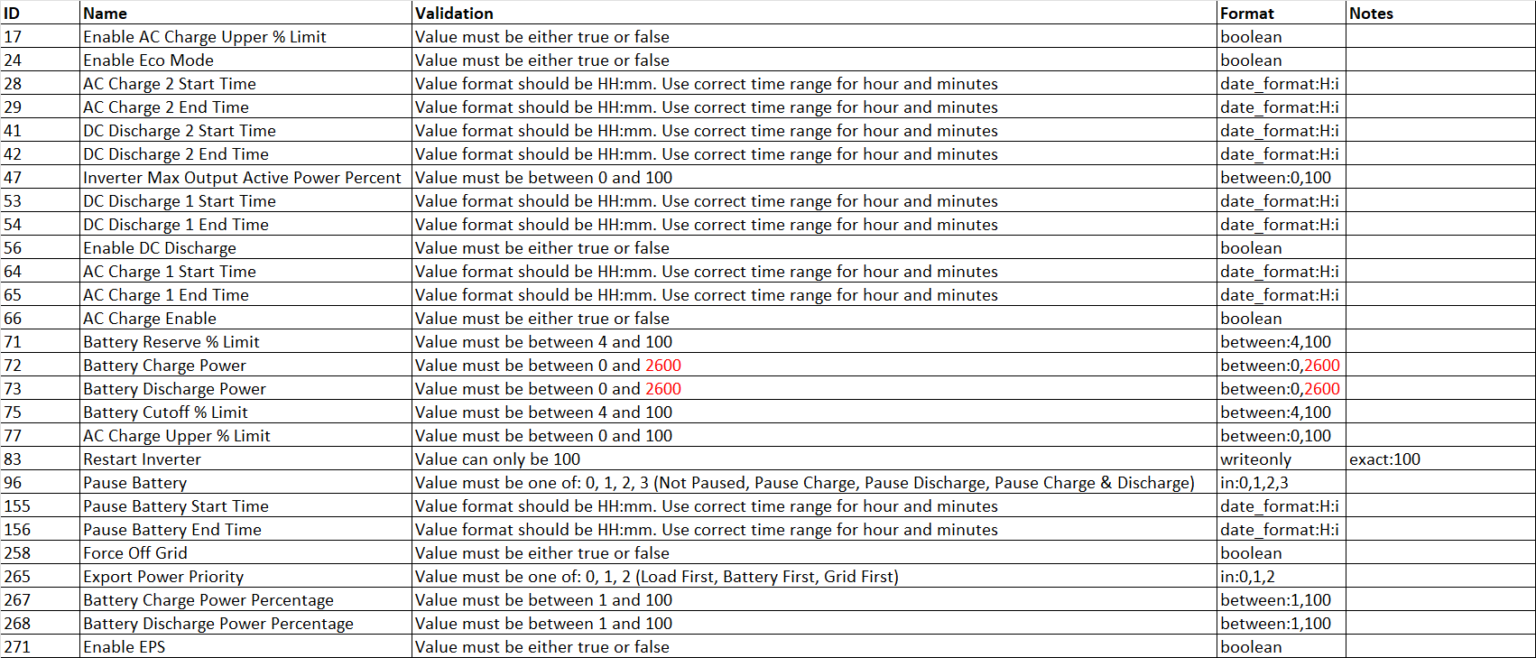
hoggy newer inverters / Firmware's (I think gen 2 onwards have this) have a mystery toggle in the API which would suggest you can prioritise export over charging.
It's also available in the remote control section on the portal
https://community.givenergy.cloud/d/3650-understanding-the-settings-on-your-app-and-portal/3
in the third table, under general, 'export power priority' is one of 'load first', 'battery first', 'grid first'.
Just trying it now - doesn't seem to have any obvious effect: solar is slightly higher than consumption right now, but whatever I set it to, solar is covering first the consumption, then the battery. No (significant) import or export.
I believe you have to divide between these two numbers. If so then I have a all time scop of... 4 🙂
Or more precise 4.375