Agile Rates

40 comments started 2024-01-03 last 2024-01-10
GivEnergy ProductsBattery
J
#1 johnsherman

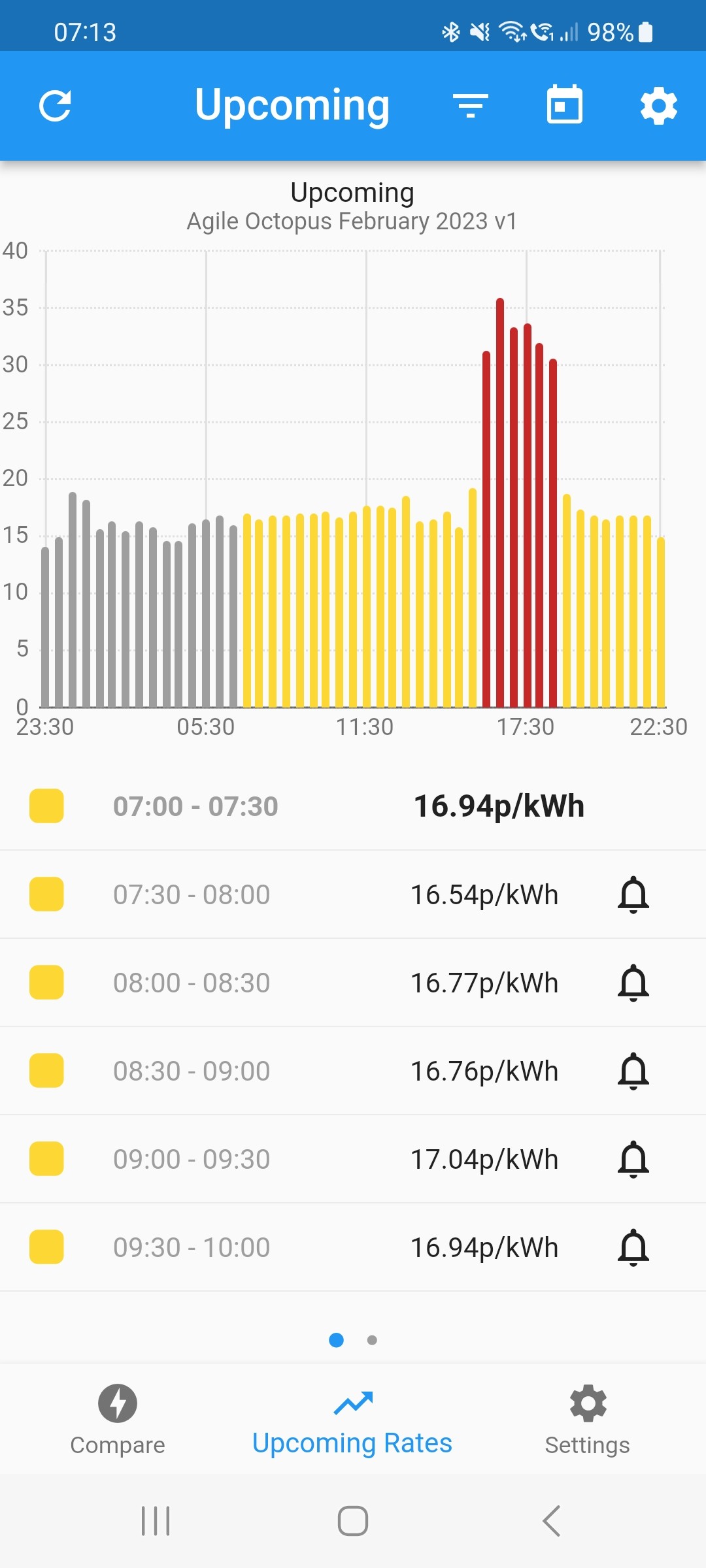
I joined Agile a few weeks ago and have become used to prices that vary during each 24 hour period so am surprised to see today's chart. There's no cheaper period in the early hours of the morning. Anyone have an idea why this might be?

D
#2 DD

Has the wind died down a bit?
I Agile is particularly cheap in the last couple of weeks of December because demand is much-reduced. Less commercial and industrial load. If fewer people are commuting to work, there'll be less overnight charging, etc.

P
#3 pacemaker

gotta take the rough with the smooth with agile. You're right though that there is unusually no cheaper overnight period. I presume something to do with demand, and I think I read yesterday an unavailability of a nuclear facility, causing more gas to be used to generate, hence more cost... I assumed all this wind would replicate the XMAS rates, but seems not.

A
#4 Arg0t

IMO 16p is not a bad rate, that is 30% less than the flexible rate paid by the vast majority. In honesty, that chart shows a lower than expected day rate rather than no low overnight rate. 16p overnight, 23p day rate, 34p peak rate would be "good" in my thinking.

The rates over Christmas were far from the norm, a perfect scenario of low consumption, due to business shutdowns, combined with higher than average wind generation.

D
#5 deepanshus

this is a very common scenario after a storm, happened on all previous occasions. i guess they are compensating for all the infra damage and also the fact that wind turbines are out of commission. it should be back to 6p-10p range in couple of days.

Also, unless you have an EV where the rates are fixed 9p, Agile is almost definitely better than Flux.

V
#6 Vestas

Its not windy in the right places (half the generation of Monday night) & there's little to no solar generation.

If you think this is bad then wait until its cold, cloudy and still (next weekend by the looks of things).

That's when you'll start seeing Agile peak rates up around 60-70p/unit!

This site is useful at times - https://gridwatch.templar.co.uk/

A
#7 alan_johnston

I noticed that too but on the plus side, it is still less than the Flux off peak rate and it continues into the daytime so way cheaper than the Flux day rate so it's still a win for me. 🙂

J
#8 Jellybaby

Arg0t 16p is basically what flux cheap period is and still 10p cheaper than flexible rate, anything under 27p I am happy with tbh.

N
#9 naltsta

Jellybaby I don’t have a massive battery so when I was on “go” my average import rate was 16p/kWh. Would be even less than that now there’s minimal sun.

Unless I get a long period of average import rate going over 16p I’ll be waiting it out on agile. Hopefully until I can go back to flux in April?

A
#10 Arg0t

naltsta

For me, as soon as the PV generates an average of 9kWh, a day, I will switch back. Looking at 2023 that is mid March.

P
#11 pacemaker

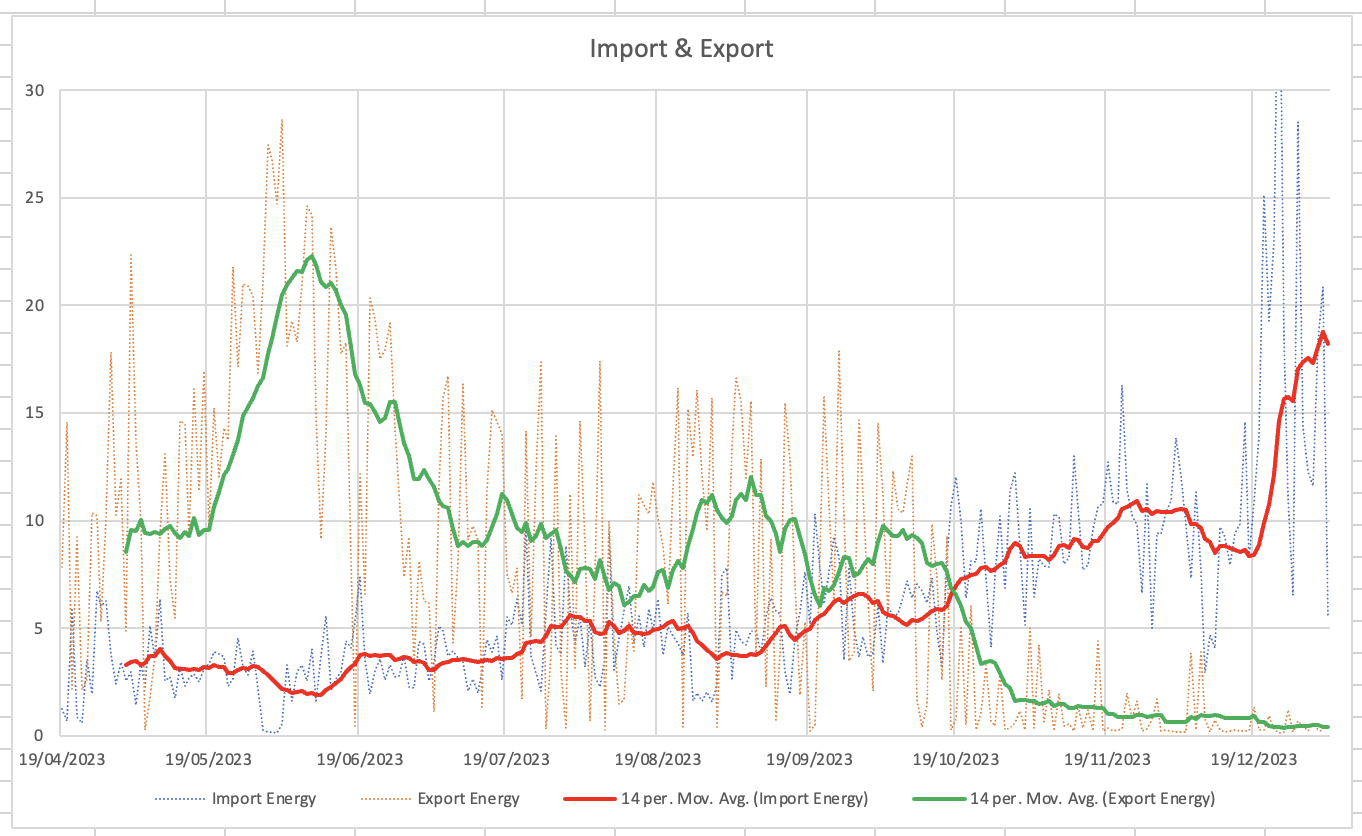
Arg0t I'm tracking 14 day moving average of import and export. When those lines cross I know its time to make the switch back to flux

A
#12 Arg0t

pacemaker are you calculating that in HA? Mind sharing the code?

P
#13 pacemaker

Arg0t no I am doing it the old fashioned way in Excel. Then creating a chart to see where the lines cross

You can see that the optimum time was around 19th Oct to do the switch, where I was consistently (based on the 14 day MA) importing more than exporting.

p.s. ignore the most recent data trends - agile was negative prices so I imported LOADS - it'll settle out 🙂 When it crosses again I will switch to flux

H
#15 HipHopAst

Arg0t Really? People spend ÂŁ7K for battery to get only 30% cheaper any you saying its not bad. To just get your money back you need 17 years.

P
#16 pacemaker

HipHopAst its not just the rate, its the fact you can load shift which saves even more cash, where you only (depending on capacity) use elec at cheapest rates.

W
#17 Wavy Davy

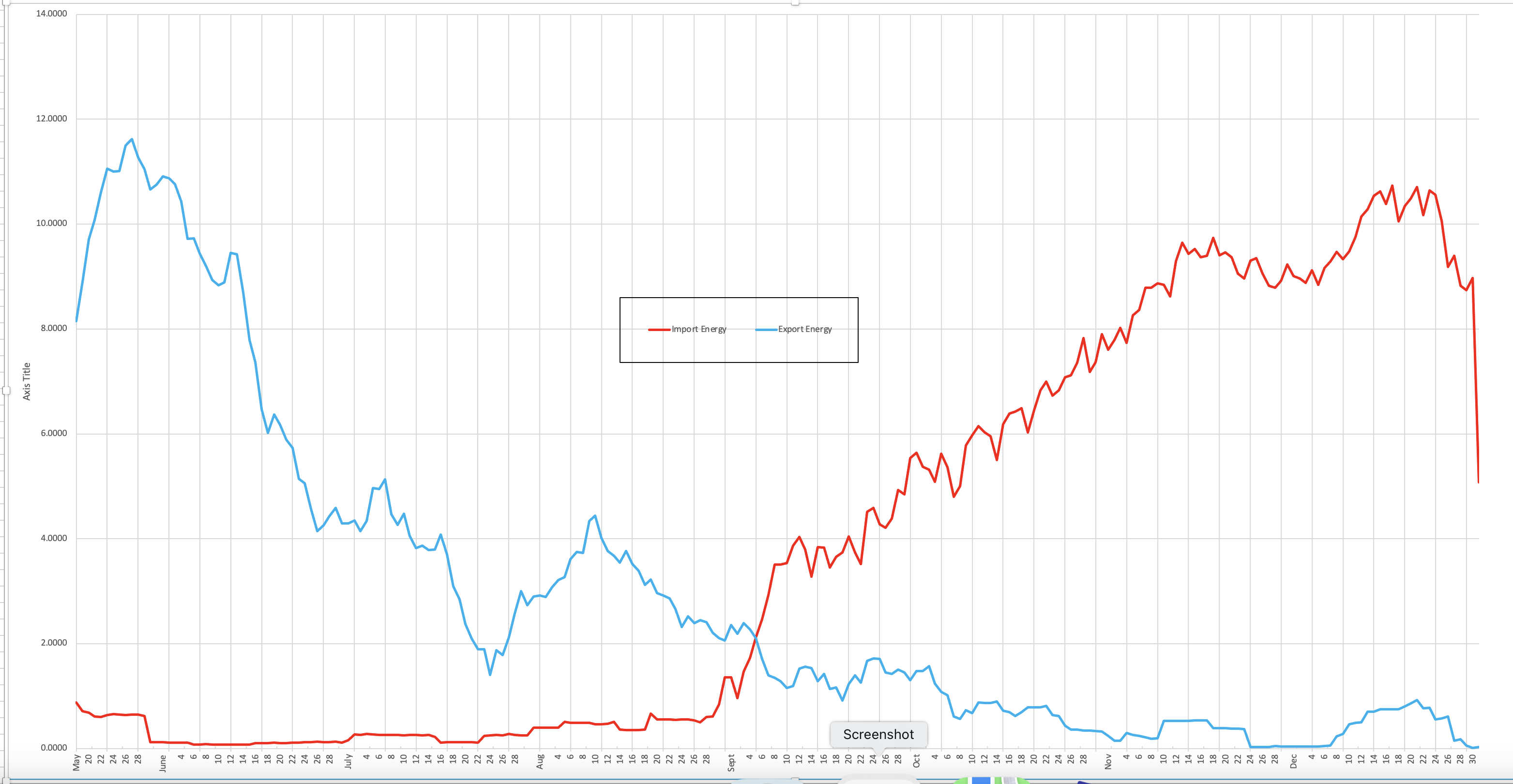
Like this graph, and have done one myself, but without the grey lines as I found them distracting and not really necessary. Just used the average ones.
For me the changeover would have been 5th Sept.
Was wondering if this could be done in Home Assistant, but as a newbie to HA no idea how to do it. Would need to import old data and log new values.

A
#18 alan_johnston

HipHopAst
My battery - main uses:-
1) it can store excess solar PV generation to use later when it isn't sunny enough.
2) It can top up with cheap (or even free) electricity to use later when it becomes expensive.
3) I have an off grid emergency power supply for use during power cuts.
4) It provides a bit of background heat in the garage (along with the inverter).
My electricty bills are now lower than before the energy crisis and the system is on target to pay back in 6 years at current rates.

#19 Watcher

HipHopAst

How did you calculate that?

A
#20 Arg0t

HipHopAst The income April to September builds credit October to March, the 30% lower than list costs, in deep winter when there is no PV and no viable alternative other than grid import, means the credit on account goes further. Paying ÂŁ7k for a battery doesn't make energy free, it allows you to shift variable rate tariffs and avoid the peak rates associated with those tarrifs.

My ÂŁ19k system will pay back in under 8 years. My net spend for energy in 2023 was ÂŁ-95 despite giving away 600kWh whilst waiting for an export MPAN. 16p is a good rate in December.

G
#21 geoffreycoan

Agreed, the rates haven't been great the last week or so, but you gotta take the rough with the smooth.

The 60p peak rates in early December when it was very cold and my heat pump chewed through nearly 100kW in a day was definitely the rough, but being 87p in profit on Christmas Eve and 15p on Christmas Day was definitely the smooth (both days significantly helped by an Octopus Power up session).

As Arg0t says the April to September period builds credit on the account that then gets consumed through the winter. I only got my export tariff setup in August last year so missed out on the best of the sun, but still generated ÂŁ333 in export income from August through to yesterday which was my 1 year anniversary of the GivEnergy solar+battery system. As I swapped supplier and tariffs a couple of times and had the meter replaced 4 times (long story!), its just too hard to work out what I actually did save in the year, but based on the import, output and generation figures and using the average electricity unit rates for 2023 I think its at least ÂŁ1,500.

I like the idea of graphing the predicted tariff transition point in Home Assistant (if possible), I don't think its as simple though as comparing import and export kWh as the unit rates are different.

I swapped from Flux to Agile in mid October which was close to when I turned the ASHP heating on. Looking back, I turned the heating off in May-time the last two years which seems a bit late for going back to Flux.

P
#22 pacemaker

geoffreycoan I like the idea of graphing the predicted tariff transition point in Home Assistant (if possible), I don't think its as simple though as comparing import and export kWh as the unit rates are different.

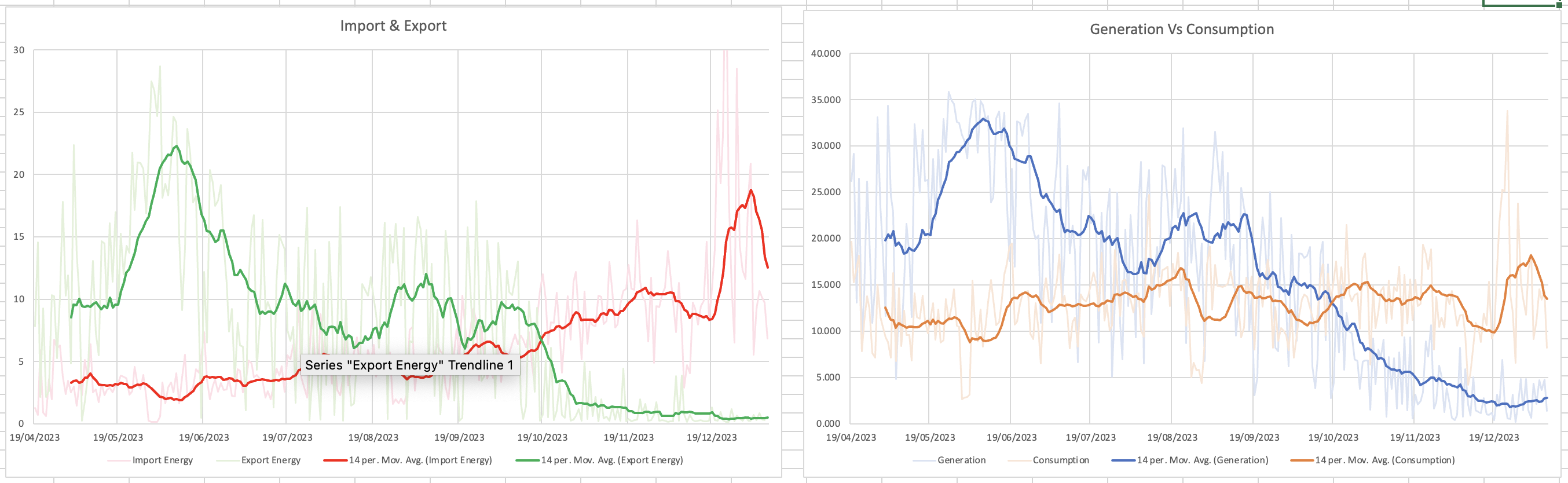
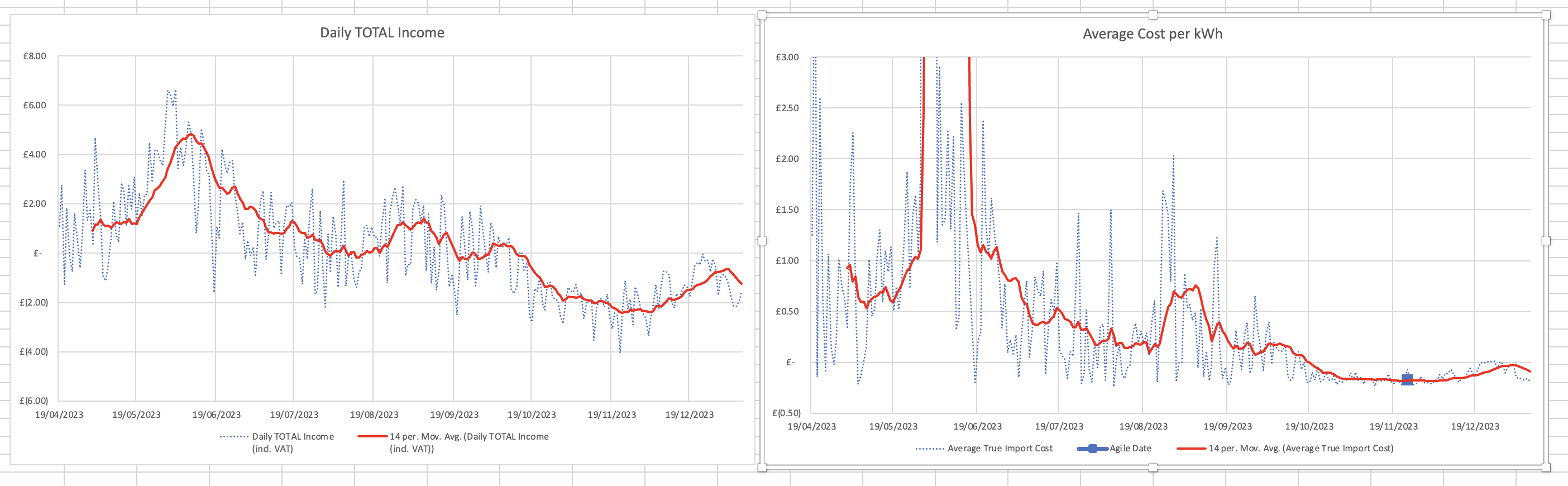
yeah I think you need to look at a few things. I'm comparing these 14 day moving averages:

  • Daily Import / Export kWh
  • Daily Generation Vs Consumption
  • Daily income (when it goes negative is the "cross over" point for autumn/winter)
  • True average cost per kWh (taking into consideration export amount and price too, not just import) (Neg = cross over for autumn/winter)

If I look at all 4 of these charts I had a switch over date of on or within a day of 18th October in all cases. But I'll only switch when all 4 of these hit their cross over point at once, because sometimes one of them might but the others won't, and they're false starts. Has to be all or nothing. At least that's my plan 🙂

#23 26Left

My rules of thumb is when the clocks change, change tariff.

For me (with a PHEV and AIO I can charge when cheapest, and oil for h/w and c/h) that means Octopus Agile in summer, and Octopus Go in winter.

So far this winter, I’m saving money on Go vs Agile - albeit with a fixed charging window of 00:30 to: 04:30.
https://community.givenergy.cloud/d/3678-making-the-most-of-octopus-agile/35

Next time I run the analysis i will check to see if dynamically picking the cheapest 8 x 30mins slots each day would have made any difference.

P
#24 pacemaker

26Left that means Octopus Agile in summer, and Octopus Go in winter.

interesting... so you'd avoid flux for summer? Can see benefits of Go in winter with EV, you think flux would be too costly on import?

#25 26Left

Fair challenge, I’ve yet to go a full year for comparison, but from what I can tell

  • Go is cheaper than Flux import as we time shift all our demand to the super cheap overnight window (ie on cloudy / low production days) by grid charging the AIO and car
  • Agile import was cheaper than Go (and Flux) during the summer (overnight and mid-day), for super-cheap top-ups (some free/negative pricing) and selling back any excess at super-peak times

We didn’t export much Aug-Oct last year. It tends to only be when either we’re on holiday (so house load is reduced) and/or the car isn’t home or hasn’t been used (so can’t be charged with PV once AIO is full).

Admittedly I haven’t done the analysis to compare whether…
1/ Agile export pays less than Flux export when both batteries are full / we can sell back excess ahead of tomorrow’s expected generation at peak times
2/ Net export vs import means we’d be better off on Flux over all

… but my hypothesis is that Agile would be better value than Flux in the summer for us.

G
#26 geoffreycoan

26Left a key determinant will be size of your solar array vs battery size & house load in summer.

We have 14kW across a FIT and two newer GE hybrid arrays. We only got our export tariff in place in mid August but still from mid August to 17th November we exported ÂŁ270 of electricity.

I made the decision on Agile for the winter and monthly comparisons have shown it’s between 50% and 70% the cost of if I’d stayed on Flux, so happy with that choice.
I need to look at the summer agile rates as I am tempted to stay on agile

D
#27 DD

26Left Next time I run the analysis i will check to see if dynamically picking the cheapest 8 x 30mins slots each day would have made any difference.

Do you have a chargepoint that would allow you to automate this? Up until now, I've been using a dumb charger, so adjusting the charging times would mean going into the car and pressing buttons... way too tedious for any small additional saving.

#28 26Left

DD 3 pin charger that I can control via a wifi plug. So I can automate, but haven’t yet. I was manually setting the charge times each day based on forecast and cheap Agile times.

#29 26Left

geoffreycoan agreed - depends a lot on generation and load, YMMV etc.

We have 5.2kW array (13 panels @ 400W each) - which I think is closer to the average domestic installation. We don’t have an ASHP (oil boiler instead). We can store electricity via a 13.5kWh AIO and 10kWh PHEV battery, and heat water using an immersion heater.

A 14kW array is a lot - you must have over 30 panels?

Export rates are more important in your situation, as clearly you will be generating a lot more than you can use or store. Our generation vs load + storage is more balanced.

W
#30 Wavy Davy

I'm on fixed 15p export tariff.
I only got my mpan in sept, but for the comparison I used rates back to mid May when my system was installed and used data from the givenergy app to fill the missing blanks.
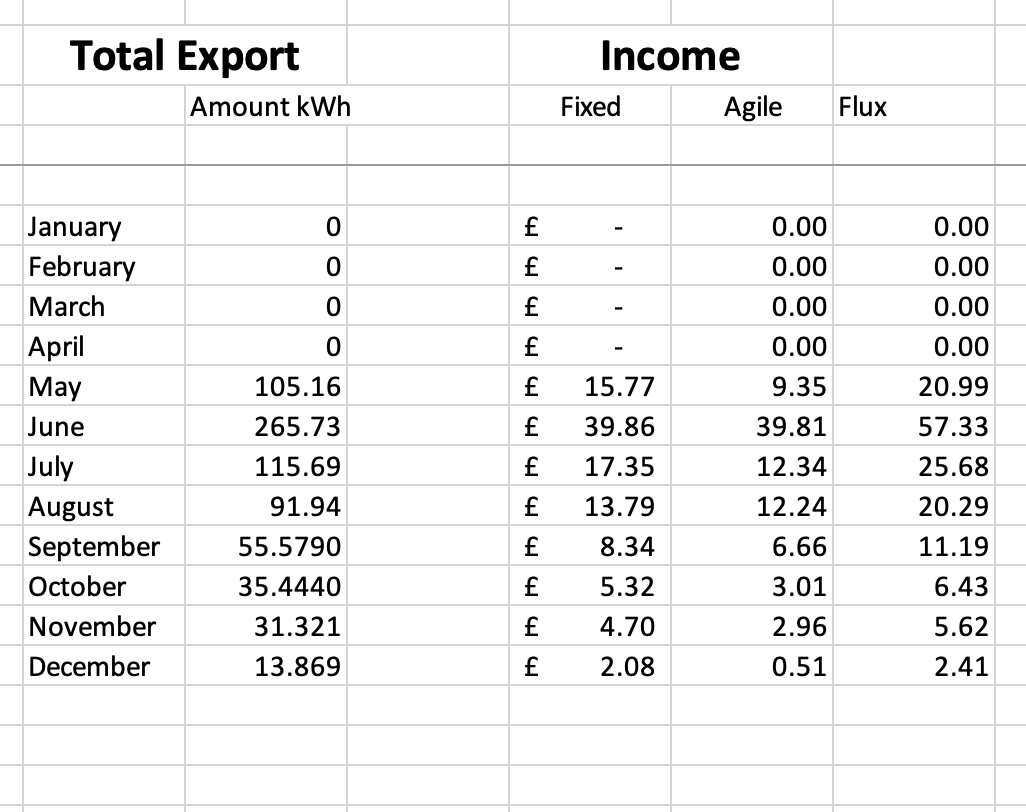
I did a comparison of my fixed , Agile and flux. Both based on the half hourly rates.

D
#31 DD

26Left As I mentioned in another thread, some say that it's a bad idea to turn off 3-pin charger via timer or smart switch: I forget the technicalities, but the charger in the car can present a reactive load, so objects strongly to abrupt changes. When using the car's timers, or a "proper" charger, the car is told to stop pulling power, rather than just having the power removed from under it.

Obviously the same happens any time there's a power cut.

G
#32 geoffreycoan

26Left We have 5.2kW array (13 panels @ 400W each) - which I think is closer to the average domestic installation. We don’t have an ASHP (oil boiler instead). We can store electricity via a 13.5kWh AIO and 10kWh PHEV battery, and heat water using an immersion heater.

A 14kW array is a lot - you must have over 30 panels?

Export rates are more important in your situation, as clearly you will be generating a lot more than you can use or store. Our generation vs load + storage is more balanced.

Yes we have 44 panels in total! 16 x 250W panels on a FIT array installed in 2006 and then 22 x 390W panels on two GivEnergy hybrid inverters installed in January last year. I figured that since the scaffolding was up I might as well maximise the number of panels installed. Only part way through the installation did I realise that I could have got about another 2 panels on the garage roof and 3 or 4 in landscape orientation along the front first floor roof ... but sometimes you just gotta know when to stop !

We had our oil boiler replaced with an ASHP in January 2022 as our oil tank sprung a leak and the current regulations meant I couldn't put a new tank where the old one was. So went electric, plus was able to get the RHI grant at the time.

So for us, I'm taking a year-long view. Export loads in the summer to create sufficient credit in the account to pay for the winter consumption. Think we're in for a period of increasing Agile rates over the next week as the temps drop and my ASHP chews through it. At least we're back to 15p rates overnight again

As you say, YMMV

#33 26Left

DD To date (6 years into an 8 year battery warranty period) it seems to have coped quite well. (And thinking about it, how is turning it off at the wall any different to abruptly unplugging the charger socket from the car when you go to drive it?)

Over the winter it is set to charge in the Go overnight 4 hour block, by the end of which it has usually finished charging of its own accord. In the summer, I usually pick the cheapest contiguous 4 hour block overnight on Agile. Sometime it soaks up extra sun in the afternoon if it has been driven earlier that day. What I don't do is cherry pick 30 mins off, 30 mins on etc.

D
#34 DD

26Left on my car, as soon as you press the unlock on on the connector, it stops pulling current. And I think the CP pin is shorter than the others, so disconnects first, and again the car should stop before the AC pins disconnect.

#35 26Left

geoffreycoan That is a lot! If only I had that much roof space.

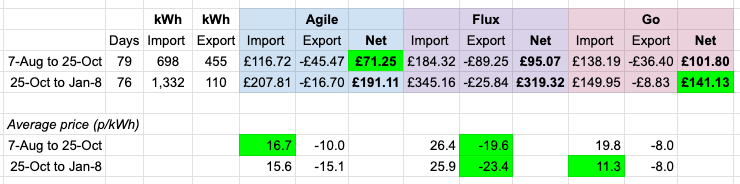
You piqued my curiosity re Flux in summer. I've run the numbers on our first 150 or so days - approx half summer/Agile, and half winter/Go. I threw in Flux too for comparison.

[What I didn't do is model time-shifting the programmable demand to fit the best tariff: 02:00-05:00 on Flux vs. 00:30-04:30 on Go vs. the cheapest X hours on Agile - so a slightly unfair comparison. While I can charge the AIO within 3 hours, the car needs 4 - another reason for me not to pick Flux.]

FWIW the results showed we were both right - for my generation vs usage I'm better off on Agile in summer and Go in winter. However as you're a net Exporter, you're clearly better off on Flux in the summer.

P
#36 pacemaker

26Left

FWIW on Flux from April to Oct last year, I got an average export price of ÂŁ0.24 p/kWh, that's without any force discharge, just natural. No EV, just 9.5 kWh battery (5kW system) and iBoost on hot water.

I just did the quick maths:

On Flux Import & Export with my usage in spring/summer I made a profit of ÂŁ237.39.
On Go Import & Octopus Fixed Export (15p) with my usage in spring/summer I would have made a profit of ÂŁ216.99.

Not a huge difference tbh. I am about to get an EV so need to factor that all in now...

#37 26Left

pacemaker interesting, thanks. Your Flux export average price is close to what I modelled.

Re export, I had the option of fixed at 15p or Agile export when on Agile import, but was told I had to drop down to 8p “Fixed Lite” for export with Octopus Go, ie you can’t import at the EV cheap rate and sell it back at the higher rate. Frustrating but I get why. So that might make your maths more in favour of Flux in the above example. But with an EV on the way, Go might well be your friend as the discount is deeper and longer overnight.

P
#38 pacemaker

26Left oh really? You can’t have Octopus fixed at 15p? Thought others were doing that.

That will definitely affect my numbers!

D
#39 DD

pacemaker Standard Go is 4 hours at 9p, with daytime export of 8p. Intelligent Go is intelligent car charging + 6 hours at 7.5p + daytime export of 15p. So definitely worth getting yourself compatible with IOG. (My Zappi is due today :-) )

The fact that daytime export is higher than nighttime import changes things quite a lot: no point using solar to heat water, when you can export it and heat the water overnight from the grid.

P
#40 pacemaker

DD aaah so IOG you can still get the 15p export rate. Thank the gods. Otherwise things looked grim! IOG is waaaay better than standard OG then