Q
#1 Qyaunos1
Hi,
Has anyone experienced one individual cell's voltage deviating from the others as the battery is approaching 100% SOC during overnight charging?

Hi,
Has anyone experienced one individual cell's voltage deviating from the others as the battery is approaching 100% SOC during overnight charging?

There's always going to be one "runner" cell that'll get there first despite however much you balance them BUT should normally only see it during a calibration if all is well - the GE packs should be stopping about 95% true SOC so only just starting to get into the upper "knee" of the curve where sell voltages start ramping up.
A pic might help if you have one.
(I have seen cell 8's on some peoples packs be a little higher as its where the cell transition from one row to another via internal links happens (2x rows of 8/16 cells)
These sometimes aren't the tightest connections and cause a bit of resistance.)
If its a 9.5 though there are 4x rows of cells inside so can be different for those. )
hoggy 3015 charges to calibration limits (and beyond on occasion) on a 9.5
Vestas ah so it's a feature then. I know mine does it but because it's an ancient 8.2 it also takes it down to 5% or less actual , so I had assumed (given it also takes it to true 100% each night) this was just because it thought it was the newer 100% dod 8.2.
If its doing it really early in the charge then yes something is amiss. But I guess that yes you might see one cell spiking regularly then on 3015, although in theory if the balancer is doing its job it should narrow over time.
All I can suggest is to log it with GE and if it gets worse or no better then ask them to look into it more.
hoggy Unfortunately the balancing "self-calibration" routine on the BMS is the main issue here.
If it doesn't run often enough then via HA/GivTCP I can see cell deviations increasing to the point at which there are more than two cells over the calibration "limit"* when nearing 100% SoC (as reported by inverter)/98% SoC (as reported by battery).
If I fully discharge when this happens then the cells which weren't high during charge will be hitting 3.05V so the battery voltage is going below 49V at times. I set the cutoff at 6% which minimises this.
Takes about 7 days for this to become noticeable in my experience. 14 days and its generating over/undervoltage notifications on the portal. Let the self-cal run and its fine again.
Watch the uptick in "BMS overvoltage/undervoltage" posts when its sunny like this week. Spring & summer is going to be "interesting" for support I reckon 😉
*From v3014 release notes - Cell thresholds changed, 1 cell 3.6v or 2 cells 3.55v, triggeres SOC to reset to 100% durinc a calibration cycle
Vestas lucky you, it takes mine to 46V!
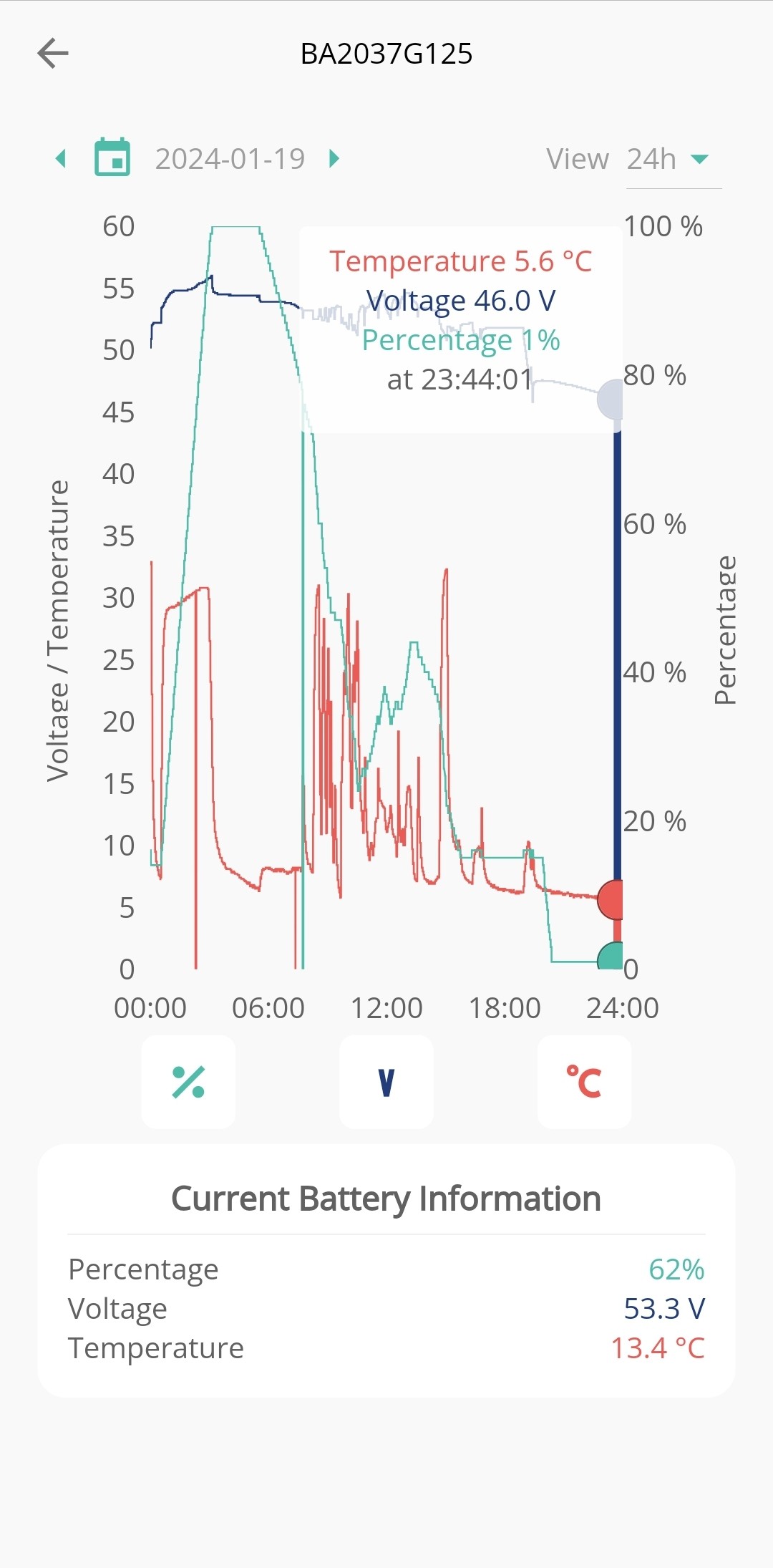
hoggy I've got automations to stop that if necessary - 3013 took mine down to 45.4V (SoC crashes) before I decided enough was enough 😉
If you're using HA/GivTCP then its possible to look at the cell voltages and work out (for a given load) when the cells are going to be dangerously depleted - gives me about 20-30 minutes notice of the point where it'll do an emergency charge (ie its empty). Set battery idle by changing mode option to "Eco (pause)" and 30 minutes later the self-cal runs. I leave it for a couple of hours as it'll do a second self cal if its below 4% REAL SoC then charge fully.
Got another one (for summer) which looks at the other end of the SoC scale and decides if things are getting unbalanced and hence self-cal needs to run. Works fine now as its easy to get below 10% if necessary but will require some tweaking for summer (and agile outgoing).
Worth noting that the portal doesn't pickup all the "overvoltage" situations either - not for me anyway. Understandable as its only recording data every 5 minutes. Got to be pretty bad (IMHO) for the portal to see it.
Edit - that final SoC crash on your graph is how 3013 was on the 9.5's.
Vestas yeah it's all monitored via HA (albeit via Givenergy_local for ahem reasons) however I'm at the stage where its a GE problem if it kills it. Logged a ticket ages ago.
Hi, thank you for replying.
I will apologise in advance, but this is going to be a long post!
I have a gen 3 hybrid inverter on 307 and a 9.5kw battery on 3015. Commissioning date 10th January 2024. The reason I am getting worried is because I have had various issues with it since installation and I want to ensure that I dont have a rubbish battery.
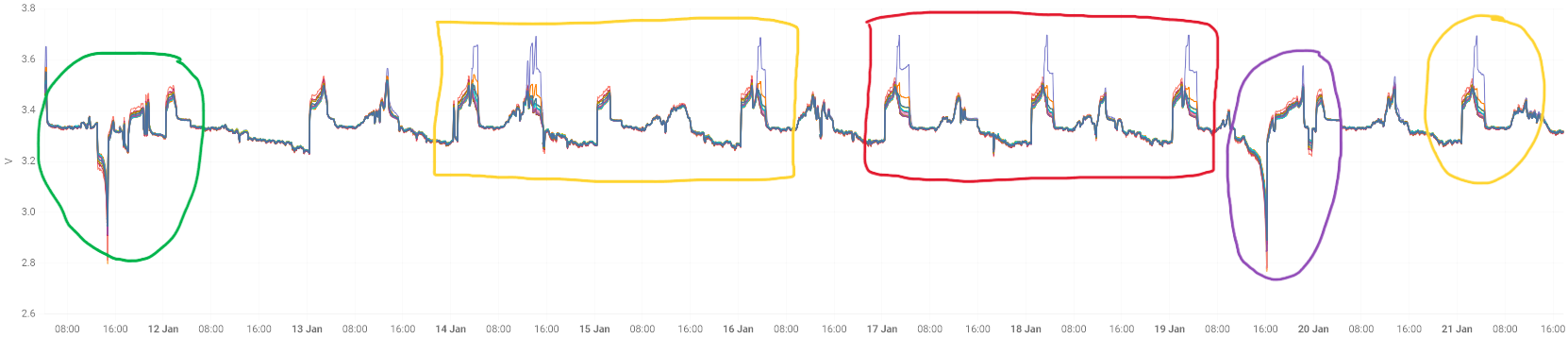
I have attached a picture of the voltages below from givtcp. The first green area is a calibration that was done as a result of a firmware update on the battery. As you can see, no spike.
On the 13th January, the battery is charged to 100% twice, and although cell 6 voltage starts to deviate at the second charge to 100% its not by much.
The yellow box is the first time that the cell 6 voltage starts to deviate significantly (the purple line on the graph) between the 14th overnight charge and the 16th but no BMS warning is triggered. The 17th, 18th and 19th are in the red box. For the 16th and 17th a BMS warning was triggered which I ignored as a blip, but on the 19th I phoned support as it had triggered 3 times in a row and had me worried. The first person I spoke to didnt give much information other than a slow calibration needs to be done. Although I wasnt happy about another calibration being done I went along with it. During the calibration the charge stopped so I phoned back and spoke to someone else. A parameter had been input incorrectly which stopped the charge which they fixed.
Whilst on the phone to the second person I took the opportunity to ask further questions as I wasnt happy with the explanation. They informed me that the cell voltages shouldnt really be drifting and that it was cell 6 specifically at which point I started digging further into the givtcp data. They said the slow calibration (purple 'circle') should bring it back in line and if it doesnt they may need to look at a replacement. Slow calibration done, and cell 6 spiked again (purple line in purple 'circle'). Although it did spike it wasnt by much and I put it down to the calibration charging beyond 100%. Overnight on the 20th charge was done cell voltage although it was a little higher than the others, it didnt trigger a BMS warning. Today on 21st (yellow 'circle') cell 6 voltage has deviated massively again but no BMS warning.
This is the issues with the cell voltages.
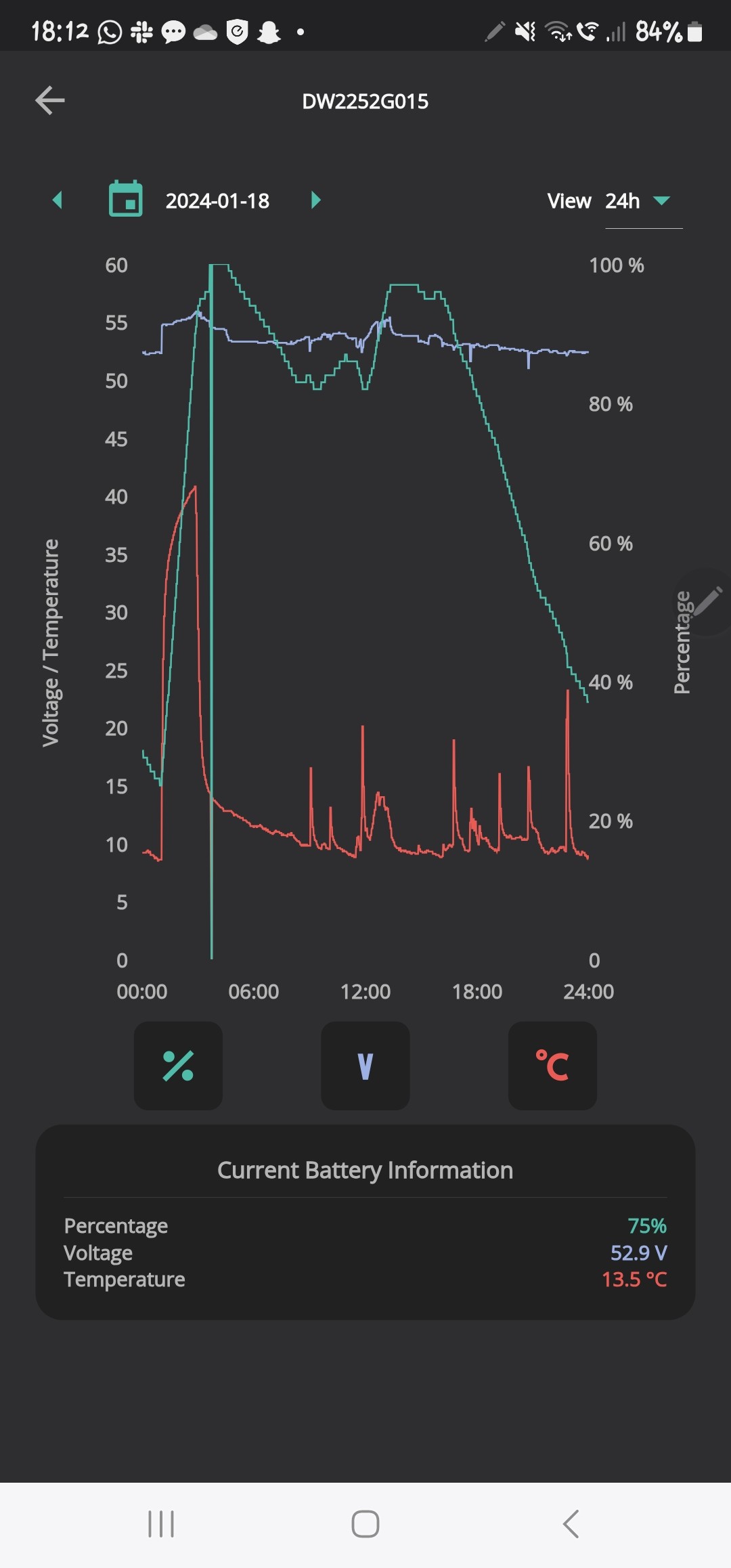
Second issue is with charge rates. My battery whenever a calibration is done charges close to 3600w and then slowly it drifts down to about 3300w and doesnt improve much beyond this. I have attached various pictures documenting the max charge rates I have achieved on various days.
Further to the above 2 issues, I also get random SOC drops down to 0% which go back up the charge percentage that the battery was at prior to the drop but it doesnt seem to affect battery performance i.e. I dont pull anything from the grid. This happens over the 5 minute reporting period where it drops down to 0% and then goes back up.
I have also attached pictures of this.
Really hoping someone can shed some light on whats going on because after spending 12k on a system and wanting a givenergy battery due to the functionality I didnt anticipate problems so soon after install.
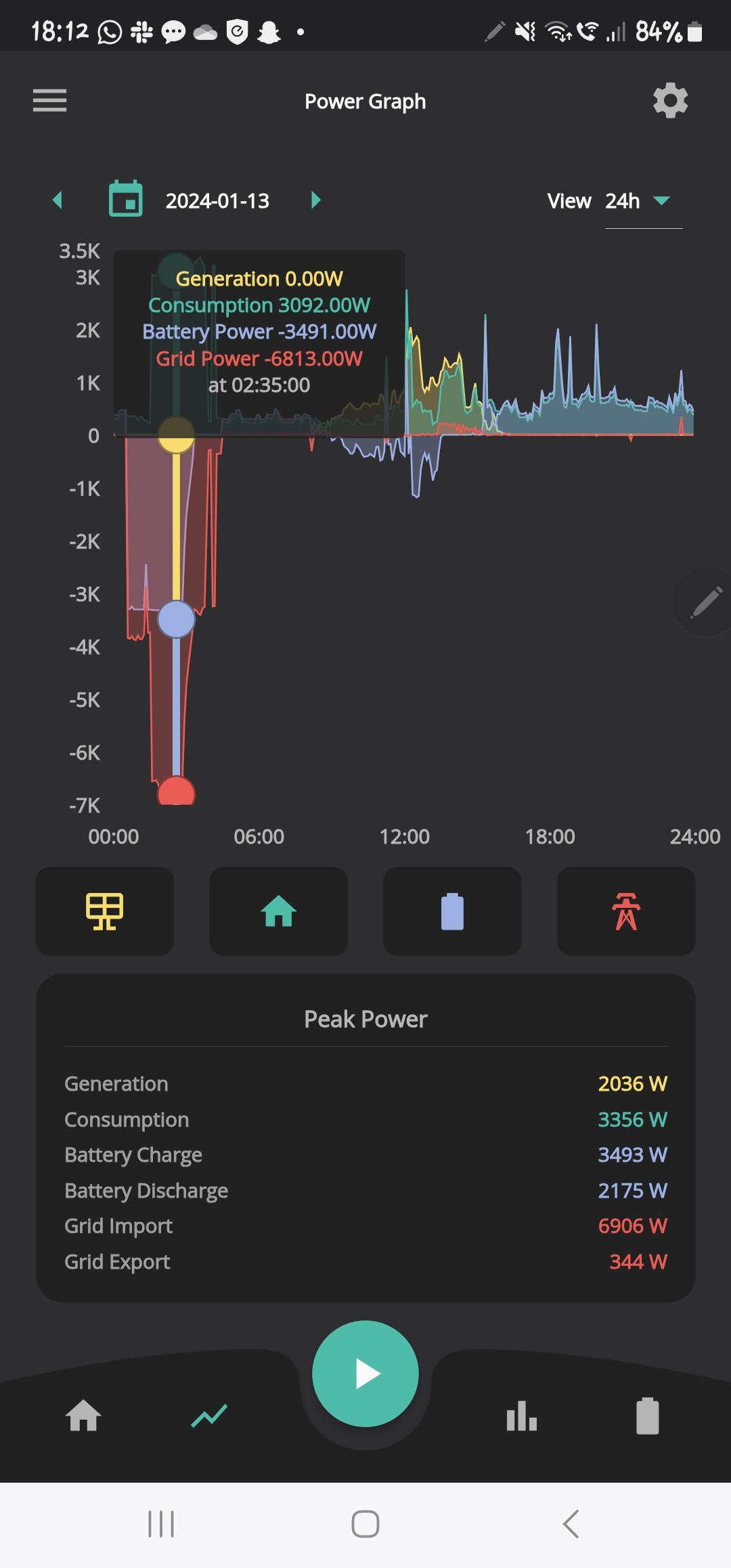
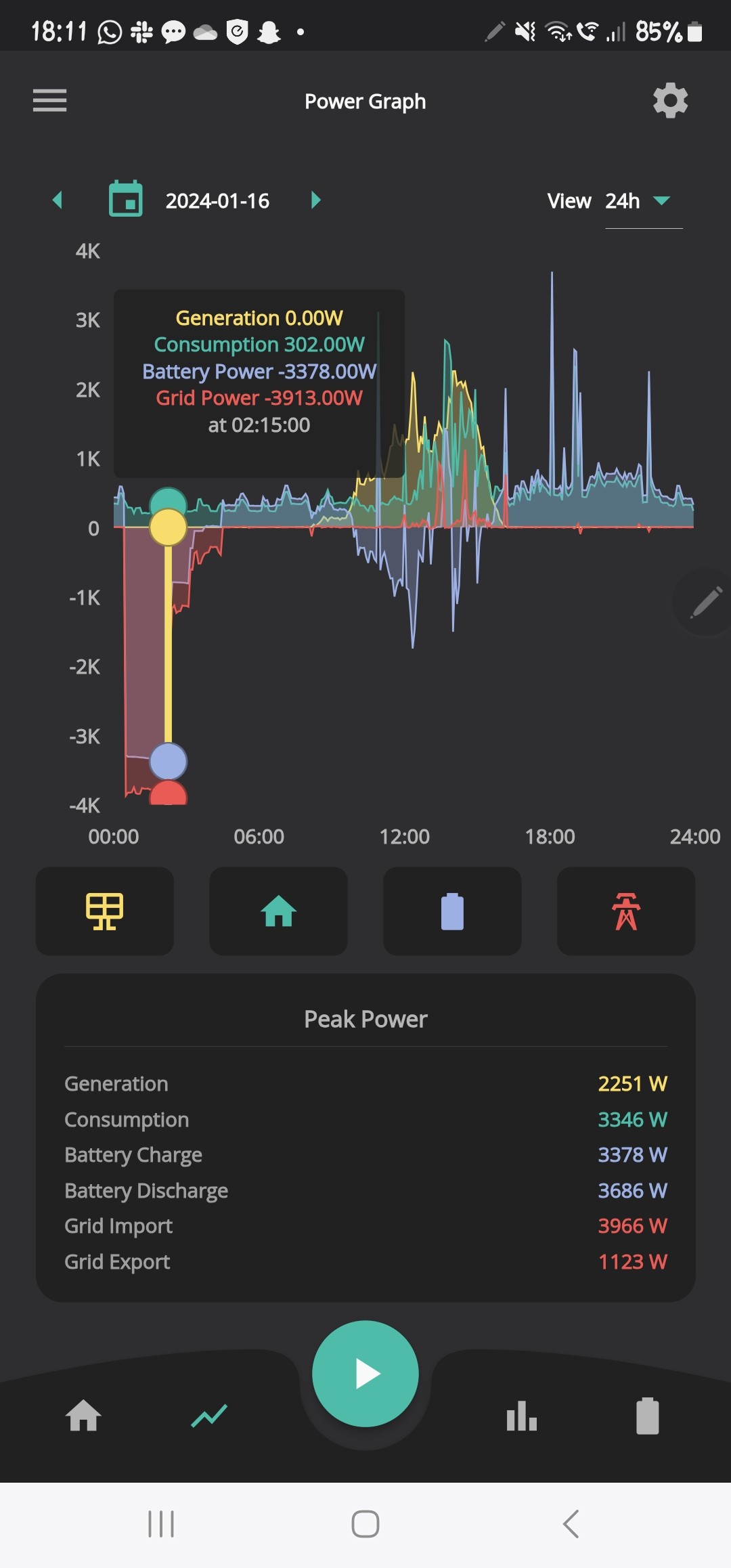
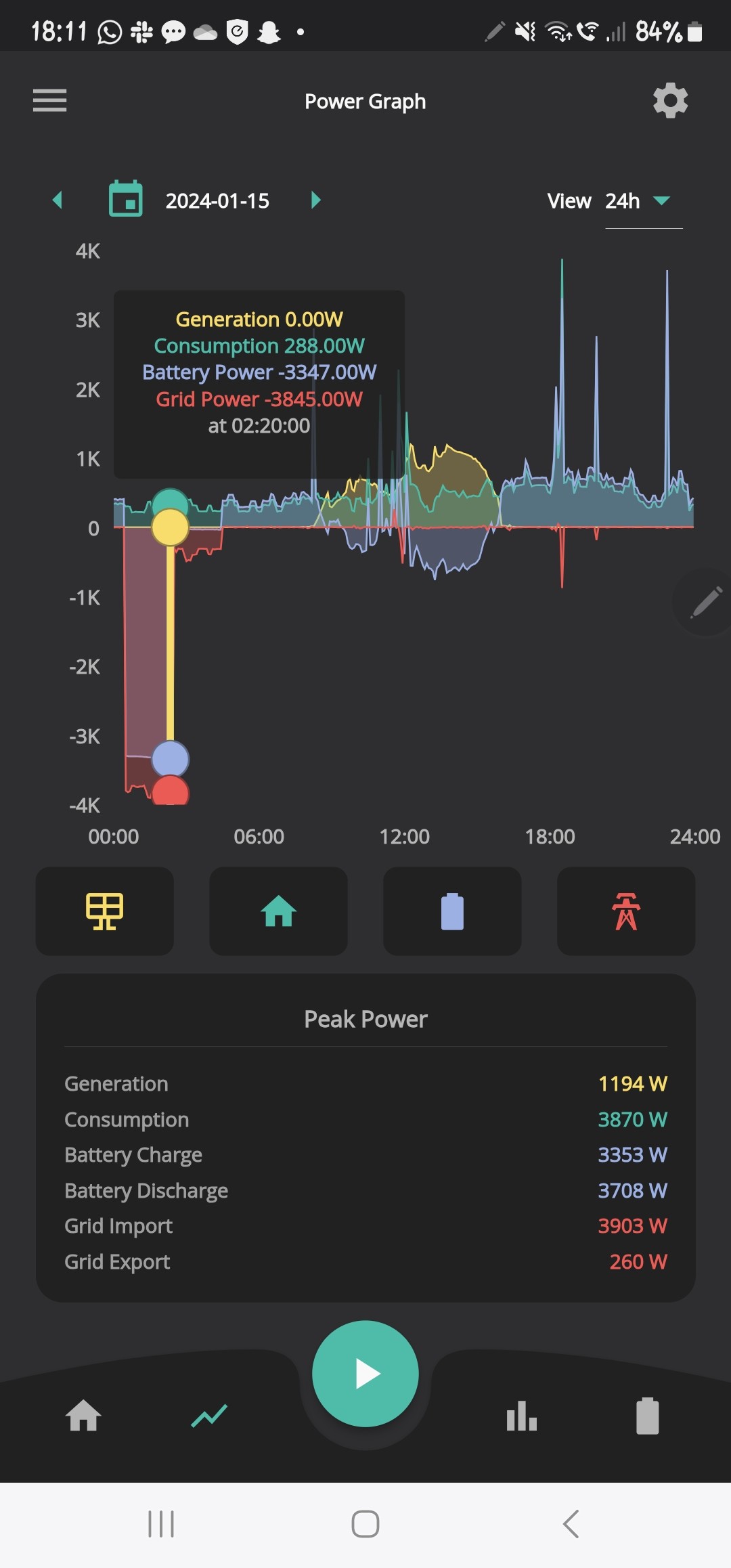
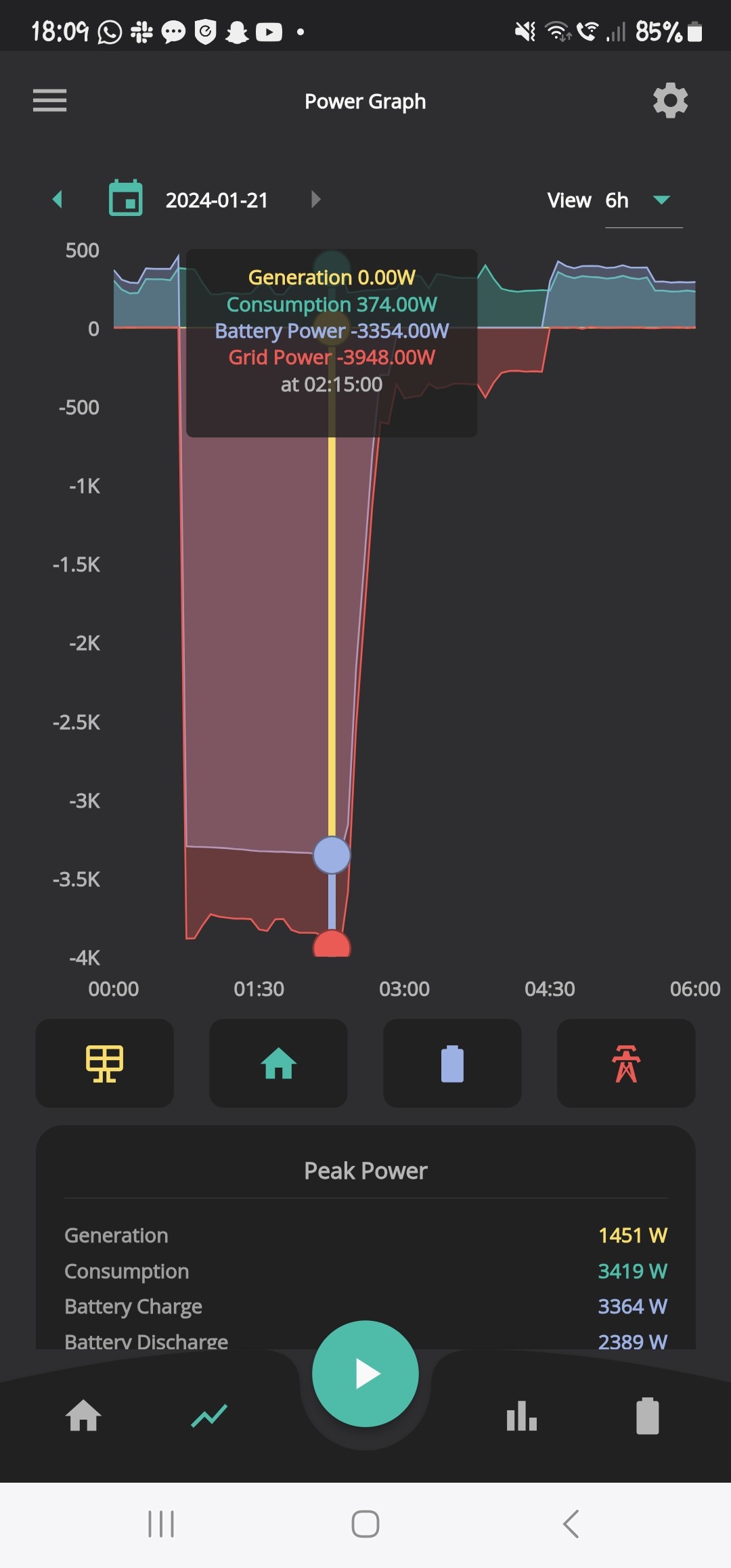
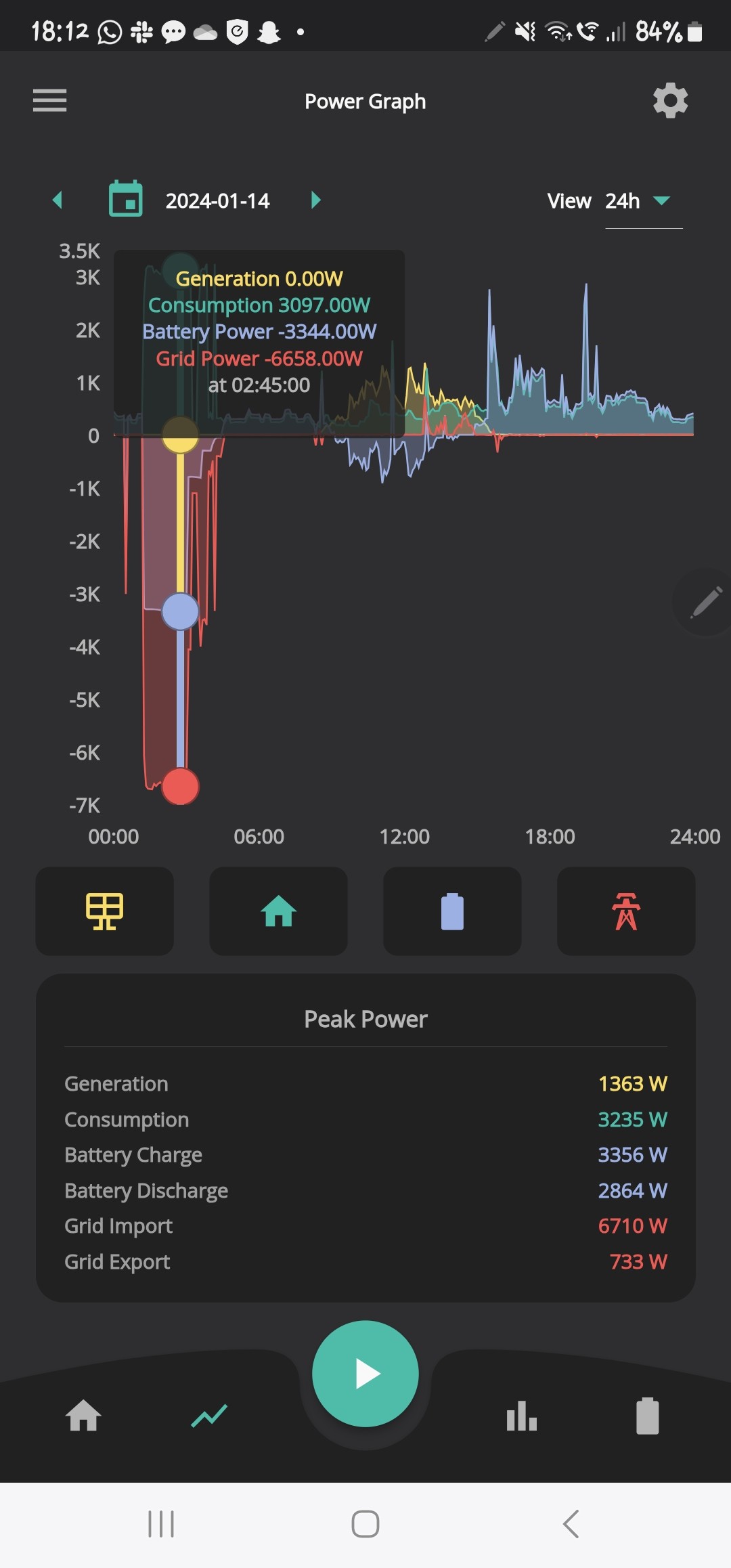
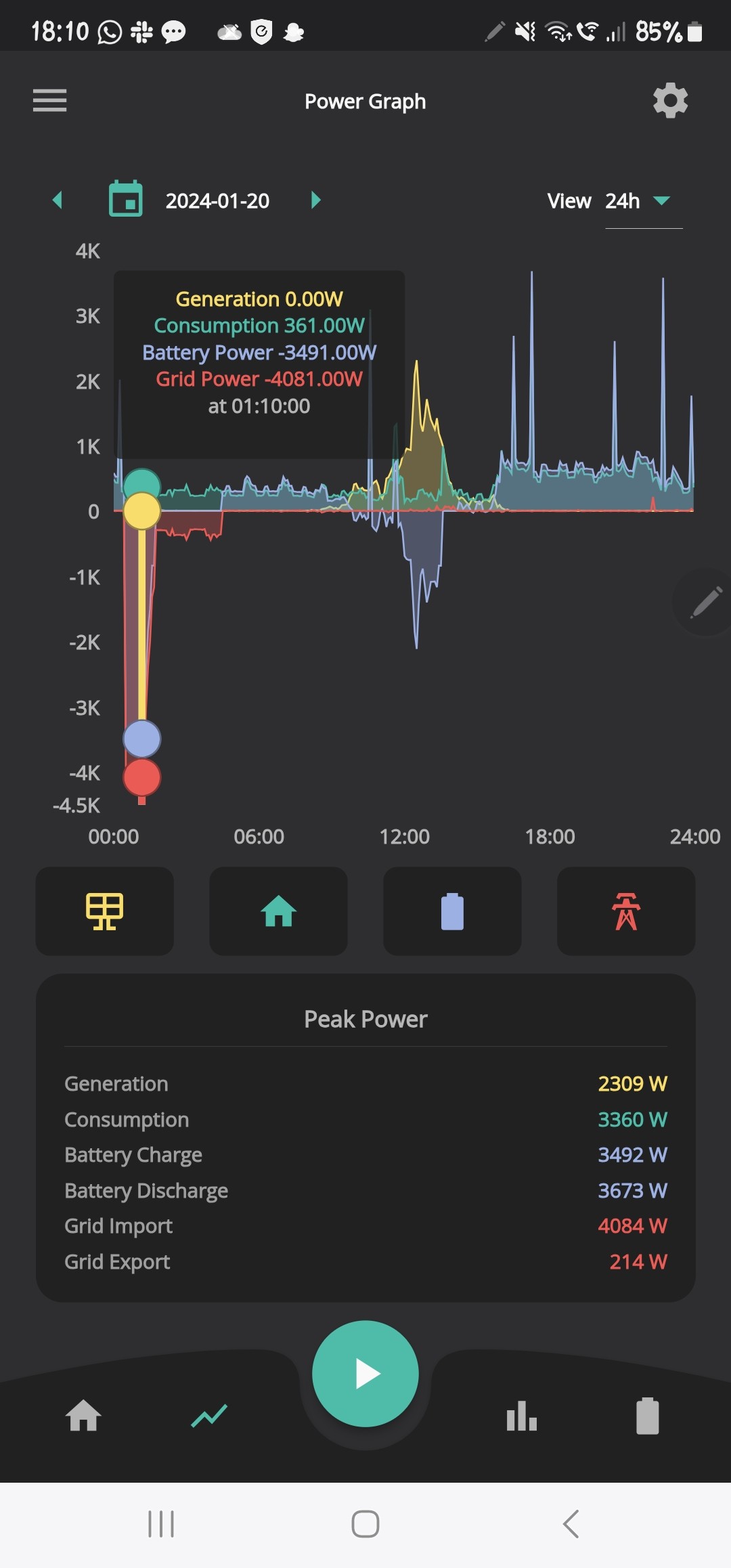
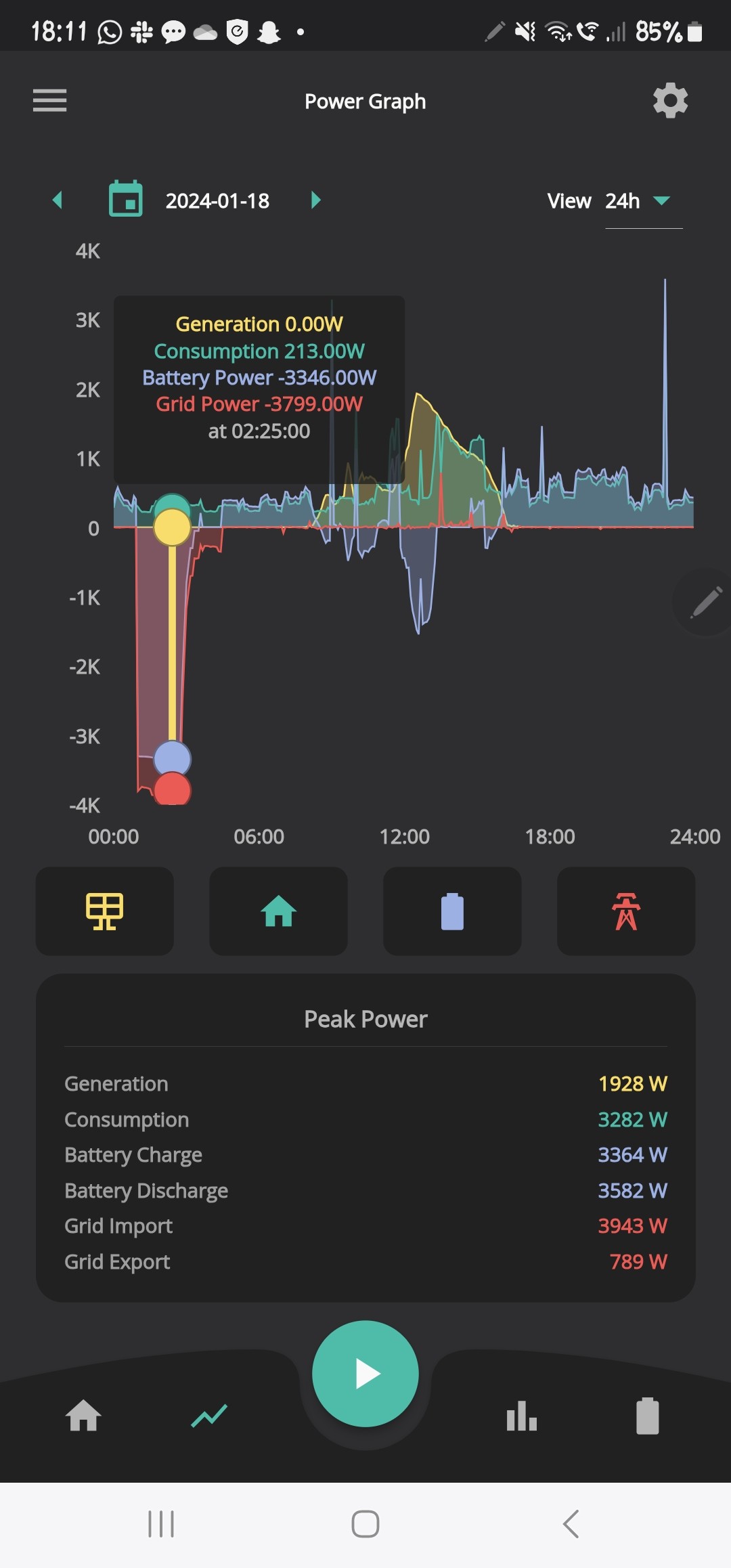
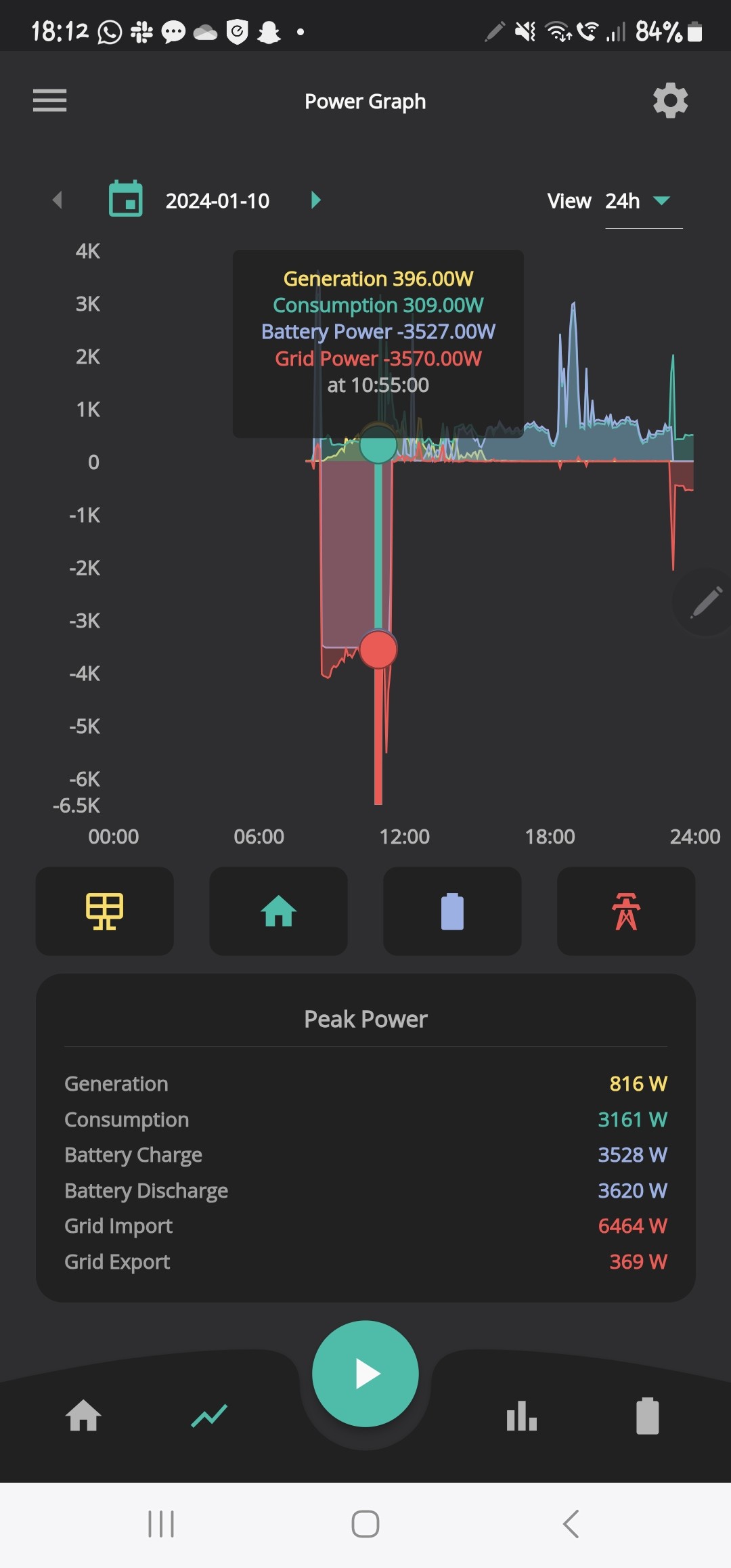
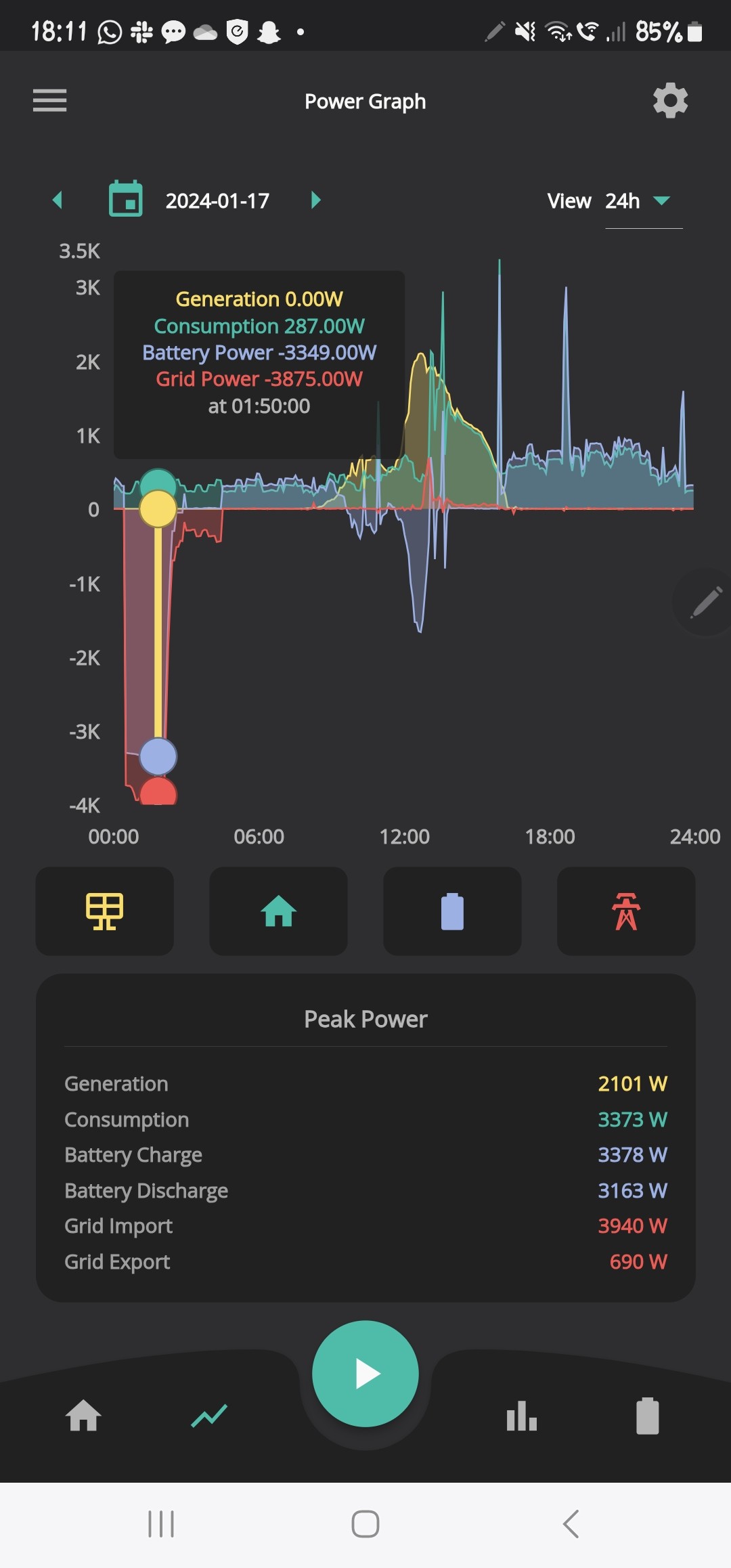
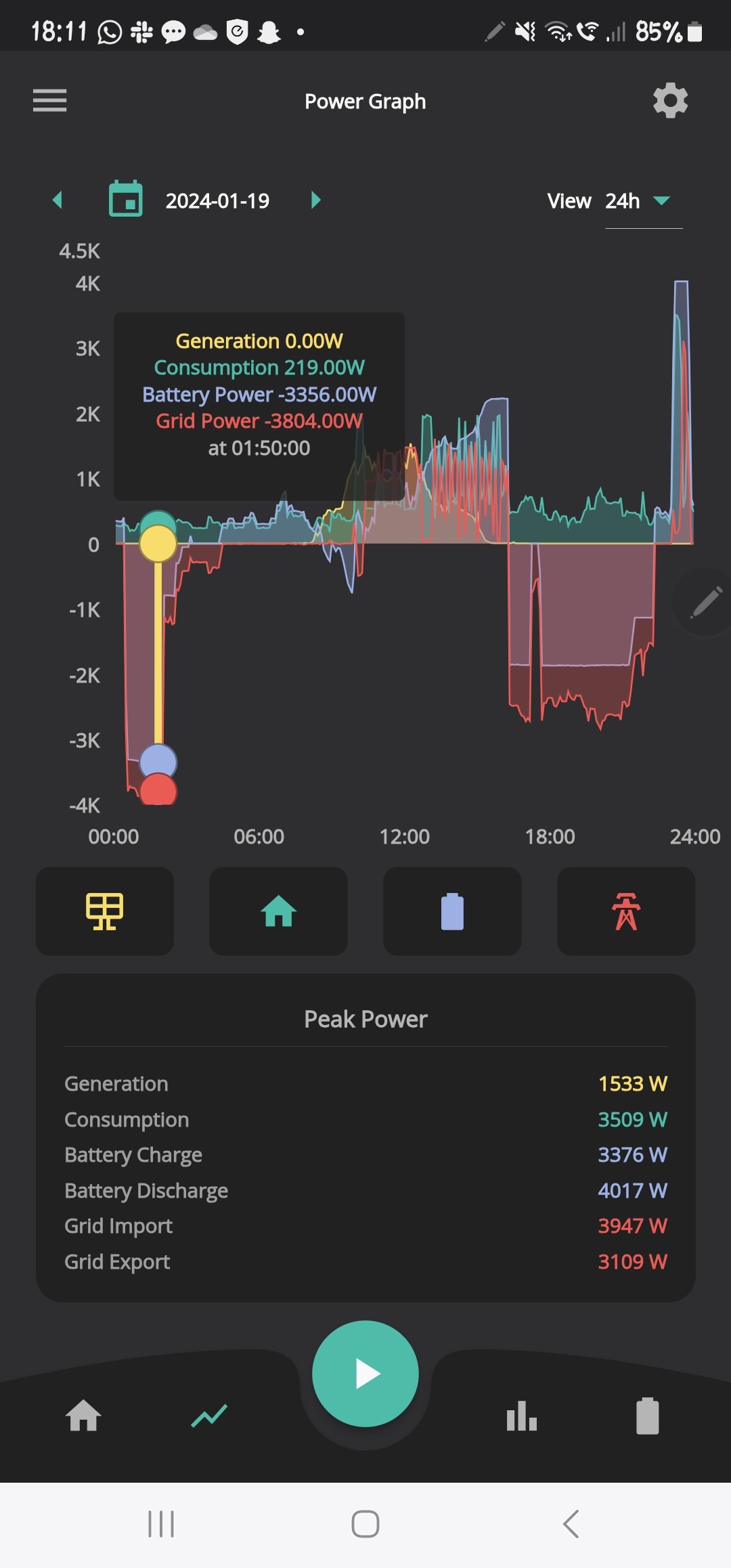
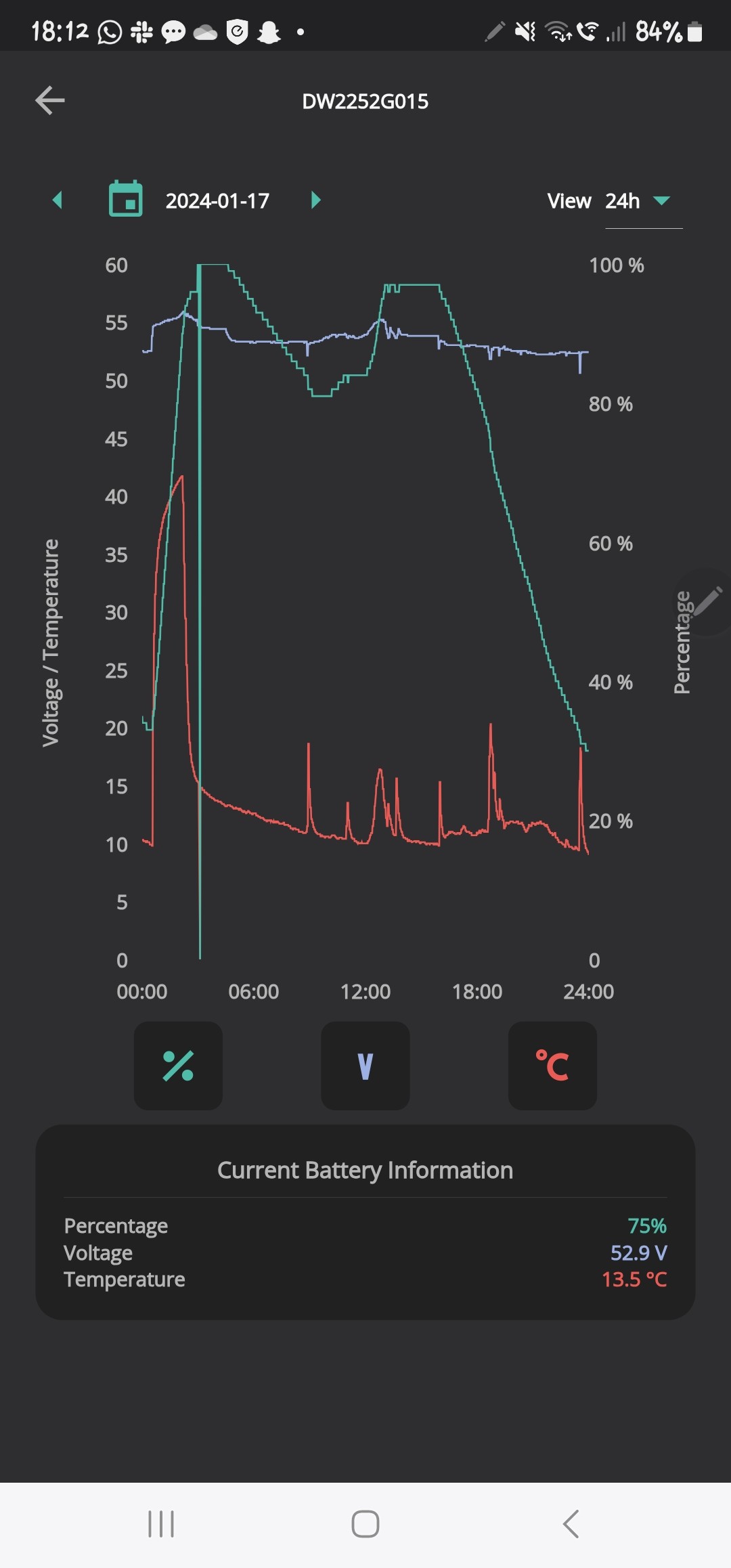
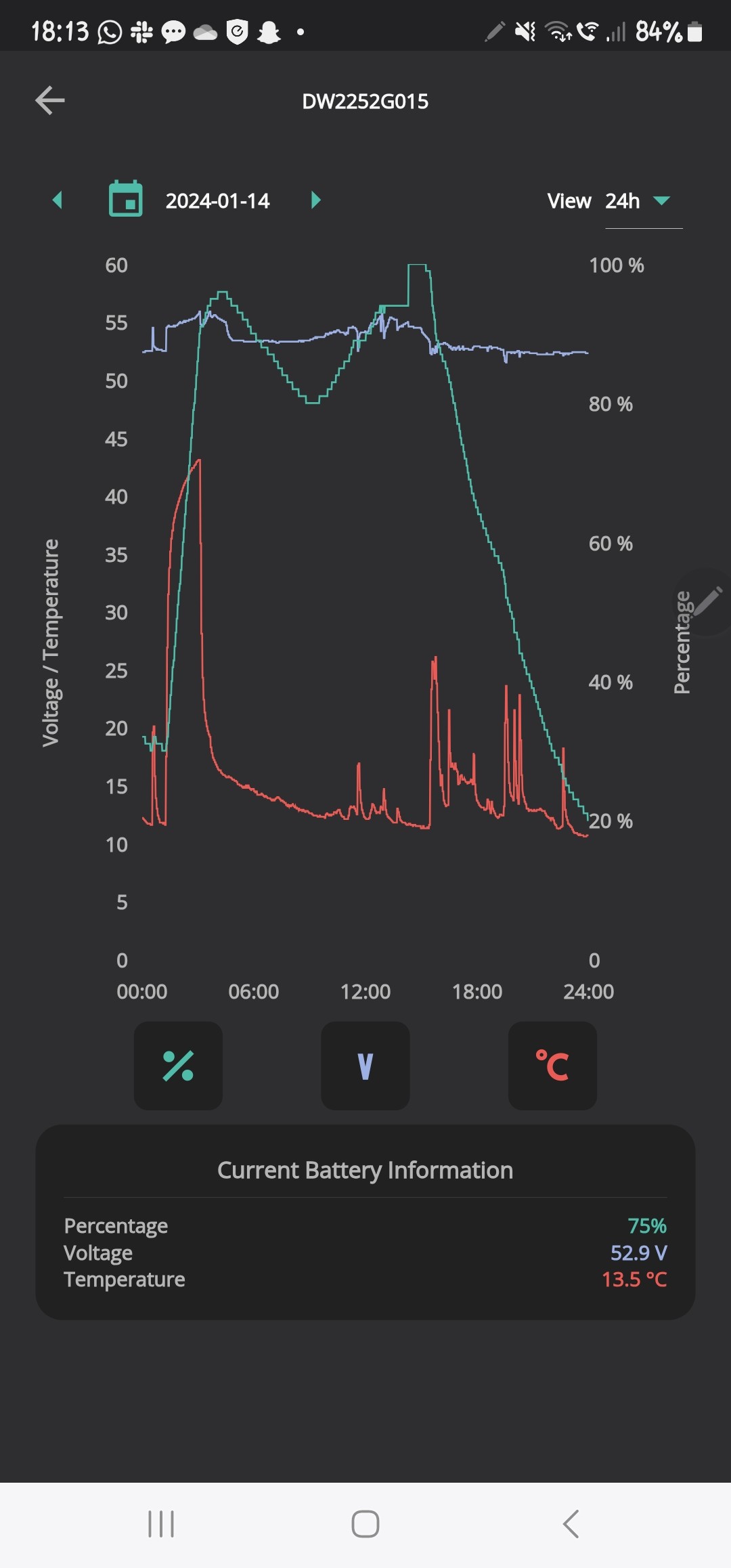
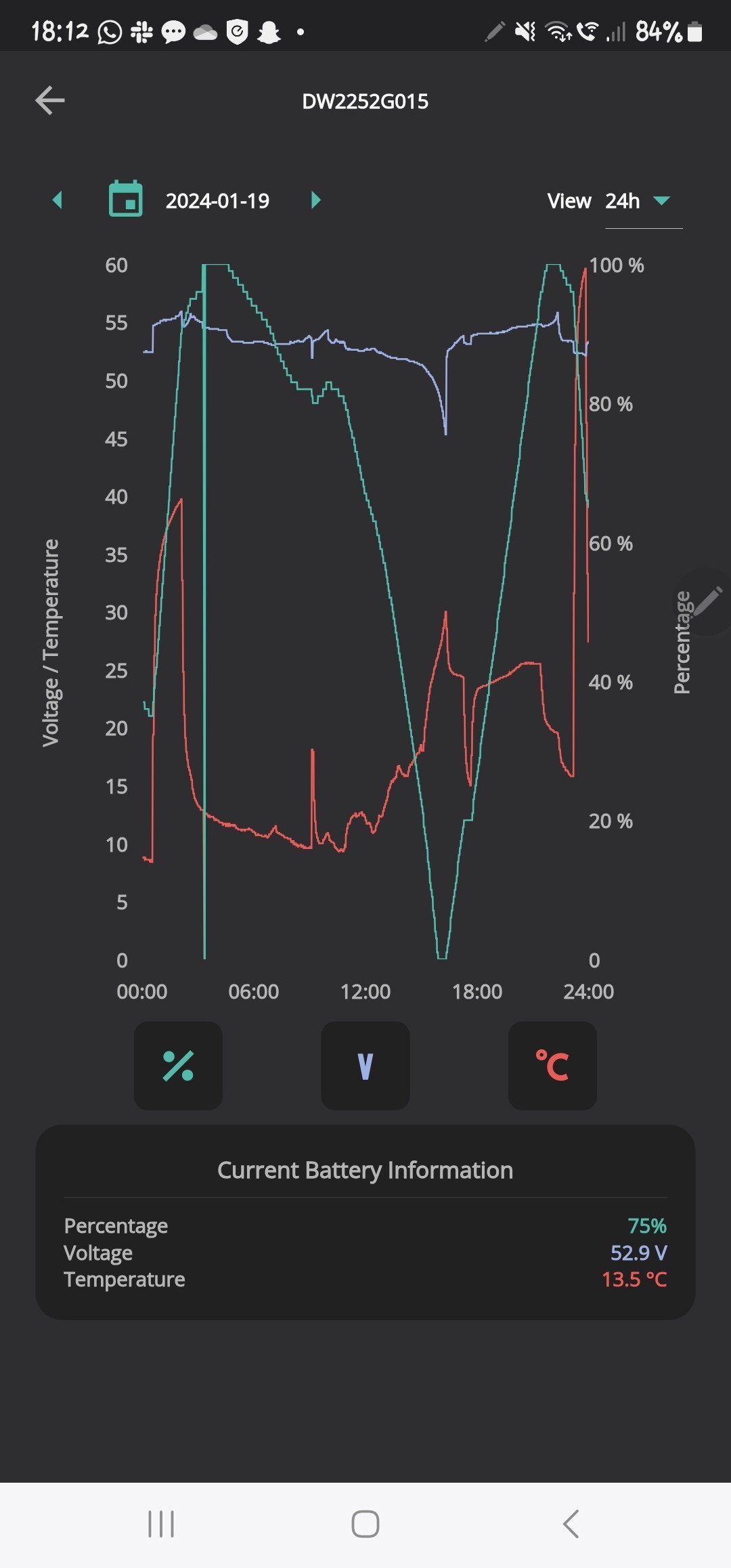
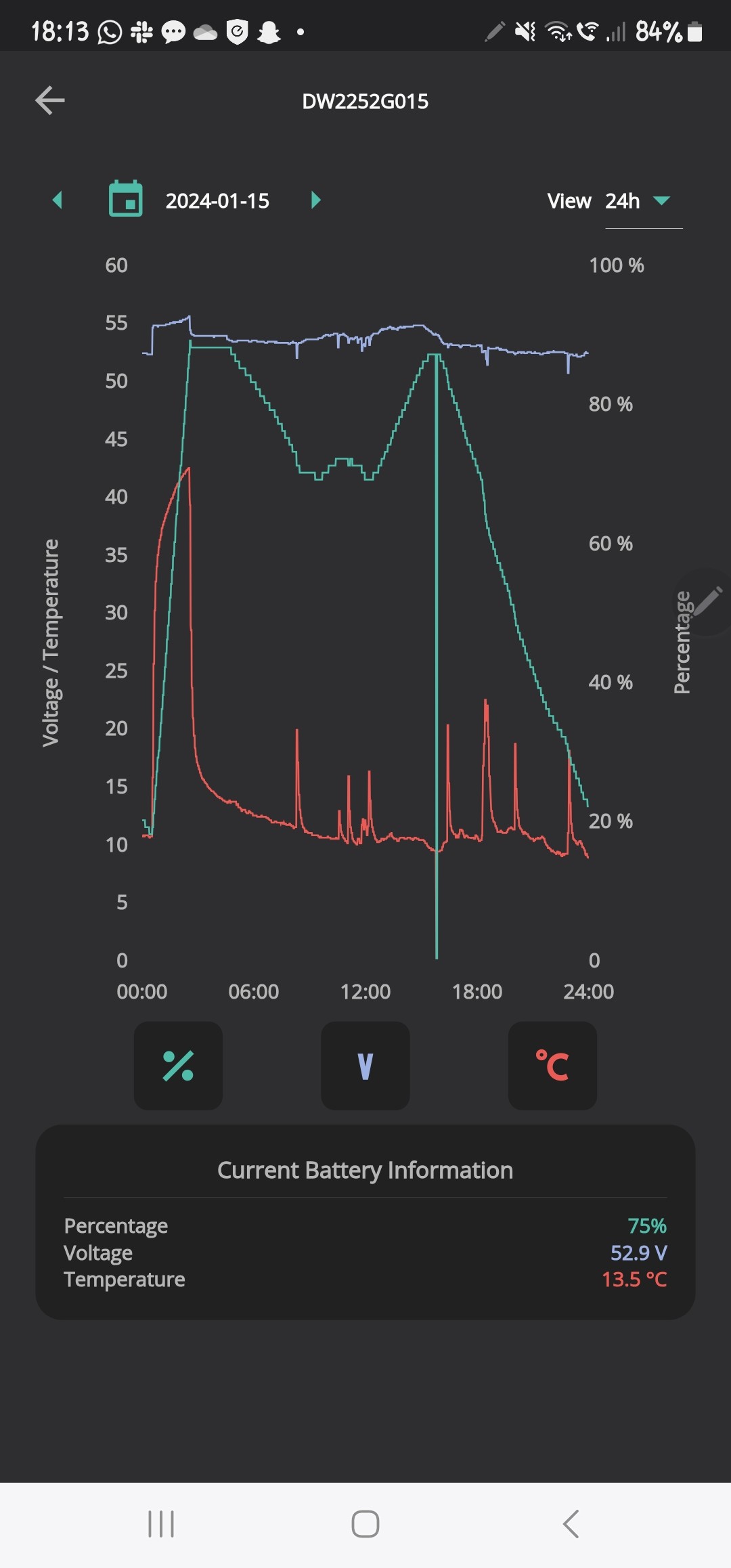
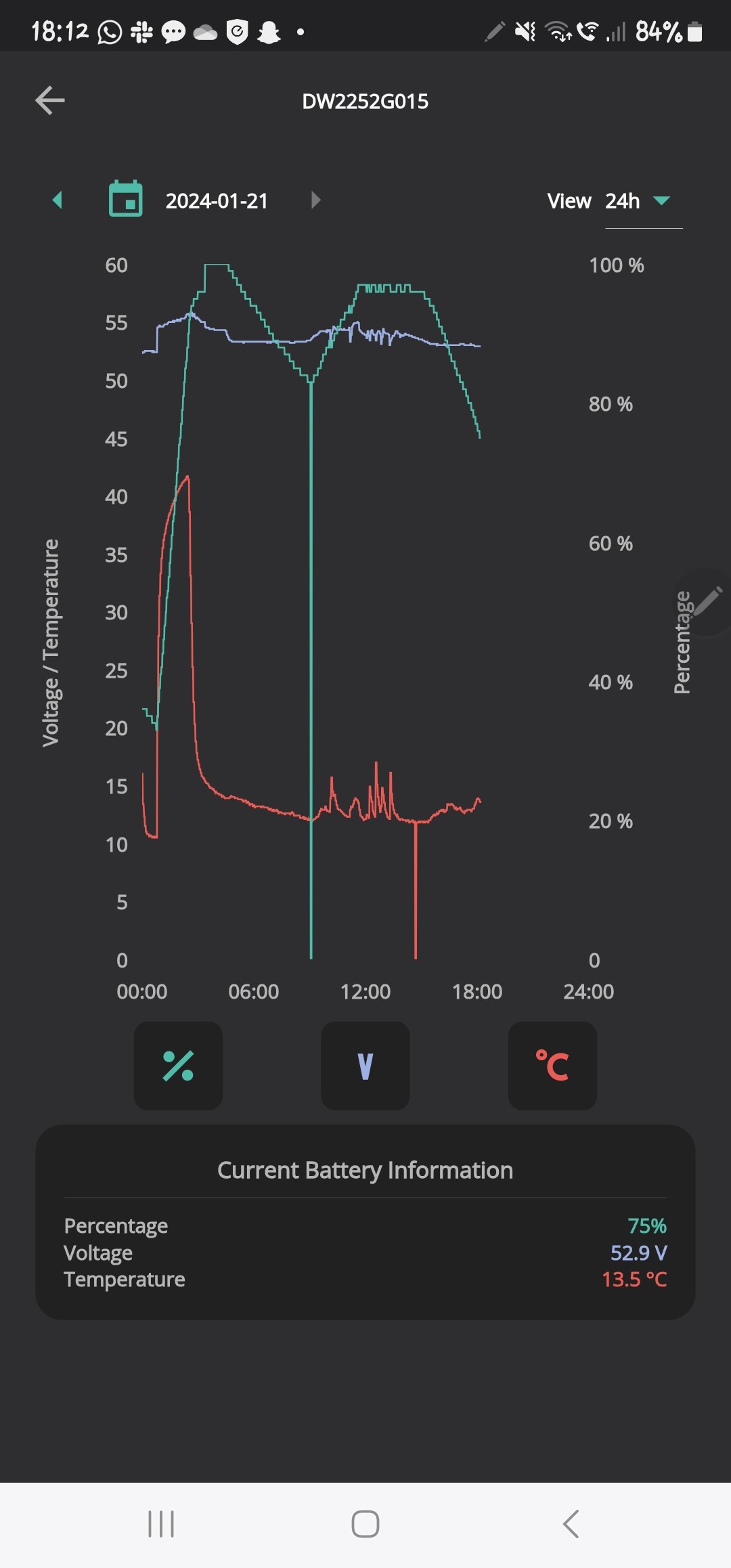
For further info, when the voltages do peak on cell 6 they are approx 3.7v or 3.69 whereas the remainder of the cells are below 3.5v each.
That's a very big variation - and quite a nasty looking voltage graph.
When I was talking about cell voltage variations earlier in the thread I was talking about variations of 60mV between cells (80-90mV as an outlier), not 200mV as you describe there. Dodgy cell possibly - hoggy would probably know better than me.
The rest of your post - dunno really how the G3 charges as I don't have one.
hoggy I have uploaded the information. Please can you take a look and let me know what you think?
Vestas thank you for taking the time to reply and for that information.
Qyaunos1 there's a lot to pick through on your post so I'll do another when not on mobile but the short answer is pretty much already confirmed by Givenergy:
They informed me that the cell voltages shouldnt really be drifting and that it was cell 6 specifically at which point I started digging further into the givtcp data. They said the slow calibration (purple 'circle') should bring it back in line and if it doesnt they may need to look at a replacement.
And it's basically back with cell six spiking so I'd say your in for either a visit to tighten something or a new pack.
You can try manually discharging from 100% > 99% and back to 100% a bunch of times using the quick settings to see if the BMS can bleed cell 6 down a bit but to be honest given its fairly stubborn profile before the last calibration I'd say it wouldn't do much.
For Charge / Discharge rates, have another look at the Gen 3 datasheet, it has different rates for Charge vs discharge so suspect your seeing that. (I'm pretty sure there was a datasheet that said both directions were 3600W at one point, which turned out to be wrong)
I'll follow up the rest in another post, the 9.5s are weird and have far more than 16 cells in them so which voltage/cell your actually seeing is complicated!
hoggy thank you for your reply.
If you can take a look when you have time and not on mobile that would be greatly appreciated.
Just so you're aware, cell 6 hit 3.68v tonight again and triggered a BMS over voltage warning so I'll be asking for a new replacement. Not going to mess about waiting for weeks on end for a engineer visit.
Given that my installation is 12 days old this does not fill me with confidence and it's really making my question whether I've made the right decision going with givenergy.
Qyaunos1 is it a common occurrence of problems with givenergy equipment?
Surely there must be a lot of people with equipment that isn't faulty but all we generally see is the problems on the forums. This battery should be lasting the full 12 years of the warranty without having to constantly monitor it for issues.
Qyaunos1 You're inside the first 30 days from purchase so you are entitled to a replacement/refund if its faulty. You don't have to agree to them repairing the item.
Get it reported to GE and your installer ASAP, so its registered as a fault within the first 30 days.
Qyaunos1 As above, your in the 30 days to simply reject & get another - I'd just do that as otherwise it'll just be bugging you the rest of it's life.
Also I don't work for GE, so I can't help other than advise you to do the above.
The following is a bit pointless other than it being "interesting" & is just stuff I've picked up over several years of GE ownership: some of the GE range (such as some versions the 5.2) don't actually have 16 cells inside, they bind / parallel smaller capacity cells together in two's to get to their rated capacity - they have 32 cells (2P 16S for the 5.2 often written on the label on the side of it)
Those packs are physically built as two banks/rows of 16cells modules to get you to 5.2kWH. They are basically two of the smaller 2.6 battery "modules" together.
As you are aware, the BMS only has provisions for 16cell readings, so for those each "cell" is actually two cells. However this is normally fine, as the two cells are physically connected together so the voltages should be the same.
The 9.5 modules take a similar idea but go one step further. Ever wondered why they are so tall?
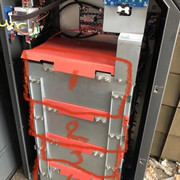
eBay is great isn't it? So as you can see (other than this one being dropped) there are 4 modules in them. But these are not the same config as the other packs, so each module does not have 16 cell inside. These are a bit more complicated to work out but I believe the following is accurate.
This is the internal of the top pack (again pinched from eBay):
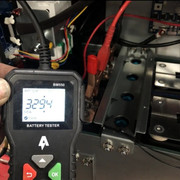
So we have a cross member running front to back which is showing 4x LFP cells. We don't have a full view but we can estimate from this that the entire module holds 8 cells, as a 3rd bank doesn't really look like it would fit. We can see that of the 4 cells they are paralleled / paired up in two's, so 8 cells per module. Finally we can assume the test instrument indicating 12V is valid, so that ties up with 8 cells made up as 2x parallel and 4x Series (given 4x 3.2V is 12.8V) so 2P4S.
Each module is 12.8V and there are x4 so = 51.2V. There are 4 modules so a total of 32Cells in the entire pack.
One would assume, given the BMS is the same as the others that cells are read top to bottom, so your troubled cell 6 would be in module 2 (the second one down)
Capacity / Brand of cell is hard to pin down but 2 believe that given the config they are 102AH each, so 204AH per pair & therefore each 12.8V module gives you 2.61kWh so the entire battery is 10.44kWh all told. This does put the DOD at around 90% on these which is different to all the others.
Note: I've assumed the cells are EVE LF100LA owing to their stumpy size, black top & rather unique round white cell terminals & round bright blue pressure relief valve which I believe only EVE cells have.
As for the BMS - it does appear to be a unique one, much as I've tried I can get sort of similar but not an exact match so how it truly works only GE knows. I will however say that the absence of any bleed resistor & the fact it uses a LAPIS controller would suggest it's balancers are of the Active type (pushing a high cell into lower cells) rather than the passive type (bleeding high cell off as waste heat through a large resistor)
I do think the balancer installed will be very current limited so it may take several hours / attempts for a really wonky cell- but only GE know the true specs of it.
BMS Pics lifted from some EMF test doc I came across on a suppliers site:
Front: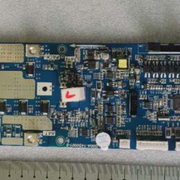 Back:
Back: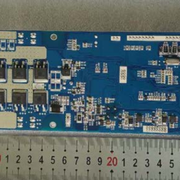
Qyaunos1 As for reliability I tend to go on the eBay theory - and other than people upgrading you don't actually see that many coming up for sale (Inverters or Batteries) bearing in mind there are nearly 70k installs now.
Do i agree the kits perfect - no. Do I sometimes think things could be handled better / more polished / checks before release - very much so.
But equally, albeit frustrating they do generally stand behind the product and if it is truly faulty will switch it out. It just might take a while to get there!
Oh and the thing on your graphs where it suddenly plummets to 0% then back again - mines always done it. It appears to be when the BMS is too busy to respond to the inverter asking it what it's current state is (this can also be when it's trying to do an OCV check so they tend to show up more then) or clashing with GivTCP asking the same thing. I wouldn't worry too much but if you use HA then it suddenly reporting 0 can screw up some automations.
hoggy Thanks for that - the datasheet on that cell is pretty comprehensive, including the fact that the cycling test goes from 3.65V/cell all the way down to 2.5V/cell, so they're tested with a 100% DoD until they hit 80% of the rated capacity. Shows the effect of increasing charge/discharge rates on capacity retention as well.
Edit - also of interest "When the internal resistance of the battery in use exceeds 150% of the initial internal resistance of the battery or the capacity is less than 70% of the nominal capacity, the battery should not to operate." Hopefully something has been lost in translation there although the datasheet is for a specific customer.
Edit2 - got to love dodgy translations "Failure to comply with these warnings could result in multiple disasters." 😃
Edit3 - https://ezealco.com/wp-content/uploads/2023/07/RD-LF100LA-S01-LF100Ah-Datasheet.pdf
Hi just an update for here.
I spoke to GE in the morning and the staff member I spoke to very quickly agreed that there was something wrong with the cell and therefore needed replacement. Spoken to my installer and they need to liaise with GE and source a new replacement but that shouldn't be a problem.
Im glad I spotted this in the first 30 days as it makes it a lot easier to sort the issue out.
The information that you guys have provided has been really useful and its extra knowledge gained which will be useful for the future.
In regards to the charge rate I did look at the datasheet and you're correct in that it has different charge/discharge rates (3300w/3600w respectively) which is a relief as I thought there was another issue with the battery on top of the voltage issue.
Really hoping that there aren't any other issues with the new replacement and I can get a few years of trouble free use out of the battery and inverter.
I am on octopus go so get 4 hours cheap overnight which is more than sufficient to fill the 9.5kwh battery. Usually what I find is that the battery charges up to 100% within 2 hours to 3 hours (depending on how much was used the day before). I do charge at the full rate, therefore the battery sits there at 100% up until 4.30 when it starts discharging to meet house demand.
Is it better for the health of the battery and to avoid any other issues to charge at a slower rate? Of course, I would need to ensure that the level is adjusted accordingly so that it actually fills before the 4 hours is up.
I just want to say thank you for the replies that you have provided. I appreciate that it is a time consuming process taking the time out to respond to people with queries.
Qyaunos1 Is it better for the health of the battery and to avoid any other issues to charge at a slower rate? Of course, I would need to ensure that the level is adjusted accordingly so that it actually fills before the 4 hours is up.
I suspect so - I charge at a slower rate for that reason. Also to try to maintain temperature through the cold night. I have a simple python script running on a pi that uses the API to tweak the charging rate so that it reaches the target SoC by the end of the cheap period. (I don't always charge to 100% - currently aiming for 75%, though an advantage of going to 100% is that the BMS is less likely to lose an accurate picture of true state of charge.)
DD Thanks for that reply.
Im assuming this python script you have is not run alongside predbat in home assistant or anything like that?
Mind if you share the script please?
Qyaunos1 Yes, just a standalone script scheduled through cron. HA seems rather heavyweight for this trivial task.
See also https://github.com/salewis38/palm which is also a standalone script that does stuff like solar prediction. (I was going to use that, but now that I'm on IOG, things are a lot simpler: I don't care how much solar there's going to be, since I plan to export it all anyway.)
I'll upload to github once I remember how.
Qyaunos1 Sorry for the delay. I had intended to tidy it up before uploading, but haven't had the chance, so I'm afraid it's rather rough.
See https://github.com/divenal/givenergy-scripts
DD thank you for uploading this. And apologies its taken a long time for me to reply. I haven't logged in here for a number of days.
Once again, thank you.
Vestas The full section of the datasheet reads "The battery life is limited. Customers should establish an effective tracking system to monitor and record the internal resistance and capacity of each battery during its life. The measurement method and calculation method of internal resistance and capacity need to be discussed and agreed between the customer and EVE Power Co., Ltd. When the internal resistance of the battery in use exceeds 150% of the initial internal resistance of the battery or the capacity is less than 70% of the nominal capacity, the battery should not to operate. Violation of this requirement will exempt EVE Power Co., Ltd. from its responsibility for product quality assurance in accordance with the product sales agreement and this specification." I'm hoping that this is just for warranty purposes, otherwise if GE are going to shut all our batteries down when they reach 70% of their original capacity, we've got major issues
Al E.Gator https://community.givenergy.cloud/d/3913-does-predbat-work-well-with-intelligent-octopus/24
Edit - I think the battery unit will stop working or (possibly) be seriously rate-limited when the cells exceed 150% initial internal resistance as that is probably the "knee point" on these cells, after which you run the risk of fairly dramatic cell failure at higher charge/discharge rates. If 150% initial internal resistance = 70% of nominal capacity then that's probably the end of life for the battery on a GE monitored/controlled system. No company wants the publicity of battery cells failing dramatically even if they're unlikely to burst into flames.....
Vestas I'm not a fan of that. 70% of nominal capacity is still a highly usable capacity for most people, and there should be BMS adjustments made to the max charge/discharge speed throughout the age of the batteries to allow people to use them to far higher cycle life. If they will stop working after about 4000 cycles, they might not last much past 12 years which makes the system as a long term investment very poor. I feel this needs to be addressed by GE formally.
Just beware if going headlong into my analysis of what I could see on that 9.5 pack, it's 1 pack out of thousands, and they are free to change cell manufacturer per batch to another (Anchi/ANC & Penghui and I'm sure others have popped up before)
hoggy Indeed but its not out of line with other datasheets or various papers on Li-Ion aging trajectories.
Basically by the time you see the "knee-point" on a LFP cell its probably unsuitable for high charge/discharge rates. Takes a long time for resistance growth on LFP because of their lower operating voltages but once resistance growth gets to a certain level its game over in terms of reliability regarding the OEM's full spec range on charge/discharge rates.